Best Time to Visit Manche: Tides, Mont St-Michel & D-Day Coast
The best time to visit Manche is late spring (May-June) or early autumn (September), when temperatures sit around 14-20°C (57-68°F), the crowds at Mont Saint-Michel and the D-Day beaches thin out, and the region’s famously dramatic tides are easier to plan a day around. Summer (July-August) brings the warmest weather, the busiest roads and the fullest car parks, while winter is quiet, mild by French standards, and suits travellers who prefer empty coastline to crowded causeways.
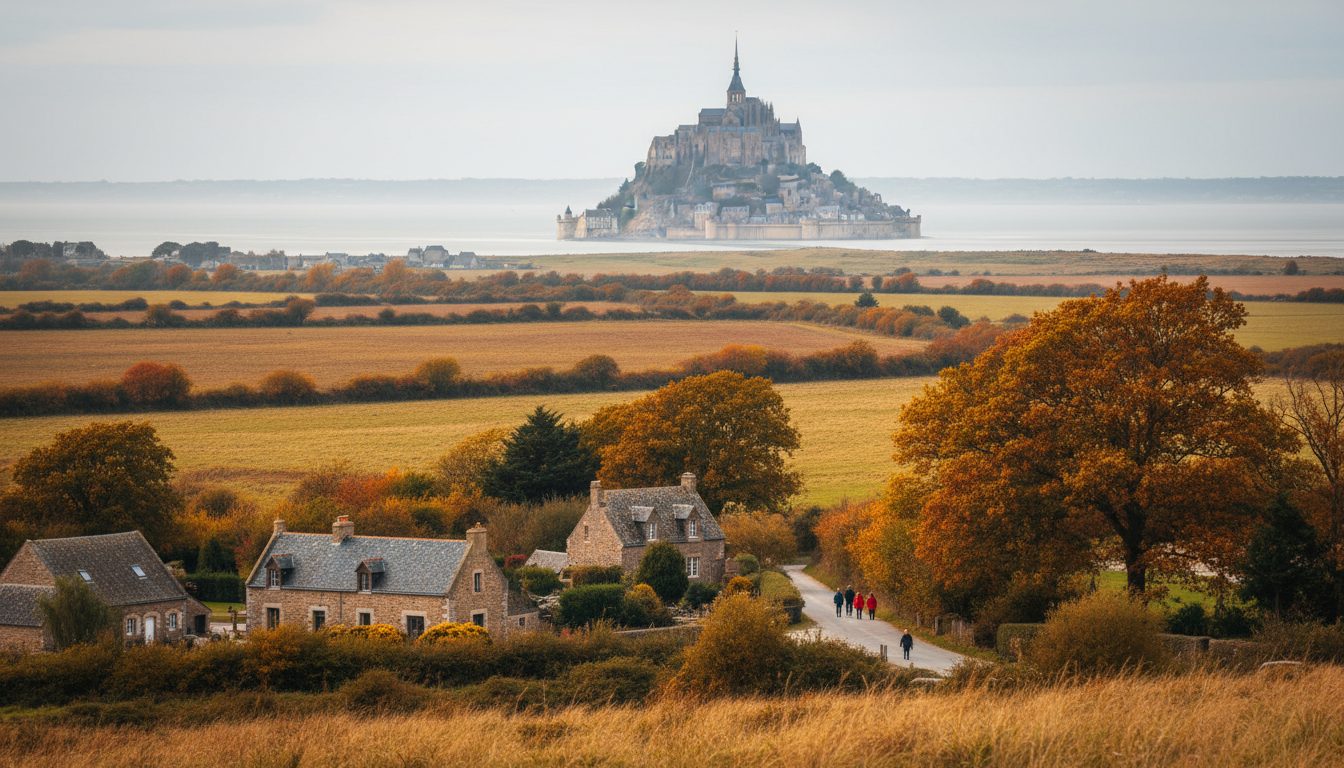
There is a particular hour, usually somewhere around a spring or autumn equinox, when the sea at Mont Saint-Michel retreats so far that the bay becomes a vast, rippled plain of wet sand stretching toward a horizon that seems to have forgotten it was ever water. Guides lead small groups out across it in rubber boots, pointing out quicksand with the same casual confidence other people might use to point out a decent café. It is one of the more theatrical things a landscape can do, and Manche does it twice a day, every day, whether or not anyone is watching. Timing your visit to this corner of Normandy is largely about deciding how much of that theatre you want front-row seats for, and how many other people you are prepared to share the view with.
This guide breaks the year down season by season, so you can work out when the weather, the crowds and your own tolerance for wind are likely to align. For the wider picture of what there is to see and do here, the Manche Travel Guide is the place to start.
Best Time to Visit Manche at a Glance
Spring (March-May): mild, bright, unpredictable – good light, thinner crowds. Summer (June-August): warmest and busiest, book ahead. Autumn (September-November): arguably the sweet spot, storms rolling in by late October. Winter (December-February): quiet, grey, cheap, occasionally gloriously stark. Grandes marées (the highest tides) peak around the spring and autumn equinoxes, which is when Mont Saint-Michel performs at its most dramatic.
Manche in Spring: March to May
Spring arrives in Manche in fits and starts, which is to say it arrives the way most things arrive in Normandy – with a certain amount of drama and no guarantees. March is still properly cool, averaging 7-11°C (45-52°F), with the Atlantic sending over squally showers that pass as quickly as they appear. By May, afternoons regularly reach 14-16°C (57-61°F) and the hedgerows along the Cotentin Peninsula are doing their best impression of a Monet, minus the admission fee.
This is a genuinely good time to be here. The light has that low, clear quality that photographers chase and that everyone else simply enjoys without knowing why. Crowds at Mont Saint-Michel are a fraction of their summer size, hotel and ferry prices are gentler, and the coastal path (the GR223, which traces much of the Cotentin coastline) is walkable without needing to queue behind a tour bus. The spring equinox, usually late March, brings one of the year’s grandes marées – the biggest tidal swings, when the sea retreats over a kilometre from the Mont and returns at a brisk walking pace. It suits walkers, photographers, and anyone who would rather see the D-Day beaches in contemplative near-solitude than as part of a scrum. The main downside is that late spring weather can be genuinely changeable – pack layers and don’t trust a blue sky before noon.
Manche in Summer: June to August
Summer is Manche’s busiest and most reliably pleasant season, with July and August averaging 18-22°C (64-72°F) and long, bright evenings that make the most of the Atlantic light. It rarely gets properly hot here – this is Normandy, not Provence, and the sea keeps things honest – but it is consistently the warmest stretch of the year, and the one in which the beaches at Barneville-Carteret and Agon-Coutainville genuinely fill with families.
June 6th brings D-Day commemoration events along Utah Beach and around Sainte-Mère-Église, with ceremonies, flypasts and a noticeable influx of visitors paying their respects – book accommodation well ahead if you’re coming specifically for this. Through July and August, Mont Saint-Michel can feel less like a medieval abbey and more like a determined queue with a very good backdrop; arriving early or staying late in the day helps enormously. Prices across the region rise accordingly, and the coastal roads around Granville and Cherbourg get properly busy. Summer suits families, first-time visitors who want everything open and running, and anyone who simply wants to swim in the sea without performing an act of willpower first.
Manche in Autumn: September to November
September is, by most reasonable measures, the best month to visit Manche, and it is a slightly annoying secret that more people haven’t caught on. Temperatures hold at a comfortable 16-19°C (61-66°F), the sea has had all summer to warm up, the crowds have gone home or back to school, and the oyster beds at Saint-Vaast-la-Hougue are heading into their best season. The second major grande marée of the year falls around the autumn equinox, giving another chance to watch the bay at Mont Saint-Michel empty and refill with theatrical commitment.
By October, the weather turns noticeably more Atlantic – 11-15°C (52-59°F), with proper wind and the first real storms rolling in off the sea, which locals regard with the weary affection of people long used to it. November is quieter still, greyer, and genuinely atmospheric if you like your coastlines a little wild. Some smaller restaurants and seasonal attractions begin reducing hours or closing for the winter from late October, so it’s worth checking ahead if you have a specific stop in mind. Autumn suits couples, food-focused travellers chasing the seafood season, and anyone allergic to queues.
Manche in Winter: December to February
Winter in Manche is mild rather than harsh – average temperatures sit between 4-9°C (39-48°F), rarely dropping below freezing for long, courtesy of the same Atlantic that makes the summers cool. What it lacks in warmth it makes up for in drama: storms off the Cotentin coast can be genuinely spectacular, and Mont Saint-Michel silhouetted against a winter sky, with barely another visitor in sight, is a different and arguably more honest version of the place than the one on the postcards.
February brings Cherbourg’s carnival, a long-running and cheerfully chaotic Mardi Gras celebration with costumed processions through the town – one of the livelier reasons to visit in deep winter. Many smaller hotels, seasonal restaurants and some attractions close or reduce opening between January and March, so this is not the season for spontaneity; book ahead and check what’s actually running. Winter suits travellers chasing empty beaches, dramatic weather, low prices and a version of Normandy that most tourists never see.
Best Time to Visit Manche for Shoulder Season Travel
If there’s a single piece of advice worth taking from this guide, it’s to aim for the shoulder seasons – late April to early June, or September into early October. You get mild, workable weather, significantly thinner crowds at the big draws like Mont Saint-Michel and the D-Day beaches, better availability on ferries and accommodation, and prices that haven’t yet been inflated by the school-holiday rush. Restaurants and attractions are open but not overwhelmed, which, in a region where the main spectacle involves watching the sea leave and come back, counts for a great deal.
Best Time to Visit Manche for Off-Season Travel
The case for visiting Manche in deep winter is a quiet one, but a real one. Prices drop, roads are empty, and the coastline – battered, grey, occasionally lashed by an Atlantic storm that arrived without an appointment – has a kind of honesty to it that the summer crowds rarely get to see. It won’t suit everyone; several smaller businesses close, daylight hours are short, and you will need a good coat. But for travellers who want Mont Saint-Michel to themselves, or who’d rather photograph a storm than a sunbather, winter delivers something the brochures don’t usually mention.
Whichever season you choose, the practical matter of where to base yourself still needs sorting – a look at villas in Manche is a reasonable place to start that conversation.
Manche Weather and Seasons FAQs
What is the rainiest month in Manche?
Manche sees rain throughout the year thanks to its Atlantic position, but autumn and winter, particularly October through January, bring the most frequent and heaviest showers, along with the occasional proper coastal storm.
When are the tides highest at Mont Saint-Michel?
The highest tides, known as grandes marées, occur around the spring and autumn equinoxes in March and September, when the sea can retreat over a kilometre from the Mont and return with striking speed. Tide tables are published locally and are worth checking before planning a visit around them.
Is Manche warmer than the rest of Normandy?
Not particularly. Manche’s coastal, Atlantic-facing position means it experiences similar mild, changeable temperatures to the rest of Normandy, generally a few degrees cooler in summer and milder in winter than inland parts of France, with wind and rain a near-constant feature regardless of season.
Keep reading
More on Manche
Guides nearby in Normandy
Where to stay
Villas in Manche
A selection from our 22 luxury villas in Manche.