
Best Time to Visit Miami: Art Deco, Stone Crab & Hurricane Season
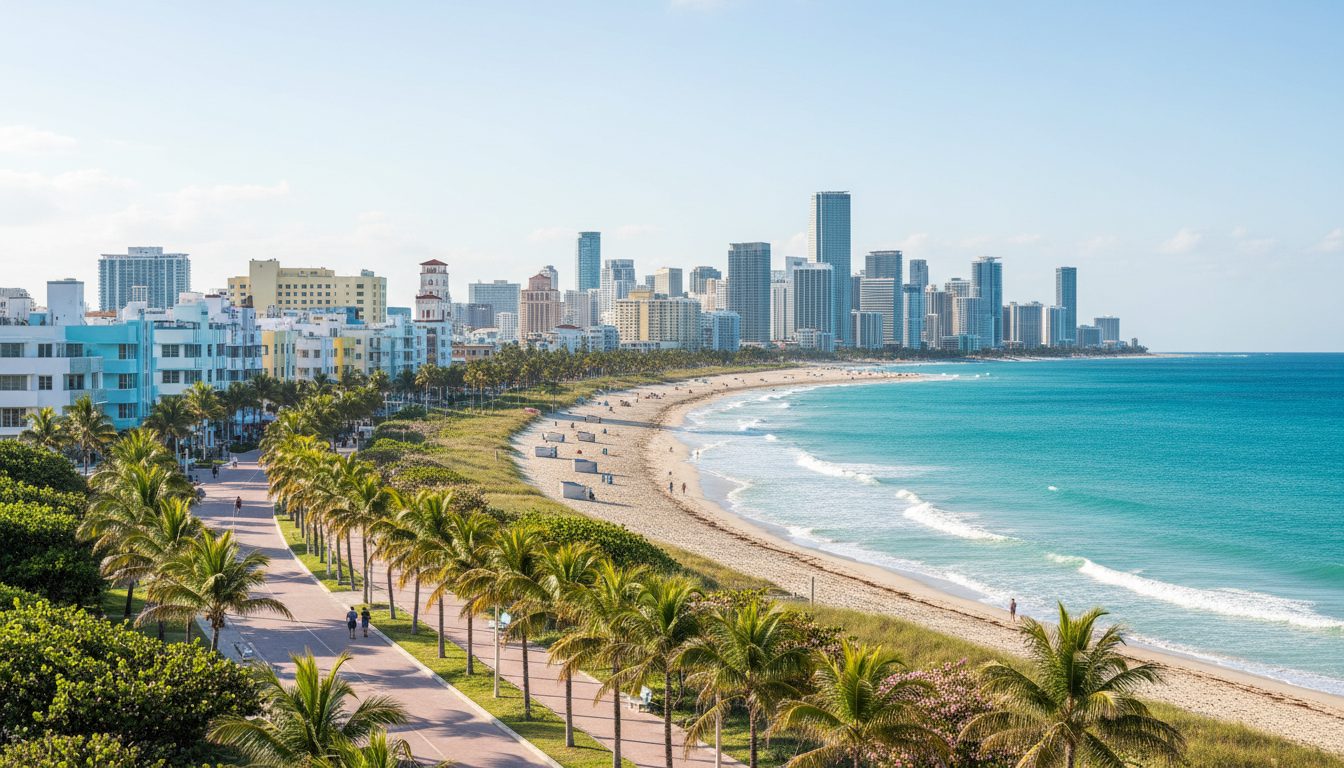
The best time to visit Miami is between December and April, when the dry season brings lower humidity, consistent sunshine and temperatures of around 20-27°C (68-80°F). This is also when hotel prices and crowds peak, especially over the December holidays and March spring break. Travellers who prefer lower prices and can tolerate heat, humidity and the chance of tropical storms will find better value, and quieter streets, between June and November.
It is seven-thirty in the morning and the light coming off Biscayne Bay has that particular pale gold quality that makes even the parking valets look cinematic. A pelican has claimed a piling outside your breakfast spot and is refusing to move for anyone, which feels appropriate for Miami, a city that has never once hurried on anyone else’s schedule. The air is warm but not yet thick, the humidity having not yet rolled in for its daily shift. Somewhere a jogger in full Lycra is taking this far more seriously than the morning requires. This is January in Miami, or possibly February, and it is, by most sensible measures, as good as the city gets.
Miami does not really have four seasons in the way that, say, Vermont does. It has two: a dry one and a wet one, with everything else being commentary. Understanding that single fact will save you more planning grief than any packing list. For the full picture of what to do once you’ve picked your dates, the Miami Travel Guide covers the rest.
Miami Weather by Season: The Two-Season Truth
From roughly November to April, Miami runs a dry season: lower humidity, blue skies, and temperatures that sit in a genuinely pleasant band. From May to October, the wet season takes over, bringing afternoon thunderstorms that arrive on a near-daily schedule with almost comic punctuality, along with the kind of humidity that makes a linen shirt feel like a personal failure within the hour. Hurricane season officially runs from 1 June to 30 November, with the real risk concentrated in August, September and October.
This two-season rhythm, rather than the conventional spring-summer-autumn-winter model, is the thing to plan around. A “winter” visit in December can feel meaningfully different from one in late February, and a “summer” storm in June behaves nothing like the system that might roll through in September. Miami’s weather is less a calendar than a set of probabilities, and the smart traveller plays the odds rather than the dates.
Visiting Miami in Winter (December to February): Miami’s High Season
Winter is when Miami becomes the Miami of postcards and inflight magazines: daytime highs of 24-27°C (75-80°F), overnight lows around 15-18°C (59-64°F), and humidity low enough that you can wear something other than swimwear without regret. It rarely rains. This is also, unsurprisingly, when everyone else has worked this out too. Hotel rates climb steeply from mid-December, flights fill up, and South Beach restaurants that happily seat walk-ins in September will suddenly require a reservation made with some forethought.
December brings Art Basel Miami, the contemporary art fair that briefly turns the entire city into a gallery opening with better catering, alongside the Orange Bowl college football fixture around New Year. February brings the South Beach Wine & Food Festival, a long weekend of culinary events that draws serious eaters from across the country. Nothing closes for winter here – quite the opposite – which suits sun-starved visitors from colder climates perfectly, as long as they’ve booked ahead and budgeted accordingly.
Visiting Miami in Spring (March to May): Spring Break and the Shoulder Season Sweet Spot
March opens with spring break in full, occasionally chaotic swing, when university students descend on the beaches with an enthusiasm that local restaurant owners view with mixed feelings. Temperatures by now have risen to 25-29°C (77-84°F), and the city hosts the Miami Open tennis tournament alongside Ultra Music Festival and, later in the month, the Calle Ocho street festival in Little Havana – a genuinely worthwhile cultural event if you can tolerate the crowds that come with it.
By April and into May, the spring breakers have gone home, the weather is still reliably dry, and prices begin a gentle retreat from their winter peak. This is arguably Miami’s best-kept secret: warm days, manageable humidity, decent availability, and a city that feels like it’s exhaling after the winter rush. Anyone wanting the Miami experience without the Miami premium should be circling late April on the calendar.
Visiting Miami in Summer (June to August): Hot, Humid and Genuinely Cheaper
Summer in Miami is not subtle. Expect daytime highs of 31-33°C (88-91°F), humidity that sits somewhere between “noticeable” and “biblical”, and an afternoon thunderstorm arriving most days with the reliability of a European train timetable (which is to say, more reliable than you’d expect). Hurricane season has begun, though the real statistical risk builds later in the summer and peaks into early autumn.
What summer lacks in comfort it makes up for in value. Hotel rates drop meaningfully, flights are easier to find, and the restaurant scene runs Miami Spice, a city-wide promotion offering multi-course set menus at reduced prices through late summer. Beaches are less crowded on weekdays, pools feel earned rather than performative, and the city takes on a slower, more local rhythm once the winter crowd has gone home. This is the season for travellers who prioritise budget and don’t mind the occasional sprint between air-conditioned buildings.
Visiting Miami in Fall (September to November): Hurricane Season and the Quietest Streets
September and October are the lowest-visited months of the Miami year, for good reason: this is peak hurricane season, and while most years pass without a direct hit, the possibility shapes everyone’s plans, from cruise lines to wedding planners. Temperatures remain high at 27-31°C (81-88°F), humidity stays stubborn, and afternoon storms continue their daily routine. Hotel prices are at their lowest of the year, and the city feels genuinely local – fewer tourists, shorter waits, better tables available on short notice.
By November, the risk eases considerably, humidity starts to drop, and temperatures settle into a more comfortable range. Few places close down in Miami regardless of season – this is a city built to keep working regardless of weather – though some independent restaurants do take a quieter few weeks in late summer for staff holidays. November rewards travellers willing to accept a small residual storm risk in exchange for noticeably lower prices and a city only just beginning to fill back up.
Shoulder Season in Miami: The Advantages of April, May and November
If pressed to name the two windows that best balance weather, crowds and price, most seasoned visitors would point to late April through May, and again in November. Both sit just outside the extremes: the weather is good without being winter-perfect, hotel rates are meaningfully below peak, and restaurants, beaches and museums operate without the queues that define February. Flights also tend to be easier to secure, including last-minute bookings that would be unthinkable in December.
These shoulder months suit almost everyone – families wanting good weather without holiday pricing, couples after a quieter romantic break, and repeat visitors who’ve already done the full winter circuit and want to see the city behave a little more like itself.
Off-Season in Miami: The Case for Visiting in Summer
There’s a reasonable argument that summer, hurricane risk and all, is when Miami shows its truest self. Locals reclaim the beaches on weekdays, restaurant staff have time to actually talk to you, and the lower prices make upgrading to a nicer room or a longer stay entirely plausible. Travel insurance that covers weather disruption is worth having, and it’s sensible to track forecasts in the week before departure rather than months out – but outright cancellations due to storms are the exception, not the rule, in most summers.
For anyone who finds humidity more of an inconvenience than a dealbreaker, and who would rather spend their holiday budget on a better room than a winter flight surcharge, summer offers a version of Miami that’s cheaper, slower and – thunderstorms aside – oddly more honest.
Whichever season you choose, it’s worth deciding on your month before you start looking at villas in Miami, since availability and pricing shift considerably between January and August.
Miami Weather and Seasons FAQs
What month has the best weather in Miami?
February is generally considered Miami’s best weather month, combining low humidity, minimal rainfall and comfortable daytime temperatures around 25°C (77°F), though it also coincides with high season pricing and crowds.
Is it safe to visit Miami during hurricane season?
Most years pass without a direct hurricane hit on Miami, and the city has well-established evacuation and monitoring systems. Visitors travelling between June and November should check forecasts in the days before travel and consider travel insurance that covers weather disruption.
When is Miami least crowded with tourists?
September and October see the fewest visitors, largely due to peak hurricane season and intense heat and humidity. Early summer and late November also offer noticeably thinner crowds compared with the December to March high season.
Keep reading
More on Miami
- Travel guideMiami Travel Guide
- RestaurantsBest Restaurants in Miami
- Food & wineMiami Food & Wine
- FamiliesMiami with Kids
Guides to places in Miami
Where to stay
Villas in Miami
A selection from our 295 luxury villas in Miami.