Best Time to Visit Midlands: Canals, Castles & Cadbury Country
The best time to visit the Midlands is late spring (April to June) or early autumn (September to October), when temperatures sit comfortably between 14-20°C (57-68°F) and rainfall eases without the summer crowds of the Peak District or Shakespeare’s birthplace. July and August bring the warmest weather and busiest attractions, while December offers Christmas markets but short, cold days.
There is a particular moment, usually around half past six on a May evening, when the light along the Birmingham canal network turns the colour of weak tea and the narrowboats seem to stop apologising for existing. Someone is always walking a spaniel. Someone else is always eating chips directly from the paper, standing, as if sitting down might admit defeat. It is not a dramatic scene. But it is, in its quiet way, the Midlands doing exactly what the Midlands does best – getting on with things, regardless of what the sky is up to.
And the sky, it must be said, is up to quite a lot here. This is a region of genuine seasonal character, from the frost on Chatsworth’s parkland in January to the heat haze over Nottinghamshire’s farmland in August, and knowing which month suits your plans makes all the difference between a trip and an ordeal involving a damp cagoule.
Midlands Weather at a Glance
- Spring (March-May): 7-16°C (45-61°F), increasingly dry, blossom and lighter crowds
- Summer (June-August): 14-22°C (57-72°F), warmest and busiest, peak festival season
- Autumn (September-November): 6-17°C (43-63°F), golden Peak District colour, fewer visitors
- Winter (December-February): 1-7°C (34-45°F), Christmas markets, short daylight, lowest prices
Midlands in Spring: March, April and May
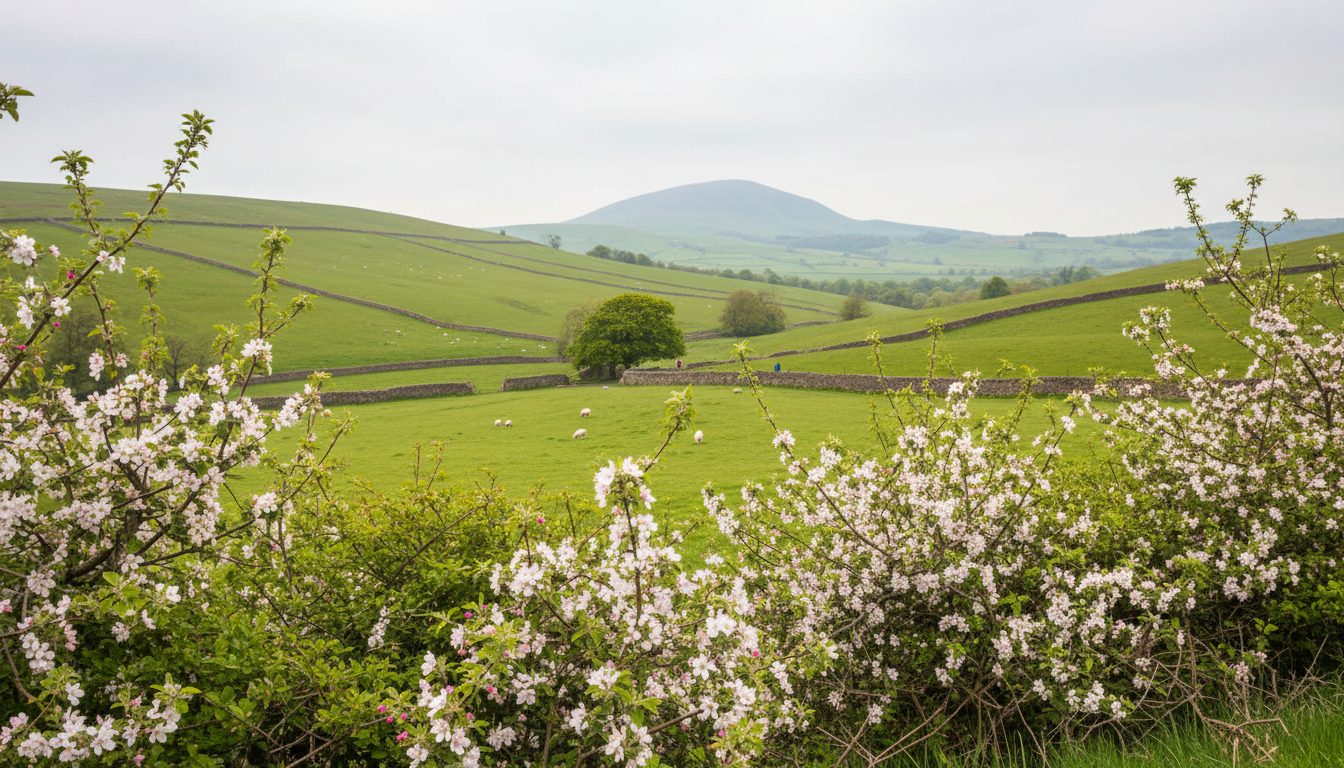
Spring arrives in the Midlands with a certain reluctance, March still carrying a chill that catches out visitors expecting British spring to resemble the postcards. Daytime temperatures hover around 7-13°C (45-55°F) in March, warming to 11-16°C (52-61°F) by May. Rainfall is lower than the autumn and winter averages, and the countryside responds accordingly: the Peak District’s gritstone edges green up, blossom appears along canal towpaths, and Stratford-upon-Avon’s riverside gardens start to look like they mean it.
This is also when Stratford-upon-Avon traditionally marks Shakespeare’s birthday in late April, drawing crowds without quite tipping into summer-scale congestion. Crowds generally remain manageable through spring, hotel and attraction prices stay below peak summer rates, and walking the Peak District is genuinely pleasant rather than a test of endurance against heat or ice. Spring suits travellers who want decent weather without competing for a parking space in Bakewell.
Midlands in Summer: June, July and August
Summer is when the Midlands gets properly warm, or at least warm by its own modest standards. Expect 16-22°C (61-72°F) through the peak months, with July and August occasionally pushing higher and prompting the entire region to discuss the heat as though it were a minor national emergency. Daylight stretches long, which suits Peak District hiking, canal boat hire and evenings spent outdoors in Birmingham’s growing café-terrace culture.
It is also, unsurprisingly, the busiest and priciest season. Chatsworth, the Peak District’s honeypot villages and Stratford-upon-Avon all see their highest visitor numbers, and accommodation rates climb accordingly. Summer suits families working around school holidays and anyone who wants long days outdoors, but it is worth booking popular attractions ahead and accepting that Bakewell’s one-way system will test your patience regardless of the month.
Midlands in Autumn: September, October and November
September is arguably the Midlands at its most flattering: temperatures still sit around 13-17°C (55-63°F), the summer crowds have mostly gone home, and the light turns gentler across the canal network and Peak District valleys. By October, the Peak District’s bracken and woodland shift into genuine autumn colour, and Nottingham’s Goose Fair brings one of the region’s oldest street fairs to the city in early October, a chaotic, affectionate tradition dating back centuries.
November is colder and wetter, 6-11°C (43-52°F), with shorter days, but it marks the quiet build-up to the Christmas market season. Autumn as a whole suits travellers who want decent weather, lower prices than summer, and a countryside doing its best impression of a watercolour painting. It is, frankly, the most underrated time to visit.
Midlands in Winter: December, January and February
Winter is cold, properly so: daytime temperatures of 4-7°C (39-45°F) in December falling to 1-5°C (34-41°F) by January and February, with frost common across the Peak District and short daylight hours throughout. December redeems itself somewhat with Birmingham’s German Christmas Market, one of the largest of its kind outside Germany and Austria, and similar festive markets appearing across the region’s towns, along with Chatsworth’s Christmas illuminations drawing visitors to the Peak District in the dark months.
January and February are quieter still, some rural attractions reduce hours or close for maintenance, and the Peak District can turn properly bleak – beautiful, but not for the underprepared. This is the off-season proper: prices drop, crowds thin to almost nothing, and the region’s indoor pleasures, museums, galleries, and long pub lunches, come into their own. It suits travellers who prefer empty streets to busy ones and don’t mind packing a decent coat.
Shoulder Season in Midlands: Why Spring and Autumn Win
If pressed to name the best time to visit the Midlands for value and comfort together, the honest answer is the shoulder seasons either side of summer. Late April into June, and September into early October, deliver the region’s most reliable combination: reasonable temperatures, lower rainfall than winter, fewer coach parties clogging Stratford-upon-Avon’s pavements, and accommodation prices well below the August peak. Walking routes through the Peak District are at their most comfortable, neither baking nor waterlogged, and market towns across Derbyshire and Staffordshire feel like they belong to residents again rather than visitors.
These months also align well with the region’s cultural calendar, Shakespeare’s birthday celebrations in spring, Nottingham’s Goose Fair in autumn, without the scheduling headaches of peak-season booking. For anyone planning a first visit to the Midlands, shoulder season is the pragmatic choice.
Off-Season Midlands: The Case for Winter
There is a counterargument, and it involves wool socks. Winter in the Midlands rewards travellers who want the region without the queue, when canal towpaths are near-empty, country house interiors feel properly atmospheric rather than crowded, and Birmingham’s Christmas market lends the city centre a warmth entirely disproportionate to the actual temperature. Prices for everything from accommodation to attraction tickets drop meaningfully, and the lower light brings out a different character in the Peak District’s stone villages, one of smoke from chimneys and steamed-up pub windows rather than ice-cream queues.
It is not for everyone. Days are short, some rural sites scale back, and a wet Tuesday in February tests anyone’s enthusiasm for the great outdoors. But for travellers who have done the summer version of the Midlands and want to see its quieter face, winter delivers.
For a fuller sense of what the region offers across all seasons, the Midlands Travel Guide covers the wider picture beyond weather.
Whichever month you choose, book accommodation early if travelling in summer or over Christmas, including villas in Midlands.
Midlands Weather and Seasons FAQs
What is the rainiest month in the Midlands?
October and November tend to be the wettest months in the Midlands, with higher rainfall totals than the drier spells of spring and early summer. Pack a proper waterproof rather than relying on an umbrella, as the Peak District in particular can turn windy and exposed.
Does it snow in the Midlands?
Snow does fall in the Midlands most winters, particularly across higher ground in the Peak District, though lowland snow is usually light and short-lived. January and February are the most likely months, though amounts vary considerably year to year.
Is the Midlands worth visiting outside summer?
Yes, spring and autumn offer comfortable walking weather and lower prices, while winter brings Christmas markets and quiet countryside. Summer is warmest but also the busiest and most expensive season across the region’s main attractions.
Keep reading
More on Midlands
Guides nearby in England
Where to stay
Villas in Midlands
A selection from our 17 luxury villas in Midlands.