
Best Restaurants in Postira: Fine Dining, Local Gems & Where to Eat
Around seven in the evening, something shifts in Postira. The heat lifts its foot slightly off the back of your neck, the fishing boats bob back into the harbour with a quiet sense of self-satisfaction, and somewhere – almost certainly from a kitchen with its window propped open – the smell of garlic meeting olive oil in a very hot pan drifts across the waterfront. It is, frankly, one of the more persuasive arguments for being alive. This small Dalmatian village on Brač island doesn’t shout about its food. It doesn’t need to. It simply cooks well, pours generously, and waits for you to notice.
If you’ve arrived expecting the dining scene of Split or Hvar, recalibrate. The best restaurants in Postira are not operating on spectacle. What they offer instead is something rarer and, in the end, more satisfying: food that tastes of exactly where it comes from, served by people who have been eating it their whole lives. For the discerning traveller, this is not a consolation prize. This is the point.
This guide covers everything you need to eat and drink well during your time here – from the finest tables to the places you’d only find by following your nose, and a few things you absolutely must order before you leave.
The Fine Dining Scene in Postira
Let’s be honest about something: Postira is not Dubrovnik. It holds no Michelin stars. What it does hold – and this is worth considerably more to certain kinds of traveller – is a deeply serious relationship with ingredient quality that would make many a starred kitchen look slightly embarrassed. The Dalmatian coast has always understood that when your olive oil is this good, your fish is this fresh, and your lamb has spent its life grazing on wild herbs above the sea, the most sophisticated thing a chef can do is largely get out of the way.
The fine dining experience in Postira tends to emerge not from white tablecloths and amuse-bouches but from konobas – traditional Croatian family taverns – that have quietly elevated their cooking over generations. These are places where the owner might also be the fisherman, and the menu changes not because the marketing team decided it was time for a seasonal refresh, but because what came in this morning was different from yesterday. Dishes here are built around peka – slow-cooked lamb or veal beneath a cast-iron bell buried in embers – and whole grilled fish brushed with nothing but good oil and sea salt. The restraint is the sophistication.
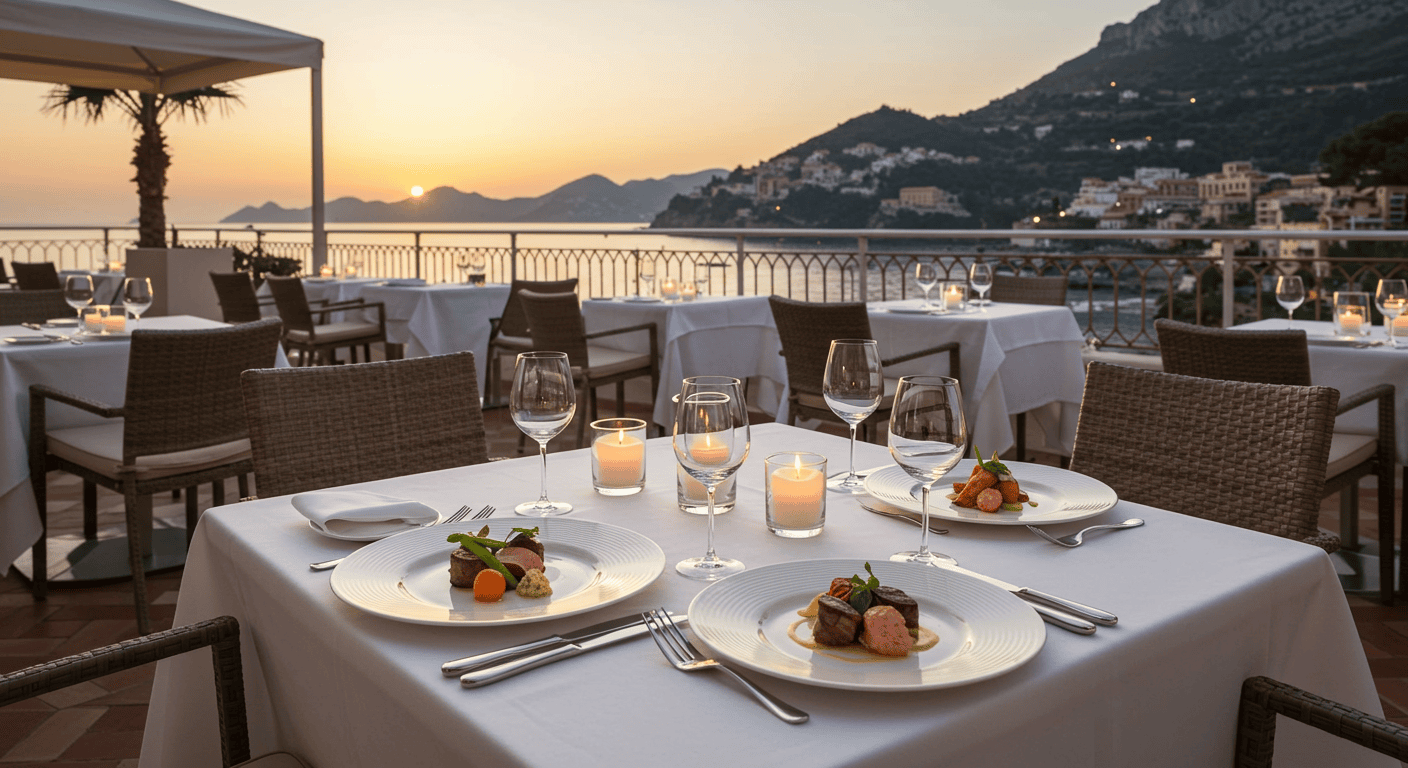
If your appetite runs to a more formal setting with premium wine service and a longer tasting experience, nearby Supetar – just a short drive or water taxi ride along the Brač coast – offers polished restaurants with broader cellars and a more composed dining room atmosphere. But for those who understand that luxury is about quality rather than formality, the best evenings in Postira begin at a table ten metres from the water and end considerably later than planned.
Local Konobas and Trattorias: Where the Real Eating Happens
The konoba is the heart of Croatian coastal eating, and Postira’s handful of family-run establishments represent the form at its most honest. These are not tourist restaurants that happen to serve local food. They are local restaurants that happen to also welcome tourists – an important distinction, and one that tends to show up immediately in the quality of what arrives at your table.
The ritual of ordering at a good Dalmatian konoba deserves a moment of respect. You will often be told what’s good today rather than handed a menu with forty options. Take this as the gift it is. The grilled catch of the day – whatever the boats brought in – is almost always the right answer. Expect whole fish: sea bass, sea bream, John Dory if you’re fortunate, all from the Adriatic rather than a farm tank. Alongside it: blitva, a simple sauté of Swiss chard and potato with olive oil and garlic that sounds deeply unremarkable until you’ve actually eaten it with properly good oil, at which point you’ll find yourself wondering why you’ve been complicating vegetables all your life.
Pašticada is the other dish to seek out – slow-braised beef in a sweet-sour sauce of prunes, wine and vinegar, served with gnocchi, and requiring something approaching patience to make properly. When it’s good, it’s very good. Order the house red without excessive anxiety. Croatian wines – particularly the whites from Pošip and Grk grapes grown on Brač and neighbouring Korčula – are seriously underrated, and the konoba owner will know exactly what to pour.
Starters worth noting: pršut (Dalmatian air-dried ham, sliced thinner than you think is possible), sheep’s cheese drizzled with honey, and brudet – a rich fisherman’s stew that benefits enormously from bread that arrives still warm.
Beach Clubs and Casual Dining by the Water
There is a particular pleasure in eating lunch somewhere that requires you to be slightly sandy to fully appreciate it. Postira and its surrounding coves offer exactly this. The beaches along this stretch of Brač – pebbled, clear-watered, backed by pine trees that smell faintly of resin in the afternoon heat – have their share of beach-adjacent eateries ranging from simple bars serving cold Karlovačko beer and grilled corn to slightly more composed spots where you can eat grilled fish and salad while watching someone’s child stage an elaborate drama with an inflatable ring.
Casual doesn’t mean careless here. Even the simplest beach bar tends to take its grilled food seriously. The calamari – lightly floured, fried in oil that’s actually hot enough, served with a wedge of lemon and approximately nothing else – is the benchmark by which all subsequent calamari will be judged and, in most cases, found wanting. Wash it down with a glass of cold Ožujsko on a day when the temperature is into the mid-thirties and try to remember the last time you felt this straightforwardly content. Take your time. The afternoon is long.
For something slightly more composed in the casual register, look for waterfront spots that offer the classic Dalmatian lunch: a shared plate of mixed grilled seafood, bread, salad, house white. It is not complicated. That is precisely the appeal.
Hidden Gems and Off-the-Beaten-Track Eating
The best food discoveries in a village like Postira tend not to announce themselves. They come via a conversation with someone who has been coming here for twenty summers, or from the simple act of walking slightly further than is strictly comfortable in the midday heat and ending up somewhere without a sign in English. This is, for the record, an excellent sign.
A few principles to navigate by: if there’s a handwritten menu, you’re on the right track. If the tablecloths are paper and the wine comes in a ceramic jug without a label, better still. The village’s residential streets and the roads threading up into the hills behind Postira occasionally hide small family-run spots – more home kitchen than restaurant – where food is cooked to order in quantities that reflect what was in the garden or at the market this morning. These places rarely advertise, rarely take reservations, and occasionally run out of the best dishes by early afternoon. This is not a problem. This is the entire experience.
Ask at your villa, ask at the harbour, ask the person behind you at the bakery. The intelligence network for this kind of discovery is informal, reliable, and generally accurate.
Food Markets, Producers and Where to Shop
Postira operates on a pleasantly human scale when it comes to provisioning. There’s no enormous covered market hall, no artisanal food hall with copper fittings and branded tote bags. What there is is better: a small local market where produce arrives from nearby gardens and smallholdings, fishmongers on the harbour who will sell you whatever came in this morning, and bakeries producing bread and pastries at hours that require either admirable discipline or a holiday sleeping pattern that has already collapsed entirely.
The olive oil of Brač deserves particular attention. The island’s olives – particularly around the village of Škrip and the southern plateau – produce oil of real character, with a grassy, slightly peppery finish that bears no resemblance to the anonymous bottles that sit on supermarket shelves at home. If you find a producer selling directly, buy as much as you can carry. Croatian regulations on what you can take home are worth checking, though the oil will likely be finished before it becomes a problem.
Lavender from the island – Hvar’s famous crop, but grown in patches on Brač as well – appears in various forms at local stalls, and the honey from Dalmatian bees is worth picking up as well. For those staying in a villa and making use of a private kitchen or chef, the morning market visit is not optional. It is the entire beginning of what you eat that evening.
Wine, Rakija and What to Drink in Postira
The question of what to drink on the Dalmatian coast has a simple answer and a deeply interesting one. The simple answer is: white wine with lunch, red wine with dinner, rakija at some point you’ll regret and celebrate in equal measure. The interesting answer involves paying attention to what the island and its neighbours are actually producing, which is considerably more worthwhile than it was even a decade ago.
Pošip is the white grape to know – grown on Korčula primarily, though found across the islands, producing wines with body, texture and a mineral salinity that pairs with seafood in a way that feels almost designed rather than accidental. Grk is another indigenous white, leaner and more citric. On the red side, Plavac Mali – the local variety related to Zinfandel, for the wine-curious – produces big, sun-saturated wines from the steep terraced vineyards of Hvar’s Dingač that are well worth seeking on any serious wine list in the region.
Rakija – the Balkan fruit brandy that operates as digestif, welcome drink, farewell gesture and cure for everything from sunburn to existential uncertainty – will be offered. The lozovača (grape) is the most common, the travarica (herb) is the most complex, and the biska (mistletoe, made on Istria but found across Croatia) is the one that arrives unexpectedly at eleven at night when you were fairly sure the evening had finished. It hadn’t.
Local craft beer has made its way even to the smaller Dalmatian villages, and cold beer at the end of a hot afternoon on a stone beach requires no further justification. Non-drinkers are well served by the fresh-squeezed juices and excellent coffee culture – Croatia takes its espresso seriously, which is more than can be said for several countries that consider themselves culturally superior in this regard.
Reservation Tips and When to Eat
The rhythms of eating in Postira follow the rhythms of the coast rather than the rhythms of a city. Lunch happens properly – not a sandwich at a desk – and tends to stretch from around one until the afternoon heat makes further movement impossible. Dinner begins around eight, reaches full velocity around nine, and rarely concludes before the hour that makes tomorrow morning ambitious.
Reservations matter more than you might expect for a village of this size. The better konobas – particularly those that require advance preparation for peka dishes, which typically need to be ordered several hours ahead – fill up quickly in July and August when Brač’s visitor numbers reach their peak. Calling ahead the morning of your intended dinner is the minimum; for the most sought-after tables, a day or two in advance is more reliable. Your villa concierge or rental manager will almost certainly have existing relationships with the best local restaurants, which tends to smooth the process considerably.
One practical note on timing: if you want peka – and you should want peka – make this known when you book. It is not a dish that can be rushed or decided on the night. The preparation begins hours before service, and a konoba that takes it seriously will want to know how many are eating it. This is not an inconvenience. It is the reason it tastes the way it does.
Avoid the trap of eating at seven simply because that’s when you eat at home. The village comes alive later. The best atmosphere, the fullest tables, the evening that ends up being the one you talk about – these tend to happen when you’ve given the day a little more time to properly finish.
Dining at Your Villa: Private Chefs and Home Cooking
There is, of course, another option – one that often turns out to be the most memorable meal of a stay in Postira. The private villa kitchen, stocked from the morning market, with a chef who knows exactly what to do with Brač lamb and locally pressed olive oil, is an experience that sits entirely outside the restaurant category but belongs in any honest guide to eating well here.
Staying in a luxury villa in Postira brings with it the possibility of arranging a private chef – either for a single exceptional dinner or throughout your stay – who can cook to the full potential of what the island produces. Think whole roasted fish from the harbour that morning, peka prepared in your own outdoor oven as the sun drops behind the hills, a dessert of local figs with honey and sheep’s cheese. The table is your own, the view is your own, and nobody is hurrying you towards the door for a nine-thirty seating. This is not the compromise option. For many guests, it becomes the reason they book a villa in the first place.
For more on what to see, do and experience during your time on the island, the full Postira Travel Guide covers the destination in its entirety – beaches, excursions, practicalities and everything worth knowing before you arrive.