Best Time to Visit Saint Lucia: Pitons, Rainforest & Carnival
The best time to visit Saint Lucia is during the dry season, from December to April, when rainfall is lowest, humidity is more manageable and skies stay reliably blue. The wet season, May to November, brings lower prices, fewer crowds and short, dramatic downpours, with the official hurricane season running June through November. Shoulder months – May and November – offer a reasonable compromise between good weather and good value.
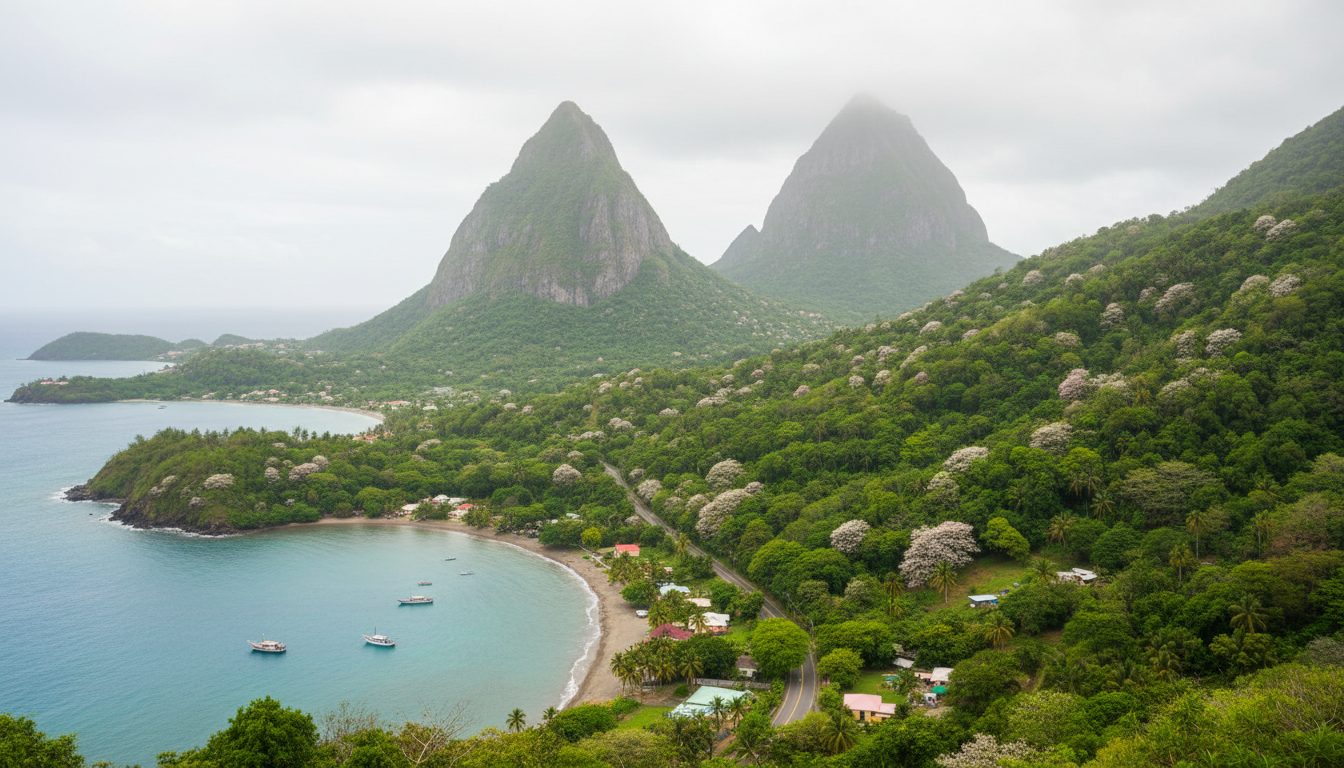
Few islands manage to look quite so improbable as Saint Lucia does on a clear morning, with two rainforest-clad volcanic spires rising straight out of the Caribbean Sea as if someone had sketched them for dramatic effect and forgotten to tone it down. The Pitons are the postcard, but the weather behind that postcard changes more than most visitors expect, and it pays to know which version of the island you’re booking before you arrive expecting one and getting the other.
Saint Lucia sits close enough to the equator that temperatures barely shift across the year – this is not a destination with a true “cold” season, whatever the brochures from colder countries might lead you to believe. What changes is rainfall, humidity and the number of people queuing for the same catamaran trip to Soufrière as you. Timing your visit well is less about dodging bad weather entirely (impossible, this is a rainforest island) and more about choosing which trade-offs suit you. For context on the island as a whole, the Saint Lucia Travel Guide is worth a read alongside this one.
Saint Lucia Weather at a Glance
Dry season: December to April, 26-31°C (79-88°F), lowest rainfall, highest prices and crowds.
Wet/green season: May to November, 25-31°C (77-88°F), heavier but shorter rain, lower prices, hurricane risk June-November.
Shoulder months: May and November, good value with milder crowds and mostly cooperative skies.
Saint Lucia Dry Season (December to April): Who It Suits
This is high season on Saint Lucia, and for good reason. Rainfall drops noticeably, humidity eases off slightly, and the trade winds keep things bearable even in the thick of the afternoon heat. Daytime temperatures run 26-31°C (79-88°F), with December and January marginally cooler and March and April creeping toward the top of that range. Mornings are reliably sunny; a quick shower in the hills around Soufrière or the rainforest interior is still possible, because rainforests do that regardless of season, but it tends to pass quickly.
This is also when the island is busiest and most expensive, particularly over Christmas, New Year and the weeks either side of Carnival build-up. Beaches at Rodney Bay and Marigot Bay fill up, boat tours sell out earlier, and restaurants that take reservations should be booked well ahead. February half-term and the Easter period (dates shift annually) bring a second wave of families. If you want guaranteed sun, firm sand underfoot for hiking the Pitons, and don’t mind paying for the privilege, this is your window. If you dislike sharing a view with a coach party, it’s worth reading on.
Saint Lucia Wet Season (May to November): The Case for Green Season
“Wet season” sounds like a warning label, but on Saint Lucia it mostly means short, heavy, often spectacular rain showers that clear within the hour, followed by the kind of intense green light that makes the rainforest interior look freshly painted. Temperatures stay similar to the dry season, 25-31°C (77-88°F), though humidity climbs and afternoon cloud builds more reliably. Locals sometimes call this period the green season, and the name fits: waterfalls run fuller, the Diamond Falls gardens and the forest around the Sulphur Springs turn a deeper shade, and the island generally looks less parched than it does by April.
Hurricane season officially runs June to November, with the higher-risk window falling in August, September and October. Direct hits on Saint Lucia itself are relatively uncommon compared with islands further north, but tropical storms and heavy rain systems do pass through, and it’s sensible to keep an eye on forecasts if travelling in this window and to take out proper travel insurance. In exchange for that small risk, you get noticeably lower accommodation rates, quieter beaches, shorter waits for boat trips, and a version of the island that feels less like a destination and more like a place people actually live. This season suits travellers who are flexible, don’t mind the odd rearranged afternoon, and would rather save money than guarantee seven unbroken days of sun.
Saint Lucia Shoulder Season (May and November): Best of Both Worlds
May and November are the island’s quietly sensible choices, the kind of months that never get the glossy magazine coverage but reward the traveller who does their homework. Rain is less intense than in the deep wet season months of July through October, crowds have thinned from the December peak, and prices sit meaningfully below high-season rates. May in particular tends to bring long dry spells between showers, making it a good bet for hikers planning the Gros Piton or Tet Paul trails without melting halfway up.
May is also when the island’s jazz and arts festival typically fills Rodney Bay and Pigeon Island with music, drawing a livelier crowd than you might expect for a supposedly quiet month, so book ahead if that coincides with your trip. November, meanwhile, sits at the tail end of hurricane season with risk tapering off and the island beginning to dry out ahead of the December rush. Both months reward flexible travellers who want good weather odds without December prices.
Saint Lucia Month by Month: Weather, Crowds and Events
January and February
Peak dry season, 25-29°C (77-84°F), low rainfall, high prices and the busiest beaches of the year. Carnival build-up events and local fetes add colour; book restaurants and tours well in advance.
March and April
Still dry, temperatures edging up to around 30°C (86°F) by April. Easter week brings another price and crowd spike. Good month for hiking before the humidity thickens.
May
Shoulder season proper. Warm, increasingly humid, with the island’s jazz and arts festival drawing music fans to Rodney Bay and Pigeon Island. Good value if booked outside festival dates.
June and July
Wet season begins in earnest, hurricane season opens. Saint Lucia’s Carnival, with its costume parades and soca, typically lands in July and brings energy (and crowds) to Castries. Expect short, heavy downpours and lush scenery.
August, September and October
The wettest, most humid stretch and the peak of hurricane risk. Prices fall to their lowest, beaches and attractions are at their quietest, and many smaller family-run restaurants outside the main resort areas reduce hours or close briefly for the slow period. Creole Heritage Month celebrations in October bring traditional food, music and the island’s Creole flag-flying to the fore, a good reason to visit despite the weather risk.
November
Rain eases, hurricane risk tapers, and the island starts drying out. A genuinely underrated month for value-conscious travellers willing to pack a light rain jacket.
Saint Lucia Weather and Crowds: The Off-Season Case
There’s a reasonable argument for visiting Saint Lucia at its least fashionable, which is to say during the heart of the wet season from August to October. Flights and accommodation cost noticeably less, popular sites like the Sulphur Springs and the Pitons trails have breathing room, and the rain, while frequent, rarely ruins an entire day. The island’s interior is at its most vivid, waterfalls run at full volume, and the pace of everything – service, traffic, queues for the ferry to Pigeon Island – slows down considerably. The trade-off is obvious: you’re gambling on a tropical storm system, and some activities (particularly boat-based ones) get cancelled at short notice. For travellers with flexible plans and good insurance, it’s a genuine bargain season rather than simply a lesser one.
For travellers weighing up where to base themselves for any of these seasons, villas in Saint Lucia are worth comparing before you book.
Saint Lucia Weather and Seasons FAQs
Is Saint Lucia hot all year round?
Yes, broadly. Daytime temperatures stay between roughly 25°C and 31°C (77-88°F) throughout the year, with little seasonal swing. What changes is humidity and rainfall rather than heat itself.
When is hurricane season in Saint Lucia?
The official Atlantic hurricane season runs from June to November, with the highest risk in August, September and October. Saint Lucia sits further south than many Caribbean islands, which reduces but doesn’t eliminate direct hits, so travel insurance is sensible during this period.
What is the driest month in Saint Lucia?
February and March tend to be the driest months, with the lowest average rainfall and the most consistent sunshine, which is part of why they’re also the most expensive months to visit.
Keep reading
More on Saint Lucia
- Travel guideSaint Lucia Travel Guide
- RestaurantsBest Restaurants in Saint Lucia
- Food & wineSaint Lucia Food & Wine
- FamiliesSaint Lucia with Kids
Guides to places in Saint Lucia
Where to stay
Villas in Saint Lucia
A selection from our 85 luxury villas in Saint Lucia.