Soho Food & Wine: Chinatown Dim Sum & Berwick Street Market
Soho’s food and wine scene is built on layers of immigration rather than any single regional cuisine – Chinese, Italian, French and Jewish communities have each left their mark on its streets. The area has no vineyards of its own but has become one of London’s densest clusters of independent wine bars, specialist delis and small, often windowless restaurants. Berwick Street still holds London’s longest-running fruit and veg market, and Gerrard Street remains the centre of the capital’s Chinatown.
I once told a dinner party, with the misplaced confidence of someone who has clearly had too much Beaujolais, that Soho had “no wine region to speak of.” Which is true, in the narrow sense that nobody is pruning Pinot Noir vines on Dean Street. And yet Soho drinks more interesting wine, pound for pound, than most actual wine regions I’ve visited – it just does so in cellars, basements and rooms barely wider than a wardrobe. That’s rather the point of the place. Soho was never meant to be a food region in the Provençal or Tuscan sense. It’s a few hundred metres of narrow streets in central London that happened to absorb, over four centuries, wave after wave of people who were hungry, resourceful and – crucially – good cooks.
Soho Food and Wine at a Glance
- Known for: Chinatown dim sum, old Italian delicatessens, natural wine bars, a historic street market
- Signature dishes: hand-pulled noodles, roast duck, espresso and pastries, small-plate modern British cooking
- Best season for food: Chinese New Year (January/February), autumn for game and truffle menus, summer for pavement dining
- Markets: Berwick Street Market (fruit, veg, flowers), Chinatown grocers on Gerrard Street
- Wine scene: independent natural wine bars and small merchants rather than vineyards
Local Cuisine in Soho: A Patchwork of Immigrant Kitchens
There is no single “Soho dish” in the way there’s a cassoulet from Toulouse or a bouillabaisse from Marseille, and that’s precisely what makes the area’s food culture worth paying attention to. French Huguenot silk weavers arrived in the seventeenth century, Italians followed in the nineteenth, Jewish families established delis and bakeries, and from the mid-twentieth century onward, Chinese immigrants settled around Gerrard Street and built what is now London’s Chinatown. Each community cooked what it knew, often with whatever ingredients could be found in a city that wasn’t always generous with them, and the results stuck.
Today you’ll find Cantonese roast meats hanging in shop windows along Gerrard Street, old-school Italian coffee bars that have served the same espresso recipe since before most of London discovered flat whites, and French-inflected bistros tucked into side streets too narrow for a car to comfortably pass. The cuisine of Soho is, essentially, the cuisine of people who moved here and refused to compromise on flavour. For a broader sense of how this fits into the area’s history and layout, the Soho Travel Guide is a useful starting point.
Food Markets in Soho: Berwick Street and Chinatown’s Grocers
Berwick Street Market has been trading since the 1840s, which makes it older than most of the buildings currently claiming to sell artisan sourdough nearby. It’s shrunk over the decades – rents in central London have a way of doing that to markets – but fruit, veg and flower stalls still line the street most days, and it remains one of the last genuinely working street markets in this part of London, as opposed to the curated, Instagram-friendly food halls that have sprung up elsewhere in the capital.
A few streets over, Chinatown’s grocers along Gerrard and Lisle Streets do a brisker trade in a different register: barrels of dried shrimp, towers of bok choy, counters of char siu and whole roast ducks cooling under heat lamps. These aren’t tourist stalls dressed up for visitors – they supply the restaurant kitchens around them, and locals shop here for the same ingredients their grandparents would recognise. Together, the two markets give Soho a working food economy that most purely residential London neighbourhoods have long since lost.
Wine in Soho: Natural Wine Bars and Independent Merchants
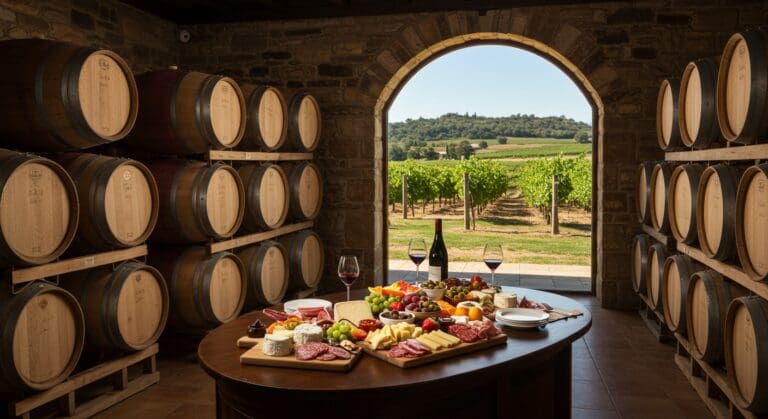
Soho produces no wine of its own, obviously, but it has quietly become one of London’s most concentrated patches of serious wine drinking. The area’s basement bars and narrow ground-floor rooms have embraced the natural wine movement with more enthusiasm than almost anywhere else in the city – expect cloudy Loire whites, lightly chilled Beaujolais, orange wines from small Italian and Georgian producers, and lists that change by the week because the importer only got six cases in.
What Soho lacks in vineyards it makes up for in expertise. Independent wine merchants here tend to be run by people who genuinely taste everything they sell, rather than simply racking what a distributor’s catalogue recommends. Prices reflect central London rents, which is to say they’re not gentle, but the quality of advice you’ll get pouring a glass at the bar is usually worth the premium. If you want a proper wine region, you’ll need to leave Soho – but if you want an evening of good wine drunk standing up in a room with twelve other people who clearly know what they’re doing, this is still one of the best places in the country to find it.
Cooking Classes and Food Experiences in Soho
Soho’s kitchens are generally too small and too busy to run formal cooking schools in the way a Tuscan farmhouse might, but informal food experiences are everywhere if you know where to look. Dim sum folding sessions and pasta-making workshops turn up seasonally around Chinatown and the Italian quarter respectively, often run from the back of a restaurant on a quiet afternoon. Wine tasting evenings are a Soho speciality in the loosest sense – less a formal course, more a knowledgeable bartender talking you through six glasses while you try not to look like you’re taking notes.
The best food experience in Soho, honestly, is simply walking it with an appetite and no fixed plan. Dip into a Chinatown bakery for an egg tart, cross two streets for an espresso that will make you reconsider every coffee you’ve had this year, and end up somewhere you didn’t plan to be, eating something you can’t quite name but will think about for weeks.
Seasonal Specialities in Soho
Chinese New Year, which falls in late January or February depending on the lunar calendar, transforms Chinatown entirely – lion dances in the street, special menus, and queues outside bakeries for celebratory pastries that only appear this one time of year. It’s worth planning around if you can; Soho rarely feels more alive.
Autumn brings truffle menus to the area’s smarter dining rooms, as white Alba truffles arrive from Italy and get shaved liberally over pasta and risotto at prices that climb with the season. Oyster season (traditionally the months containing an “r”) suits Soho’s seafood counters well, and come summer, several streets pedestrianise in the evenings, turning pavements into informal dining rooms where you can eat al fresco in a way that feels distinctly un-British, and all the better for it.
Best Food Experiences in Soho
If pressed to choose, I’d say the best Soho food day looks something like this: morning coffee and pastry at an old Italian counter, a wander through Berwick Street Market for fruit you’ll eat on the walk, dim sum for lunch around Gerrard Street, and an evening spent wine-bar hopping – three glasses, three rooms, three conversations with strangers who happen to be standing at the same bar. None of it requires a reservation six months out or a dress code. That, more than any single dish, is what Soho does better than almost anywhere else in London.
Anyone planning where to base themselves for all this should look at villas in Soho.
Soho Food and Wine FAQs
Is Berwick Street Market still worth visiting?
Yes, though it’s smaller than it once was. Fruit, veg and flower stalls still trade most weekdays, and it remains one of the few genuinely working street markets left in central London rather than a curated food experience aimed at visitors.
What is the best time of year to visit Soho for food?
Chinese New Year in late January or February brings special menus and street celebrations to Chinatown, while autumn is strong for truffle and game dishes. Summer evenings, when several streets pedestrianise for outdoor dining, are also particularly good.
Does Soho have its own wine region or local wine production?
No, Soho is an inner-London district with no vineyards of its own. Its reputation rests instead on a dense concentration of independent wine bars and merchants, particularly within the natural wine scene.
Where to stay
Villas in Soho
A selection from our 65 luxury villas in Soho.