Sonnenland Travel Guide: Hillside Sun, Views & Golf
Sonnenland is a hillside district of San Bartolomé de Tirajana, set above Maspalomas and Playa del Inglés on the south coast of Gran Canaria in the Canary Islands. It is known for its elevated sea views, calm residential streets, nearby golf courses and reliable sunshine, offering a quieter alternative to the resort strip below while keeping it within easy reach.
Sonnenland at a Glance
- Where: Hillside district of San Bartolomé de Tirajana, above Maspalomas, Gran Canaria, Canary Islands, Spain
- Nearest airport: Gran Canaria Airport (LPA), roughly 25-40 minutes by car depending on traffic
- Best time to visit: May to September for the warmest, driest beach weather; November to March for mild temperatures and plenty of sun with fewer crowds
- Getting around: A hire car is useful for the hillside streets; taxis and local buses link down to Maspalomas and Playa del Inglés
- Known for: Hillside sea views, year-round sunshine, golf courses, a quieter residential pace above the resort strip
- Ideal for: Couples, golfers, families wanting peace with beach access nearby, and anyone keen to avoid the busiest resort crowds
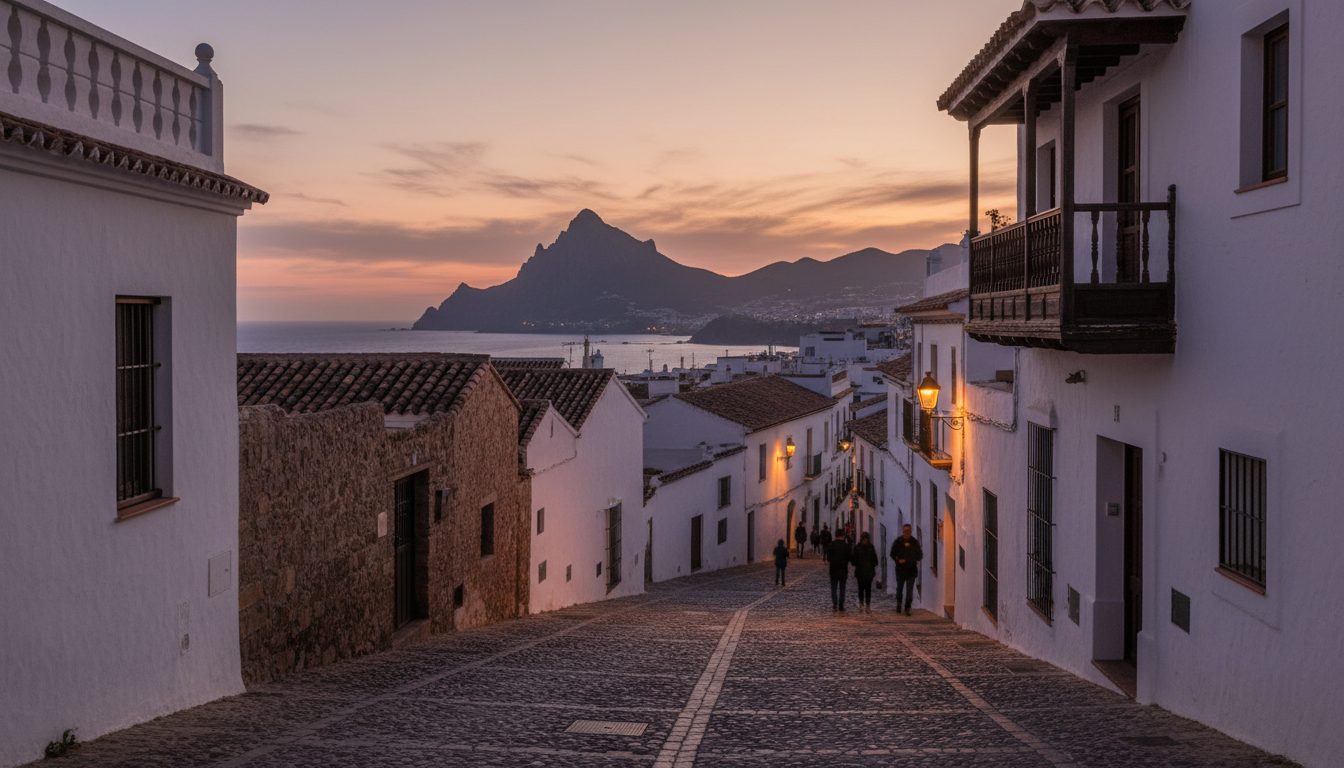
Most hillside developments promise a view and deliver a car park. Sonnenland is the rarer thing: a genuinely elevated perch above one of Europe’s most visited winter-sun resorts, where the gradient does the work that a thousand marketing brochures usually fail to achieve. From up here, the famous dunes of Maspalomas flatten into a pale smudge against the Atlantic, the resort lights twinkle without intruding, and the whole business of sunbathing and sangria continues quite happily several hundred metres below, leaving you to enjoy the view in relative peace.
This part of Gran Canaria suits couples after a quieter base, golfers drawn by the courses threaded through the hills, and families who want proximity to beaches without actually sleeping among the beach crowds. It works less well for anyone wanting nightlife on the doorstep or a car-free holiday, since the streets climb steeply and the liveliest bars and restaurants are mostly a short drive, or a committed walk, downhill.
Getting to Sonnenland: A Short Drive, A Longer View
Gran Canaria Airport is the only practical way in, and it is the sole airport on the island with international scheduled flights, connected to the south coast via the GC-1 motorway. The drive to Sonnenland covers around 31 km and takes anywhere from 25 to 40 minutes depending on traffic and exactly where you are headed within the district – local estimates range from a brisk 28 minutes to a more leisurely 35, which is about as precise as Spanish road traffic ever allows anyone to be.
There is no passenger railway on Gran Canaria, so ferries handle the island-hopping rather than any onward journey to Sonnenland itself. Las Palmas port in the island’s northeast is the main gateway for crossings to mainland Spain, Fuerteventura and Lanzarote, while the high-speed terminal at Agaete, on the northwest coast, runs Fred Olsen Express sailings to Santa Cruz de Tenerife seven or eight times daily in about an hour and twenty minutes, from €48.30. A weekly Baleària service even links Cádiz to Gran Canaria, though at 35 to 39 hours it is for committed slow-travel enthusiasts rather than anyone trying to reach a sunbed by Tuesday. For the ordinary Sonnenland visitor, these ferries are strictly for day trips and island-hopping – flying into LPA remains the only sensible route in.
Once here, a hire car earns its keep. The hillside streets were not designed with pedestrians in mind, and while taxis run reliably down to Maspalomas and Playa del Inglés, having your own wheels makes the golf courses, supermarkets and dinner reservations considerably less of a logistical exercise.
Where to Eat in Sonnenland: Views Over Volume
Fine Dining in Sonnenland
Sonnenland itself is largely residential, so the grander dining rooms with linen tablecloths and ambitious tasting menus tend to sit down the hill in Maspalomas and along the resort fringes, where hotel restaurants and independent chefs compete for the evening trade. What Sonnenland offers instead is a handful of restaurants built around their terraces, where the view of the coast at dusk does at least half the work that the kitchen is doing, and nobody seems to mind that arrangement in the slightest.
Where the Locals Eat
The more everyday eating happens in small neighbourhood bars and tapas spots scattered through Sonnenland’s streets, serving grilled fish, papas arrugadas with mojo sauce and the unfussy, generously portioned plates that locals actually eat rather than photograph. These places rarely bother with English menus or much ceremony, which is precisely their appeal. For a wider spread of markets and beach clubs, the short drive down to Maspalomas opens up considerably more choice.
Hidden Gems in Sonnenland
Ask a long-term resident rather than a hotel concierge and you will hear about the small family-run kitchens tucked into side streets, often with no sign to speak of, where the owner cooks what was fresh that morning and the wine list is whatever red happens to be open. These places change hands occasionally and rarely advertise, so the only real way to find them is to walk, order the dish of the day, and trust your instincts.
Exploring Sonnenland: The Lay of the Land
Sonnenland occupies the slopes rising inland from Maspalomas and Playa del Inglés, part of the wider municipality of San Bartolomé de Tirajana. The terrain is dry, volcanic and sun-baked, dotted with low scrub and the occasional palm, and the roads wind up and across the hillside in loops that reward anyone who bothers to stop and look back at the view rather than pressing on to the next junction. Below, the resort strip runs along the coast in a continuous ribbon of hotels and apartments, while above, the land climbs toward the interior of the island, where the landscape turns rockier and considerably less crowded.
What distinguishes Sonnenland from the beachfront towns below is simply altitude and air. The sea breeze reaches up the slope but loses some of its humidity along the way, and the views stretch out over the dunes, the ocean and, on a clear day, as far as the silhouette of Tenerife on the horizon. It is a landscape built for quiet mornings on a terrace rather than beach-towel territory wars, which tells you most of what you need to know about who chooses to stay here.
Things to Do in Sonnenland: Beyond the View
The dunes and beaches of Maspalomas sit only minutes away, and most visitors treat Sonnenland as a calm base from which to dip down for a day of sand and sea before retreating uphill in the evening. Beyond the beach, the district’s own appeal lies in its golf courses, its quiet walking routes and the simple pleasure of a terrace at sunset with a glass of something cold.
Day trips are easily arranged from here: the dunes themselves are worth an unhurried morning walk before the midday heat sets in, and the lively promenades of Playa del Inglés offer shopping, bars and the occasional spectacle that the resort is famous for. Inland excursions into the mountainous centre of Gran Canaria reward anyone willing to drive an hour or so, trading sea views for pine forests and volcanic craters that feel like an entirely different island.
Outdoor and Adventure Activities in Sonnenland: Golf, Walking and the Odd Steep Hill
Golf is Sonnenland’s signature outdoor pursuit, with courses woven through the surrounding hills offering fairways with sea views that occasionally distract even serious players from their swing. Walking is equally rewarding here, provided you accept the gradient as part of the exercise rather than an inconvenience – the quieter residential lanes make for genuinely pleasant early morning or late afternoon strolls once the worst of the heat has passed.
For anything more adrenaline-fuelled, the coast below delivers: windsurfing and kitesurfing off Maspalomas take advantage of reliable Atlantic breezes, while diving and boat trips can be arranged along the southern shoreline. Cyclists, too, use the hillside roads around Sonnenland as training ground, their thighs presumably thanking them considerably less than their Strava accounts do.
Sonnenland for Families: Quiet Streets, Beach a Short Drive Away
Families tend to find Sonnenland works well as a base precisely because it is not the resort strip itself – the streets are calmer, traffic is lighter, and evenings are considerably quieter for anyone with young children who need to sleep before 10pm. The trade-off is that the beach, and most of the organised children’s activities, sit a short drive downhill rather than on the doorstep.
For families with teenagers or older children, the independence of walking to shops and cafes within Sonnenland works reasonably well, while the beach clubs and water parks of Maspalomas and Playa del Inglés are easily reached for a full day out. Younger children benefit from the calmer pace and space to run around, though parents without a car may find the daily commute down to the sand becomes slightly wearing by the second week. Sun protection matters year-round here, given the near-constant sunshine, so pack accordingly regardless of season.
History and Culture of Sonnenland
Sonnenland’s story is a relatively modern one, built largely from the tourism boom that transformed this stretch of southern Gran Canaria from scrubby coastline into one of Europe’s most popular winter-sun destinations through the latter half of the twentieth century. The German name itself, meaning “sun land”, gives away the target market of those early decades rather plainly, and the district still carries a notably international character as a result, with long-term residents from across northern Europe alongside Spanish and Canarian neighbours.
Traditional Canarian culture is more visible down the hill and inland, in the older towns of San Bartolomé de Tirajana, where fiestas, church processions and local crafts still follow patterns older than any resort development. Sonnenland itself is less about historic architecture and more about the particular culture that sun-seekers, retirees and holidaymakers have built together over several decades – informal, international and entirely unbothered by anyone looking for grand monuments.
Shopping in Sonnenland
Shopping within Sonnenland itself is modest – a scattering of small supermarkets, bakeries and convenience stores catering to residents rather than souvenir hunters. For anything more substantial, the commercial centres of Maspalomas and Playa del Inglés offer considerably more choice, from fashion boutiques to the sprawling malls that the south coast is known for.
Worth bringing home, if you venture down the hill for it, is a bottle of Gran Canaria wine from the island’s small but increasingly respected vineyards, or a jar of local mojo sauce, which travels rather better in luggage than it sounds like it should. Canarian cheese, particularly from the island’s interior, also makes a reliable gift for anyone back home who takes their dairy seriously.
Where to Stay in Sonnenland
Sonnenland suits those who want quiet evenings and a view, rather than a room above a nightclub. The upper slopes, closer to the golf courses, offer the most peace and the longest views, making them a sound choice for couples and golfers who value a terrace over a nightlife strip. Lower down, nearer where Sonnenland meets the edges of Maspalomas, the walk to restaurants and shops becomes considerably more manageable, which suits families or anyone without a strong appetite for hill-walking after dinner.
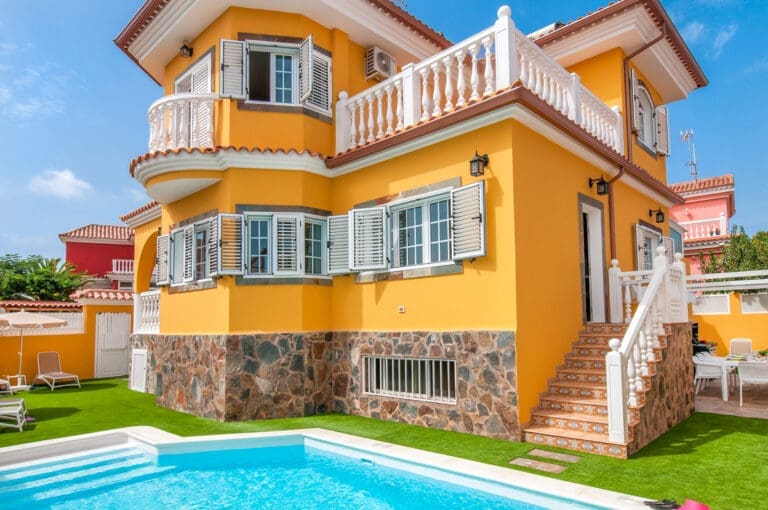
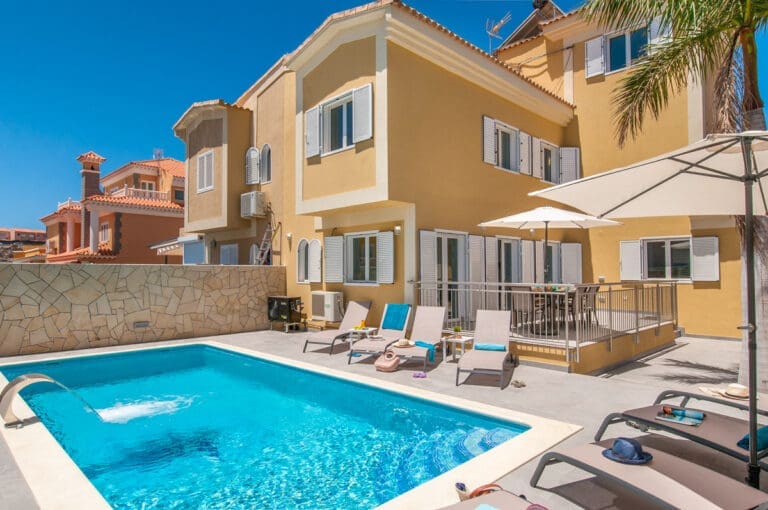
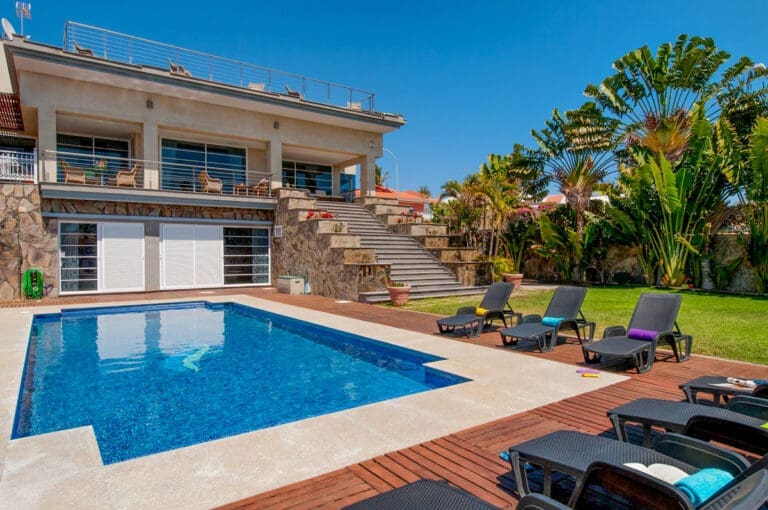
Wherever you choose within the district, having a car – or at least a reliable taxi app – makes the difference between a relaxed stay and a frustrating one, given the gradient and distances involved. For travellers wanting space, a private terrace and genuine quiet after dark, villas in Sonnenland are a good way to stay in the area.
Practical Tips for Visiting Sonnenland
Spain’s currency is the euro, and Spanish is the main language, though English and German are widely spoken throughout this part of Spain given the long history of northern European tourism here. Tipping is appreciated but not obligatory – rounding up or leaving ten percent for good service is standard rather than expected. Safety is generally good, with the usual precautions around valuables on beaches and in busy resort areas applying as they would anywhere.
Book golf tee times and popular restaurant terraces ahead during peak season, particularly over winter when northern Europeans arrive in numbers chasing the sun. A hire car is worth arranging before arrival rather than on the day, since demand at the airport can be high. Sunscreen, a hat and a reasonable tolerance for walking uphill will all serve you considerably better than any guidebook.
Sonnenland FAQs
What is the best time to visit Sonnenland?
May to September brings the warmest, driest weather for beach days, with temperatures climbing from around 22°C in May to 27°C in August. November to March stays mild and notably sunny, with over 300 sunny days a year across the region and fewer crowds, making Sonnenland a genuine year-round destination.
How do I get to Sonnenland?
Fly into Gran Canaria Airport (LPA), the island’s only airport with international scheduled flights, then drive via the GC-1 motorway. The journey covers around 31 km and typically takes 25 to 40 minutes depending on traffic.
What is Sonnenland known for?
Sonnenland is known for its hillside sea views above Maspalomas, its golf courses, reliable year-round sunshine and a quieter, more residential pace than the resort strip below.
How many days do you need in Sonnenland?
Three to five days suits most visitors well, allowing time to enjoy the views and golf locally while making day trips down to the beaches and resort towns. Longer stays of a week or more work well for golfers or those simply after rest.
Is Sonnenland good for families?
Yes, particularly for families wanting quieter evenings than the resort strip offers, though a car or regular taxi use is needed to reach the beaches and children’s activities down the hill in Maspalomas and Playa del Inglés.
Where is the best place to stay in Sonnenland?
The upper slopes near the golf courses suit couples and golfers seeking quiet and long views, while the lower edges closer to Maspalomas suit families and anyone wanting an easier walk to restaurants and shops.
Do you need a car in Sonnenland?
A car is strongly recommended given the hillside streets and distance to the beach and resort amenities below, though taxis and local buses provide a workable alternative for those without one.
Where to stay
Villas in Sonnenland
A selection from our 3 luxury villas in Sonnenland.