Best Time to Visit Viterbo: Thermal Baths & Santa Rosa Festival
The best time to visit Viterbo is spring (April to June) or early autumn (September and October), when daytime temperatures sit between 18-25°C (64-77°F) and the medieval streets are walkable without a sun hat welded to your head. July and August bring heat that can climb past 35°C (95°F) and empty the piazzas by mid-afternoon. Winter is mild and quiet, better suited to the thermal baths than long café sessions outdoors.
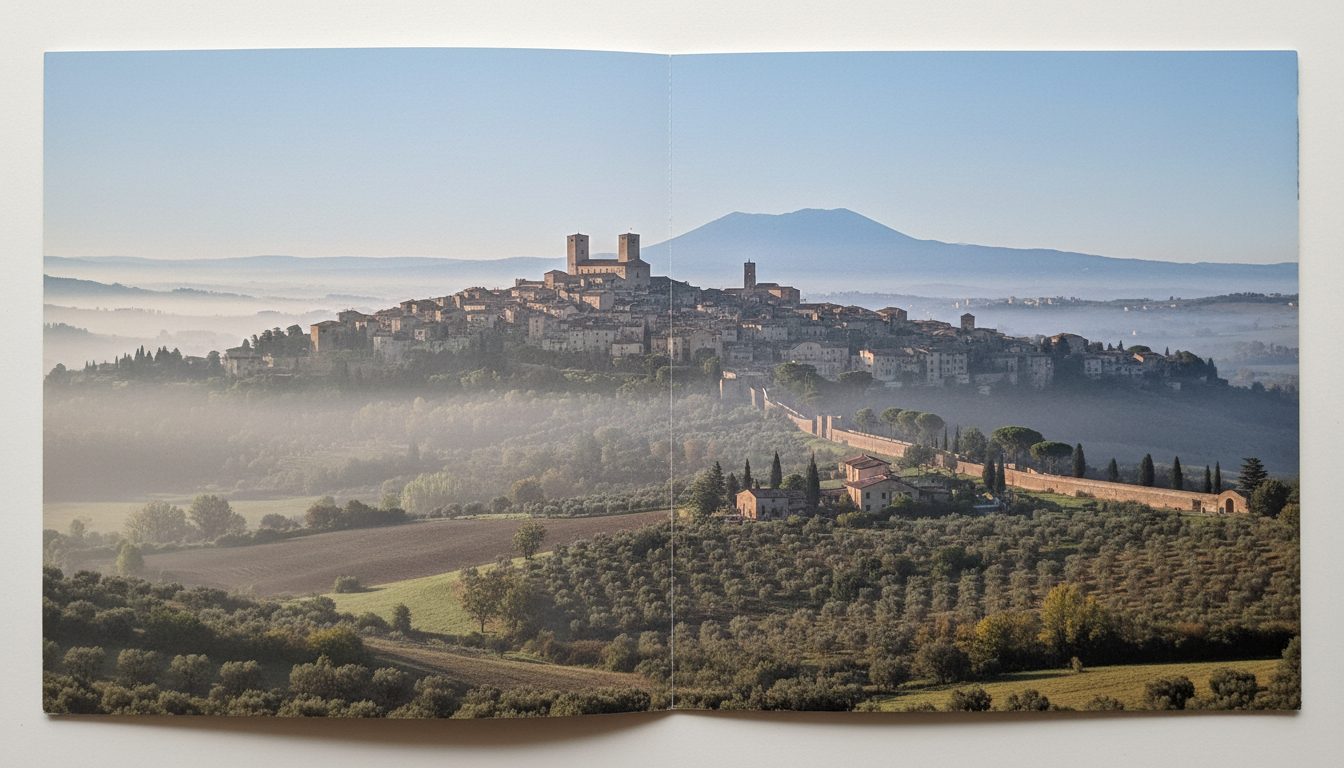
First-time visitors almost always make the same mistake: they plan Viterbo around someone else’s calendar. They book it as a day trip bolted onto a Rome itinerary, arriving at the hottest part of the day in August because that’s when the train was cheap, and then wonder why half the shutters are down and the only creatures moving are cats. Viterbo has its own rhythm, set by volcanic hills, a stubborn inland climate, and a festival calendar that has nothing to do with Rome’s. Get the timing right and you get a city of golden stone and quiet thermal steam. Get it wrong and you get a furnace with closed shops. The good news is that getting it right isn’t difficult, once you know what each season actually looks like here.
Best Time to Visit Viterbo: At a Glance
Spring and early autumn offer the gentlest weather and fullest calendar of things actually open. Summer is hot, dry and busy with Italian weekenders rather than foreign tourists. Winter is cold by Lazio standards but mild by most others, and this is when the Terme dei Papi thermal complex comes into its own, steam rising off the water while everyone else shivers at the edge. September 3rd, for the Macchina di Santa Rosa, is either the best or worst night to be in town, depending on whether you’ve booked ahead.
Spring in Viterbo: March to May
Spring is when Viterbo makes its best case for itself. By March the mornings are still sharp, averaging 7-13°C (45-55°F), but April and May settle into a reliable run of 14-22°C (57-72°F) with long dry spells and the occasional thundery afternoon that clears as quickly as it arrives. The volcanic countryside around the city turns a shade of green that photographs better than it has any right to, and the chestnut woods of the surrounding hills are in leaf rather than bare.
Crowds are moderate – enough to keep restaurants lively, not so many that you’re queuing for the Palazzo dei Papi. Prices sit below the summer peak. This is also the season when Viterbo’s Via Francigena pilgrim traffic picks up, so you’ll share the cobbled San Pellegrino quarter with walkers carrying scallop shells and the specific thousand-yard stare of someone who has just done thirty kilometres on foot. Spring suits travellers who want warmth without sweat, and who’d rather wander the medieval streets than fight for shade.
Summer in Viterbo: June to August
Summer in Viterbo is hot in the dry, stony way that inland Lazio does best – or worst, depending on your tolerance. June starts reasonably, around 22-28°C (72-82°F), but July and August regularly push past 32°C (90°F) and have been known to flirt with 38°C (100°F) in a bad heatwave. Nights offer little relief in the historic centre, where the tufa stone holds heat like a pizza oven holds, well, heat.
This is peak season for domestic Italian tourism rather than international crowds – Viterbo doesn’t get the coach-tour treatment that Rome or Florence endure, which is part of its appeal, but it does mean August brings the traditional Italian August shutdown: some family-run shops and trattorias close for a week or two around Ferragosto (15 August), regardless of how many visitors are standing outside looking disappointed. Prices rise modestly for accommodation, though nowhere near resort-town levels. Summer suits early risers who’ll do their sightseeing before 10am, retreat indoors through the worst of the afternoon, and re-emerge for a late dinner once the stone has stopped radiating heat back at them.
Autumn in Viterbo: September to November
September is arguably the single best month to visit Viterbo, and not only because the heat finally breaks into a civilised 18-26°C (64-79°F). On the 3rd of September, the city stages the Macchina di Santa Rosa – a nine-metre illuminated tower carried through the darkened streets on the shoulders of around a hundred facchini, a UNESCO-recognised tradition that has been running for centuries and draws Viterbesi back from wherever they’ve scattered to. It is genuinely one of the more remarkable things you can witness in central Italy, and also the one night of the year when you should have booked your room months in advance.
October cools further, into the mid-teens to low twenties, and brings chestnut season to the surrounding hills, with local sagre (food festivals) celebrating the harvest in towns around the Monti Cimini. By November the weather turns properly autumnal – cooler, greyer, occasionally wet – and the crowds thin to almost nothing. Autumn suits travellers who want the drama of a genuine local festival alongside the practical comforts of mild weather and reasonable prices, provided they avoid the rookie error of turning up on September 3rd without a bed booked.
Winter in Viterbo: December to February
Winter here is cold rather than brutal – typically 3-10°C (37-50°F), with occasional frost and grey skies but rarely snow in the city itself, though the higher ground nearby sometimes gets a dusting. This is when Viterbo empties of visitors almost entirely, which has its own particular charm: you can stand in an empty Piazza San Lorenzo and actually hear the fountain.
It’s also, counterintuitively, when the city’s biggest attraction makes the most sense. The Terme dei Papi thermal baths, fed by the same sulphurous springs the popes once used, are considerably more appealing when steam is rising off 40°C water into cold air than when you’re already sweating in August. Expect shorter opening hours at some minor sights, a handful of restaurants closing for their own winter break, and hotel prices at their lowest point of the year. Winter suits travellers chasing quiet streets, thermal water and a version of Viterbo that feels closer to how its own residents experience it.
Viterbo Shoulder Season: Why It Works
The shoulder months – April, May, September and October – consistently come up as the answer to “when is the best time to visit Viterbo”, and for good reason. You get comfortable daytime temperatures without the summer’s oppressive heat, accommodation prices that haven’t yet hit peak, and a city that’s lively without being overwhelmed. Restaurants, museums and the Palazzo dei Papi all run full hours, local festivals and sagre are more likely to be running, and the surrounding countryside – vineyards, chestnut woods, the volcanic hills – is at its most photogenic. If you can only pick one window, this is it.
The Case for Off-Season Viterbo
There’s a quieter argument for visiting in deep winter, when almost nobody else bothers. Prices drop, the streets belong to locals rather than visitors, and the thermal baths – Viterbo’s genuine specialty – are at their most enjoyable precisely because the air around them is cold. You’ll trade long golden evenings for shorter grey days, and a few shops will have their shutters down, but you’ll also get a version of the city that feels unperformed. For travellers who’ve already done the obvious Italian hill towns in high season and fancy something closer to how these places actually function day to day, off-season Viterbo delivers that in full. For more on what to do once you’re there, the Viterbo Travel Guide covers the rest of the city beyond its weather.
Whichever season you choose, it’s worth deciding where to base yourself before the dates lock in: villas in Viterbo.
Viterbo Weather and Seasons FAQs
Is Viterbo hotter than Rome?
Viterbo sits inland and slightly higher than Rome, which gives it marginally cooler evenings in summer but similarly intense daytime heat in July and August. Winters in Viterbo tend to run a touch colder than the capital, partly due to its elevation and distance from the coast.
How many days do you need in Viterbo?
Two to three days is enough to see the medieval San Pellegrino quarter, the Palazzo dei Papi and the Terme dei Papi thermal baths at an unhurried pace, with time left over for a day trip into the surrounding Monti Cimini countryside.
Does it rain a lot in Viterbo?
Rainfall is concentrated in autumn and winter, roughly October through February, with short sharp showers more common than prolonged wet spells. Summers are reliably dry, often with weeks passing without significant rain.
Keep reading
More on Viterbo
Guides nearby in Lazio
Where to stay
Villas in Viterbo
A selection from our 27 luxury villas in Viterbo.