Best Time to Visit West Sussex: Goodwood & Bluebell Woods
The best time to visit West Sussex is May to June or September, when temperatures sit comfortably between 15-20°C (59-68°F), crowds thin out after or before the summer peak, and the South Downs and coastal towns are at their most workable. July and August bring the warmest weather and the busiest roads, particularly around Goodwood event dates, while winter offers low prices and genuine quiet at the cost of shorter days and wetter skies.
Nowhere else in England manages quite this combination: a racehorse gallops past a Regency theatre, a Norman castle, a Roman cathedral and a stretch of chalk downland, all within a county you could drive across in under two hours. Cornwall has the coast. The Cotswolds have the honey-stone villages. West Sussex has the oddly satisfying habit of having a bit of everything and never quite shouting about it – which is, frankly, its charm.
Working out the best time to visit West Sussex depends rather a lot on what you’re after. A sunny walk along the South Downs Way wants different weather to an afternoon at Chichester Harbour watching dinghies argue with the tide. This guide breaks the county down month by month and season by season, with honest notes on what you’ll gain and what you’ll give up at each point in the year. For the wider picture, the West Sussex Travel Guide covers the rest.
Best Time to Visit West Sussex at a Glance
Warmest and busiest: July-August. Best balance of weather and crowds: May-June and September. Cheapest and quietest: November-February, bar Christmas week. Wettest months: October-January. Driest and most reliable: April-June. Event-heavy weekends to plan around (or embrace): Goodwood Festival of Speed in July, Glorious Goodwood in late July/early August, and Goodwood Revival in September.
West Sussex Weather by Season
Spring in West Sussex: March to May
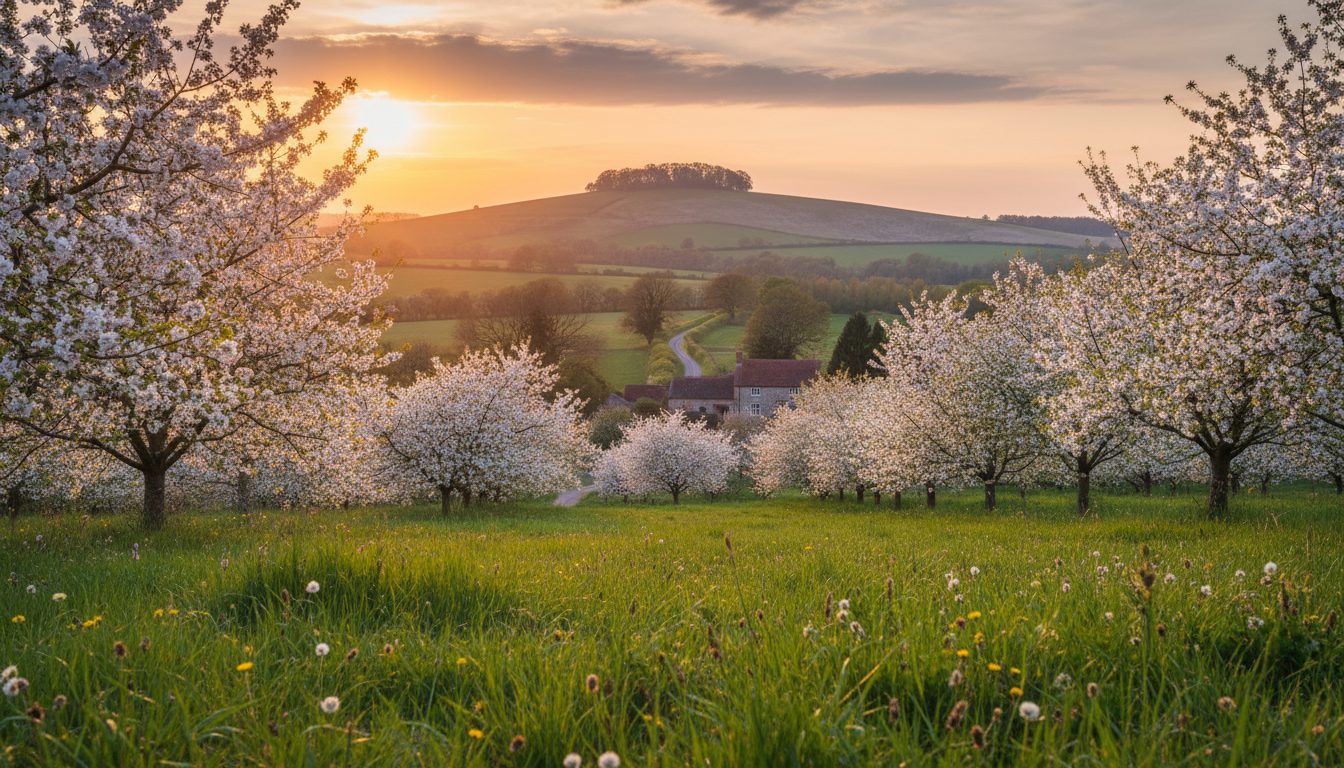
Spring arrives in West Sussex rather shyly. March can still feel like winter’s leftovers, with temperatures of 7-12°C (45-54°F) and a wind off the Channel that finds every gap in your coat. By April things brighten – 9-14°C (48-57°F) – and the South Downs begin their slow green-up. May is the real pay-off: 11-17°C (52-63°F), longer daylight, and the bluebell woods around the Downs at their best, usually peaking in the last two weeks of the month depending on how the winter behaved.
Crowds are modest outside Easter week and the bluebell weekends, when the better-known woodland spots fill with people photographing flowers at close range and getting mildly tetchy with each other over tripod space. Chichester Festival Theatre’s season typically begins in May, and garden properties across the county reopen after winter hours. Rain is a genuine possibility most weeks, so pack for it rather than hope against it.
Summer in West Sussex: June to August
June is arguably the best-kept secret of the West Sussex calendar – 14-20°C (57-68°F), long evenings, hedgerows at their fullest, and none of the July scrum. July and August bring the warmest weather of the year, 17-23°C (63-73°F) with occasional hotter spells, and with it the busiest roads, the fullest car parks at Arundel and the highest accommodation prices anywhere in the county.
This is also peak event season. The Goodwood Festival of Speed in early July draws serious crowds (and serious traffic on the A286 – allow for it). Glorious Goodwood, the horse racing meeting at the end of July into early August, does something similar to the A285 and A27. Arundel Festival usually runs in August, filling the town with music and arts events. If motorsport, racing and festival energy are your reason for coming, summer is unambiguously the best time to visit West Sussex. If you’d rather have a Downs footpath to yourself, it isn’t.
Autumn in West Sussex: September to November
September is quietly one of the finest months here – 13-19°C (55-66°F), the sea at Bognor and Littlehampton still swimmable for the brave, and the crowds of August gone home to think about school terms. Goodwood Revival, the vintage motorsport weekend, usually lands in September and brings its own cheerfully eccentric crowd dressed as though rationing never ended.
October drops to 10-15°C (50-59°F) with noticeably shorter days and the first proper rain of the autumn, while November settles into 6-11°C (43-52°F), grey skies, and a county that has largely gone back to its own business. Woodland colour on the Downs peaks in late October, worth the gamble on weather. Prices ease from October onward, and this is a genuinely good stretch for anyone who wants West Sussex without the performance.
Winter in West Sussex: December to February
Winter here is rarely dramatic – snow is the exception, not the rule – but it is properly cold and often damp, with temperatures of 4-9°C (39-48°F) and short days that shut the light off by 4.30pm in December. Chichester and Arundel both put on Christmas markets and light trails in December, which bring a brief flurry of weekend visitors, but January and February are as quiet as the county gets. Some smaller attractions and seasonal cafés close or reduce hours over this period, so check before you plan a day around them.
What winter offers in return is space: empty beaches at Climping and West Wittering, footpaths with nobody on them, and the lowest prices of the year. It suits travellers who want weather with character and don’t need the Downs to be sunlit to enjoy them.
Best Time to Visit West Sussex by Traveller Type
Families with school-age children are tied to the summer holidays whether they like the car-park queues or not, so July-August it is, with the consolation of warm sea water and long evenings. Walkers and cyclists get the best conditions in May, June and September, when temperatures suit effort and the mud of winter has dried out. Racing and motorsport fans should build their trip around the Goodwood calendar directly, since those dates dictate accommodation availability and road traffic for a wide radius regardless of the season. Anyone chasing a quiet, contemplative version of the county – long lunches, empty harbours, a slower pace – should look at September, early October, or the depths of winter, when West Sussex stops performing for visitors and simply gets on with itself.
Shoulder Season in West Sussex: The Case for May, June and September
If there’s a single answer to the best time to visit West Sussex, it’s probably this trio of months. Weather is reliably mild, daylight is generous, gardens and woodland are at their best, and you’re not competing with peak-season crowds or peak-season prices for a table or a parking space. Chichester Festival Theatre is in full swing by June, the coast is warming up without yet being crowded, and the Downs are green rather than parched. The only real downside is that the weather, while good, is not guaranteed – this is still England, and a fine May can turn on you without warning.
Off-Season West Sussex: Why Winter Still Works
The case for visiting West Sussex in winter rests on honesty rather than romance. Days are short, the sea is uninviting, and some attractions keep reduced hours. But prices drop meaningfully, roads clear, and the county’s genuine texture – its churches, its market towns, its harbour at low tide under a flat grey sky – comes through without a queue in front of it. It won’t suit everyone. It suits the traveller who finds a crowded beach more tiring than a cold one.
Whatever month you choose, the practical next step is sorting out where to stay, and villas in West Sussex are worth a look.
West Sussex Weather and Seasons FAQs
What is the rainiest month in West Sussex?
October through January tend to bring the most rainfall, with November and December typically the wettest. Spring and early summer, particularly April through June, are comparatively drier, though no month in West Sussex is entirely rain-free.
Is West Sussex warmer than the rest of England?
Slightly, yes. Its south-facing coastal position and the moderating effect of the Channel give it marginally milder winters and warmer summers than much of inland England, though the difference is a matter of a degree or two rather than a different climate altogether.
Do I need to book around the Goodwood events?
If you’re visiting during the Festival of Speed in July, Glorious Goodwood in late July or early August, or Goodwood Revival in September, book well ahead. These dates significantly affect accommodation availability and road traffic across a wide area of the county, whether or not you’re attending.
Keep reading
More on West Sussex
- Travel guideWest Sussex Travel Guide
- RestaurantsBest Restaurants in West Sussex
- Food & wineWest Sussex Food & Wine Guide
- FamiliesWest Sussex with Kids
Guides nearby in South East
Where to stay
Villas in West Sussex
A selection from our 109 luxury villas in West Sussex.