
Adeje with Kids: Water Parks, Golden Beaches & Year-Round Sun
Adeje, on the southern coast of Tenerife, is a well-established family holiday destination thanks to its calm, shallow beaches, mild year-round climate and concentration of water parks and watersports within a short walk or drive. The resort area of Costa Adeje has flat promenades, shallow swimming coves and a high density of family-friendly restaurants, making it suitable for toddlers through to restless teenagers. Most attractions, beaches and eating options are within a fifteen-minute drive of each other, and Tenerife South airport is close by.
So does Adeje actually deliver on the promise of a stress-free family holiday, or is that just something written by people who have never queued for a sun lounger at 7am? Having done exactly that, more than once, I can report the answer is mostly yes – with a few honest caveats along the way.
Adeje sits on the southern tip of Tenerife, in the part of the island that gets the least rain and the most sunshine, which is precisely why it was developed into a resort in the first place. The result is Costa Adeje, a purpose-built stretch of hotels, promenades and beaches that was clearly designed by someone who had, at some point, tried to carry a beach bag, a toddler and an inflatable flamingo across hot volcanic sand and vowed never again. The beaches here are calm, the walkways are flat, and almost everything a family might need – pharmacies, ice cream, sun hats you didn’t pack – is within pram-pushing distance. For the wider context on when to visit and how the area fits together, the Adeje Travel Guide covers the bigger picture; this one sticks strictly to the under-eighteens.
Is Adeje Good for Families?
Adeje works for families for reasons that are mostly practical rather than glamorous. The climate is the headline act: temperatures hover in the low-to-mid twenties even in winter, so you are rarely gambling an entire holiday on one week of weather. The sea, protected by breakwaters along the main resort beaches, tends to be gentle rather than the thrilling but terrifying surf you find elsewhere on the island. Pavements are wide and largely flat, which matters enormously when you are managing a buggy, a scooter and a child who has decided walking is now, suddenly, impossible.
It is not a quiet, undiscovered corner of Spain, and anyone expecting rustic charm will be disappointed – this is resort Tenerife, built for comfort and convenience rather than authenticity. But for a first family trip abroad, or a holiday with very young children, that trade-off is usually the point. Everything is close together, English is widely spoken, and the infrastructure for prams, high chairs and early dinners is well established.
Best Family Beaches in Adeje
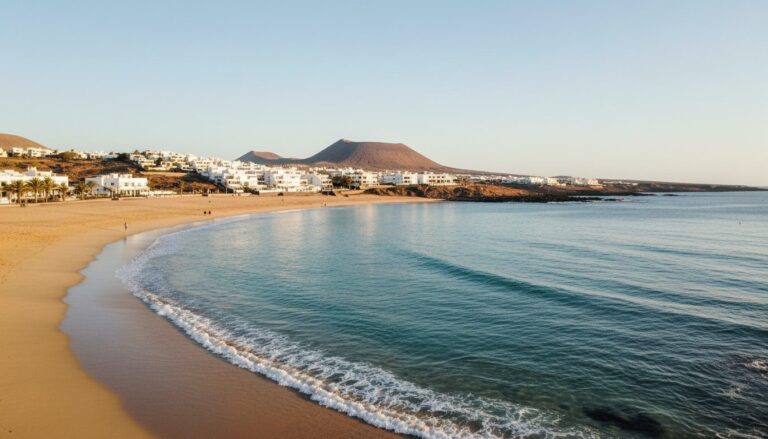
The main resort beaches of Costa Adeje were built, essentially, with families in mind. Playa del Duque, at the northern end, has fine imported sand and calm, shallow water protected by rock breakwaters, along with a promenade lined with loungers, cafés and enough shade structures to keep a reluctant toddler from staging a protest. It is the smartest of the resort beaches and also the busiest in high season, so arrive early if you want a spot near the water rather than near the car park.
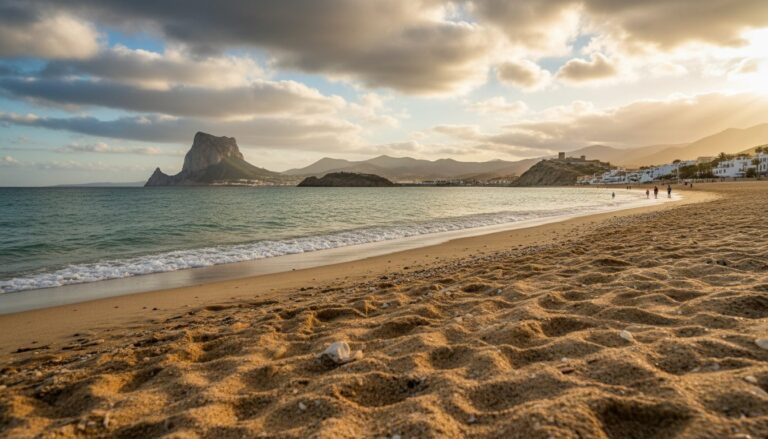
Playa de Fañabé and Playa de Torviscas, further along the same stretch, are slightly more low-key and just as suitable for small children, with gently shelving entry points and lifeguard cover in season. None of these are Tenerife’s dramatic black-sand beaches – those are mostly further north around the old town – so if volcanic drama is what you are after, you will need a day trip. For paddling, sandcastle engineering and the simple pleasure of not watching your child get dragged under by a rip current, Adeje’s beaches do the job well.
Things to Do in Adeje with Kids
Adeje’s biggest family draw, quite literally, is its water parks. One large Thai-themed park in the hills above the resort has become something of a rite of passage for visiting families, with a wave pool, a lazy river and a genuinely enormous slide that older children will beg to go on and parents will privately hope closes early. A second, longer-established water park nearby is slightly gentler and better suited to younger children, with more modest slides and a calmer, less theatrical atmosphere.
Down at the harbour in Puerto Colón, glass-bottomed boat trips and whale and dolphin watching excursions depart regularly, and are a reliable way to entertain children who have grown bored of sand. Submarine tours, giving a close look at the volcanic seabed without anyone needing to actually get wet, are also popular with slightly older children who are fascinated by anything involving a periscope. For a change of scene, Mount Teide and its national park are around 45 minutes’ drive inland – a genuinely different landscape of lava fields and high-altitude silence that makes a striking contrast to the beach below.
Child-Friendly Restaurants in Adeje
Adeje, and Costa Adeje in particular, is well used to feeding children, which means high chairs, kids’ menus and an admirable lack of judgement when a four-year-old orders chips three nights running. Along the harbour at Puerto Colón and the promenades near the main beaches, you will find a dense run of tapas bars and seafood restaurants with outdoor seating, happy to serve early dinners well before the Spanish would normally consider eating. Beachfront chiringuitos – casual, open-air places right on the sand – are particularly good for lunch, serving simple grilled fish, papas arrugadas (the local wrinkled potatoes served with mojo sauce) and ice cream, all without anyone minding sandy feet under the table.
For a slightly calmer evening, the pedestrian streets just back from the seafront have a good spread of pizza and pasta places, which remain the reliable fallback of international family travel the world over. Portions tend to be generous, service is fast rather than leisurely, and nobody will raise an eyebrow at a bedtime of 7.30pm.
Rainy-Day Things to Do in Adeje
Genuine rainy days are rare in this part of Tenerife, which is precisely why the area was developed as a resort in the first place – but cloudy, cooler spells do occur, usually brought in on the trade winds rather than actual rain. When they do, the water parks remain a surprisingly good option, since heated pools and covered areas mean the weather matters less than you’d think. Shopping centres near the main beaches offer air-conditioned relief, along with cinemas, arcades and the kind of indoor play areas that buy parents a coffee in peace.
A day trip up to Mount Teide is also a sound option if the coast is overcast, since cloud cover often sits below the summit, leaving clear skies above it – one of those oddities of volcanic geography that makes for a memorable, if chilly, family outing.
Adeje with Kids by Age
Toddlers in Adeje
For the very youngest, Adeje’s main appeal is its shallow, calm beaches and flat, buggy-friendly promenades. Shade is worth planning around, since the sun here is considerably stronger than its latitude suggests – something to do with the subtropical position and clean Atlantic air, and something every sunburnt parent learns the hard way, usually on day two. Splash pools at the gentler of the two water parks suit toddlers well, and most restaurants are entirely unfazed by high chairs, early sittings and the occasional dropped plate.
Juniors in Adeje
School-age children are, frankly, spoiled for choice here. The water parks are the obvious highlight, but boat trips, mini-golf and bicycle hire along the seafront promenade all fill days easily. This is also a good age for the glass-bottomed boat trips, which hold attention far longer than a standard beach afternoon and come with the added thrill of spotting a turtle, if you are lucky.
Teens in Adeje
Older children and teenagers tend to gravitate toward watersports – jet skiing, parasailing and paddleboarding are all available along the main beaches, and surf lessons can be arranged on the island’s more exposed coasts for those keen to try. Adeje itself is a family resort rather than a nightlife destination, which teenagers may find mildly disappointing and parents will find entirely fine.
Getting Around Adeje with Children
Costa Adeje itself is easily walkable, with flat promenades connecting most beaches, restaurants and attractions, so a buggy and a decent pair of shoes will get you a long way without needing transport at all. For trips further afield – Mount Teide, other parts of the island, or simply avoiding a long walk back in the midday heat – a hire car is the most practical option, and child seats can usually be arranged in advance. Local buses run between resorts and are inexpensive, though timetables are not always built around nap schedules. Taxis are plentiful and reasonably priced for shorter hops, particularly useful on days when small legs have simply had enough. Tenerife South airport is a short drive from Adeje, which makes arrival and departure days considerably less fraught than on islands with longer transfers.
If you are now working out where to base yourselves for all this, the practical next step is looking at villas in Adeje.
Adeje Family Holiday FAQs
Is Adeje suitable for a family holiday with toddlers?
Yes. The main beaches have calm, shallow water and flat promenades suited to buggies, and restaurants are well used to early dinners and high chairs. Sun protection is important given the strength of the subtropical sun.
What is the best time of year to visit Adeje with children?
Adeje has a mild climate year-round, so school holidays in winter, Easter and summer all work well. Summer is busiest and hottest, while spring and autumn offer warm weather with smaller crowds.
Do you need a car in Adeje with kids?
Not within Costa Adeje itself, since beaches, restaurants and attractions are walkable. A car becomes useful for day trips to Mount Teide or other parts of the island beyond the resort area.
Keep reading
More on Adeje
Guides nearby in Santa Cruz de Tenerife
Where to stay
Villas in Adeje
A selection from our 38 luxury villas in Adeje.
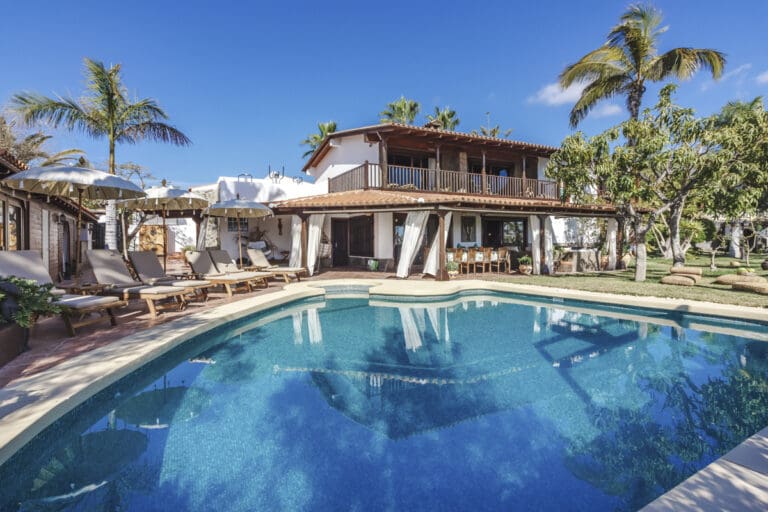 Finca Cillian Spain
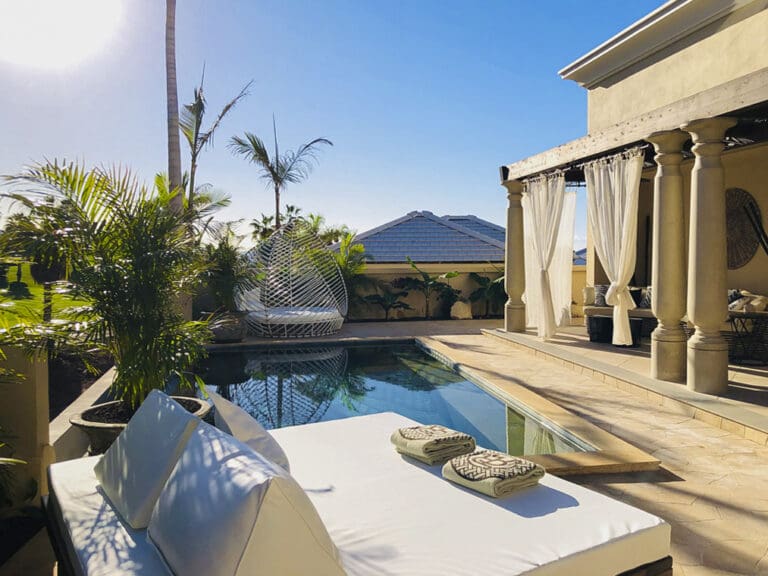 Paradiso Royal Spain
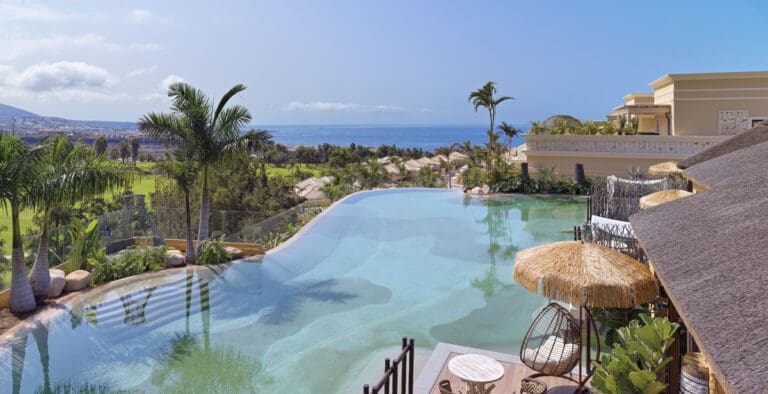 Laguna Royal 2 Spain
 Villa Jaid Tenerife Spain
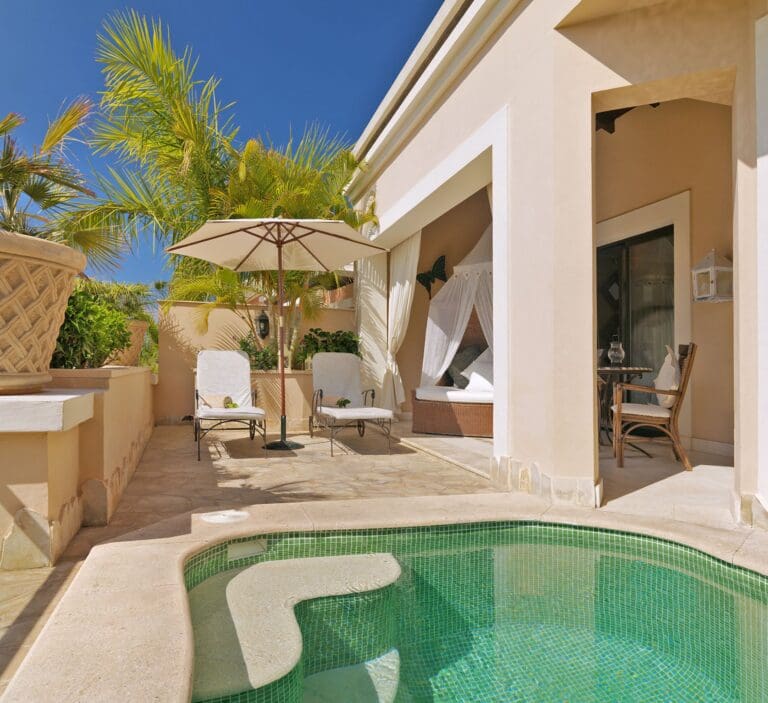 Duchess Villa Spain
 Majestic Villa Spain
See all 38 villas in AdejeVillas across Santa Cruz de Tenerife