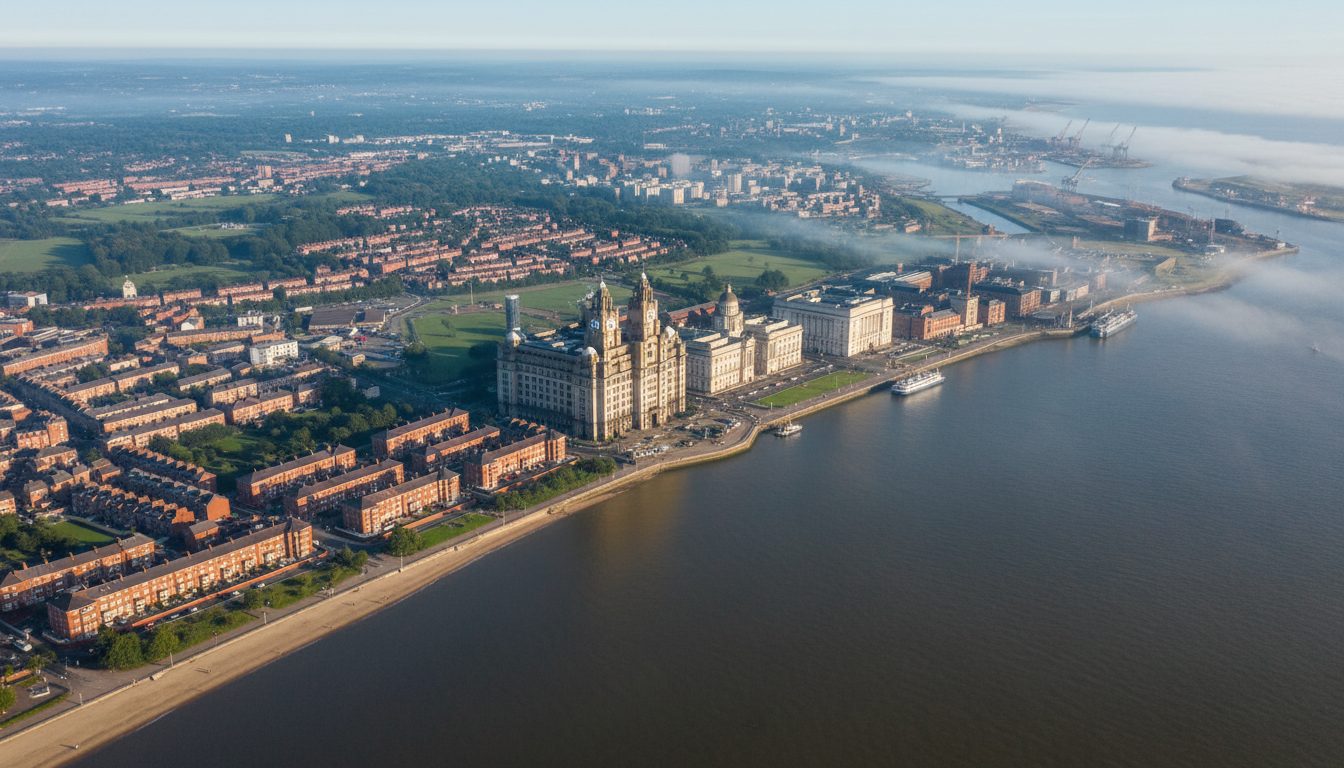
Best Time to Visit Merseyside: Beatles, Ferries & Aintree
The best time to visit Merseyside is May to September, when daytime temperatures reach 17-21°C (63-70°F) and rainfall is at its lowest. May and September offer the best balance of mild weather, lighter crowds and lower prices, while July and August bring the busiest streets, the Grand National crowds have long gone, and winter (December to February) offers the cheapest stays with real festive atmosphere but short days and cold winds off the Mersey.
Here is the fact that every guidebook somehow skips: Merseyside, sitting right on the Irish Sea, gets less annual rainfall than Manchester, twenty-odd miles up the road. Nobody who has ever stood at a bus stop on Liverpool’s Lord Street in a horizontal drizzle quite believes this, but the numbers don’t lie. The estuary does strange and useful things to the weather here – it moderates the cold in winter and, occasionally, produces a genuinely pleasant July. Planning the best time to visit Merseyside is less about dodging rain entirely (this is still the north-west of England) and more about picking your moment with the local climate’s quirks in mind. For the fuller picture of the region, the Merseyside Travel Guide covers where to go once you’ve worked out when.
Best Time to Visit Merseyside: Season by Season Overview
Spring and early autumn are the sweet spots – mild, reasonably dry, and free of the summer scrum around Albert Dock. Summer is warmest and busiest, with the longest daylight hours of the year stretching evenings along the waterfront. Winter is cold, often grey, and genuinely cheap, with a festive Liverpool and Southport that few visitors bother to see. There is no single wrong time to come, only trade-offs between weather, price and crowd tolerance – which, frankly, is true of most of Britain.
Spring in Merseyside: March to May
Spring arrives in Merseyside in fits and starts, as it does everywhere in Britain, but by April the daffodils in Sefton Park are in full show and the light stretches noticeably further into the evening. Average highs climb from around 10°C (50°F) in March to 15°C (59°F) by May, with lows rarely dropping below 4°C (39°F). Rainfall is moderate and showers tend to pass quickly rather than settle in for the day.
This is Grand National season – the famous steeplechase at Aintree Racecourse takes over the region’s hotels and taxis for several days in early April, so book well ahead if you want to be anywhere near Liverpool that week, or avoid it entirely if you’d rather not share the city with several thousand people in fascinator hats. Outside of race week, spring is wonderfully uncrowded. Museums and the Albert Dock attractions are fully open, outdoor cafes start setting out tables again, and prices sit comfortably below summer peaks. Spring suits travellers who want decent weather without the queues – families with school-age children aside, since term time keeps things quieter still.
Summer in Merseyside: June to August
Summer is Merseyside at its most sociable. Temperatures average 18-21°C (64-70°F), occasionally pushing into the mid-twenties during a proper heatwave, which happens perhaps once a summer and causes mild regional panic. Daylight lingers until nearly 10pm in June, which does wonders for a long evening along the waterfront.
This is also peak season for events: Africa Oyé, Europe’s largest free celebration of African and Caribbean music, fills Sefton Park with dancing in June, and the Southport Flower Show brings horticultural crowds (and surprisingly serious rosette competition) to the coast in August. Liverpool’s music festivals and outdoor concerts cluster here too. Expect higher hotel rates, busier ferries across the Mersey, and queues for the more popular museums – the Beatles-related sites in particular get lively. Rain still happens; this is still England. Pack a layer regardless of what the forecast promises. Summer suits first-time visitors who want the fullest version of Merseyside – busy, bright and occasionally a little overwhelming – and families making the most of school holidays.
Autumn in Merseyside: September to November
September is arguably the best month of the year to visit, and the one most frequently overlooked. Temperatures hold at a pleasant 14-18°C (57-64°F), the summer crowds have gone home, children are back at school, and the light turns genuinely flattering across the Liver Building’s waterfront. By October, highs drop to around 13°C (55°F) and the rain becomes a more regular visitor; by November it’s closer to 9°C (48°F) with shorter, often damp days.
Prices fall noticeably after the August bank holiday and keep falling through to winter. Most major attractions stay open on their regular schedules, though some seasonal outdoor offerings wind down by late October. Autumn suits travellers who prioritise value and calm over guaranteed sunshine, and anyone who’d rather photograph the docks without forty other people in the frame.
Winter in Merseyside: December to February
Winter here is cold rather than brutal – the Irish Sea keeps the worst of it at bay, so snow is the exception rather than the rule. Daytime highs hover around 7-8°C (45-46°F), dropping close to freezing overnight, and daylight is thin, with sunset before 4pm at the solstice. Wind off the Mersey is the main discomfort; bring a coat that means business.
December brings Christmas lights and markets to Liverpool city centre and Southport’s Lord Street, along with a genuinely warm (if chilly) festive atmosphere that contrasts nicely with the quiet of January and February, Merseyside’s lowest season for visitor numbers. Hotel rates drop to their lowest point of the year outside of Christmas week itself, museums remain open, and many of the city’s best indoor attractions – galleries, the Beatles story exhibits, the big museums along the waterfront – are at their emptiest and most enjoyable. Winter suits budget-conscious travellers, photographers who like moody skies, and anyone with a low tolerance for crowds and a high tolerance for drizzle.
Shoulder Season in Merseyside: The Smart Traveller’s Choice
If there’s a single answer to the best time to visit Merseyside for most people, it’s late May, June, or September. These shoulder months deliver the bulk of summer’s good weather and open attractions without the peak-season prices or the queues that build up around the big sites in July and August. Hotel and travel costs sit well below the summer peak, restaurants are easier to get into without booking weeks ahead, and the city feels like it’s being used by people who live there rather than overrun by people who don’t. Ferries run their full timetable, football season is either just starting or winding down depending on the month, and the weather is reliable enough to make outdoor plans without a constant backup scheme. This is the window seasoned travellers quietly favour, and for good reason.
Merseyside Off-Season: The Case for Visiting in Winter
There’s an honest argument for visiting Merseyside in the depths of winter, beyond simply saving money. The region’s museums and galleries – many free to enter – are built for indoor days, and a wet Tuesday in January is precisely when you’ll have the Walker Art Gallery or the Maritime Museum largely to yourself. Liverpool’s famously lively pub and live-music scene doesn’t pause for the season, and in some ways it feels more authentically itself once the summer visitors have thinned out. The trade-off is obvious: short days, grey skies more often than not, and a wind coming off the estuary that will find every gap in your coat. If you’re after atmosphere over sunshine, and a city behaving as it does the other eleven months of the year, winter delivers it at a fraction of the cost.
For travellers weighing up when to go against where to stay, it’s worth browsing villas in Merseyside once you’ve settled on your season.
Merseyside Weather and Seasons FAQs
Does it rain a lot in Merseyside?
Merseyside gets a moderate amount of rain by British standards – less, in fact, than Manchester or much of inland Lancashire, thanks to its coastal position. Showers are common year-round but tend to be short rather than prolonged, with autumn and winter the wettest periods.
What is the warmest month in Merseyside?
July is typically the warmest month, with average highs around 20-21°C (68-70°F), though genuinely hot days above 25°C (77°F) are infrequent and treated as minor local events when they occur.
Is Merseyside worth visiting in winter?
Yes, particularly for indoor attractions like the region’s museums and galleries, Christmas markets, and lower prices on accommodation and flights. Expect cold temperatures around 7-8°C (45-46°F), short daylight hours, and a real chance of wind and rain, but none of the crowds that fill the city in summer.
Keep reading
More on Merseyside
Guides nearby in Liverpool
Where to stay
Villas in Merseyside
A selection from our 3 luxury villas in Merseyside.