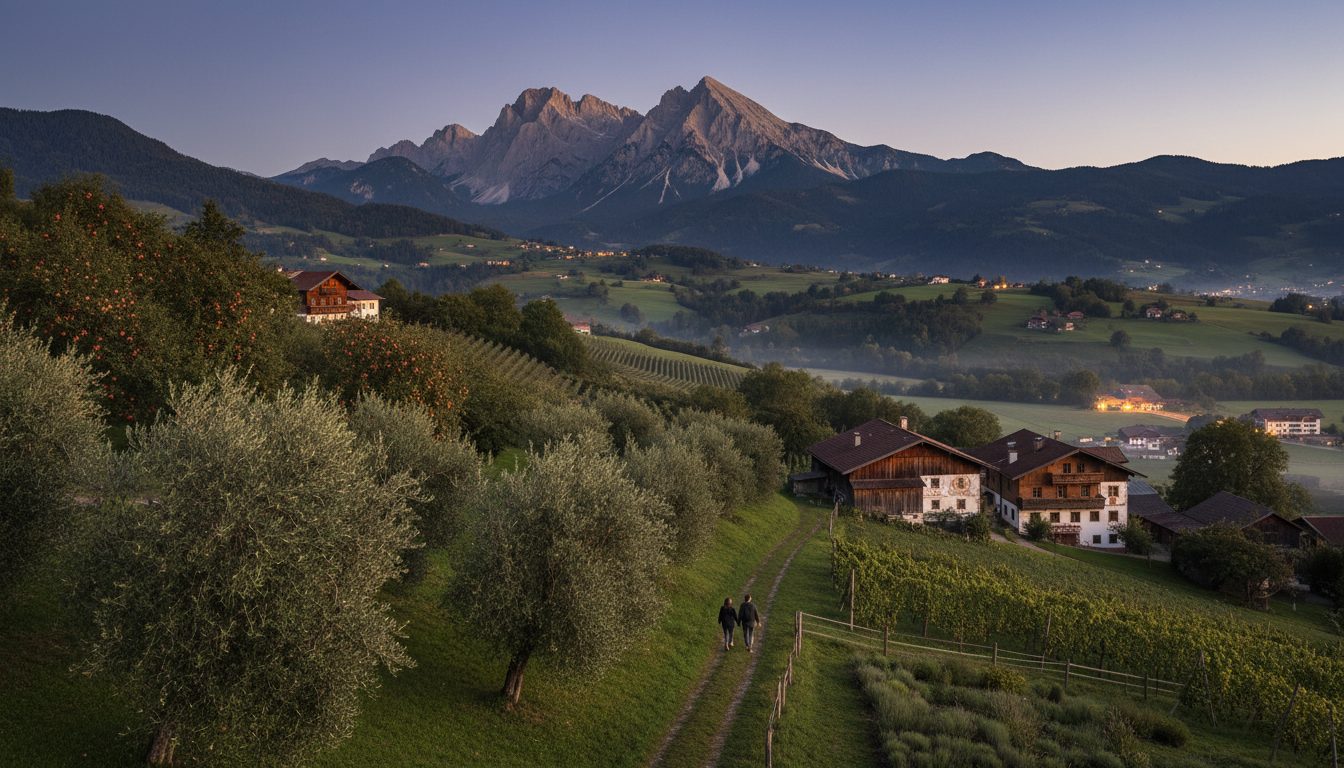
Tyrol Food & Wine: Speck, Schnapps and Alpine Dairy Culture
Tyrolean cuisine centres on hearty Alpine dishes such as Tiroler Gröstl, Speck, Kasspatzln and Kaiserschmarrn, built around dairy, pork and potatoes rather than grapes. Tyrol itself produces very little wine – most bottles on local tables travel in from elsewhere in Austria or from South Tyrol across the border – but the region excels at schnapps, Alpine beer and mountain cheese. Food markets, farmhouse cooking classes and dairy visits in the Inn Valley remain the most direct way to experience Tyrol food and wine.
Tuscany has its olive groves, Burgundy its slopes of pinot noir, and the Dordogne its ducks fattened to the point of civic pride. Tyrol has none of these. What it has instead is cheese that genuinely tastes of the mountain pasture it grazed on an hour earlier, a schnapps cabinet in every farmhouse kitchen that has clearly seen some use, and a devotion to pork, potatoes and dairy that owes more to centuries of surviving long winters than to any Instagram trend. This is not a region that will dazzle you with its cellar door experiences. It will, however, feed you extraordinarily well, usually at a long wooden table, usually after a walk you didn’t think you’d earned yet.
Anyone arriving expecting a wine region to rival its southern neighbours should recalibrate early. Tyrol is Austria’s mountain larder, not its vineyard. What follows is an honest account of what the region does serve, and serve exceptionally – because once you stop looking for Chardonnay and start looking for Graukäse, the picture improves considerably.
What to Eat in Tyrol: Signature Dishes and Local Classics
Tyrolean food is built for people who have just come down from somewhere steep, and it shows. Tiroler Gröstl – pan-fried potatoes, onions and leftover roast meat, topped with a fried egg – began life as a way of using up Sunday’s dinner and has since become Monday’s entire reason for living. Kasspatzln, Tyrol’s answer to mac and cheese, layers soft egg noodles with mountain cheese and crisp fried onions, and no amount of sophistication will ever make it taste anything less than essential after a day on the slopes.
Speck – cold-smoked, air-dried ham, seasoned with juniper and herbs – is the region’s great culinary export and appears everywhere from breakfast boards to dumpling fillings. Schlutzkrapfen, half-moon pasta parcels filled with spinach and quark, show a gentler Italianate influence that drifts up from South Tyrol across the border. And for dessert, Kaiserschmarrn – a shredded, caramelised pancake dusted with icing sugar and served with plum compote – is proof that the Habsburgs, whatever their other failings, knew how to finish a meal.
None of this is delicate food. It is food designed to put calories back into a body that has just spent them, and it is served without apology in farmhouse inns, mountain huts and city-centre restaurants alike.
Tyrol Wine and Spirits: Why Schnapps Matters More Than Wine
Here is the honest bit. Tyrol’s altitude and climate make it one of the least wine-friendly corners of Austria, and the locals know it – ask for a Tyrolean wine list in most restaurants and you’ll be handed bottles from Austria’s Wachau or Burgenland, or from South Tyrol just over the Italian border, rather than anything grown locally. There is no equivalent here of the vineyard-dotted valleys you’d find further south in Europe, and anyone promising otherwise is selling something.
What Tyrol does properly is spirits. Nearly every farmhouse of any vintage has a still, officially or otherwise, and the results turn up as Marillenschnaps (apricot brandy), Zwetschgenschnaps (plum) and, most distinctively, Zirbenschnaps – a sweetish liqueur infused with young stone pine cones that tastes faintly of resin and mountain air, and is handed around after dinner with a confidence that brooks no argument. Beer is the other serious player: Tyrol has a long brewing tradition, with crisp, malty Alpine lagers served everywhere from mountain huts to city squares, and it’s taken rather more seriously than most visitors expect.
Vineyards Near Innsbruck: Tyrol’s Rare Wine Growing
There are, against all topographical sense, a handful of small vineyards clinging to south-facing slopes around Innsbruck and the village of Zirl, where sheltered microclimates allow a little wine growing at what’s often claimed as Austria’s highest or most northerly viticultural limit. The volumes are tiny and mostly consumed locally rather than exported, but they make an interesting curiosity for anyone keen to say they’ve tasted Tyrolean wine rather than simply Austrian wine drunk in Tyrol – a distinction that matters more to pub quizzes than to palates.
Food Markets in Tyrol: Alms, Farmers’ Markets and Christmas Stalls
Tyrol’s markets reflect its economy: dairy, meat and produce rather than fish and citrus. Innsbruck’s covered food market is the best single stop for Speck, Bergkäse, fresh bread and regional produce under one roof, and makes an excellent, unhurried introduction to what the valley actually eats day to day, as opposed to what’s plated up for tourists.
Outdoor farmers’ markets appear in towns across the region on fixed weekly mornings, selling everything from mountain honey to home-pressed juices and the kind of root vegetables that look like they’ve had a harder life than you have. Come winter, Tyrol’s Christmas markets take over town squares with mulled wine, roasted chestnuts and gingerbread, and while they’re undeniably touristed, there’s a reason the formula hasn’t changed much in decades – it works, and the Glühwein helps considerably with the cold.
Alms – the high mountain dairy huts – often sell their own cheese and butter directly to walkers who’ve made the climb, which remains one of the more satisfying transactions available anywhere in Europe: pay a few euros, eat cheese made that morning from cows grazing within sight.
Cooking Classes in Tyrol: Learning Alpine Kitchen Skills
Farmhouse cooking classes are increasingly available across the Tyrolean valleys, usually hosted by families who have been making the same Kasspatzln and Knödel recipes for generations and see no particular reason to reinvent them now. Expect flour on your hands, dumplings that fall apart on the first attempt, and a genuine education in how Alpine food logic actually works – using what the farm produces, wasting nothing, and building meals that can sustain someone through a working day on a mountainside.
Some classes focus specifically on cheese and butter making, drawing on the Alm tradition of small-batch dairy production, while others lean into bread baking or the gentle art of schnapps distilling, for those who’d like to understand exactly how that after-dinner Zirbenschnaps came to be so convincing. These sessions tend to run in German with varying levels of English, so it’s worth checking ahead if language is a concern – though cooking, usefully, translates reasonably well through gesture alone.
Seasonal Food in Tyrol: Cheese, Game and Winter Specialities
Tyrol’s food calendar follows the mountains rather than the Mediterranean, so forget truffles, olive oil and seafood – they belong to other guides. Spring and summer bring the Alm cheeses to their best, as herds move up to higher pastures and the milk, and therefore the cheese, takes on the richer character of alpine flora. Autumn is game season, with venison and wild boar appearing on menus alongside mushrooms foraged from the forests that seem to press right up against every village.
Winter, unsurprisingly, is when Tyrol does what it does best: thick soups, Speck and cheese boards, Glühwein and schnapps by the fire, and the kind of stick-to-your-ribs cooking that makes sense of a region built around skiing and sub-zero mornings. If you’re visiting with food specifically in mind, winter and early summer both have their charms, though the après-ski crowds in December and January do mean restaurants book out faster and prices climb accordingly.
Best Food Experiences in Tyrol
The single best food experience in Tyrol remains deceptively simple: lunch at a mountain hut, reached on foot, with a view that no restaurant at sea level could ever justify charging for. A plate of Kasspatzln eaten at 1,800 metres, legs aching, tastes measurably better than the same dish eaten at a table in town – this is not sentiment, it’s basic physiology, and the Tyroleans have built an entire hospitality industry around understanding it.
Beyond the huts, seek out a proper Speck tasting at a working smokehouse, an evening of schnapps with people who actually distilled it, and at least one long, slow dinner in a wood-panelled Gasthaus where the Kaiserschmarrn arrives unannounced and enormous. None of it is showy. All of it works.
For wider context on where food and wine fit into a broader Tyrolean trip, the main Tyrol Travel Guide covers the region’s valleys, seasons and towns in more detail.
For those planning where to base themselves for a Tyrolean food trip, there are villas in Tyrol.
Tyrol Food and Wine FAQs
Does Tyrol produce its own wine?
Only in very small quantities. A handful of vineyards survive around Innsbruck and Zirl thanks to sheltered microclimates, but most wine served in Tyrolean restaurants comes from other Austrian regions or from South Tyrol across the Italian border.
What is the most typical Tyrolean dish to try?
Tiroler Gröstl – pan-fried potatoes, onion and roast meat topped with a fried egg – is the dish most closely associated with the region, alongside Kasspatzln and Speck, which appear on almost every Tyrolean menu in some form.
Is Tyrolean food suitable for vegetarians?
It’s possible but limited, since much of the cuisine centres on pork and dairy. Cheese-based dishes like Kasspatzln, and dumplings filled with spinach or quark, such as Schlutzkrapfen, are the most reliable vegetarian options.
Keep reading
More on Tyrol
- Travel guideTyrol Travel Guide
- When to goBest Time to Visit Tyrol
- RestaurantsBest Restaurants in Tyrol
- FamiliesTyrol with Kids
Guides to places in Tyrol
Where to stay
Villas in Tyrol
A selection from our 256 luxury villas in Tyrol.