
Best Restaurants in Split-Dalmatia County
Here is what most guides to Dalmatia will not tell you: the worst meal you are likely to eat in Split-Dalmatia County is the one you ordered because a laminated menu outside a restaurant on the Riva had photographs. The best meal – and it may genuinely rank among the finest of your life – will be served in a room with no view, no dress code, and a handwritten menu that changed this morning because the fisherman brought something different. This is the essential tension of eating in Dalmatia. The county is blessed with an extraordinary larder: the Adriatic at its front door, a hinterland of olive groves and vineyards, sheep grazing on karst limestone that somehow produces extraordinary cheese, and a culinary tradition old enough to predate the tourist industry by several centuries. The challenge is not finding good food. The challenge is not walking past it on the way to somewhere worse.
What follows is an honest guide to the best restaurants in Split-Dalmatia County – from Michelin-recognised dining rooms to the kind of family konoba where the owner’s grandmother still makes the brodetto. Read it carefully. Eat accordingly.
The Fine Dining Scene: Michelin Recognition in Split
Split does not yet have a full Michelin-starred restaurant, which surprises people who know the city well and surprises nobody who has spent time here. The Dalmatian culinary philosophy – respect the ingredient, do not fuss – is not always a natural fit for the kind of architectural theatre that earns starred status. What Split does have, however, is a growing cluster of Michelin Guide-recognised establishments that are doing genuinely serious, creative cooking without losing the soul of the place.
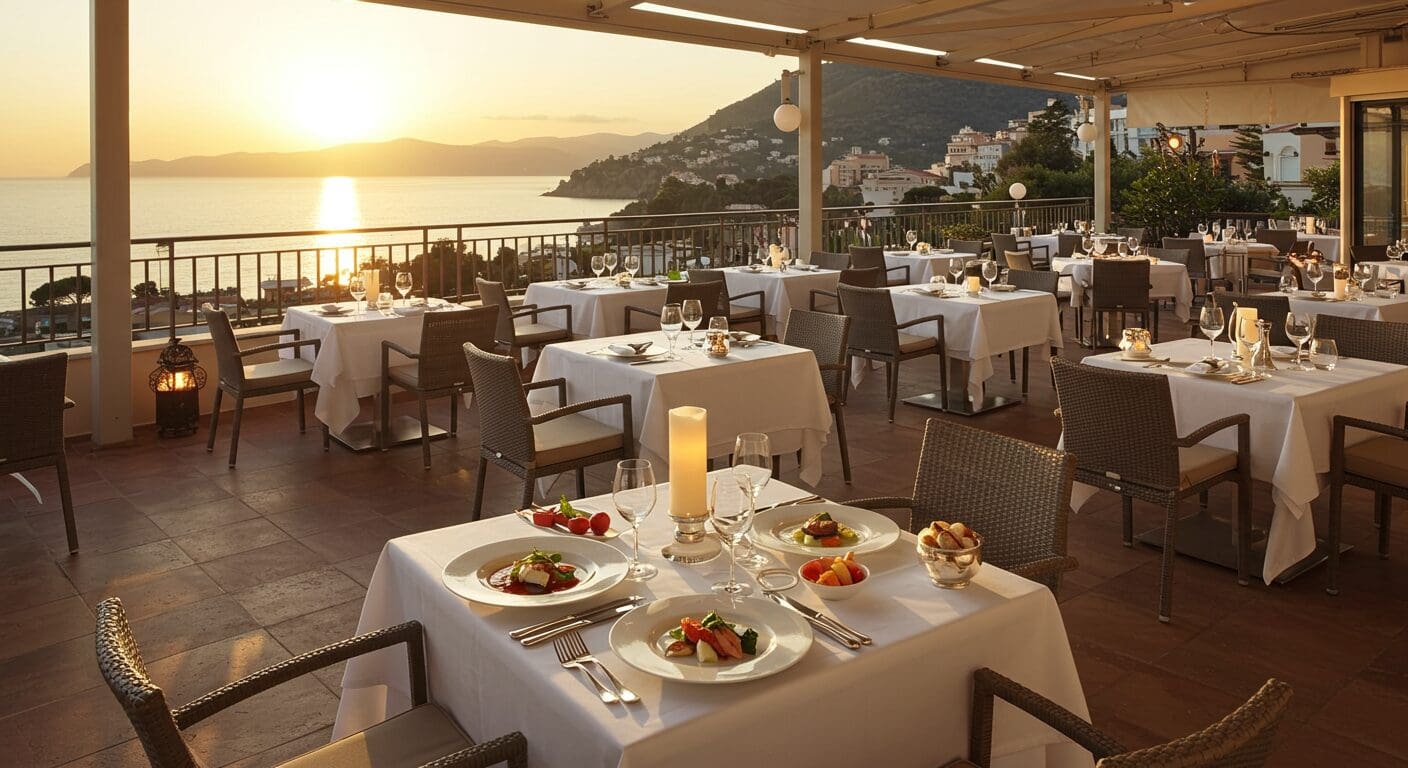
Restoran Dvor is the restaurant most visitors point to when they want to understand what contemporary Dalmatian fine dining actually looks like. Situated on the coast just past Bačvice Beach – the city’s famous picigin beach, where grown adults splash in knee-deep water with great competitive seriousness – Dvor commands a spectacular seafront position and serves some of the most innovative food in the county. The restaurant is recognised by the Michelin Guide, and it earns that recognition through cooking that is both adventurous and grounded. Those who surrender to the tasting menu describe it as transformative: an eight-course dinner paced impeccably, with wine chosen by a sommelier who actually knows what he is talking about, followed by a three-course dessert sequence that reframes what you thought dessert was for. “The flavors were fantastic and unforgettable with top-quality wine,” said one guest, and that is not the kind of sentence people usually write unless they mean it.
Zinfandel Food & Wine Bar has been in the game since 2013 – practically an institution by Split’s standards, given how quickly the restaurant scene here has evolved. It sits among the nine establishments currently holding Michelin recognition in the county, and it has earned its place through a combination of an exceptionally well-curated Croatian wine list, intelligent cooking, and the kind of relaxed sophistication that does not require you to lower your voice. The menu ranges from sharing platters designed for grazing to a “gin and tonic” dessert that sounds like a gimmick and is, in fact, quite brilliant. If you want to understand Croatian wine before you order a bottle at dinner, Zinfandel is where to start that education.
Konoba Fetivi and the Art of Doing One Thing Brilliantly
The word konoba originally referred to a wine cellar. Over centuries of Dalmatian life it evolved to mean something closer to a family tavern – unpretentious, ingredient-led, the kind of place where the cook’s relationship with the fisherman is older than any reviewer’s relationship with the restaurant. Konoba Fetivi, in Split’s historic Varoš district, is the standard against which all other konobe in the city are measured.
It has been awarded the Michelin Bib Gourmand – the guide’s designation for exceptional quality at a moderate price – and the award is well-deserved. The family behind Fetivi has been part of the Varoš neighbourhood for three hundred years. Three hundred years. The menu changes daily, built around whatever arrived fresh that morning, and it includes both seafood and meat dishes rooted firmly in Dalmatian tradition. The black risotto – made with cuttlefish ink, slow-cooked and deeply savoury – is the dish most frequently mentioned by guests with a slightly reverent expression. One reviewer called it “hands down the winner of the day – rich and creamy and the octopus so very tender.” That is not hyperbole. Order it. Do not overthink the rest of the menu. Trust the family. This is, after all, their neighbourhood in a way it can never quite be yours.
Villa Spiza: The No-Reservations, No-Freezer Policy That Works
Villa Spiza occupies a narrow sliver of Petra Kružića Street inside Split’s old town – a street so atmospheric that standing in it at dusk feels vaguely like a film set, except the food is better than any film set has any right to be. The restaurant operates on principles that would make a restaurant management consultant weep: no reservations, no credit cards, no freezer. This last point is not a boast; it is a philosophy. If it cannot be served fresh, it is not served.
The menu is handwritten each day and changes entirely based on the morning’s haul. Seafood dominates, but excellent meat dishes appear regularly. Tables are small, the room fills quickly, and the locals who come here – and they do come here, which is always the best endorsement – know to arrive early. This is not a restaurant that performs scarcity. The scarcity is real, and it is the point. Come before the evening rush, order whatever the server suggests with particular enthusiasm, and pay in cash. The inconvenience is entirely worth it.
Konoba Marjan: Classic Dalmatia on the Hillside
On the walk up through Varoš toward Marjan Hill – Split’s forested park that hangs above the western end of the city – you will find Konoba Marjan, a family-owned restaurant that represents classic Dalmatian dining at its most straightforward and satisfying. There is nothing here that needs explaining or contextualising. It is a charming konoba where seafood is the main event, the cooking is careful and generous, and the atmosphere is exactly what you come to Croatia hoping to find. Sometimes the most reliable recommendation is also the simplest one. Konoba Marjan is that recommendation.
Beach Clubs and Casual Dining: Eating with the Adriatic at Your Elbow
Split-Dalmatia County stretches from the city itself across the Makarska Riviera, through the Cetina River valley, and out to the islands of Brač, Hvar, Šolta and Vis – a geography that creates a remarkable diversity of casual dining options. On Hvar, the beach club scene is genuinely sophisticated: sunbeds, DJ sets, and kitchens producing grilled fish that would not embarrass a far more formal establishment. The island has a well-earned reputation for style, and its restaurants – both on the waterfront in Hvar Town and tucked into quieter coves around Stari Grad – reflect that. The fish is exceptional. The wine list, if you know where to look, reaches into the best of Dalmatian viticulture.
On Brač, particularly around Bol and its famous Zlatni Rat beach, casual konobe and beachside restaurants serve grilled sea bass and dorada caught that morning, drizzled with olive oil pressed from the island’s own groves – olives grown in the same limestone soil that gives Brač wine its particular mineral character. This is not food that needs a Michelin inspector. It is food that needs a table in the shade and nothing scheduled for the next three hours.
Along the Makarska Riviera, the restaurant scene is more varied in quality – the challenge here is that the Riviera’s beauty does some establishments’ marketing work for them. Look for smaller, family-run places set back slightly from the main promenades, where the food earns its place on the menu rather than relying on the view to compensate for a frozen sauce.
Hidden Gems: The Places the Guidebooks Haven’t Caught Up With
Dalmatia rewards the unhurried traveller. The genuinely exceptional local restaurants – the ones that have been feeding the same families for decades, that have no Instagram presence, that may not even have a sign visible from the main road – are found by walking in the wrong direction with purpose. The island of Vis, further from the mainland than the other Dalmatian islands and for decades closed to foreign visitors as a Yugoslav military base, has a restaurant culture that feels unusually authentic. Komiža, the island’s western fishing town, has small seafood restaurants that serve the day’s catch without ceremony or embellishment. The brodetto – a dense, wine-braised fish stew that varies from village to village and family to family – is a dish to seek out specifically here.
In Split itself, the Varoš district – already home to both Konoba Fetivi and Konoba Marjan – rewards wandering. Small restaurants open and close with some regularity, but the neighbourhood’s character remains constant: stone houses, fig trees growing from the walls, the smell of something good coming from a window at noon. This is where Split actually lives, as opposed to where it poses for photographs.
Food Markets and Provisions: Pazar and Beyond
The Green Market – known locally as Pazar – sits just outside the eastern walls of Diocletian’s Palace and operates every morning from early until early afternoon. It is one of the most genuinely pleasurable food markets on the Adriatic coast: a proper working market where local producers bring seasonal vegetables, dried figs, fresh herbs, honey, homemade liqueurs, and olive oil in unlabelled bottles that will be some of the best olive oil you have ever tasted. The cheese – particularly the sheep’s milk varieties from the islands and the hinterland – deserves serious attention. Bring cash, arrive before ten in the morning, and do not rush.
The fish market, located in the basement of Diocletian’s Palace (the Romans built their emperor a palace; the Dalmatians use it to sell fish – a repurposing that seems entirely correct), is smaller but fascinating. The selection reflects exactly what was caught overnight. If you are staying in a villa with kitchen access, this is where the day’s cooking begins.
What to Order: The Dishes That Define the County
Certain dishes in Split-Dalmatia County are non-negotiable. The black risotto – crni rižot – made with cuttlefish ink and served with fresh seafood, is the defining Dalmatian first course. Order it wherever the restaurant seems serious. Grilled fish – simply prepared with olive oil, garlic, and fresh herbs – is the correct main course in most coastal and island settings. Octopus appears everywhere: grilled, in salads, slow-cooked under a peka (a domed iron lid buried in embers, a cooking method that produces meat of extraordinary tenderness). Peka, incidentally, requires advance ordering – usually twenty-four hours. If you are staying somewhere that can arrange it, do so immediately.
Pašticada is the inland counterpart to all this seafood: a slow-braised beef dish marinated in wine and vinegar, served with gnocchi, and deeply, unreasonably good. It is the dish Split cooks at Christmas, for weddings, for homecomings. Order it when you see it, even in summer. The local wine is essential: look for Plavac Mali – the powerful red grape native to the Dalmatian coast – and Pošip, the crisp white from Korčula that handles grilled fish with effortless grace. Prošek, the sweet dessert wine made from dried grapes, is the correct ending to a long Dalmatian lunch. A glass of travarica (herb brandy) to begin the meal is customary, and resistance is futile.
Reservation Tips: How to Eat Well Without the Frustration
A few practical realities worth knowing before you sit down anywhere. Split in July and August is extremely busy – the kind of busy that means the city’s best restaurants are fully booked days in advance, and the second-best restaurants fill up within hours of a table becoming available. Book as early as possible for anywhere with Michelin recognition: Restoran Dvor and Zinfandel in particular require advance planning in high season. For Villa Spiza, which takes no reservations, the strategy is simple: arrive at opening, or be prepared to wait. The wait is usually worth it. Usually.
On the islands, booking ahead matters less in shoulder season (May, June, September) but becomes critical in August. If you are arriving by boat or ferry, factor in the time it takes to actually get off the boat, walk through the harbour, and find the restaurant – this calculation goes wrong for more people than you might expect.
Outside the main summer season, some smaller restaurants operate reduced hours or close entirely. A quick call ahead – or a message through their social media if they have any – saves the particular disappointment of arriving at a darkened building on a Tuesday in October. And if you are staying in a luxury villa in Split-Dalmatia County, the most elegant solution to the reservation question is sometimes to bring the kitchen to you: many of the county’s finest villas offer private chef arrangements, where a local chef arrives with market-fresh ingredients and produces a meal that is tailored entirely to your table. The setting, the service, the food – all without the business of booking weeks in advance or finding a car park in Hvar Town on a Saturday night in August. It is, on reflection, the most sensible option.
For more on planning your time in the region – from island-hopping to the Cetina canyon and the streets of Diocletian’s Palace – the full Split-Dalmatia County Travel Guide has everything you need before you arrive.


