9th arrondissement with Kids: The Ultimate Family Holiday Guide
The 9th arrondissement works well for families because it is compact, flat and packed with free or low-cost attractions within walking distance of each other, including the Grévin wax museum, the Palais Garnier opera house and the rooftop terraces of the grand department stores. It has no beach and very little green space compared with other parts of Paris, but it makes up for this with excellent métro connections to places that do. Most local restaurants are casual enough to absorb a toddler meltdown without anyone reaching for the smelling salts.
Saturday morning on Rue des Martyrs smells of warm butter and ground coffee, and if you arrive before ten you can watch the street wake up properly: the cheese shop hauling out its awning, a baker stacking baguettes like firewood, a small child already wearing most of a pain au chocolat on his face. This is the 9th arrondissement at its most charming – a working Parisian neighbourhood that happens to have an opera house and two of the city’s grandest department stores wedged into its southern edge, and that somehow still functions as somewhere people actually live, with actual children, going to actual school. It is not designed for tourists with pushchairs. It simply tolerates them rather well.
How Family-Friendly Is the 9th arrondissement?
Very, with caveats. The 9th arrondissement sits just north of the Opéra and Grands Boulevards, bordered by Montmartre to the north, which means families get the convenience of central Paris without quite the crush of the 1st or 4th. Pavements are generally wide enough for a double buggy, which in central Paris counts as a small miracle. The area is flat, unlike hillier Montmartre next door, so there is less hauling a pushchair up cobbled steps while muttering under your breath.
What it lacks is green space. The 9th has no large park of its own – nothing on the scale of the Jardin du Luxembourg or Parc Monceau – so you will need to walk or take the métro a short distance if your children need somewhere to run properly. It also lacks a beach, obviously, this being landlocked central Paris rather than the coast, though Paris does stage a summer “beach” event along the Seine each year, a short ride away. For a fuller picture of the neighbourhood beyond its family offering, the 9th arrondissement Travel Guide covers the architecture, shopping and history in more depth.
Things to Do in 9th arrondissement with Kids
The Musée Grévin, the city’s wax museum on Boulevard Montmartre, is the obvious crowd-pleaser and genuinely earns its reputation with children: interactive scenes, a hall of mirrors that reliably produces shrieking, and enough celebrity waxworks to keep teenagers interested and younger ones mildly baffled as to why a motionless man in a suit is famous. Older children with a taste for the theatrical will enjoy a guided tour of the Palais Garnier, the opera house whose grand staircase and gilded auditorium inspired the Phantom of the Opera story – worth mentioning to any child who finds architecture dull, since it usually buys you another twenty minutes of attention.
Both Galeries Lafayette and Printemps, the department stores anchoring the southern edge of the 9th, have free rooftop terraces with views across the Paris skyline, and Galeries Lafayette’s glass dome inside is worth the detour even if you have no intention of buying anything (your children certainly won’t notice the absence of shopping bags). For a quieter afternoon, the Musée de la Vie Romantique occupies a house with a courtyard garden and a small tea room – unassuming, free to enter for the permanent collection, and a good place to let toddlers toddle without much risk.
9th arrondissement with Kids: Beaches and Outdoor Space
Let’s deal with this plainly: there is no beach in the 9th arrondissement, and anyone promising you one is confusing Paris with somewhere considerably further south. What the arrondissement does have is a scattering of small squares – Square Montholon, Square d’Anvers and the garden around Square de la Trinité among them – with benches, some planting and occasionally a modest play area, useful for a twenty-minute pause rather than a full afternoon out.
For proper outdoor space, families generally walk or take a short métro ride to Montmartre’s hillside gardens just to the north, or further afield to the larger parks elsewhere in Paris. In July and August, the temporary Paris Plages installation along the Seine brings sand, deckchairs and splash areas to the riverbank – not a real beach by any geographic definition, but convincing enough for a five-year-old, and an easy métro journey from the 9th.
Where to Eat in 9th arrondissement with Kids
Food in the 9th arrondissement tends toward the casual and the carb-based, which suits children perfectly. Rue des Martyrs is the street to know: a steep run of bakeries, cheesemongers, chocolatiers and small cafés where you can assemble a children’s lunch – or, let’s be honest, an adult’s lunch too – entirely from shop counters without ever sitting down. Bistros around the area generally offer simple steak-frites or roast chicken that satisfies most young palates, and bakeries throughout the 9th sell the usual reliable staples: croissants, pain au chocolat and baguette sandwiches that travel well if you are eating on a park bench rather than at a table.
Department store food halls at Galeries Lafayette and Printemps are worth knowing about on days when patience is thin, offering a wide spread of options under one roof so that nobody has to agree on a single restaurant – itself a small miracle of modern family diplomacy.
Rainy Day Things to Do in 9th arrondissement
Paris does rain, and the 9th arrondissement has enough indoor options to ride out a wet afternoon without resorting to a hotel room and a tablet. The Musée Grévin is entirely indoors and built for exactly this scenario. Galeries Lafayette and Printemps both offer hours of weatherproof wandering across multiple floors, with the added advantage of toilets, lifts and somewhere to sit down, which matter more with children than any guidebook likes to admit. The Musée de la Vie Romantique’s main rooms stay dry even when its garden doesn’t, and a guided interior tour of the Palais Garnier is, if anything, improved by grey weather outside the tall windows.
Getting Around 9th arrondissement with Kids
The 9th arrondissement is served by several métro lines, including connections at Trinité, Le Peletier, Chaussée d’Antin-La Fayette and Cadet, which makes most of the neighbourhood reachable on foot or with one short ride at most. The area itself is flat and compact enough to walk with a pushchair, though Paris pavements can narrow suddenly outside shopfronts, so expect the odd detour into the road.
The métro is not universally buggy-friendly – many stations involve stairs rather than lifts – so parents with younger children often find it easier to fold the pushchair and carry, or to walk where distances allow. Buses tend to be a gentler option with small children, being step-free at street level, if slower in central Paris traffic. Taxis and ride-hailing apps are widely available and worth using for tired legs or sudden rain, particularly with teenagers who have reached the age of refusing to walk another step on principle.
9th arrondissement with Kids by Age
Toddlers in the 9th arrondissement
Toddlers do best with short outings punctuated by food and somewhere to sit. The small squares scattered through the arrondissement work for brief stops, and the courtyard garden at the Musée de la Vie Romantique is calm enough for unsteady walking without too many obstacles. Bakeries double as emergency supply stops, and department store toilets and lifts are more useful to a parent with a pushchair than any amount of cultural enthusiasm.
Juniors in the 9th arrondissement
This is arguably the easiest age group for the 9th. The Grévin wax museum is built almost entirely for this audience, and the Palais Garnier’s grand staircase and chandelier tend to impress even children who claim to be bored of “old buildings.” Rue des Martyrs offers enough food variety to keep everyone fed without negotiation, and the rooftop terraces at the department stores give a proper view of Paris without an entrance fee.
Teens in the 9th arrondissement
Teenagers generally respond well to the shopping at Galeries Lafayette and Printemps, the slightly theatrical history of the Palais Garnier, and the general buzz of the Grands Boulevards nearby. The 9th’s proximity to Montmartre also means an easy walk north into livelier, more photogenic streets once the department stores have lost their novelty – which, in our experience, takes about forty minutes.
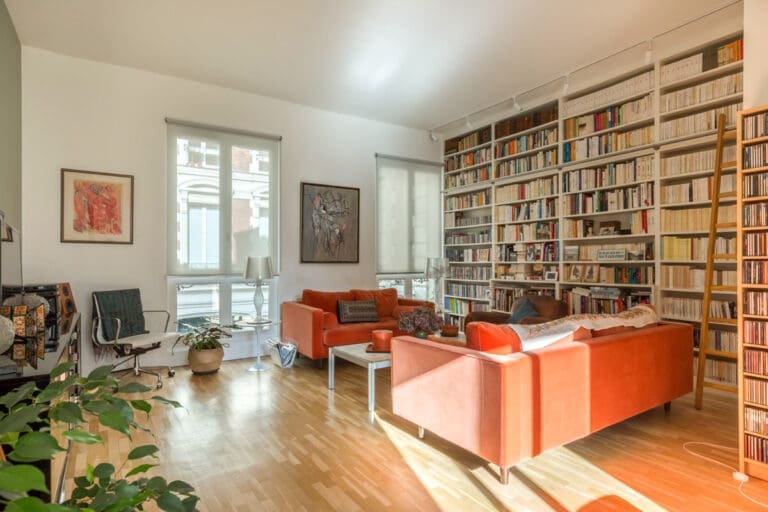
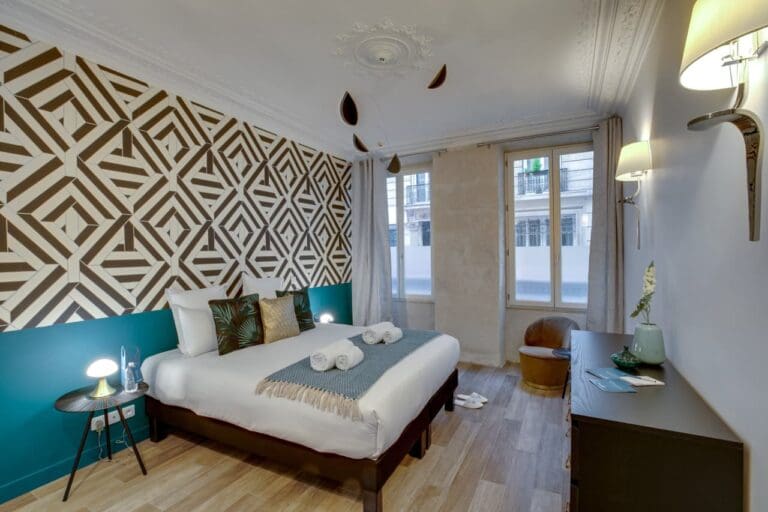
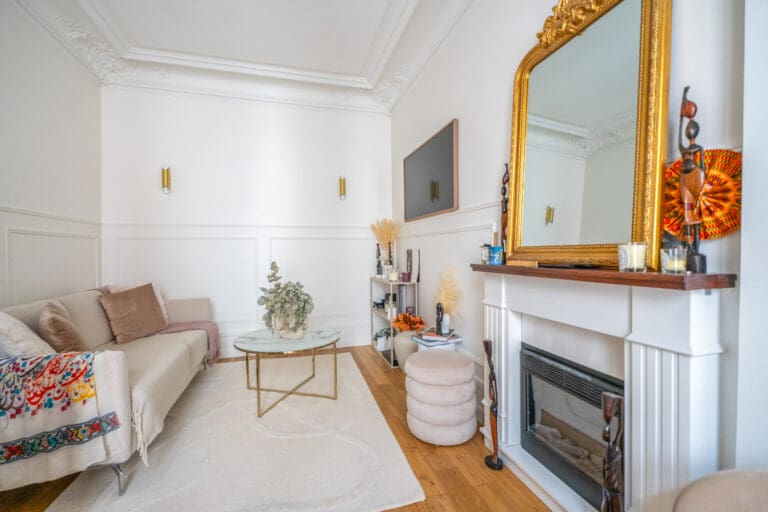
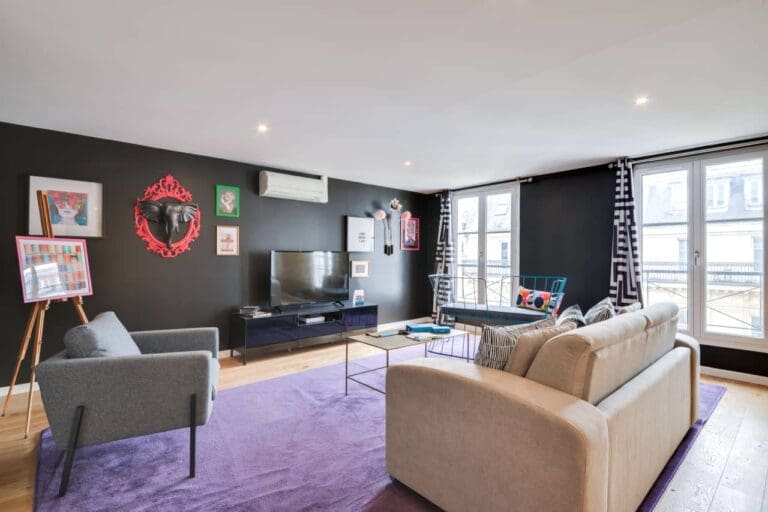
If you are weighing up where to base a family stay in the area, you can browse villas in 9th arrondissement.
9th arrondissement Family Holiday FAQs
Is the 9th arrondissement safe for families with children?
Yes, the 9th arrondissement is generally considered a safe, residential part of central Paris, with the usual city-centre precautions around crowded areas and public transport applying as they would anywhere.
How much walking should we expect with children in the 9th arrondissement?
The arrondissement is flat and compact, so most attractions are within a 10 to 20 minute walk of each other, though pushchairs may need to navigate narrow pavements near shopfronts and markets.
Is the Palais Garnier suitable for young children?
Self-guided and guided interior tours are generally more engaging for children aged seven and up who can appreciate the scale and detail, while toddlers may find the quiet, formal atmosphere less rewarding than an outdoor stop.
Keep reading
More on 9th arrondissement
- Travel guide9th arrondissement Travel Guide
- RestaurantsBest Restaurants in 9th arrondissement
- Food & wine9th arrondissement Food & Wine Guide
Guides nearby in Ile-de-France
Where to stay
Villas in 9th arrondissement
A selection from our 5 luxury villas in 9th arrondissement.