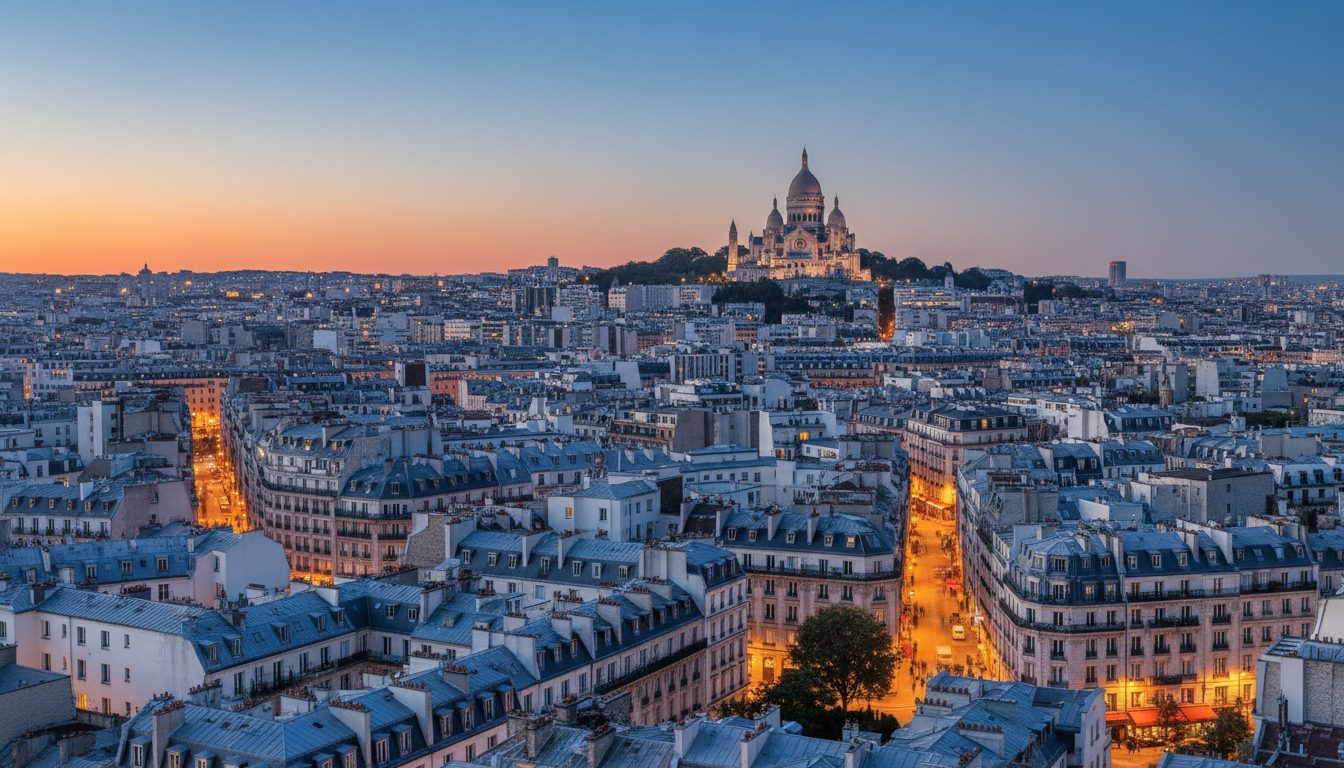
9th arrondissement Food & Wine Guide: Local Cuisine, Markets & Wine Estates
The 9th arrondissement of Paris has no vineyards of its own, but it is one of the city’s most rewarding districts for eating and drinking well, built around a famous food street, a historic covered market and a dense cluster of wine bars. Signature experiences here include browsing cheesemongers and bakeries on Rue des Martyrs, shopping for produce under glass roofs, and drinking natural and regional French wines in small, unpretentious bars. Seasonal specialities such as autumn game, winter truffle shavings and spring asparagus appear on bistro menus rather than at any farm gate.
First-time visitors arrive expecting a scaled-down version of Burgundy or the Rhône – a tidy little wine region tucked behind the Opéra, perhaps, with a tasting room on every corner. There isn’t one. The 9th arrondissement grows nothing but plane trees and the occasional window box of basil, and anyone hunting for a vine within its borders will go home disappointed. What it offers instead is something arguably more useful to a visitor on a short trip: a concentration of excellent places to eat and drink that would take a lifetime to properly explore, drawing on produce and wine from every corner of France and beyond.
This is a district that eats the way Parisians actually eat, rather than the way postcards suggest they do. Expect cheese shops with queues out the door on a Saturday morning, wine bars where the list changes by the glass, and bakeries that sell out of their best bread by eleven. It rewards slow mornings and a willingness to ignore the clock, which is, admittedly, not the easiest instruction to follow in a city that prides itself on having somewhere else to be.
9th Arrondissement Cuisine: What’s Actually on the Plate
The food culture of the 9th arrondissement is classic Parisian bistro cooking layered with the influence of every wave of migration that has passed through the district, particularly around Faubourg Montmartre and the Grands Boulevards. On one corner you’ll find steak frites and duck confit served the way they’ve been served for a century; a few streets over, South Asian and North African grocers and canteens do a brisk trade alongside kebab counters and noodle bars that outlast most restaurant trends.
Onion soup, leeks vinaigrette, tartare, and a proper croque-monsieur remain the backbone of the neighbourhood bistro menu, and the 9th does them without fuss or flourish – this is not a district chasing plating awards. Pâtisserie is taken seriously here, a legacy of the 19th-century bourgeois households of Nouvelle Athènes who expected their chocolatiers to be as reliable as their bankers. Expect well-made tarts, éclairs and the odd seasonal special rather than anything experimental; the 9th arrondissement’s food and wine identity is built on consistency, not novelty.
9th Arrondissement Wine: Bars, Caves and What You’ll Actually Drink
No grapes grow in the 9th arrondissement, so there are no estates to tour and no cellar doors to knock on – a fact worth knowing before you plan a day around it. What the district does have is an unusually good concentration of wine bars and independent cavistes, many specialising in small-producer and natural wine from Burgundy, the Loire, Beaujolais and the Jura. Staff tend to know their stock properly and will happily talk you through a glass rather than simply pour it.
These bars function as informal tasting rooms for the rest of France: a Loire Chenin one week, a Jura Poulsard the next, often served with a plate of charcuterie or cheese rather than a full meal. It’s a more honest way to drink your way around French wine regions than any coach tour, if a little harder on the wallet by the glass. Treat an evening here as an introduction to producers you might later seek out on their own ground, rather than a destination in itself.
9th Arrondissement Food Markets
The district’s covered market, a 19th-century iron-and-glass structure near the Grands Boulevards, remains the best single stop for fresh produce, cheese, fish and flowers, and it operates at a pace that rewards arriving early and leaving with more bags than you planned. Stallholders are brisk rather than chatty, which is simply the local register of friendliness – don’t mistake efficiency for rudeness.
Beyond the covered market, the open-air stalls and specialist shops along Rue des Martyrs form what amounts to an outdoor market in slow motion: a cheesemonger, a fishmonger, a rotisserie, several bakeries and a wine shop within a few hundred metres of each other. It’s less a single event than a permanent, grazing kind of shopping trip, and arguably the most authentic food experience the 9th arrondissement offers a visitor with a free morning and a reusable bag.
9th Arrondissement Cooking Classes
Cooking classes in the 9th arrondissement tend to be small, kitchen-based sessions run by independent chefs rather than large commercial operations, often built around a market visit followed by hands-on preparation of a classic bistro dish or a pastry technique. Demand is highest in the shoulder seasons when visitor numbers are manageable and produce from the surrounding markets is at its best.
Most classes run for three to four hours, group sizes are kept deliberately small, and a decent class will include wine with the meal you’ve just cooked – which is, frankly, the only fair reward for an afternoon spent getting flour on your shirt. Booking ahead is sensible, particularly around Christmas and in early autumn when cooking schools see a spike in interest from visitors keen to take a little French technique home with them.
Seasonal Specialities in the 9th Arrondissement
Seasonality here is dictated by what arrives at the covered market and from the wholesale markets beyond the city, rather than by anything grown locally. Winter brings game, root vegetables and the arrival of black truffle shavings on bistro menus, usually from producers further south, rather than anything native to Paris itself. Spring sees white and green asparagus, the first strawberries, and a noticeable lightening of menus after months of braises and stews.
Summer in the 9th arrondissement leans towards simpler plates – tartares, cold soups, more fish – partly because the kitchens, many of them small and unventilated by modern standards, become genuinely unbearable in August heat. Autumn restores the heavier dishes and marks the start of the season for Beaujolais Nouveau, which the district’s wine bars mark with more enthusiasm than the wine itself generally deserves – a small, cheerful ritual rather than a serious tasting event.
Best Food Experiences in the 9th Arrondissement
The single best food experience in the 9th arrondissement remains an unhurried morning on Rue des Martyrs, moving from bakery to cheesemonger to wine shop with no particular plan, which tells you more about how Parisians actually shop and eat than any formal meal will. A close second is an evening spent working through a wine bar’s by-the-glass list with a plate of cheese and charcuterie, letting the staff steer rather than ordering off instinct.
For a slower, more structured introduction, pair a market visit with a short cooking class, or simply book a table at a traditional bistro for the classic trio of leeks vinaigrette, duck confit and tarte tatin – unglamorous dishes, done properly, which is really the whole point of eating in this district. For more on getting around and what else fills the days between meals, see the 9th arrondissement Travel Guide.
Those planning where to base themselves for all this eating and drinking can browse villas in 9th arrondissement.
9th Arrondissement Food and Wine FAQs
Is the 9th arrondissement a wine-producing region?
No. The 9th arrondissement is a dense urban district of Paris with no vineyards or wine estates. It is, however, a strong base for drinking wine from across France, thanks to its concentration of independent wine bars and shops specialising in small producers.
What is the best food street in the 9th arrondissement?
Rue des Martyrs is generally considered the standout, with a dense run of bakeries, cheesemongers, a rotisserie, a fishmonger and wine shops along a single sloping street, best visited on a Saturday morning before midday.
Do I need to book ahead for cooking classes in the 9th arrondissement?
Yes, particularly around autumn and the Christmas period, as independent cooking schools in the district tend to run small, kitchen-based groups with limited places per session.
Keep reading
More on 9th arrondissement
- Travel guide9th arrondissement Travel Guide
- RestaurantsBest Restaurants in 9th arrondissement
- Families9th arrondissement with Kids
Guides nearby in Ile-de-France
Where to stay
Villas in 9th arrondissement
A selection from our 5 luxury villas in 9th arrondissement.