Almeria with Kids: Desert Film Sets, Volcanic Beaches & Tapas
Almeria is a family-friendly destination in southeast Spain, known for calm, shallow beaches in the Cabo de Gata-Níjar Natural Park, a dry desert climate that rarely spoils a holiday, and a slower pace than Spain’s more crowded coasts. Families with young children benefit from gently shelving water and plentiful tapas culture, while older kids can explore volcanic coves, desert film sets and water sports along the coast.
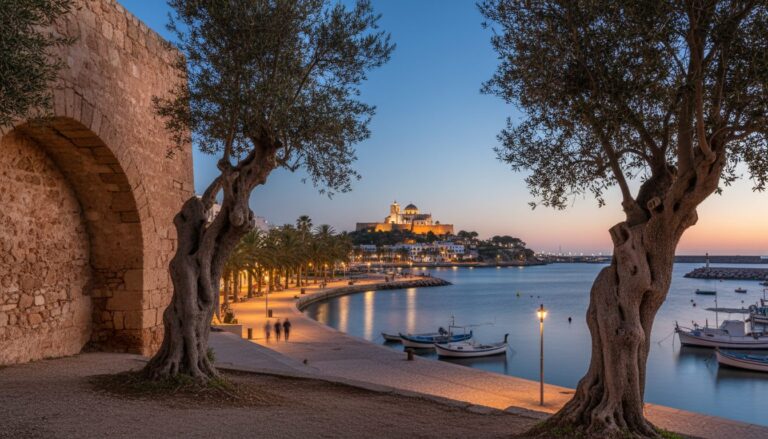
There is a particular hour on the Almeria coast – somewhere between the heat finally loosening its grip and the streetlights flickering on – when every plaza fills with families, prams, dogs and at least one toddler refusing, loudly, to wear shoes. Nobody minds. This is the paseo, Spain’s early-evening ritual of walking nowhere in particular, and it tells you most of what you need to know about bringing children here: the culture already expects them to be out, loud and awake well past what any northern European bedtime chart would consider reasonable. If your family holiday ideal involves children who are tired, sun-happy and included in the adult evening rather than hidden away from it, Almeria does this without even trying.
Almeria with Kids: How Well It Works for Families
Almeria works for families largely because it has not yet worked out how to be a theme park about itself. This is the driest corner of Spain – genuinely desert in parts, which locals mention with a mix of pride and mild astonishment that anyone finds it surprising – and that climate means dependable sun, low humidity, and far fewer of the sudden thunderstorms that can wreck a week on the Atlantic coast. The province sits a little apart from the conveyor-belt resorts further along the Mediterranean, which means smaller crowds, friendlier prices, and beaches that haven’t been entirely colonised by sunbed franchises.
What it lacks is the dense all-inclusive infrastructure of somewhere like Benidorm – the kids’ clubs, the splash parks on every corner, the English breakfast menus. Some families will miss that. Others will find it a relief. Almeria rewards families who are happy to self-entertain a little: a beach, a bucket, a decent ice cream, and the rest sorts itself out. For context on the wider region, the Almeria Travel Guide covers the practicalities in more depth.
Best Family Beaches in Almeria
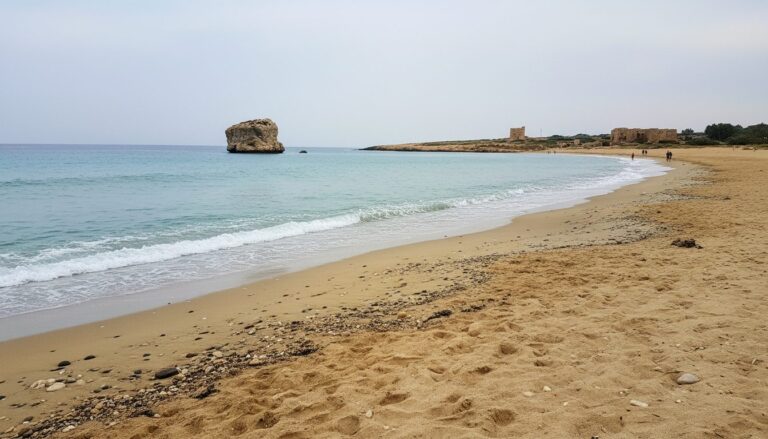
The beaches inside the Cabo de Gata-Níjar Natural Park are the headline act, and deservedly so – volcanic rock coves with clear, calm water, backed by scrubland rather than apartment blocks. Several of these coves shelve gently enough for small children to paddle confidently, though shade is scarce, so a decent sunshade earns its luggage space here more than almost anywhere else in Spain.
Closer to the city, the municipal beaches are long, flat, sandy stretches with lifeguards in season, beachside showers and enough chiringuitos (beach bars, usually with a children’s menu scrawled somewhere on a chalkboard) to keep everyone fed without a long walk back for lunch. These urban beaches are less dramatic than the natural park’s coves but considerably easier with a buggy, which matters more than scenery does at 11am with a toddler who has decided today is the day for a meltdown about sand texture.
Further along the coast, quieter bays offer calmer water again, useful for families with very young children or anyone nervous about currents – though it’s worth noting that the more sheltered the cove, the more popular it becomes by midday, so an early arrival pays off.
Things to Do in Almeria with Kids
Almeria’s desert interior has provided the backdrop for countless Western films, and the Tabernas area’s film sets remain a genuinely good day out for children old enough to enjoy a mock gunfight and a dusty saloon – the sheer improbability of the landscape (cacti, canyons, not a drop of sea in sight) tends to impress kids more than any amount of parental enthusiasm for cinema history.
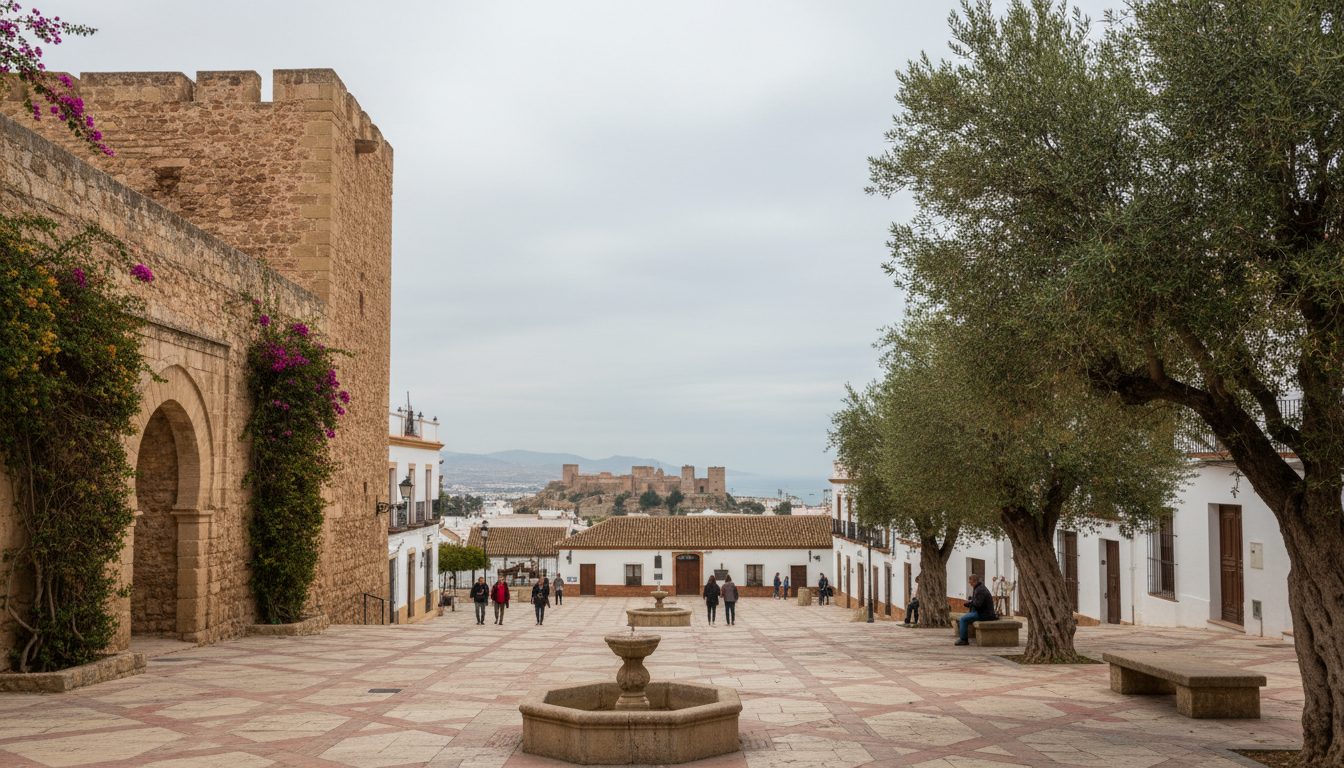
The Alcazaba, the hilltop fortress overlooking the city, is large enough for children to run about in without anyone shushing them, and the views over the rooftops to the sea are worth the climb even if the history lesson is only half-absorbed. Boat trips along the Cabo de Gata coastline are popular with families too, giving tired legs a rest while still delivering a close-up of the volcanic cliffs that are otherwise only reachable on foot.
Water sports – snorkelling, kayaking, paddleboarding – are widely available along the coast and tend to be run at a pace suitable for nervous first-timers as well as confident teenagers, which makes them a reliable way to please a mixed-age group in one go.
Child-Friendly Restaurants in Almeria
Almeria has one quiet advantage over much of Spain: order a drink in many of its bars and a free tapa arrives with it, unbidden, as a matter of local pride. For families this is less a curiosity than a small miracle – a plate of something appears before the “I’m hungry” chorus has properly started, buying everyone ten more minutes of peace.
Family-run seafood restaurants along the seafront serve simple grilled fish, fried squid and the local speciality of gurullos (a hearty pasta and rabbit stew) in settings relaxed enough that a dropped fork or a wandering toddler barely raises an eyebrow. Tapas bars in the old town are similarly forgiving – plates are small, shareable and arrive quickly, which suits children with short attention spans and parents with shorter patience for a formal three-course ordeal. Ice cream parlours are plentiful in every town along the coast, and no Spanish family holiday is complete without the nightly debate over flavours conducted at a volume entirely disproportionate to the stakes.
Rainy Day Activities in Almeria
Rain is not Almeria’s specialty – it is, after all, the driest region in Spain – but on the rare grey day, the city’s indoor attractions step up. The Alcazaba’s covered halls and the city’s small museums offer an hour or two of shelter with genuine historical substance behind them, useful for school-age children working on a holiday project they’d forgotten about until now.
The underground network of Guerra Civil air-raid shelters beneath the city centre is a surprisingly good wet-weather option for older children, offering a tangible, slightly eerie sense of history that tends to land better than a plaque ever could. For younger children, indoor play centres and bowling venues exist in the larger towns, functioning exactly as they do everywhere else in the world – a reliable pressure valve when the weather, or the children, need letting off.
Almeria with Kids by Age Group
Toddlers in Almeria
Toddlers do well here, provided you manage the heat sensibly – shade, water, and a siesta-aligned schedule go a long way. The gently shelving urban beaches are easier than the dramatic coves for very young children, and pavements in the newer coastal towns are generally buggy-friendly, if occasionally interrupted by the cheerful Spanish indifference to dropped kerbs. Restaurants rarely bat an eyelid at a toddler mid-tantrum; this is, after all, a culture that keeps children up until midnight as a matter of course.
Juniors in Almeria
Primary-school-age children are arguably the best-served group – old enough for boat trips, film sets and snorkelling, young enough to still find a lizard on a wall endlessly fascinating. The combination of beach mornings, a cooked lunch somewhere shady, and an evening ice cream covers most of the entertainment brief without much parental engineering required.
Teens in Almeria
Teenagers tend to come round to Almeria once they’ve clocked the watersports and the fact that the beaches are genuinely quieter than wherever their friends have posted from. The desert landscapes photograph well, which matters more to this age group than almost anything else on offer, and the later Spanish dining hours suit a teenage body clock rather better than most parents would like to admit.
Getting Around Almeria with Children
A hire car is close to essential for families wanting to reach the coves of Cabo de Gata or the film sets at Tabernas – public transport exists but runs on a schedule better suited to patient adults than children mid-meltdown over a missed bus. Roads are generally in good condition, though the final stretches into some of the more remote natural park beaches turn to gravel track, manageable but slow.
Within Almeria city itself, distances are walkable and pavements wide enough for buggies, with the promenade along the seafront making for an easy stroll between beach, ice cream and the car. Car seats are a legal requirement as elsewhere in Spain and should be booked in advance with any hire company, since local supply can run short in peak season – a detail worth sorting before you land rather than after.
If you are weighing up where to base the family, the current villas in Almeria are worth a look.
Almeria Family Holiday FAQs
Is Almeria safe for families with young children?
Almeria is generally considered a safe destination for families, with low crime rates and lifeguarded beaches in season. The main practical risks are heat and sun exposure rather than anything to do with safety in the usual sense, so sun protection and hydration matter more than vigilance over crowds.
What is the best time of year to visit Almeria with kids?
Late spring (May to June) and early autumn (September) offer warm, reliable weather without the peak-summer heat, which can be intense for small children. July and August are busiest and hottest, though still manageable with shaded midday breaks and an early-morning beach routine.
Do I need a car to explore Almeria with children?
A car is strongly recommended for families wanting to visit the Cabo de Gata-Níjar Natural Park, the Tabernas film sets or quieter coastal coves, as public transport links to these areas are limited. Within Almeria city, a car is unnecessary, since most attractions and beaches are within walking distance.
Keep reading
More on Almeria
- Travel guideAlmeria Travel Guide
- RestaurantsBest Restaurants in Almeria
- Food & wineAlmeria Food & Wine
Guides nearby in Southern Spain
Where to stay
Villas in Almeria
A selection from our 35 luxury villas in Almeria.