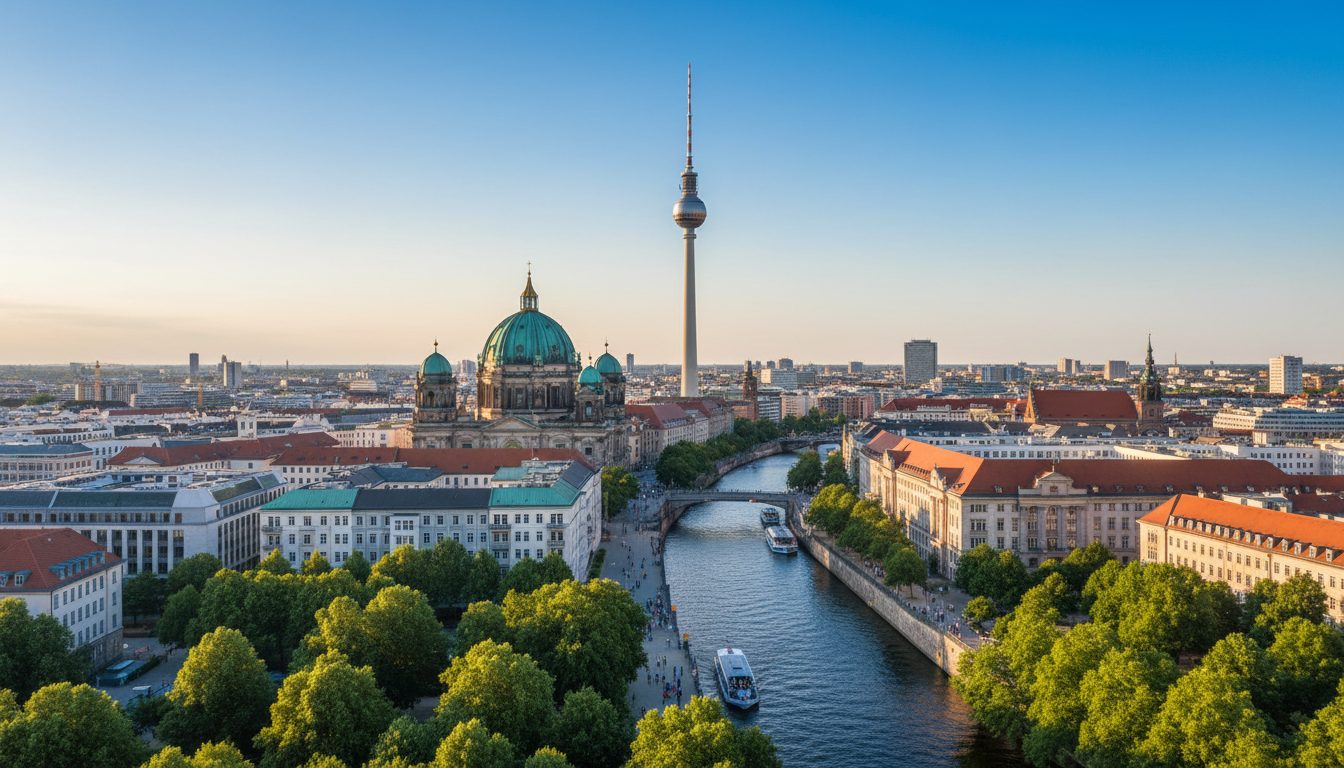
Best Time to Visit Berlin: Markets, Techno & Spree Summers
The best time to visit Berlin is May to September, when warm weather fills the city’s lakes, beer gardens and outdoor festivals. Spring (April-May) and autumn (September-October) offer milder crowds and prices, while December draws visitors for its Christmas markets despite the cold. Winter (January-February) is the quietest and cheapest season, though daylight is short and many outdoor attractions close.
There is a particular hour on a July evening when the Spree turns the colour of weak tea, the beer garden tables fill with people who have clearly planned their entire day around being exactly here at exactly this time, and somewhere across the water a sound system starts up that nobody asked for but everybody secretly wanted. This is Berlin doing what Berlin does best: making the most of sunlight it spent six months fully expecting never to see again. Timing a trip to this city is less about avoiding bad weather – there is no version of Berlin without some – and more about choosing which version of the city’s personality you’d like to meet.
Berlin Weather by Season: Quick Overview
Spring (March-May): 9-19°C / 48-66°F, crowds building, prices moderate.
Summer (June-August): 20-24°C / 68-75°F, peak crowds, highest prices.
Autumn (September-November): 7-19°C / 45-66°F, thinning crowds, good value.
Winter (December-February): minus 2 to 4°C / 28-39°F, lowest crowds except around Christmas, lowest prices except around Christmas.
Berlin Weather in Spring (March to May)
Spring arrives in Berlin the way most good things arrive in Berlin – late, and with some bureaucratic reluctance. March can still feel like a hangover from winter, with highs around 9°C (48°F) and a wind that seems to have personal grievances. By May, though, the parks fill with people lying on blankets in that particular pose of northern Europeans recovering from a long absence of vitamin D, and temperatures climb to a genuinely pleasant 19°C (66°F).
Crowds are moderate and building rather than overwhelming – this is one of the better windows for seeing the major sights without negotiating your way through tour groups. Prices sit comfortably below summer peak. The Carnival of Cultures, a street parade and festival of music and food reflecting Berlin’s diversity, usually falls around Pentecost weekend in late May or early June and is worth timing a visit around if street festivals are your thing. Outdoor cafés reopen their terraces properly in April, and by May the beer gardens are back in business. This season suits travellers who want decent weather without summer’s queues, and who don’t mind the odd day that still requires a coat.
Berlin Weather in Summer (June to August)
This is peak Berlin: long daylight hours stretching toward 10pm, temperatures averaging 23-24°C (73-75°F), and a city that moves almost entirely outdoors. Lakes around the city fill with swimmers, beer gardens run at full capacity, and the parks become open-air living rooms. July brings Christopher Street Day, Berlin’s pride celebration, which turns the city centre into a genuinely enormous street party – plan accommodation well ahead if you want to be anywhere near it.
Crowds are at their highest, particularly at major sights and museums, and prices follow suit. Hotel and flight costs peak, and popular restaurants need advance booking. Humidity is low by European summer standards, so the heat rarely feels oppressive, though the occasional thunderstorm rolls through with real commitment. This season suits first-time visitors who want everything open, every festival running and every beer garden table (eventually) available, and who are prepared to share the experience with quite a lot of other people doing exactly the same thing.
Berlin Weather in Autumn (September to November)
September is arguably the best-kept secret on the Berlin calendar: warm days around 19°C (66°F), noticeably thinner crowds than August, and a golden light over the Spree that photographs rather well, not that anyone needs encouragement to take photographs here. October cools to around 13°C (55°F) and brings the Festival of Lights, when buildings across the city are illuminated with projections – worth checking current dates before booking.
By November, temperatures drop to 7°C (45°F) and the weather turns genuinely grey and damp, the kind of month locals describe with a shrug rather than an apology. Crowds and prices fall steadily through the season, making this an excellent stretch for value-conscious travellers willing to trade some sunshine for shorter queues. Museums and indoor attractions remain fully operational year-round, so a rainy November afternoon is no great hardship. This season suits travellers who prioritise lower costs and thinner crowds over guaranteed sunshine, and who like the idea of Berlin looking faintly moody.
Berlin Weather in Winter (December to February)
Winter is Berlin split neatly in two. The first half, through December, is genuinely lovely in its own cold way: Christmas markets appear across the city, selling mulled wine and roasted chestnuts under strings of lights, and the atmosphere around Alexanderplatz and other central squares has a warmth that has nothing to do with the actual temperature (hovering around 4°C / 39°F, often lower). New Year’s Eve at the Brandenburg Gate draws enormous crowds for a fireworks display and street party that Berliners either love or deliberately leave town to avoid.
January and February are the quiet counterpart – cold, often grey, with highs barely above freezing (around 3°C / 37°F, with regular dips below zero) and short daylight hours. This is also when hotel prices bottom out, outside the festive peak, and when the Berlinale film festival brings a burst of cultural energy to an otherwise subdued month. Some outdoor attractions reduce hours or close for maintenance. This season suits travellers chasing the Christmas market atmosphere specifically, or those who genuinely prefer their cities quiet, cheap and slightly melancholic.
Best Time to Visit Berlin for Shoulder Season Travel
If there is a single best time to visit Berlin for most travellers, it is the shoulder seasons – specifically May and September. Both deliver reliably warm, dry weather without summer’s peak pricing or crowd levels, and both still have the city’s outdoor culture in full swing: beer gardens open, lake swimming viable, festivals running. Flights and accommodation cost noticeably less than the July-August peak, and popular sights – the kind that require timed entry in summer – are easier to approach without advance planning. Late September in particular offers some of the best weather-to-crowd ratio of the year, before the autumn chill sets in properly. For travellers who want Berlin at its most agreeable without paying peak-season prices, these windows are difficult to beat.
Best Time to Visit Berlin for Off-Season Deals
The case for visiting Berlin in the depths of winter – January and February specifically, after the Christmas markets pack up – rests entirely on value and solitude. Flights and hotel rates drop to their lowest point of the year, major museums and galleries are blissfully uncrowded, and the city’s famously thriving indoor culture (concert halls, museums, a nightlife scene that runs regardless of the weather outside) means there is plenty to do when it is too cold to linger outdoors. The trade-off is obvious: short days, limited sunlight, and a climate that rewards a proper coat rather than punishing the absence of one. For travellers more interested in culture, history and nightlife than in sitting by a lake, this is a legitimately smart time to go.
Best Time to Visit Berlin: Who Each Season Suits
Summer suits first-timers and festival-goers who want the full outdoor experience and don’t mind company. Spring and early autumn suit travellers after a balance of good weather and manageable crowds, particularly those visiting museums or doing serious sightseeing. Late autumn suits budget-conscious travellers comfortable with grey skies. Winter suits Christmas market enthusiasts in December, and culture-focused, crowd-averse travellers in January and February. There is, happily, no genuinely bad time to visit Berlin – only versions of the city suited to different moods and different tolerances for cold. For more on planning the wider trip, the Berlin Travel Guide covers the rest.
For those weighing up where to stay across the seasons, see villas in Berlin.
Berlin Weather and Seasons FAQs
Does it rain a lot in Berlin?
Berlin gets moderate rainfall spread fairly evenly across the year, with no distinct wet season. Summer sees occasional heavy thunderstorms, while autumn and winter bring more persistent drizzle. An umbrella is sensible year-round, though rarely essential for more than a few days at a time.
Is Berlin cold in winter?
Yes, winter temperatures typically range from minus 2°C to 4°C (28-39°F), with occasional colder snaps. Snow is possible but not guaranteed every year. Daylight hours are short, with sunset often before 4.30pm in December and January.
What month has the best weather in Berlin?
July and August bring the warmest, most reliable weather, with highs around 23-24°C (73-75°F), though May and September often offer a better balance of pleasant temperatures and smaller crowds.
Keep reading
More on Berlin
- Travel guideBerlin Travel Guide
- RestaurantsBest Restaurants in Berlin
- Food & wineBerlin Food & Wine
- FamiliesBerlin with Kids
Guides nearby in Germany
Where to stay
Villas in Berlin
A selection from our 33 luxury villas in Berlin.