
Best Restaurants in Cabris: Fine Dining, Local Gems & Where to Eat
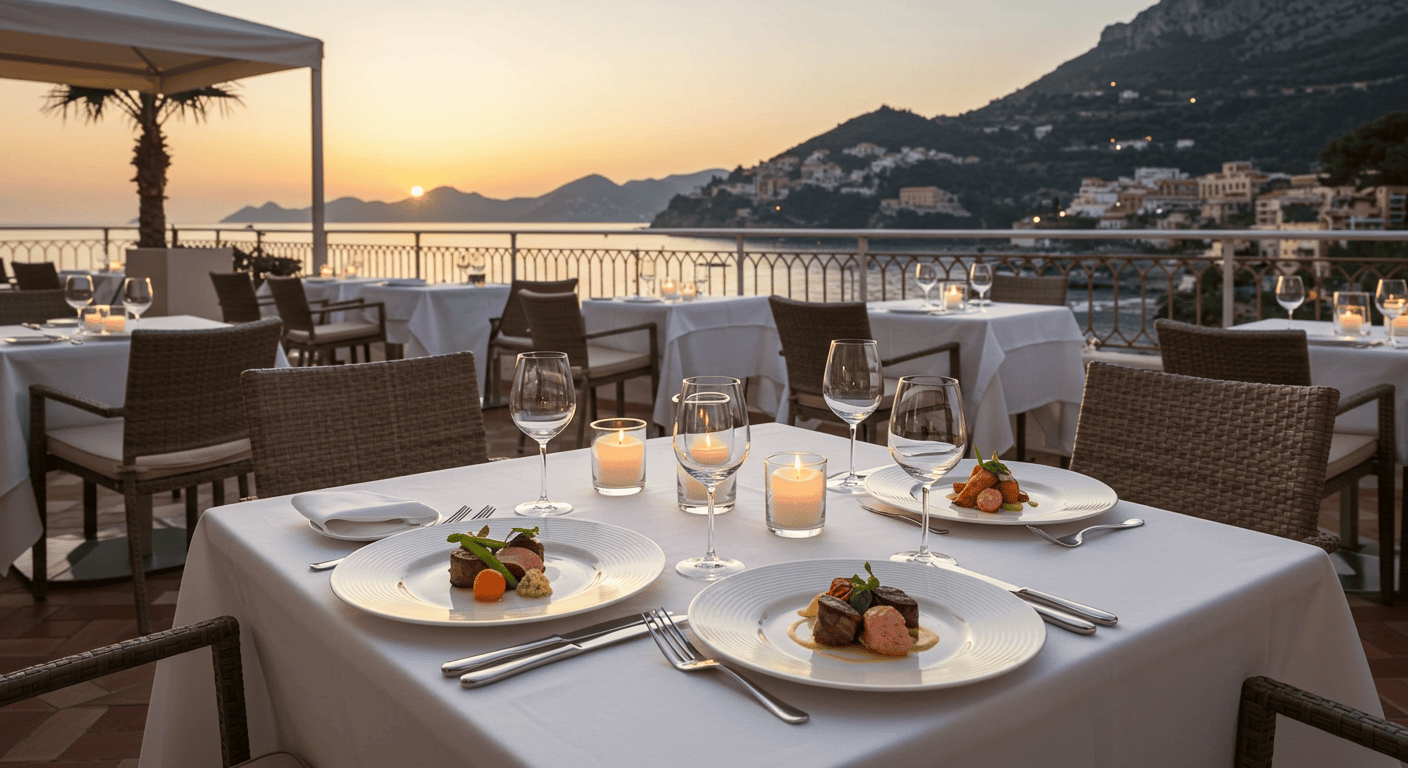
Here is the thing about eating in Cabris: you are doing it on a clifftop village in the Alpes-Maritimes where the view from almost any terrace takes in the entire arc of the Côte d’Azur, from the Esterel massif to the glitter of Cannes below – and yet somehow the food still manages to compete with the scenery. That is not a small achievement. Cabris is not trying to be Grasse, or Monaco, or anywhere else. It is quietly, confidently itself: a medieval perched village of ochre walls, bougainvillea, and an almost aggressive sense of calm. The dining here reflects exactly that character. It is serious without being stiff, rooted in Provençal tradition without being trapped by it, and occasionally capable of surprising you in ways that the more celebrated addresses on the coast simply cannot.
The Dining Character of Cabris
To understand where to eat in Cabris, you first need to understand what kind of place it is. This is a village of perhaps 1,500 souls perched at 550 metres above sea level, with more artists and writers per square metre than most French towns ten times its size. The dining scene reflects that identity. You will not find the sort of theatrical molecular gastronomy that demands a six-month reservation and a press kit. What you will find is cooking that takes its ingredients seriously, its producers personally, and its guests as adults capable of appreciating both.
The surrounding landscape does a great deal of the work. The Pays de Grasse is lavender country, olive country, herb country – the kind of territory where thyme grows wild on every hillside and the olive oil is pressed a few kilometres away. Local chefs know this and use it accordingly. The result is a Provençal table that feels genuinely of its place rather than assembled for tourist consumption. Rosé from the nearby Var, socca from the coast, daube that has been cooking since yesterday – these are not affectations. They are just lunch.
The best approach to dining in Cabris is to move slowly. Book a table for the long lunch, linger over the cheese course, watch the light change over the Esterel. The village will reward this pace entirely.
Fine Dining Near Cabris – The Elevated Table
Cabris itself is a small village, and the kind of destination where fine dining tends to mean something rather different from the white-tablecloth temple experience you might expect in Cannes or Nice. The elevation here – literal and figurative – is in the quality of produce, the care of preparation, and the remarkable settings rather than in formality for its own sake. Several of the better restaurants in and around the village offer menus of genuine ambition: carefully sourced lamb from the pre-Alpine hills, fish from the Golfe de la Napoule, black truffles from Var in season, and herbs that did not spend a week in a refrigerated lorry before arriving at the kitchen.
For Michelin-calibre experiences, the smart move is to use Cabris as a base and reach slightly outward. Grasse – just a few minutes’ drive down the hill – and the wider Alpes-Maritimes region hold serious culinary addresses that a well-briefed concierge or villa manager can arrange. The route between Cabris and Mougins, that celebrated gastronomic village, takes perhaps fifteen minutes by car and opens up an entirely different tier of the table. Mougins has long attracted serious chefs drawn by the light, the landscape, and presumably the fact that well-heeled travellers from Cannes are only twenty minutes away. The concentration of quality restaurants in that corridor – between Cabris, Mougins, and Grasse – is quietly extraordinary for an area most visitors overlook entirely.
Back in Cabris proper, look for restaurant terraces that announce their local sourcing without making a religion of it. When a menu changes by season and the patron can tell you which farm the lamb came from, you are in the right place.
Local Gems – The Heart of the Village Table
The restaurants that matter most in Cabris tend not to advertise loudly. They do not need to. A village this size runs on reputation, and word travels – as it does in all the best French villages – at the speed of a market gossip. The local bistros and auberges clustered around the central square and along the narrow lanes offer exactly the kind of cooking that travel writers have been describing as “unpretentious” for decades, which is another way of saying honest, generous, and technically better than it looks from the outside.
Expect menus built around the classics of Provençal cooking: soupe au pistou in summer, slow-braised daube de boeuf as the evenings cool, tians of courgette and tomato that make you reconsider your entire position on vegetables. The bread will be good. The oil will be very good. There will almost certainly be a cheese course that demands consideration rather than a quick wave of the hand. Desserts tend toward the comforting – a lavender crème brûlée, a fig tart with local honey – and are none the worse for it.
Portions in the Provençal tradition tend toward the generous. This is worth knowing before you order three courses with enthusiasm at midday and find yourself unable to participate in the afternoon’s activities. (The activities, in Cabris, mostly involve sitting on terraces with a view. You will manage.)
Hidden Gems and Local Secrets
Every village of this character has its places that exist just slightly off the obvious route. In Cabris, these tend to be found by walking – genuinely walking, not consulting an app – through the lanes and following your nose. A kitchen window producing the right smells at noon is as reliable a restaurant guide as anything published. The smaller addresses that serve a largely local clientele are often the ones that take the least interest in presentation and the most interest in flavour. This is, in most circumstances, the correct priority.
Ask at your villa, ask at the boulangerie, ask the woman selling lavender sachets near the church ruins. The village is small enough that almost everyone has an opinion on where to eat, and almost all of those opinions are better than a generic review written by someone who visited once on a press trip. Local intelligence in a place like Cabris is genuinely irreplaceable.
It is also worth knowing that some of the finest informal eating in the area happens at the farms and producers themselves – a domain offering dégustation, an olive producer with a small table, a cheese maker who will feed you at noon if you arrive at the right time. These experiences exist at the edges of the conventional restaurant world and are frequently the most memorable meals of a trip.
Markets, Produce and the Art of Grazing
The market culture of the Alpes-Maritimes is one of the genuine pleasures of travelling in this region, and Cabris sits at the centre of a web of excellent weekly markets that should not be missed. Grasse holds its market regularly and with real character – this is not a tourist market dressed up in Provençal fabric, but a working market where locals shop and producers bring what they actually have rather than what photographs well.
The range of produce available in season in this part of France is quietly extraordinary. Courgette flowers in June. Cèpes in October. Strawberries from Carros that taste of actual strawberries rather than packaging. Olives of a dozen varieties. Charcuterie from the mountain villages. Lavender honey in jars the colour of amber. Tapenade that bears approximately no relationship to the supermarket version.
For luxury travellers staying in a villa with a kitchen – or indeed a private chef – the market circuit is one of the great pleasures of the trip. Arriving early, moving slowly, buying generously, and then returning to cook with ingredients of this quality is a particular kind of holiday pleasure that a restaurant, however good, cannot quite replicate. The market at Grasse is well worth the short drive down the hill. The market culture of nearby Valbonne and Saint-Paul-de-Vence also rewards exploration if you are prepared to venture slightly further afield.
What to Eat and Drink in Cabris
The Provençal table has its own logic and its own non-negotiables, and eating well in Cabris means knowing which ones to embrace. Start with socca if you can find it – the chickpea pancake from Nice that travels remarkably well to the hills and is one of those things that tastes of nowhere else on earth. In the morning, eat it from paper with too much pepper and feel pleased with yourself.
For lunch and dinner, the canon is generous. Ratatouille made properly – each vegetable cooked separately, combined at the end – is a revelation compared with the stewed approximation served in less careful kitchens. Lamb from the pre-Alpine hills is exceptional, particularly in spring and early summer. The fish, sourced from the coast below, travels the short distance up the hill remarkably fresh: loup de mer, daurade, and rougets all appear regularly on menus of any ambition.
On the wine front, Provence rosé has had a remarkable decade of rehabilitation from holiday sunburn fuel to genuinely serious wine, and the better tables in and around Cabris stock examples that make the case emphatically. Look for bottles from the Var appellations – Bandol in particular produces rosé of real structure and longevity. The local whites from Bellet, a tiny appellation near Nice, are worth seeking out if you encounter them. And if someone puts a pastis in front of you at six in the evening on a terrace with a view of the Esterel turning pink, the correct response is gratitude.
Casual Dining, Terraces and the Long Afternoon
One of the genuine luxuries of Cabris is that casual dining here means something rather specific: a table on a terrace with a panoramic view across the Côte d’Azur, a glass of cold rosé, and no particular obligation to be anywhere else. The village’s elevated position means that almost every outdoor table offers a version of this experience, from the simple café near the church ruins to the more considered restaurant terraces along the main lanes.
The long Provençal lunch is not a myth. Two hours is considered brisk. Three is not unusual. The rhythm of eating in a place like Cabris is calibrated to the heat of the afternoon – lunch stretches, the village quiets between two and four, life resumes gently. Tourists who fight this rhythm do so at their own expense. Those who surrender to it entirely tend to report it as one of the better decisions of their holiday.
For something between a picnic and a restaurant meal – which is sometimes exactly what is needed – the provision of very good charcuterie, cheese, olives, and bread from the village shops, assembled and taken to one of the viewpoints near the ruined château, is an option that no restaurant can quite beat for the combination of food, light, and silence.
Reservation Tips and Practical Advice
The practical reality of dining in a small French village is that reservation habits matter more than in a city. The better tables in and around Cabris are not large, and in high season – July and August particularly – they fill with a combination of locals, second-home owners, and the growing number of discerning visitors who have discovered that the villages above the coast offer a more rewarding experience than the coast itself.
Book ahead. Not weeks ahead for most places, but a day or two at minimum in high season. Lunch reservations in France are taken as seriously as dinner ones, which is correct. If you are planning an evening meal during the Cannes Film Festival period in May, book further in advance – the ripple effect of that event reaches into the hills more than you might expect.
A few additional notes: most kitchens in Provence close between lunch service and dinner service with a sincerity that should not be tested. Arriving at 3pm hoping for food will be met with the kind of gentle French incredulity that is very hard to argue with. Dress codes at even the better restaurants in this area tend toward the smart-casual – Cabris is not Monte Carlo. And if you arrive at a restaurant without a reservation on a busy evening and are told there is no table, accept this with grace. The village is small. You will almost certainly eat at that restaurant before your trip is over.
For the fullest experience of what this extraordinary corner of Provence has to offer at the table and beyond, see our Cabris Travel Guide, which covers the village in full – from the ruins of the château to the perfume country below.
The Private Chef Option – Dining at the Villa
There is, finally, a dining option in Cabris that eclipses even the finest local restaurant for a particular kind of traveller: eating at home. Not home cooking in the harried weekday sense, but the very specific pleasure of a private chef working in a well-equipped villa kitchen with market produce sourced that morning, producing a meal calibrated exactly to the preferences of the people around the table, served on a terrace with a view of the entire coast below and no obligation to ask for the bill.
Staying in a luxury villa in Cabris with a private chef option transforms the dining question entirely. You still venture out – you should, because the village and its surroundings reward exploration at the table as much as anywhere – but you return to something that no restaurant can replicate: your own space, your own view, your own pace. A long dinner under the Provençal sky with the lights of Cannes spread across the coast below is the kind of evening that does not require a name or a reservation. It just requires the right villa.


