East Sussex Food & Wine: Sparkling Wine, Scallops & Ale
East Sussex food and wine centres on South Downs lamb, Rye Bay scallops, Sussex pond pudding and English sparkling wine grown on the region’s chalk soils. Key wine estates include Rathfinny near Alfriston, Ridgeview near Ditchling and the small, long-established Breaky Bottom near Lewes. Food markets in Lewes and the historic fishing beach at Hastings are the best places to buy direct from producers.
It is nine in the morning and the stallholders at Lewes are setting up under a sky that cannot quite decide what season it is. You buy a wedge of hard Sussex cheese you weren’t planning to buy, eat it standing up like someone with no self-control whatsoever, and wander down to the river. By noon you are on a chalk ridge above Alfriston with a glass of English sparkling wine in hand, looking at vines that would not look out of place in the Marne valley. Lunch is scallops, landed that morning at Rye, cooked simply because they do not need help. By evening you are in a Downland pub with a pint of Harvey’s, and the whole day has cost you nothing more than the willingness to eat what the county actually produces rather than what you assumed it would.
East Sussex Food and Wine: Regional Cuisine
East Sussex has never gone in for culinary theatre. What it has instead is geography that quietly does the work for you – chalk downland running to the coast, a scatter of sheltered valleys in the Weald, and a shoreline that has fed fishing families for centuries. The result is a cuisine built on honest, well-raised ingredients rather than invention for its own sake: lamb that has grazed on downland turf, fish that was in the sea that morning, and a dairy and brewing tradition that has barely needed to change its methods in a hundred years.
The same chalk that gives the South Downs their walking trails and views also happens to be geologically identical to the Champagne region’s – a fact East Sussex winemakers mention with the studied casualness of people who know exactly how good their wine is. For more on the landscape behind all this, the East Sussex Travel Guide covers the Downs and coast in full.
East Sussex Signature Dishes
Sussex pond pudding is the dish most likely to surprise visitors – a suet pudding steamed for hours with a whole lemon sealed inside, which bursts when cut to flood the plate with hot, sharp syrup. It looks unassuming and tastes like a minor miracle. South Downs lamb, raised on the chalk grassland that gives the breed its distinctive, slightly mineral flavour, turns up on menus across the county, usually treated with more restraint than you’d find elsewhere.
Sussex smokies – smoked haddock poached in cream with mustard and brandy – is a Brighton and Sussex coast classic that deserves to be better known outside the region. And then there are Rye Bay scallops, dredged and hand-dived from the shallow, sandy waters off the Sussex coast, served about as simply as possible because anything more would be an insult to them.
East Sussex Wine Estates to Visit
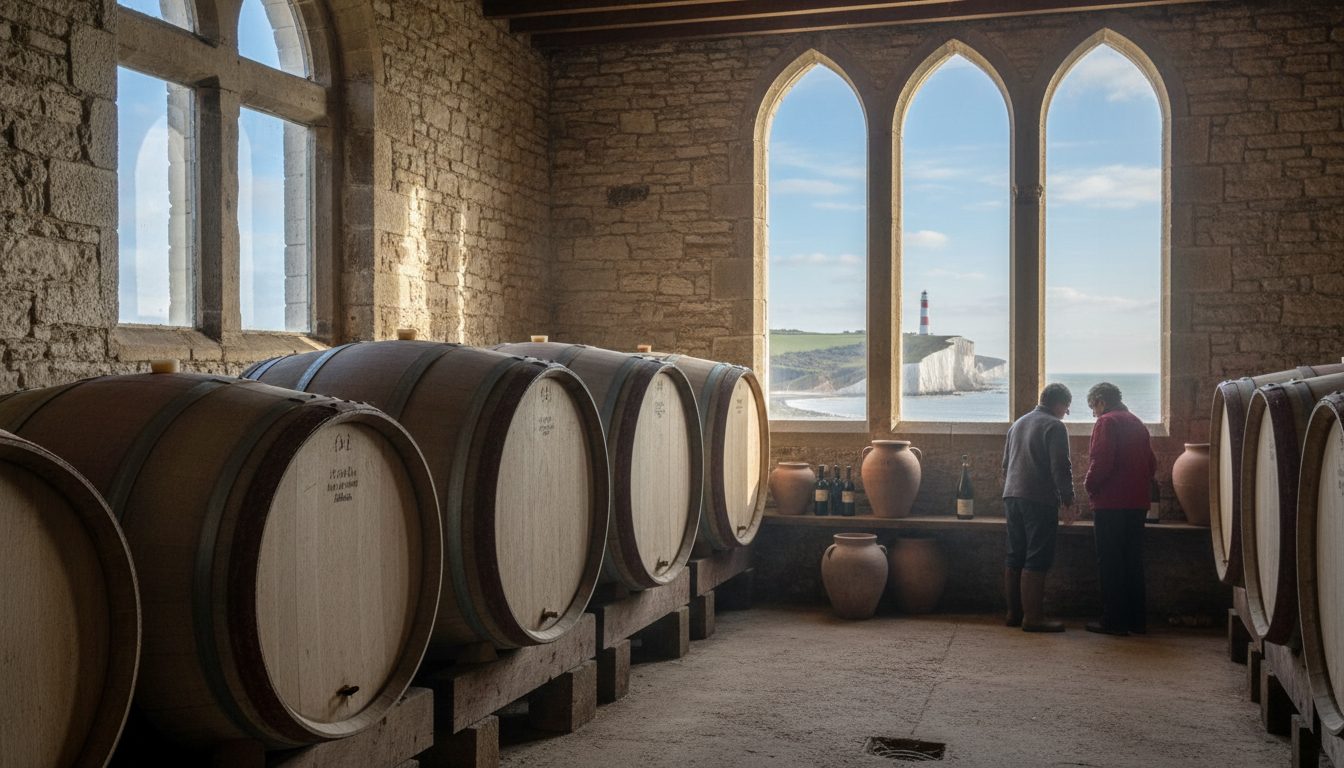
Rathfinny Wine Estate, spread across 600 acres below the Downs near Alfriston, is the county’s most ambitious wine project – a working estate with vineyards, a cellar door and tastings that take the whole business of English sparkling wine seriously without being precious about it. Ridgeview, near Ditchling, was among the first to prove that English sparkling wine could be taken seriously at all, and remains a family-run reference point for the industry it helped create.
For something smaller and considerably more eccentric, Breaky Bottom, tucked into a fold of the Downs near Lewes, has been making wine on the same patch of chalk since the 1970s, long before English sparkling wine was fashionable. It is not polished. It is not trying to be. That is rather the point.
East Sussex Food Markets
Lewes holds a farmers’ market that draws producers from across the county – cheese, meat, bread, cider and whatever vegetables the Weald has decided to produce that week. It is the kind of market where the stallholders know exactly which field something came from, and are happy to tell you at length.
Down on the coast, Hastings’ Stade – the old fishing beach beneath the net shops – remains one of the last places in England where you can buy fish straight off a beach-launched boat, sold by the people who caught it a few hours earlier. Rye and Battle both have a scattering of independent delis and greengrocers worth a browse if you’re self-catering, though don’t expect them to keep fashionable hours.
Cooking Classes in East Sussex
Several of the region’s vineyards run tastings and tours that go well beyond a quick pour and a leaflet, walking visitors through the pressing, fermentation and disgorgement that turn a cool-climate grape into something genuinely competitive with Champagne. Along the coast, seasonal cookery sessions built around the day’s catch – shucking scallops, filleting mackerel, that sort of thing – crop up at farm shops and coastal kitchens, particularly in the warmer months when the fishing boats are busiest.
None of this requires advance expertise. It requires an appetite and a willingness to get your hands slightly fishy, which, frankly, is the correct attitude to bring to a coastal county.
Seasonal Food in East Sussex
Scallops are at their best from late autumn through winter, when the Rye Bay boats are out dredging and diving in earnest. Spring brings tender South Downs lamb and the first asparagus from the Weald’s sheltered fields. Autumn is game season – pheasant and venison from estates across the Downs appear on pub menus, alongside apples from the county’s orchards, pressed into juice and cider. Winter is when Sussex pond pudding earns its keep, served steaming after a walk on a day too cold to enjoy properly.
There’s no single “best” season for East Sussex food – each one simply hands the kitchen a different set of ingredients and expects it to behave accordingly.
Best Food Experiences in East Sussex
A tour of Harvey’s Brewery in Lewes, a Victorian tower brewery still working on the banks of the Ouse, is about as close as England gets to a cathedral for beer – the smell of hops alone is worth the visit. Buying fish directly from the boats at Hastings Stade and eating it within the hour, ideally outdoors and ideally with vinegar involved, is the kind of unglamorous pleasure that luxury hotels spend a fortune trying to replicate and never quite manage.
A long lunch at a vineyard such as Rathfinny, glass in hand and Downs in view, is the more polished alternative – and there’s a reasonable argument for doing both in the same week.
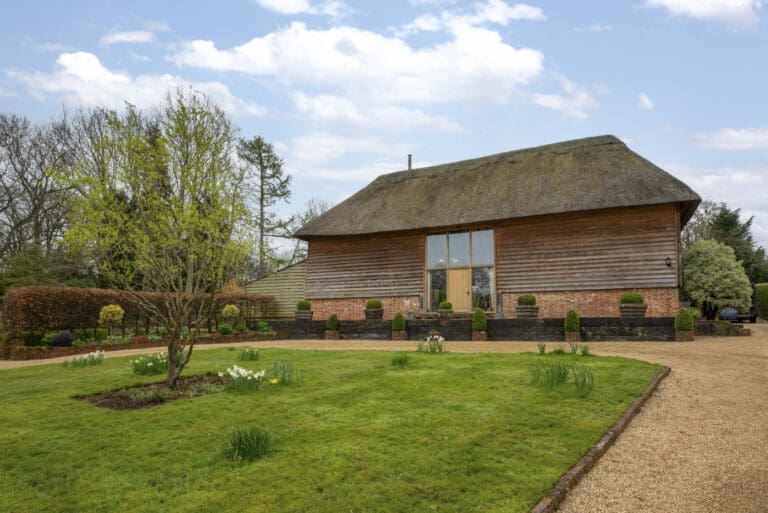
For those planning where to base themselves for all this eating and drinking, there are villas in East Sussex within easy reach of the Downs and coast.
East Sussex Food and Wine FAQs
What food is East Sussex known for?
East Sussex is known for South Downs lamb, Rye Bay scallops, Sussex pond pudding, smoked haddock dishes known as Sussex smokies, and a growing reputation for English sparkling wine made on its chalk soils.
Is East Sussex good for wine tasting?
Yes. The chalk downland around Alfriston, Ditchling and Lewes shares its underlying geology with Champagne, and estates such as Rathfinny, Ridgeview and Breaky Bottom offer tastings and tours ranging from polished to pleasantly rough around the edges.
When is the best time to visit East Sussex for food and wine?
Late summer and early autumn combine harvest-time vineyard visits with the start of the scallop season, while spring suits lamb and asparagus. Winter rewards visitors with hearty dishes like Sussex pond pudding and quieter brewery and market visits.
Keep reading
More on East Sussex
- Travel guideEast Sussex Travel Guide
- When to goBest Time to Visit East Sussex
- RestaurantsBest Restaurants in East Sussex
- FamiliesEast Sussex with Kids
Guides nearby in United Kingdom
Where to stay
Villas in East Sussex
A selection from our 56 luxury villas in East Sussex.