Best Time to Visit Gard: Pont du Gard, Nîmes & Cévennes
The best time to visit Gard is May, June or September, when temperatures sit comfortably between 20-27°C (68-81°F), the Pont du Gard isn’t swarming with coach parties, and the region’s markets, vineyards and chestnut forests are all doing something interesting. July and August bring reliable heat and the biggest festivals but also the biggest crowds and prices, while November to February is cold by local standards and much quieter.
So when does Gard actually want visitors – as opposed to merely tolerating them? That’s the real question, because this corner of southern France, strung between the Cévennes mountains and the edge of the Camargue, has a personality that shifts dramatically depending on the month. Get the timing right and you’ll have Roman ruins practically to yourself and a glass of local Costières de Nîmes in hand by six. Get it wrong and you’ll be queuing for shade under the Pont du Gard with several thousand of your closest friends. This guide, a companion piece to the main Gard Travel Guide, walks through the year month by month so you can decide which version of Gard you’d rather meet.
Best Time to Visit Gard at a Glance
May, June and September: warm, dry, manageable crowds, good value. July-August: hot, busy, festival season, premium prices. March-April and October: mild, fresh, genuinely pleasant for walking and sightseeing. November-February: cool, quiet, cheap, some rural businesses closed.
Visiting Gard in Spring: March to May
Spring arrives in Gard with a certain hesitation. March can still carry a chill off the Cévennes, with daytime highs around 15°C (59°F) and the occasional sharp mistral wind that locals shrug off and visitors wish they’d packed a scarf for. By April the garrigue scrubland is greening up properly, temperatures climb to a gentler 18°C (64°F), and the almond and cherry blossom around the villages gives the countryside a soft, unhurried look it won’t have again until autumn.
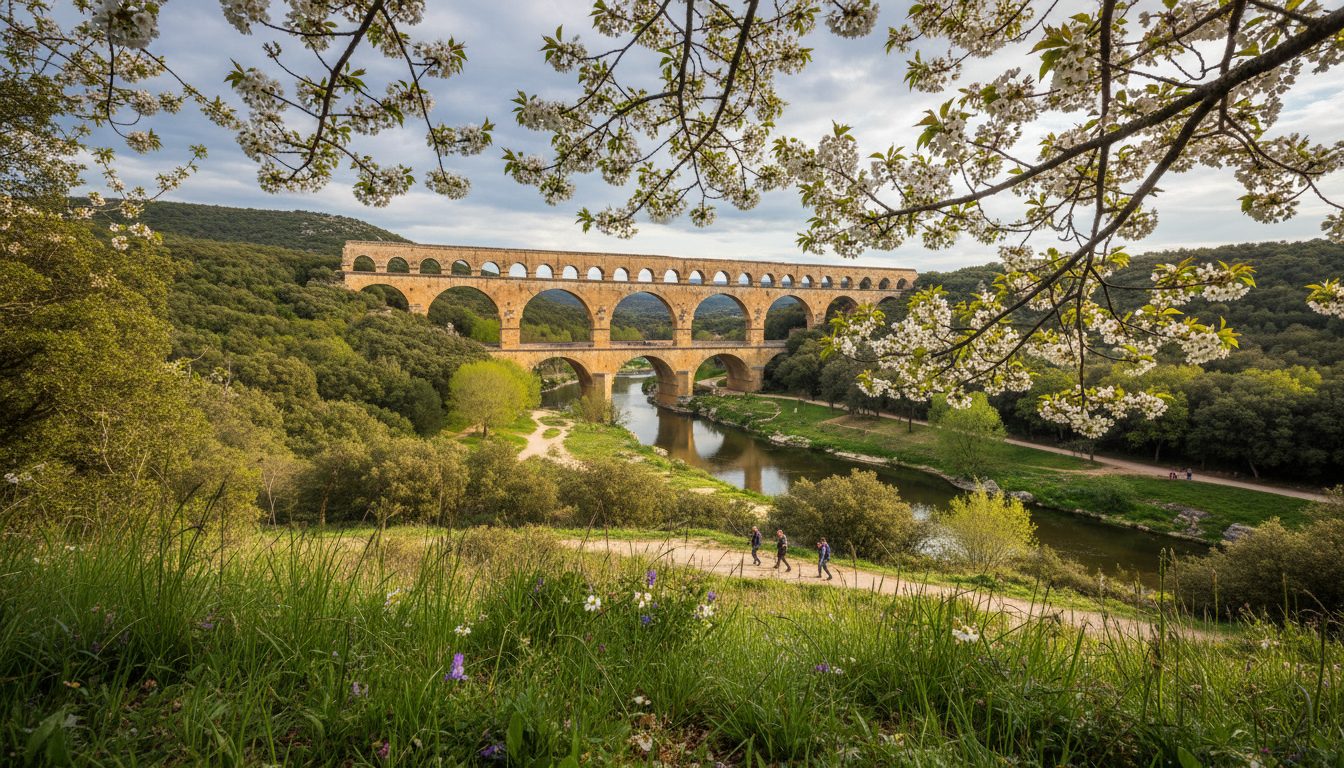
May is where spring really earns its keep: 23°C (73°F) on average, long daylight, and the Pont du Gard site open without the midsummer scrum. The famous Feria de Nîmes, the city’s bullfighting and bull-running festival, usually falls around Whitsun and fills the streets with flamenco dresses, sherry and a crowd that takes its festivities seriously – book accommodation in Nîmes well ahead if this coincides with your visit. Spring suits walkers, cyclists and anyone who’d rather photograph a Roman aqueduct without forty strangers in the frame.
Visiting Gard in Summer: June to August
June is arguably the best-kept secret of the Gard calendar – temperatures around 27°C (81°F), long warm evenings, lavender-scented hills to the north, and school holidays not yet in full swing. July and August are a different animal entirely: 31°C (88°F) is standard, occasionally climbing higher, and the heat has a dry, insistent quality that makes the shaded arcades of Uzès’ market square feel less like a nice detail and more like a survival strategy.
This is peak season in every sense. Nîmes’ arena hosts major summer events, the Saturday market at Uzès becomes a genuine spectacle, and the Gardon river’s swimming spots near the Pont du Gard fill up fast on hot afternoons. Prices for accommodation rise accordingly, and the Pont du Gard itself can feel more like an airport departure lounge than an ancient monument by midday in August. Summer suits families tied to school holidays, river swimmers and anyone who considers a melting ice cream a minor inconvenience rather than a tragedy.
Visiting Gard in Autumn: September to November
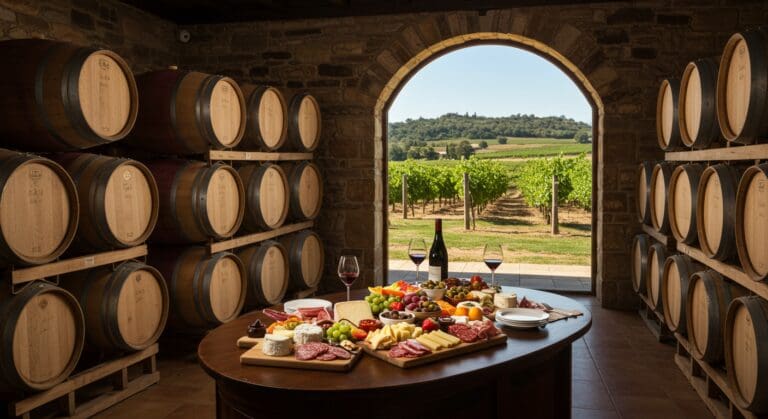
September is Gard quietly showing off. The heat of August softens to a still-generous 26°C (79°F), the crowds thin noticeably after the first week, and the grape harvest across the Costières de Nîmes vineyards gives the whole region a faint, pleasant smell of fermenting optimism. Nîmes holds its autumn Feria around the grape harvest, a smaller, more local affair than the May event but no less enthusiastic.
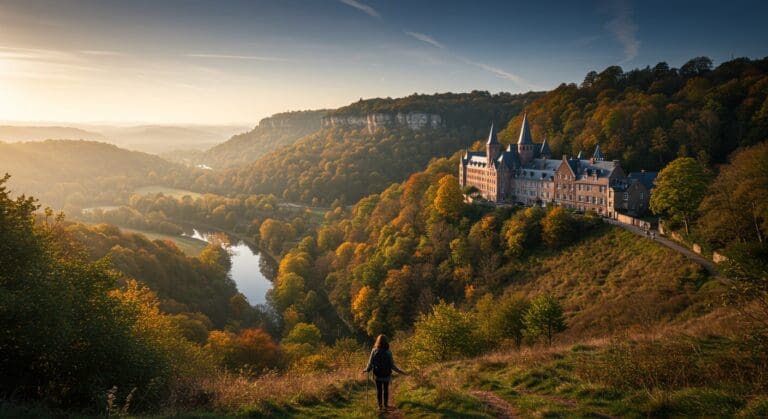
October cools further to around 20°C (68°F), and this is chestnut season in the Cévennes – roasted on street corners, stirred into stews, celebrated at harvest events in the mountain villages. By November temperatures have dropped to 14°C (57°F) and the light turns that particular low, golden colour that makes even a petrol station look faintly cinematic. Autumn suits food-focused travellers, wine enthusiasts and anyone who finds the idea of a crowd-free Pont du Gard at sunset more appealing than a crowded one at noon.
Visiting Gard in Winter: December to February
Winter in Gard is not dramatic, but it is honest. December sits around 11°C (52°F), January dips slightly to 10°C (50°F), and February recovers a touch to 12°C (54°F) – cool rather than cold, with clear bright days far more common than grey ones, though the mistral can make a still 10°C feel considerably less friendly. Snow is rare at lower elevations but not unheard of in the Cévennes foothills.
This is when Gard empties out properly. Some rural restaurants and smaller museums reduce their hours or close for a few weeks, particularly in January, and the Pont du Gard site itself operates on shorter winter hours. What you get in return is near-total solitude at major sites, markets that feel local rather than performative, and accommodation prices at their lowest point of the year. Winter suits history buffs, photographers chasing low light, and travellers who’d rather have Nîmes’ Roman arena to themselves than share it with a tour bus.
Best Time to Visit Gard for Festivals and Events
Gard’s calendar has two clear high points: the Nîmes Feria around Whitsun in May/June and its smaller autumn counterpart in September, both built around bullfighting traditions, flamenco-inflected street parties and a city determined to make the most of its Roman arena. Markets run year-round, but Uzès’ Saturday market and the Wednesday evening market in summer are at their liveliest from May through September, loaded with local cheeses, olives, melons and lavender honey from the surrounding countryside. Chestnut festivals animate Cévennes villages through October, a good reason to plan an autumn detour into the hills rather than sticking strictly to the Roman monuments.
Shoulder Season in Gard: Why It’s the Smart Choice
If there’s a single piece of advice worth taking from this guide, it’s to aim for the shoulder months. Late May, June and September deliver the temperatures people actually picture when they imagine the south of France – warm but not punishing – without the August scrum at the Pont du Gard or the inflated accommodation rates that peak around 14 July. Restaurants still have their terraces out, the vineyards are either flowering or harvesting depending on which side of summer you land on, and locals have time to actually talk to you rather than simply process you. Early October runs it close, with the added bonus of chestnut season beginning in the Cévennes. For most travellers weighing weather against crowds against cost, these windows represent the best return on a Gard trip you’re likely to find.
Off-Season Gard: The Case for Winter
There’s an argument, rarely made loudly enough, for visiting Gard in the depths of winter precisely because almost nobody else does. The light is sharper, the Roman monuments stand in genuine quiet, and a good lunch costs noticeably less than it would in July. Yes, some smaller rural businesses shut their doors for a January breather, and yes, you’ll want a proper coat for the mistral days. But for travellers more interested in atmosphere than tan lines, winter in Gard offers something summer simply can’t: a region behaving entirely like itself, with nobody watching.
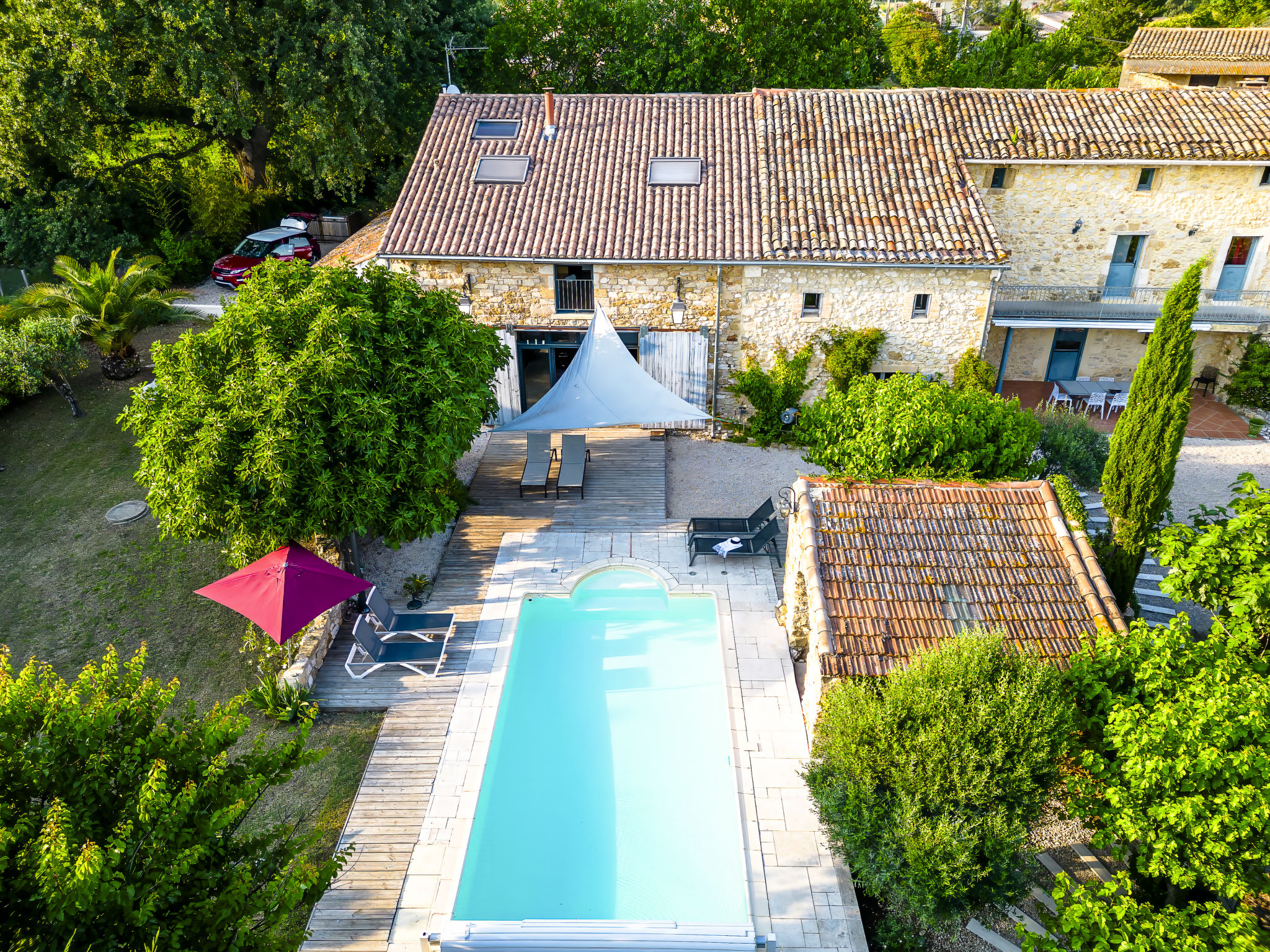
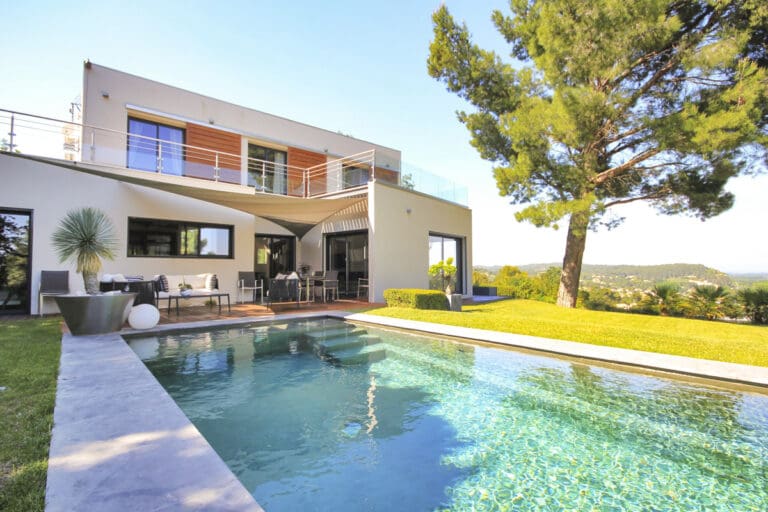
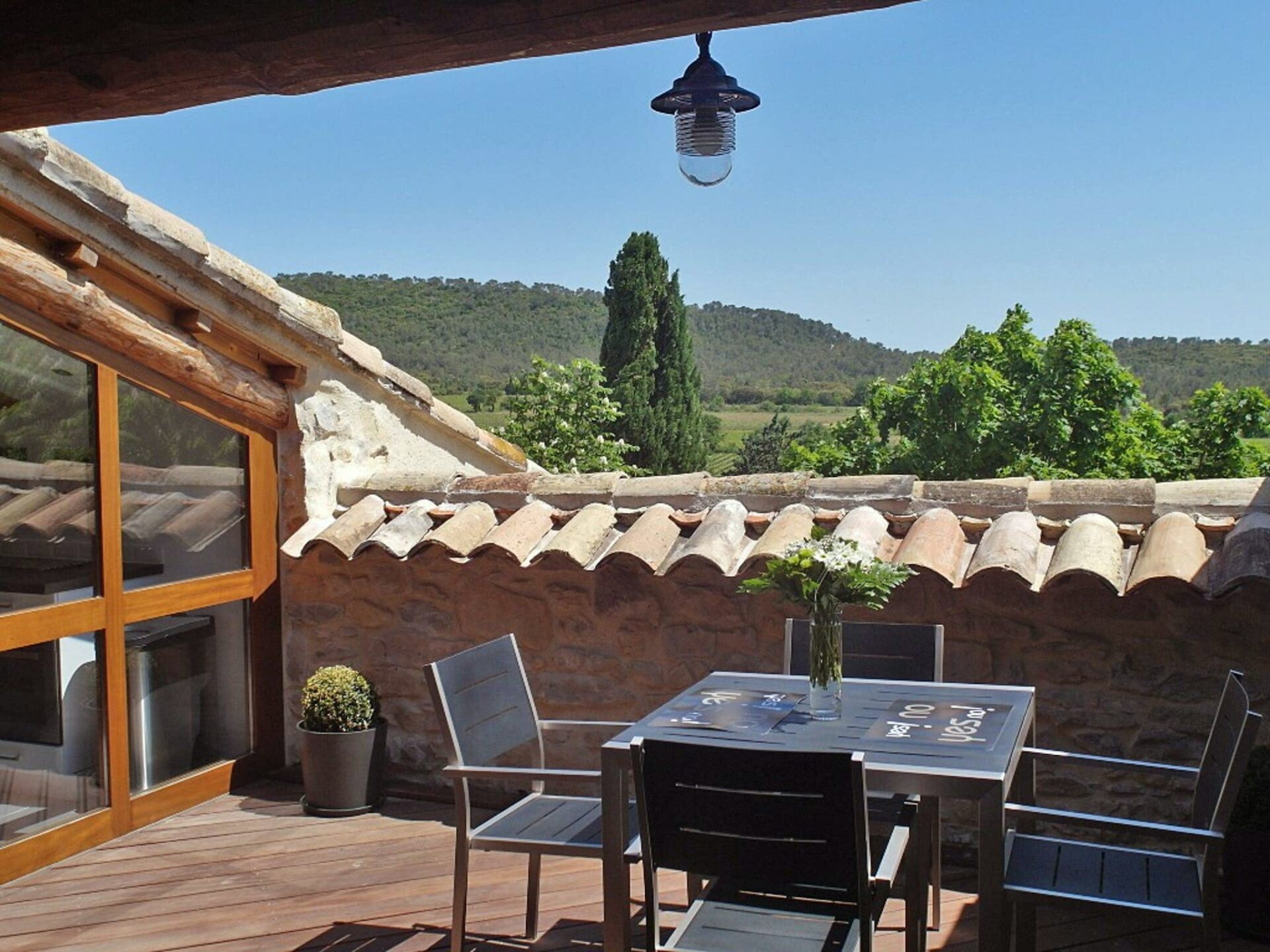
Whichever month you choose, it helps to have a comfortable base to come home to – browse villas in Gard to find one that suits your season.
Gard Weather and Seasons FAQs
Is Gard hot in summer?
Yes. July and August regularly reach 31°C (88°F), with dry heat that can feel more intense than the number suggests, particularly in exposed spots like the Pont du Gard car park around midday. Mornings and evenings stay pleasant, so plan outdoor sightseeing accordingly.
Does it rain much in Gard?
Rainfall is concentrated mainly in autumn, particularly September and October, when the region can see short but heavy downpours known locally as episodes cévenols. Summers are largely dry, and winter rain tends to be lighter and more intermittent.
What is the mistral and does it affect travel plans in Gard?
The mistral is a strong, cold, dry wind that funnels down the Rhône valley and can affect Gard, particularly in winter and spring. It tends to bring very clear skies, but can make outdoor dining and sightseeing less comfortable for a day or two at a time; it usually passes quickly.
Keep reading
More on Gard
- Travel guideGard Travel Guide
- RestaurantsBest Restaurants in Gard
- Food & wineGard Food & Wine
- FamiliesGard with Kids
Guides nearby in Occitanie
Where to stay
Villas in Gard
A selection from our 51 luxury villas in Gard.