Gwynedd with Kids: Castles, Steam Trains & Beaches
Gwynedd in North Wales works well for families thanks to sheltered sandy beaches along Cardigan Bay, gentle lower-level walking in Snowdonia, medieval castles children can actually climb over, and narrow-gauge steam railways that solve the “are we there yet” problem rather than causing it. The region suits all ages, from toddlers on buggy-friendly promenades to teenagers coasteering off the Llŷn Peninsula. Most beaches, castles and towns sit within an hour of each other, so a week’s holiday rarely means long days in the car.
Most guidebooks reach for the same photograph: Yr Wyddfa’s summit, swallowed in cloud, looking like the sort of place you’d need ropes and a flask of something stronger than squash to survive. This is, to put it gently, not the Gwynedd that families actually experience. The real secret of the place is lower down – on beaches so flat the tide seems to apologise before it comes in, on slate paths worn smooth by two centuries of quarrymen, on trains that climb hills so small children don’t even need travel sickness tablets. Gwynedd with kids is less about conquering mountains and more about pottering happily at their feet.
Is Gwynedd Good for a Family Holiday?
Yes, and for reasons that have little to do with marketing. Gwynedd covers a large stretch of North Wales – Snowdonia’s mountains inland, Cardigan Bay’s coastline to the west – which means a short drive can take you from rock pools to waterfalls without anyone getting carsick. Towns such as Barmouth, Harlech, Porthmadog, Pwllheli and Caernarfon are compact and walkable, with none of the queuing-for-an-ice-cream chaos you find further south in Wales during August.
It also helps that Gwynedd is bilingual, with Welsh spoken as a first language in many communities – children tend to find the road signs and shop names genuinely interesting rather than baffling, which is more than can be said for their parents’ attempts at pronunciation. For a wider sense of the region beyond its family appeal, the Gwynedd Travel Guide covers the full picture. For families specifically, the appeal is simple: short distances, low stress, and scenery that keeps children looking out of the window instead of at a screen.
Best Family Beaches in Gwynedd
Barmouth has the classic seaside formula – wide sand, a working harbour, a railway bridge to admire, and enough gentle shallows that even nervous paddlers relax. Harlech’s beach, backed by dunes and overlooked by its castle on the ridge above, is vast at low tide and rarely crowded even in summer, mostly because reaching it involves a walk through the dunes that puts off anyone carrying more than a windbreak.
Black Rock Sands near Porthmadog is popular with families because you can drive directly onto the beach (seasonal restrictions apply, so check locally), which saves the usual gear-hauling expedition. Abersoch and Llanbedrog on the Llŷn Peninsula offer calmer water, colourful beach huts and a slightly more fashionable crowd, useful to know if you packed for mud and got sunshine instead. One honest caveat: the sea here is the Irish Sea’s southern reach, and it is bracing in the way that British seas are always described as “bracing” rather than what they actually are, which is cold.
Things to Do in Gwynedd with Kids
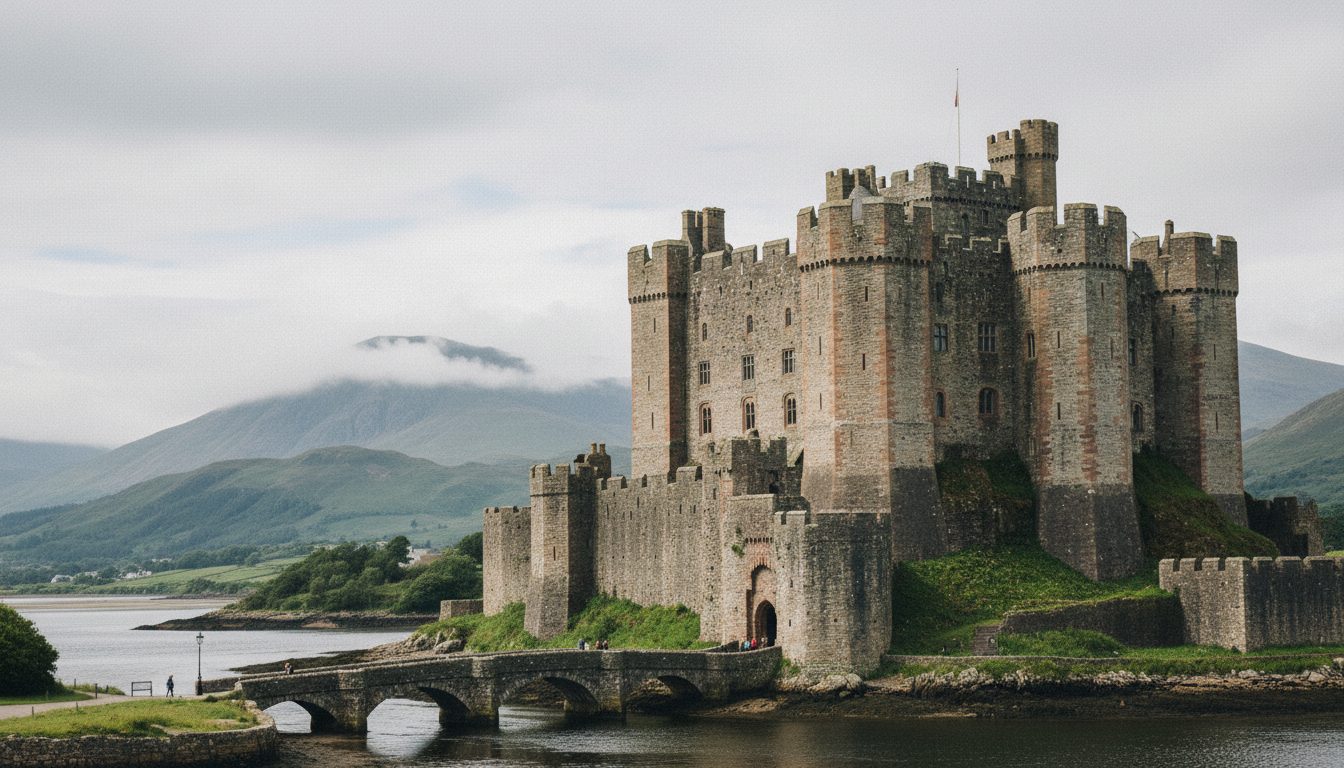
Castles are the obvious draw, and Gwynedd does not disappoint – Caernarfon Castle’s polygonal towers and Harlech Castle’s clifftop position both give children somewhere proper to run, climb and imagine sieges, which is really all a castle needs to do. Narrow-gauge steam railways thread through the old slate-quarrying valleys, climbing gently from coastal towns into greener hills; they are slow, charming, and a genuinely restful way to see Snowdonia without anyone complaining about their legs.
Lower-level walks around lakes such as Llyn Padarn suit younger legs, while older children and teenagers can try coasteering, surfing or paddleboarding with a local activity operator along the Llŷn Peninsula coast. Former slate quarries have been turned into adventure sites with zip lines and underground trampoline networks – loud, slightly terrifying for parents watching from below, and reliably popular with anyone over the age of eight. Boat trips from harbours such as Pwllheli or Porthmadog offer reasonable odds of spotting dolphins or seals in Cardigan Bay.
Rainy Day Activities in Gwynedd
Wales does rain, and Gwynedd’s mountains have a habit of attracting more than their share of it, so a plan B matters. Slate heritage museums and visitor centres explain the industry that shaped the region, usually with hands-on exhibits that keep children occupied longer than expected. Indoor leisure centres with swimming pools exist in the larger towns, useful when the outdoor pool option (the sea) is uninviting.
Soft play centres and indoor climbing walls turn up in Caernarfon and Bangor, while smaller towns tend to have a cosy café with a log fire and a shelf of board games, which is less exciting to a nine-year-old but considerably more relaxing for everyone else. Local libraries often run free family activities during school holidays, and cinemas in Bangor and Porthmadog provide a reliable last resort when the forecast simply will not cooperate.
Where to Eat with Kids in Gwynedd
Harbourside chip shops are something of an institution here, serving the kind of fish and chips that tastes better eaten on a harbour wall than it would on a plate at home, for reasons science has never adequately explained. Welsh cakes and bara brith appear in bakeries and farm shop cafés throughout the region, both forgiving options for fussy eaters who refuse anything green.
Pubs with gardens and play areas are common in coastal towns, a sensible setup that lets parents finish a meal while children work off the afternoon’s ice cream. Cardigan Bay crab and lobster feature on menus close to the coast, and farm shop cafés often serve Welsh lamb in simpler, child-friendly forms – think sausages and mash rather than anything requiring a translation of the menu.
Gwynedd with Kids by Age: Toddlers, Juniors and Teens
Gwynedd flexes well across ages, largely because its attractions are not built around a single demographic the way a theme park is. A little planning by age group makes the difference between a smooth week and a fractious one.
Gwynedd with Toddlers
Flat promenades in Barmouth and Porthmadog suit buggies well, and shallow, gently shelving beaches reduce the usual toddler-near-water anxiety. Main towns have baby-changing facilities in public toilets and larger cafés, though smaller villages are patchier, so plan accordingly. Short lakeside paths around Llyn Padarn or gentle forest trails give toddlers somewhere to toddle without the risk of an actual mountain appearing underfoot. Early dinner sittings are generally easy to find, since Welsh seaside towns keep sensible hours rather than Mediterranean ones.
Gwynedd with Juniors (Ages 5-12)
This age group is Gwynedd’s sweet spot. Steam railways, castle battlements, rock pools and sandcastle-building beaches tick every box without requiring much persuasion. Cycling paths around Porthmadog and Barmouth suit confident young riders, and many towns run family-friendly treasure hunts or trails tied to local history, slate heritage or castle legends. Expect a fair amount of enthusiastic running up castle walls that were, admittedly, not designed with modern health and safety in mind.
Gwynedd with Teenagers
Teenagers tend to respond better to adrenaline than scenery, and Gwynedd obliges with coasteering, surfing, mountain biking through forest trails such as those around Coed y Brenin, and zip-lining through old quarry caverns. An easier, well-marked path up Yr Wyddfa can work for fitter teenagers with proper boots and a realistic weather forecast, though it should never be underestimated – people do get caught out, and mountain rescue teams are not there for decoration. Welsh language and culture, often met with a shrug at first, has a way of becoming genuinely interesting once teenagers realise it is not taught in most schools back home.
Getting Around Gwynedd with Kids
A car is the practical choice, since Gwynedd’s public transport, while scenic, is not frequent enough to build a tight family itinerary around. The coastal railway line linking towns such as Barmouth, Harlech and Porthmadog is a pleasant and useful option for shorter hops, particularly if someone in the car has reached their limit of “are we nearly there yet.”
Roads inland through Snowdonia narrow quickly into single-track lanes with passing places, and satnav journey times should be treated as optimistic fiction rather than fact – a ten-mile route can easily take twenty-five minutes longer than promised. Parking at popular beaches fills early in summer school holidays, so arriving before mid-morning saves considerable frustration. Pack snacks, pack patience, and accept that the views, at least, make up for the pace.
Best Time to Visit Gwynedd with Kids
School summer holidays bring the busiest crowds, particularly to Barmouth and Abersoch, along with the highest likelihood of actual sunshine. May, June and September offer a quieter, often equally pleasant alternative, with lighter traffic on those single-track lanes and more availability generally. Welsh weather remains famously unreliable whatever the month, so waterproofs belong in every suitcase regardless of season – treat sunshine as a pleasant bonus rather than a guarantee, and nobody will be disappointed.
For families weighing up where to stay, villas in Gwynedd are worth a look.
Gwynedd Family Holiday FAQs
Is Gwynedd suitable for a family holiday with young children?
Yes. Gwynedd has several flat, gently shelving beaches, short lakeside and forest walks suitable for pushchairs, and compact coastal towns with baby-changing facilities and early dinner sittings, making it manageable for families with toddlers.
How many days do you need in Gwynedd with kids?
A week allows time for beaches, a castle visit, a steam railway trip and at least one rainy-day backup without feeling rushed, though a long weekend is enough to cover the coastal highlights around Barmouth or Porthmadog.
Is the sea warm enough for swimming in Gwynedd?
The sea along Cardigan Bay stays cool even in summer, generally suited to paddling and short swims rather than prolonged bathing. Wetsuits are commonly used by families and surfers alike, particularly outside the peak summer weeks.
Keep reading
More on Gwynedd
- Travel guideGwynedd Travel Guide
- When to goBest Time to Visit Gwynedd
- RestaurantsBest Restaurants in Gwynedd
- Food & wineGwynedd Food & Wine
Guides nearby in Wales
Where to stay
Villas in Gwynedd
A selection from our 44 luxury villas in Gwynedd.