Ireland Food & Wine: Oysters, Soda Bread & Whiskey Trails
Ireland’s food culture centres on seafood from its Atlantic and Celtic Sea coastlines, grass-fed beef and lamb, and dairy products of genuinely exceptional quality, eaten fresh at farmers’ markets and traditional pubs. The country produces very little wine of its own, but makes up for it with world-renowned whiskey, stout and a fast-growing craft beer and cider scene. Best eating happens close to the coast, where oysters, mussels and freshly landed fish define the regional cooking.
There is a particular hour, somewhere around seven in the morning on a pier in Galway or Dingle, when the boats come in and the gulls lose their minds entirely. Crates of mussels and langoustines are hauled up still dripping, someone’s uncle is shouting about the price of cod, and a few hundred metres away a woman is already shucking oysters for breakfast, because that is apparently a normal thing to do here. This is Ireland’s real food scene – not the laminated “Traditional Irish Breakfast” menus of the tourist strip, but something older, saltier and considerably better than its reputation suggests. For decades Ireland’s cuisine was dismissed, sometimes fairly, as a grey business of boiled things. That version is mostly gone. What is left is a food culture built on genuinely superb raw ingredients – dairy, beef, lamb, seafood – cooked with a confidence that took its time arriving but has arrived all the same.
Ireland Food and Wine at a Glance
Ireland’s strength is produce rather than pretension: Atlantic seafood, grass-fed beef, artisan cheese and dairy that genuinely tastes different because the cows eat grass rather than feed for most of the year. The coastline, from Donegal round to West Cork, is where the best eating happens, particularly oysters, crab and chowder. Dublin has the country’s most ambitious restaurant scene, but smaller towns in Cork, Clare and Galway often punch above their weight. Ireland is not a wine country – rainfall and sunshine hours see to that – so whiskey, stout and an increasingly serious craft beer and cider industry take its place as the national drinks to actually pay attention to. For a wider sense of where this all fits into a trip, the Ireland Travel Guide covers regions and timing in more detail.
Regional Cuisine in Ireland: From Atlantic Coast to Pasture
Ireland’s food map is largely drawn by its coastline and its grass. The west and southwest – Galway, Clare, Kerry, Cork – build their cooking around what comes out of the Atlantic that morning: oysters, mussels, crab, monkfish, and mackerel so fresh it barely needs seasoning. Smoked salmon, a genuine Irish speciality rather than an imported habit, is cured along much of this coast using methods passed down through generations of small smokehouses.
Move inland and the story shifts to pasture. Ireland’s mild, wet climate (good for very little else, weather-wise) produces some of the best grazing land in Europe, which is why Irish beef, lamb and dairy consistently rank among the finest anywhere. Butter here is not an afterthought; it is practically a food group. Dublin sits at the hinge between coast and country, with a restaurant scene that has quietly matured from “safe bistro” to genuinely confident modern Irish cooking, often built on exactly the same beef, lamb and seafood found further west, just plated with more ambition.
Signature Dishes in Ireland
Start with the obvious: Irish stew, a slow braise of lamb or mutton with potatoes, carrots and onion, the kind of dish that forgives bad weather entirely. Soda bread, dense and slightly sour, appears everywhere from breakfast to the side of a bowl of chowder, and is one of the few things Ireland does that nobody else has quite managed to copy properly.
Seafood chowder – thick, creamy, built on whatever the boats landed that day – is close to a national dish along the west coast, and the quality varies wildly depending on how recently the fish actually swam. Colcannon (mashed potato with cabbage or kale and butter, lots of butter) and boxty, a potato pancake particular to the northwest and midlands, round out the potato’s genuinely dominant role in Irish cooking. Black pudding, made from pork blood and oatmeal, divides visitors sharply but is a fixture of any proper Irish breakfast, alongside bacon, eggs and that soda bread again. Along the coast, oysters are often served as simply as possible – natural, with lemon and brown bread – which is usually the correct call.
Wine in Ireland: Whiskey, Stout and the Truth About the Grapes
Let’s address this honestly, since the word “wine” is doing some heavy lifting in this guide’s title: Ireland is not a wine country. The climate is wrong for it – too much rain, too little reliable sun – and the handful of small vineyards that do exist, mostly in the sunnier southeast, remain a curiosity rather than an industry. Most wine on Irish tables is imported, and the lists in good restaurants are thoughtfully chosen but not locally grown.
What Ireland does instead, and does with genuine authority, is whiskey. Irish whiskey – traditionally triple-distilled and smoother than its Scottish cousin – has its heartland across Cork, Kerry and the midlands, with distillery visits now a serious food-and-drink experience in their own right, including tastings that explain the difference between pot still, malt and blended styles far better than any bottle label manages. Stout, meanwhile, needs no introduction, though it tastes markedly better within a few miles of where it is brewed than it does shipped and chilled elsewhere – a fact every Irish publican will confirm with some satisfaction. Craft beer has grown rapidly over the past decade, particularly around Dublin and Cork, and traditional cider, made from orchards concentrated in the southeast, is worth seeking out on its own terms rather than as a whiskey substitute.
Food Markets in Ireland
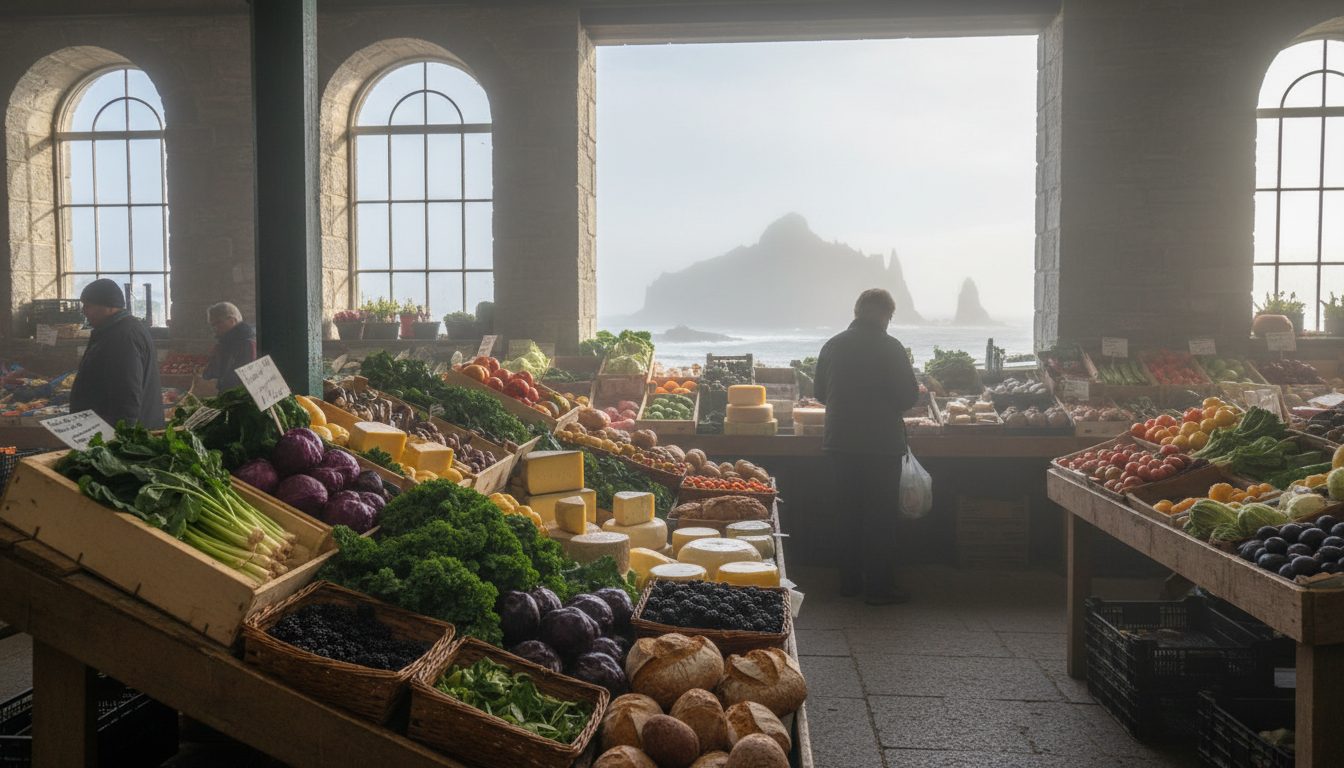
Ireland’s food markets are where the produce does the talking, usually on a Saturday morning, usually with some rain threatening. City markets bring together artisan cheesemakers, local butchers, bakers and fishmongers under one roof, often in handsome Victorian buildings that have fed their city for well over a century. Smaller towns along the west coast run weekly farmers’ markets built almost entirely around that morning’s catch, local cheese, soda bread and preserves, and these are usually a far better gauge of regional cooking than any restaurant menu.
Markets are also the easiest way to taste Ireland’s dairy properly – a wedge of farmhouse cheese eaten standing up in a market square, still slightly warm from the stall, tells you more about Irish food than a week of hotel breakfasts. Cork and Galway in particular have strong market cultures worth building a morning around, ideally with no fixed plans afterward.
Cooking Classes in Ireland
Several cookery schools, concentrated particularly in County Cork and County Clare, run courses ranging from a half-day introduction to Irish baking and seafood cookery through to longer residential programmes for the more seriously obsessed. Many are built directly onto working farms or smallholdings, which means the class often starts in a vegetable garden or at a kitchen door with hens wandering past, rather than in a sterile demonstration kitchen. Expect to cover soda bread, chowder, and whatever the morning’s market or garden happened to provide – these classes tend to be shaped by season rather than a fixed syllabus, which is very much the point.
Seasonal Specialities in Ireland
Oysters are at their best from September through April, broadly following the old rule of only eating them in months containing an “r” – a piece of folk wisdom that happens to be more or less scientifically sound. Spring brings new-season lamb, grazed on early grass and noticeably sweeter than the autumn equivalent. Summer is for crab, mackerel and the brief, glorious window when soft fruit actually ripens outdoors. Truffles and olive oil, for the record, are not an Irish speciality and anyone claiming otherwise is probably trying to sell you something – Ireland’s seasonal strengths lie firmly in seafood, dairy and pasture-raised meat, and the calendar here is built around the boats and the grass rather than the sun.
Best Food Experiences in Ireland
An autumn oyster festival on the west coast remains one of the country’s great food gatherings, drawing serious eaters for shucking competitions and a great deal of stout. A whiskey distillery tour through Cork or Kerry, ending in a proper tutored tasting, explains more about Irish food culture than most restaurant meals manage. A simple seafood shack lunch somewhere along the Atlantic coast – plastic chairs, paper plates, chowder that outclasses places charging four times as much – is, more often than not, the meal visitors remember longest. And a slow pub lunch, stew and soda bread, preferably with rain on the window and no particular schedule, remains the most honest introduction to how Ireland actually eats.
For travellers planning where to base themselves around all this eating and drinking, see villas in Ireland.
Ireland Food and Wine FAQs
Does Ireland produce its own wine?
Only in very small quantities. A handful of vineyards operate in the sunnier southeast, but Ireland’s climate is not well suited to grape growing, so most wine served in restaurants and bars is imported rather than domestically produced.
What is the best time of year for seafood in Ireland?
Oysters are best from September to April, while crab and mackerel peak through the summer months. Seafood is available year-round along the coast, but autumn and winter are traditionally considered prime oyster season.
Is Irish food different from British food?
Yes, noticeably. Irish cooking leans heavily on potatoes, dairy, grass-fed beef and lamb, and strong regional seafood traditions along the Atlantic coast, with dishes like soda bread, colcannon and seafood chowder that have no direct British equivalent.
Where to stay
Villas in Ireland
A selection from our 43 luxury villas in Ireland.