Best Time to Visit Joshua Tree: Wildflowers & Dark Skies
The best time to visit Joshua Tree National Park is during spring (March to May) or fall (September to November), when daytime temperatures sit between 18-29°C (64-85°F), ideal for hiking, climbing and wildflower viewing. Summer brings extreme heat that regularly exceeds 38°C (100°F), while winter nights frequently drop below freezing despite mild, sunny days. Crowds and prices peak in spring, ease in late autumn, and drop to their lowest in high summer.
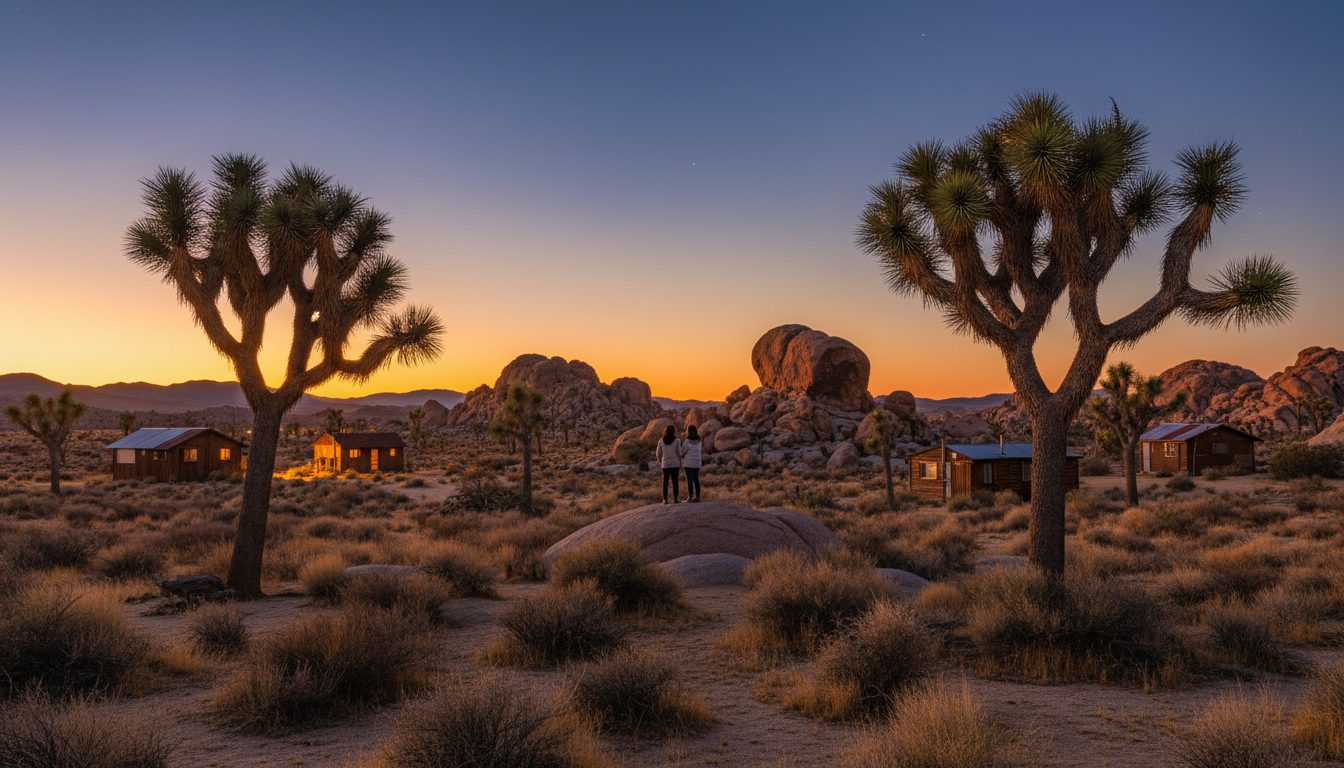
Picture this: it’s a Tuesday morning in April, somewhere around seven, and you’re standing in a landscape that looks like it was art-directed by a committee of geologists with a grudge against straight lines. The light is doing that low, gold, faintly theatrical thing it only manages for about twenty minutes a day. A coyote trots past with the unbothered confidence of someone who owns the place – he does. Somewhere nearby a cholla cactus is backlit into something almost pretty, which is more than can be said for its attitude toward passing ankles. The air is somewhere in the low twenties Celsius, jacket-off, sunscreen-on weather, and the trail is yours alone, because everyone else is still asleep in town nursing the sort of hangover that only an uninterrupted desert sky full of stars can induce. This, more or less, is the pitch for visiting Joshua Tree in spring. The rest of the year has its own version of that morning – some gentler, some considerably hotter – and working out which one suits you is really the whole point of this guide. For the wider picture of getting here and getting around, the Joshua Tree Travel Guide covers the practicalities.
Best Time to Visit Joshua Tree: At a Glance
- Spring (Mar-May): 20-29°C / 68-85°F days, wildflowers, busiest and priciest season
- Summer (Jun-Aug): 38-43°C / 100-110°F days, lowest crowds and rates, serious heat risk
- Fall (Sep-Nov): 21-33°C / 70-91°F days, second peak, cooler rock for climbers
- Winter (Dec-Feb): 15-18°C / 59-64°F days, 0-5°C / 32-41°F nights, quiet midweek, superb stargazing
Joshua Tree Weather in Spring: March to May
Spring is the reason Joshua Tree has a reputation at all, and it earns it. Daytime temperatures climb gently from the high teens in March to the high twenties by late May, while nights stay cool enough to need a fleece around the campfire. This is when the desert, which spends most of the year looking magnificently indifferent to your presence, briefly softens: brittlebush flushes yellow, the ocotillo throws up red tips like a plant having a minor emergency, and in a good rain year the cholla cactus garden becomes something close to luminous at dawn. Whether the bloom is modest or spectacular depends entirely on winter rainfall, and nobody – rangers included – can promise it a year in advance.
March in Joshua Tree
Still cool at night (often 4-9°C / 39-48°F), with pleasant 20-24°C / 68-75°F days. Spring break crowds arrive mid-month, and the West Entrance can queue before 9am on weekends.
April in Joshua Tree
The peak month for both weather and visitor numbers. Expect 23-28°C / 73-82°F afternoons, full campgrounds booked weeks ahead, and rock climbers filling every reasonable crack in every reasonable boulder.
May in Joshua Tree
Warming toward summer – 27-30°C / 81-86°F by late month – but still comfortable for morning hikes. Crowds thin slightly after the holiday weekend at the start of the month.
Joshua Tree Weather in Summer: June to August
Summer in Joshua Tree is not subtle. Daytime temperatures routinely sit between 38-43°C (100-110°F), occasionally edging past 46°C (115°F), and the ground itself becomes a legitimate hazard – rock surfaces can exceed 60°C. Hiking after about 10am is not recommended by rangers, full stop, and several popular trails become genuinely dangerous without serious water reserves. Nights, though, stay warm rather than brutal, hovering around 21-27°C (70-80°F), which makes for excellent after-dark stargazing once the sun has finally given up for the day.
This is unambiguously the quiet season. Lodging rates in the surrounding towns drop noticeably, trails that were shoulder-to-shoulder in April are suddenly yours, and the park’s famous dark skies get even darker thanks to clearer summer air. It suits early risers, dedicated stargazers and anyone who finds the idea of a near-empty national park more appealing than a cooler afternoon. It does not suit families with small children, anyone with a cardiovascular condition, or people who think “it’s a dry heat” is a meaningful comfort at 43°C.
Joshua Tree Weather in Fall: September to November
Fall is spring’s quieter, slightly underrated sibling – arguably the better one, if you can tolerate marginally warmer afternoons in exchange for noticeably smaller crowds. September still carries summer’s heat (daytime around 33°C / 91°F), but by November the park has cooled into something close to perfect: 21-26°C / 70-79°F days and crisp 7-13°C / 45-55°F nights. Rock climbers tend to prefer this window to spring’s, since cooler rock means better friction and fewer sweaty palms at the crux.
September in Joshua Tree
Hot by day (around 33°C / 91°F) but increasingly bearable by evening. Crowds remain low – this is arguably the best-kept secret on the calendar.
October in Joshua Tree
Temperatures ease to a comfortable 27-30°C / 81-86°F, and this is when the surrounding Hwy 62 towns liven up with autumn art and music events. Bookings pick up noticeably.
November in Joshua Tree
Cooler again, 21-26°C / 70-79°F, with Thanksgiving week bringing a short, sharp crowd surge before the park settles into winter calm.
Joshua Tree Weather in Winter: December to February
Winter confuses first-time visitors who’ve assumed “desert” means “warm.” Daytime temperatures are genuinely pleasant – 15-18°C / 59-64°F under reliably blue skies – but nights, particularly at the higher elevations around Hidden Valley and Quail Springs (roughly 1,235m / 4,050ft), routinely drop to 0-5°C / 32-41°F and occasionally lower, with the odd dusting of snow on the rocks after a cold front moves through. It’s a photographer’s dream and a camper’s lesson in packing a proper sleeping bag.
Crowds are light outside the week bridging Christmas and New Year, when the park briefly fills with families escaping colder climates elsewhere. Midweek in January, you can walk sections of popular trails without seeing another soul, and the long, clear nights make this arguably the single best season for stargazing – cold, yes, but cold and spectacularly starlit.
Shoulder Season in Joshua Tree: Why It’s the Smart Choice
If there’s a sensible middle ground, it sits at the edges of spring and fall – early March before the crowds peak, late May just after they thin, and most of September and November. Temperatures are comfortable without being extreme, lodging rates haven’t yet hit their high-season ceiling, and trails are busy rather than besieged. This is also when the park’s infrastructure – visitor centers, ranger programs, campgrounds – runs at full capacity without the queuing that defines a Saturday in April. For travelers who want good weather without fighting for a parking spot at Hidden Valley, these windows are the pragmatic answer to when to go.
Off-Season in Joshua Tree: The Case for Visiting in Summer
There’s a genuine, if niche, argument for coming in July. Prices for everything nearby drop, the park empties out, and a 5am start rewards you with cool air, warm light and the rare sensation of having an entire national park to yourself. Add the occasional dramatic monsoon thunderstorm rolling across the desert in July and August, and summer has its own stark appeal – provided you treat the heat with the respect it demands, carry far more water than feels necessary, and accept that any hike beyond a short morning stroll is off the table until October.
Whichever season you choose, it’s worth sorting where you’ll stay well in advance – here’s where to look for villas in Joshua Tree.
Joshua Tree Weather and Seasons FAQs
What is the hottest month in Joshua Tree?
July is typically the hottest month, with daytime temperatures frequently reaching 38-43°C (100-110°F) and occasionally higher. Hiking during midday is strongly discouraged by park rangers throughout summer.
When do the wildflowers bloom in Joshua Tree?
Wildflowers typically appear between late February and May, peaking in March and April in most years, though the intensity of the bloom depends heavily on winter rainfall and varies considerably year to year.
Is Joshua Tree cold at night?
Yes, especially in winter, when nighttime temperatures at higher elevations can drop to 0-5°C (32-41°F) or below. Even in spring and fall, desert nights are noticeably cooler than the daytime temperatures suggest, so warm layers are essential year-round.
Keep reading
More on Joshua Tree
- Travel guideJoshua Tree Travel Guide
- RestaurantsBest Restaurants in Joshua Tree
- Food & wineJoshua Tree Food & Wine
- FamiliesJoshua Tree with Kids
Guides to places in Joshua Tree
Where to stay
Villas in Joshua Tree
A selection from our 71 luxury villas in Joshua Tree.