
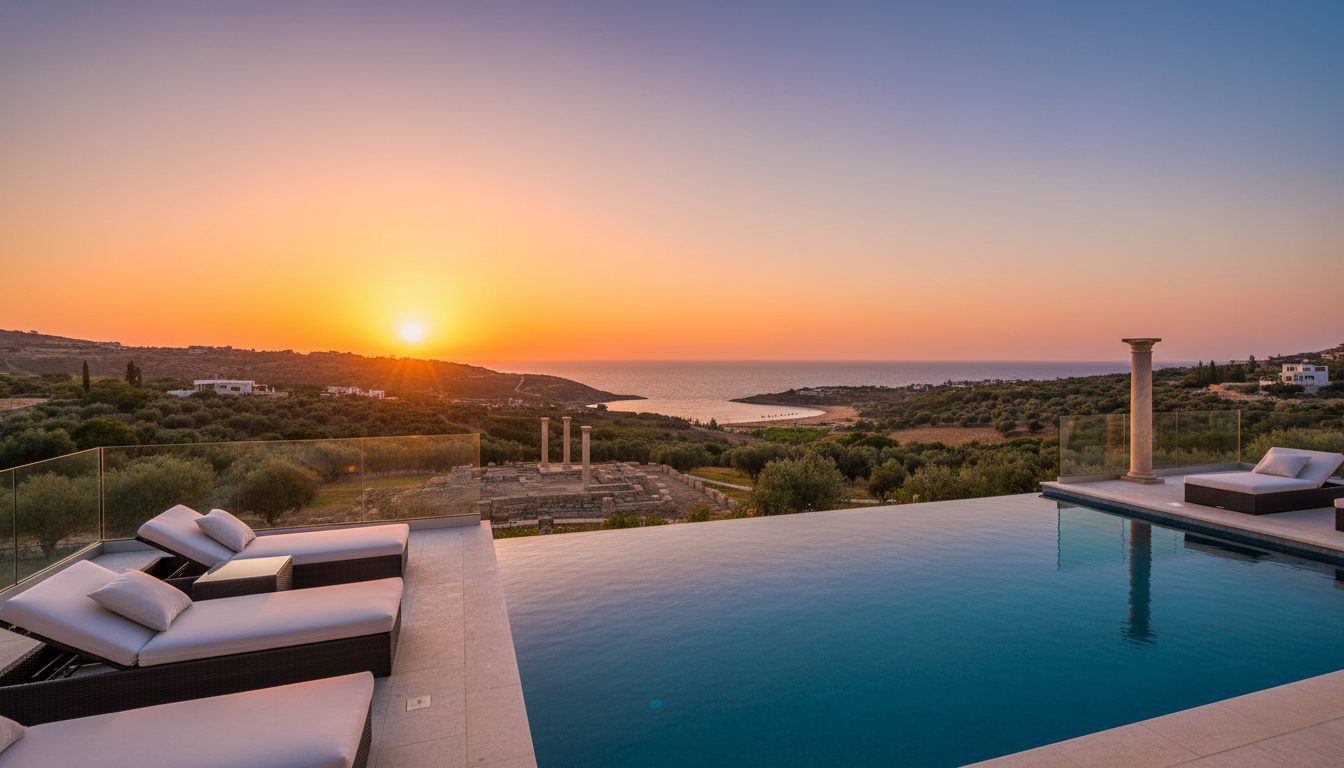
Best Time to Visit Kouklia: Aphrodite, Ruins & Rock
The best time to visit Kouklia is April, May, October or November, when temperatures sit between 20-26°C and the Sanctuary of Aphrodite site and coastal roads are free of midsummer crowds. Summer (June to August) is hot and dry with little rain, ideal for beach time near Petra tou Romiou but less pleasant for walking ruins at midday. Winter is mild, quiet and the best value season, with daytime temperatures rarely dropping below 15°C.
Picture this: you’re standing among the stone foundations of the Sanctuary of Aphrodite at nine in the morning, and you have it to yourself bar one cat and a guide having a cigarette by the gate. The light is doing that low, golden thing it does only in spring and autumn here. Later you’ll drive the short, winding road down to Petra tou Romiou and watch the sea do its famous turquoise trick around the rock where Aphrodite is said to have emerged, fully formed and presumably unbothered by the crowds that would one day photograph her birthplace. By lunchtime you’re back in the village, in the shade of a taverna terrace, with a glass of something local and absolutely no urgency about anything. That day exists. The trick is knowing which months actually deliver it.
Best Time to Visit Kouklia at a Glance
- Best overall: April-May and October-November – mild, green or golden, uncrowded
- Hottest: July-August, 33-36°C, dry as a bone
- Wettest: December-January, occasional heavy but brief rain
- Quietest and cheapest: January-February
- Best for swimming: June through September, sea temperature stays warm into October
Kouklia Weather in Spring (March to May)
Spring arrives in Kouklia with a kind of theatrical confidence. The hills around the village, brown and resigned for most of the year, turn briefly and extravagantly green, and wildflowers push up through the archaeological site as if they too want a look at the ruins. Temperatures climb steadily from the high teens in March to the mid-twenties by late May, and the rain that occasionally interrupts late winter tapers off by April.
This is a season that suits almost everyone, which is precisely why it’s underrated by people who assume Cyprus is a strictly July-and-August destination. Couples get long golden-hour walks around the sanctuary without jostling for photographs. Families find the heat manageable for children, and the sea – while not yet warm enough for lengthy swims until May – is pleasant for paddling. Hotel and villa rates sit comfortably below peak summer pricing, and restaurant terraces are easy to book without planning three days ahead. Easter, when it falls in this window, brings genuine local colour to nearby Paphos, with candlelit processions and a sense of occasion that package tourism hasn’t yet flattened.
Kouklia Weather in Summer (June to August)
Summer in Kouklia is exactly what the brochures promise and exactly what the brochures never mention in the same sentence: relentless sunshine, temperatures regularly touching 33-36°C, and barely a drop of rain from June until September. The sea along the nearby coast warms to genuinely inviting levels, Petra tou Romiou’s pebble beach fills with a reasonable but not overwhelming number of visitors compared with Paphos’s resort strips, and evenings stretch long and warm enough for dinner outdoors without a cardigan in sight.
It suits groups who want pool days, late starts and beach afternoons, and families whose main requirement is guaranteed sunshine for the whole fortnight. It suits couples less well around midday – walking an open-air archaeological site at 1pm in August is an act of mild self-punishment best reserved for people who enjoy suffering for their Instagram feed. The sensible move, and one that locals and long-stay visitors adopt without exception, is to see the ruins and the rock early morning or at golden hour, then retreat to shade, a pool, or a long lunch until the heat relents.
Kouklia Weather in Autumn (September to November)
September holds onto summer’s warmth but loses its intensity, and by October Kouklia settles into what might be its most flattering season. Days hover around 24-28°C in September, dropping to a gentler 20-23°C by November, the sea stays warm enough for swimming well into October, and the crowds that filled the coast road in August have largely gone home, presumably back to wherever people go when they’re not standing in front of Aphrodite’s Rock taking the exact same photograph.
This is harvest season for the vineyards scattered through the surrounding countryside, and the light across the hills takes on a softer, amber quality that photographers and wine-minded visitors both appreciate for different reasons. Prices begin easing from their summer peak, restaurants have more breathing room, and the archaeological site becomes a genuine pleasure to walk rather than an endurance test. Couples and older travellers tend to favour this stretch, though families visiting after the European school term starts will also find it comfortably manageable and considerably less frantic than August.
Kouklia Weather in Winter (December to February)
Winter here is mild rather than cold, which surprises visitors expecting something more dramatic. Daytime temperatures typically sit between 15-18°C, evenings cool down noticeably, and rain arrives in short, sometimes heavy bursts rather than the grey drizzle familiar to northern Europeans escaping it. Snow is a hills-and-mountains phenomenon elsewhere on the island, not a Kouklia one.
Some seasonal businesses reduce their hours or close for a stretch in January and February, and the pace of the village slows to something closer to its everyday rhythm, unperformed for visitors. What winter lacks in beach weather it makes up for with empty roads, low prices, and a version of the sanctuary site that feels less like a tourist attraction and more like an actual ancient place quietly getting on with being ancient. It particularly suits couples after a slower, cheaper break, and anyone who finds the idea of having Petra tou Romiou nearly to themselves more appealing than having it to themselves and three coachloads.
Best Time to Visit Kouklia for Festivals and Events
Kouklia’s calendar leans on the wider Paphos district’s traditions rather than running its own packed events programme, which is part of its appeal – you get the cultural texture without the festival-town crowds. Easter in the Paphos region brings processions and genuine local observance rather than performance for tourists. Early summer typically sees the Kataklysmos festival celebrated along the Paphos coastline, a water-themed tradition with music, food stalls and a cheerfully chaotic atmosphere worth a day trip from Kouklia if your visit coincides with it. Grape harvest season in September and October brings informal activity to the vineyards and wineries of the surrounding countryside, with some opening for tastings as the new vintage takes shape. None of this demands you build a trip around it, but knowing it’s there helps explain why locals seem unbothered by the idea of visiting in what visitors call the “off” months.
Best Time to Visit Kouklia for Families, Couples and Groups
Families chasing guaranteed sunshine and easy swimming should aim for June through early September, accepting the heat as the trade-off for reliable beach days and long evenings. Couples get the best version of Kouklia in April-May or October-November, when the ruins, the rock and the countryside look their best and restaurant terraces feel intimate rather than overcrowded. Groups of friends after villa pool days, long dinners and flexible plans tend to do well in the shoulder months too, getting summer-adjacent warmth without summer-adjacent prices. Anyone travelling with older relatives, or simply averse to heat, should look hard at autumn – it offers nearly everything summer does, minus the part where walking to the car becomes a minor ordeal.
Shoulder Season in Kouklia: The Smart Traveller’s Window
If there’s a single piece of advice worth taking from this guide, it’s to book May or October and stop second-guessing it. Villa rates ease back from their August peak, flights and transfers are less congested, and the village itself – rather than its summer visitor version – is on display. Restaurants have time to talk to you. The archaeological site has room to breathe. The weather, crucially, does almost everything summer does except the actual overheating. Shoulder season isn’t a compromise here; it’s arguably the upgrade, and it’s one of the quieter facts about Cyprus travel that repeat visitors tend to keep to themselves.
Off-Season Kouklia: The Case for Visiting in Winter
Winter won’t give you beach days, and anyone expecting otherwise should adjust expectations immediately. What it gives instead is a village operating at its own pace, prices that make a longer stay genuinely affordable, and historic sites you can wander without choreographing around other people’s photographs. The countryside is green rather than parched, the light is clear and low, and a log fire in a villa after a day of ruins and countryside walks has its own particular appeal that no infinity pool quite replicates in August. It’s not for everyone. It’s precisely for the kind of traveller who finds that an advantage rather than a drawback.
Whichever season you choose, a private villa gives you the flexibility to work around Kouklia’s weather on your own terms – shaded pool days in summer, log fires in winter, and plenty of room for a long lunch whenever the mood takes you. Browse luxury villas in Kouklia to find the right base for your visit, and for the full picture of what to do once you’re settled in, head back to the Kouklia Travel Guide.
Kouklia Weather and Seasons FAQs
What is the hottest month in Kouklia?
July and August are the hottest months, with daytime temperatures commonly reaching 33-36°C and very little rainfall. Early mornings and evenings remain the most comfortable times to visit the Sanctuary of Aphrodite or walk near Petra tou Romiou during this period.
Is Kouklia good to visit in winter?
Yes. Winters are mild, typically 15-18°C during the day, with short bursts of rain rather than prolonged grey weather. It’s the quietest and most affordable time to visit, ideal for those prioritising value and low crowds over beach weather.
When is the best time to visit Kouklia for the archaeological site?
April, May, October and November offer the most comfortable conditions for walking the open-air Sanctuary of Aphrodite site, with mild temperatures and far fewer visitors than the peak summer months of July and August.


