
Kouklia Travel Guide: Where to Stay, Eat & Explore in Luxury
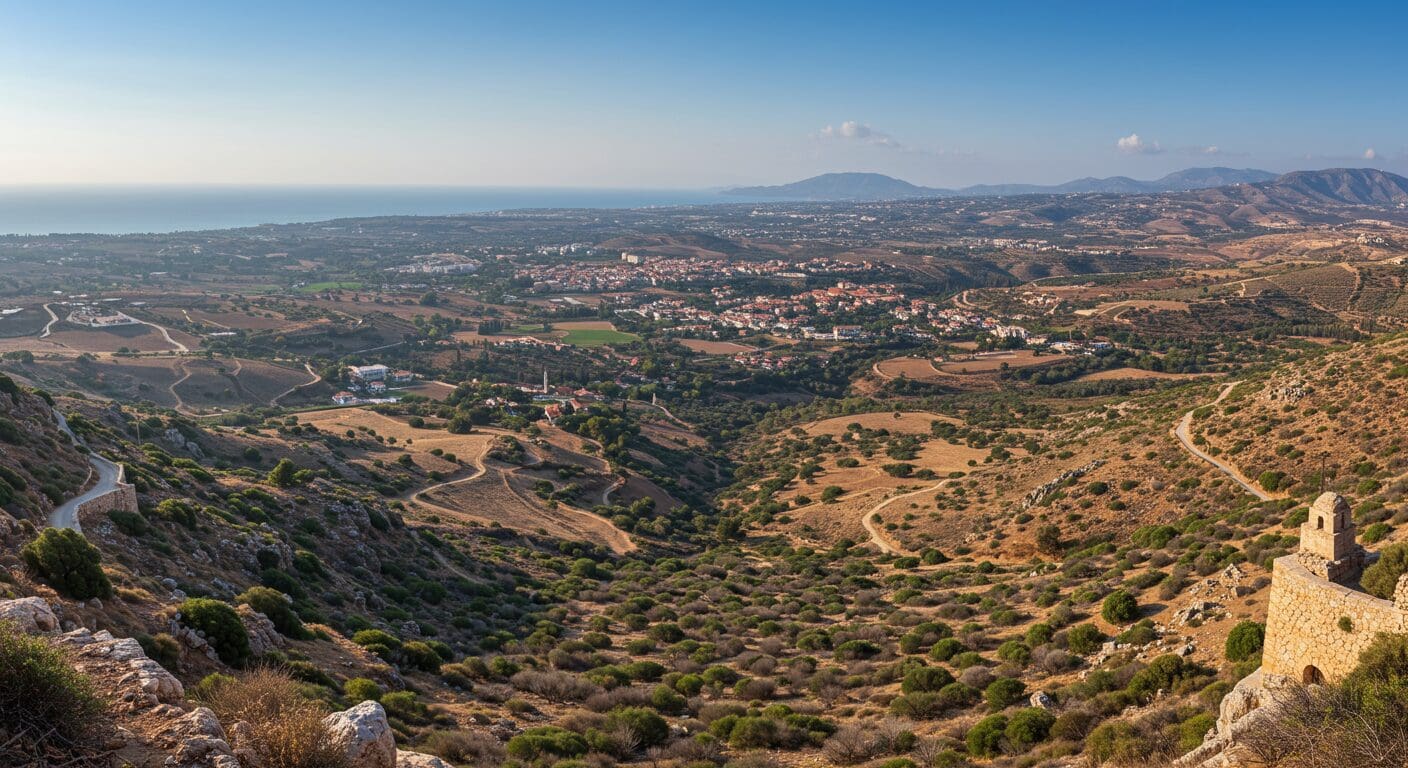
In the hour before the heat properly arrives, when the light is still honeyed rather than white and the cicadas haven’t yet committed fully to their shift, Kouklia smells of dry earth, wild thyme, and something older that you can’t quite name. It might be the limestone dust from the ancient sanctuary. It might just be Cyprus doing what Cyprus does – which is to make you feel, quietly and without fuss, that you have arrived somewhere that has been here far longer than your holiday plans.
Kouklia is not for everyone, and that is precisely its recommendation. This is not a destination for people who need a pool bar DJ and a cocktail with a paper umbrella. It is, however, ideal for couples marking a significant anniversary who want the Mediterranean without the performance of it – the kind of people who find a village square and a carafe of local wine and consider that an excellent evening. It works beautifully for families with young children who want privacy, a villa pool, and a pace of life that doesn’t require anyone to queue for anything. It attracts groups of friends who’ve outgrown Ibiza and are only slightly embarrassed to admit how much they’re enjoying the quiet. And increasingly, it draws the remote-working traveller – someone whose laptop goes wherever they go and who has learned that a reliable connection and an olive grove view are not mutually exclusive. Wellness-focused guests come here too, drawn by the clean air, the ancient energy, and the sense that slowing down is not laziness but rather the whole point.
Getting to Kouklia Without Losing Half Your Holiday to the Journey
Kouklia sits in the Paphos district of southwestern Cyprus, roughly 15 kilometres east of Paphos city along the B6 coastal road. Paphos International Airport (PFO) is your arrival point, and the transfer is refreshingly brief – around 20 to 25 minutes depending on traffic, which in this part of Cyprus rarely involves either. Most villa guests arrange private transfers in advance, which is strongly recommended: the taxi situation at Paphos airport is functional but not exactly seamless, and arriving at a beautiful villa in an anxious mood defeats the purpose entirely.
Flights to Paphos operate from across Europe year-round, with particularly strong connections from the United Kingdom – British Airways, easyJet, Jet2 and Ryanair all service the route with varying degrees of elegance. Flying time from London is approximately four and a half hours. Once in Kouklia, a hire car is not strictly essential but it is genuinely liberating. The village itself is compact and walkable, but the surrounding area – Pissouri, Petra tou Romiou, the Troodos foothills – rewards exploration, and the roads here are good, the distances manageable. Consider it a luxury, not an obligation. Which, in this part of the world, is the right way to think about most things.
Where to Eat in Kouklia: Tables, Terraces and the Art of the Meze
Fine Dining
Kouklia is not a destination that trades in white-tablecloth formality, which is actually a mark in its favour. The food culture here is rooted in something more honest – long tables, generous portions, wine that arrives in a jug rather than a sommelier’s hands, and the understanding that a meal is a social event rather than a transaction. The quality, when you know where to go, is genuinely high. Cyprus meze – the procession of small dishes that arrives seemingly without end – is one of the great pleasures of Mediterranean eating, and the tavernas of Kouklia do it exceptionally well. Think grilled halloumi that actually squeaks, smoky aubergine salad, fresh calamari, loukaniko sausage fragrant with coriander seed, and kleftiko so slow-cooked the lamb practically dissolves at the table.
Where the Locals Eat
The village square is the centre of social gravity in Kouklia, and two establishments there are worth knowing by name. Maria’s Taverna – sometimes called Thanasis Place, sometimes simply Maria’s on the Square – is run by the very friendly Maria herself and serves food that is rustic in the best sense: honest ingredients, proper technique, no pretension. The meze is terrific. If you visit in spring, ask specifically whether they have the wild asparagus omelette – if they do, order it immediately and don’t share it unless you have to. In summer, the square is closed to traffic in the evenings and the whole thing becomes an outdoor dining room, which is the kind of urban planning decision every city council in Europe should study carefully.
Right next door to Maria’s, literally a matter of metres, you will find Gabriel’s Tavern. The competition appears to be friendly. Gabriel’s menu runs slightly broader than Maria’s, with good vegetarian options alongside the expected Cypriot staples, and the meze here is consistently excellent. Regular visitors to the village tend to have a quietly passionate opinion about which of the two they prefer, and will share it at length if asked.
At Efraim Tavern, also on the village square, the family-run atmosphere is warm and the food reliably good. The real reason to go on a Thursday, however, is the buffet – eat-as-much-as-you-can, with tables set out on the street and around the square, and traditional Cypriot dancing that manages to be genuinely entertaining rather than a tourist-trap performance. Whether you join in is between you and your dignity.
Hidden Gems Worth Seeking Out
Diarizos Tavern, tucked into a corner of the village, is one of those places that regulars are slightly reluctant to share – which tells you something. It’s a cosy, relaxed space serving breakfasts that are well worth waking up for, excellent afternoon teas, homemade cakes that put most hotel patisseries to shame, sandwiches and burgers. It does not open for dinner, which means it retains an unhurried daytime energy that suits Kouklia perfectly. Go for the homemade cake. Go back for the cake again.
Pithari Tavern rounds out the village’s dining scene with a loyal following and the kind of low-key reputation that tends to be earned rather than manufactured. It appears consistently on every credible list of where to eat in Kouklia, which is usually a more reliable endorsement than any single review.
The Landscape Around Kouklia: More Than Just a Pretty Backdrop
The Paphos district has a particular quality of light in the late afternoon – warm, directional, almost cinematic – that makes the landscape look as though it has been art-directed. The truth is rather more ancient. This stretch of the southwestern coast sits between the sea and the foothills of the Troodos mountains, and the terrain shifts from chalky coastline to terraced vineyards to pine-covered ridges within a remarkably short distance. It is a varied and genuinely beautiful part of Cyprus, though perhaps less visited than the resort-heavy northeast.
The village of Kouklia itself sits on a low ridge above the coastal plain, surrounded by citrus orchards, carob trees and the silvery movement of olives in the breeze. The famous rock formation of Petra tou Romiou – the birthplace of Aphrodite, according to Greek mythology – is barely ten minutes away, and the sight of those pale limestone boulders rising from the jade-green sea at golden hour is the sort of thing you photograph and then immediately know no photograph will do justice to. The Diarizos River valley runs to the north, green and relatively lush compared to the coast, and makes for wonderful driving country. The ancient city-kingdom of Palaipafos, whose ruins are largely coincident with modern Kouklia, adds a layer of historical depth that you don’t often find in a village this size.
Pissouri, the elegant village perched on the headland to the east, is worth an afternoon – its square has a different architectural character, slightly more polished, and the views down to Pissouri Bay are arresting. Paphos city, with its harbour, its mosaics and its reasonable selection of urban distractions, is close enough for a half-day without feeling obligatory.
Things to Do in Kouklia That Are Actually Worth Your Time
The most culturally significant thing you can do in Kouklia requires relatively little effort and rewards it generously. The Sanctuary of Aphrodite – or more accurately the ruins of Palaipafos, the ancient city that predates the modern village by several thousand years – is located essentially within walking distance of the village centre. This was one of the most important religious sites in the ancient world, a place of pilgrimage for worshippers of Aphrodite for over a thousand years. The Archaeological Museum on site provides excellent context, and the ruins themselves, while not as flashy as some Cypriot sites, have a quiet gravity that the tour buses somehow never quite dispel. Worth going early, before said buses arrive.
The Cyprus Night on the village square – organised by Maria’s Taverna on Thursday evenings in high season – is one of those local events that manages the difficult trick of being genuinely good while also being explicitly aimed at visitors. Traditional music, dancing, food and the pleasant chaos of a village square in full social mode. It is festive without being manufactured, which in a tourist destination is no small achievement.
Day trips from Kouklia open up the broader riches of the Paphos district: the painted Byzantine churches of the Troodos (a UNESCO World Heritage Site, collectively), the medieval castle at Kolossi, the wine villages of Omodos and Lofou, and the waterfall at Millomeri. For a more leisurely pace, the coastal path toward Petra tou Romiou makes for an excellent morning walk – bring water, wear shoes you trust, and go before the sun remembers what it’s capable of.
Adventure and Active Pursuits: Cyprus Gets Physical
The sea around the Paphos coast is remarkably clear and warm from late April through October, and diving is excellent – there are several well-regarded dive centres operating out of Paphos that run trips to sites including the famous EDRO III shipwreck near Pegeia, which sits dramatically half-in, half-out of the water and looks precisely like someone’s dramatic screensaver. Snorkelling is possible directly from several beaches near Kouklia, particularly around the rocks at Petra tou Romiou.
Hiking in the Troodos mountains provides a complete change of altitude and temperature – in summer, the higher elevations are genuinely cool and the trails through the cedar and pine forests offer a pleasant contrast to the coast. The Atalante Trail around Mount Olympos is well-marked and manageable for fit walkers. Cycling is increasingly popular in the region, and the quiet back roads around Kouklia and the Diarizos valley are well-suited to it – though the hills will find you whether you’re looking for them or not.
Horse riding is available through stables in the wider Paphos area, and the landscape lends itself well to it. Sea kayaking along the coastline toward Aphrodite’s Rock gives you a perspective on the cliffs and rock formations that is genuinely different from the road, and the water is calm enough for relative beginners through most of the season.
Kouklia for Families: The Holiday Where Everyone Actually Relaxes
There is a particular type of family holiday that has been badly underserved by the travel industry – the one where the adults genuinely unwind rather than simply changing postcode while continuing to perform parenting at full volume. Kouklia, with its combination of private villa living, calm village pace and reliable sunshine, does this type of holiday unusually well.
Children adapt quickly to the village rhythm. The square is safe and social in the evenings, with local families equally present – it is not a sanitised resort environment but a real community, which tends to be more interesting and more relaxing than the alternative. The beaches along this stretch of coast are generally less crowded than those around Paphos city or Limassol, and the water is shallow and safe for younger swimmers at several points near Pissouri Bay.
The ruins of Palaipafos, presented correctly, captivate children in a way that many ancient sites do not – there is something about the scale and the tangibility of the stones that makes history feel immediate rather than academic. The Cyprus Night on the village square is genuinely fun for families, with the music and dancing providing entertainment that nobody is too old or too young for. And the drive to Paphos for a harbour dinner, the boat trips to sea caves, and the proximity to the gentle Troodos provide more than enough to fill a two-week stay without anyone feeling the pace was forced.
In a private villa with its own pool, the logistics of family life also improve dramatically. Meal times become flexible, nap schedules are respected, and nobody has to negotiate with a hotel restaurant about portion sizes.
History and Culture in Kouklia: Where Mythology Has a Postal Address
The thing that distinguishes Kouklia from most Mediterranean villages of similar size is this: it was, for several hundred years, one of the most important places in the known world. The Sanctuary of Aphrodite at Palaipafos was established in the twelfth century BC and remained an active centre of worship through the Roman period – pilgrims came from across the ancient Mediterranean to pay tribute to the goddess of love here, and the city that grew around the sanctuary was wealthy, sophisticated and politically significant.
What remains today is fragmentary but evocative. The Lusignan Manor House – a medieval fortification built over the ancient site – houses the small but well-curated Archaeological Museum, which contains finds from the sanctuary including inscriptions, votive objects and a conical stone symbol that may represent the deity herself. The ruins of the sanctuary itself sprawl across a low hilltop with the sea visible in the distance, and the layering of civilisations here – Bronze Age, Classical, Hellenistic, Roman, medieval – gives the site a depth that rewards proper attention.
Beyond the archaeology, the village retains authentic Cypriot character. The traditional architecture – honey-coloured stone, broad archways, carved wooden shutters – has not been substantially altered for tourist consumption, which feels increasingly rare in the Mediterranean. The Thursday Cyprus Night in summer is the most visible expression of local culture for visitors, but the community has its own calendar of religious festivals and saints’ days that continue regardless of the tourist season, and the village church at the centre of Kouklia is an active, living part of community life.
Shopping in and Around Kouklia: What to Bring Home
Kouklia is not a shopping destination in the conventional sense, which is actually rather liberating. There are no boutiques attempting to sell you things you don’t need at prices designed to exploit your holiday mood. What there is, in the village and the wider region, is a set of genuinely good things to take home.
Cyprus lace – specifically lefkaritika from the village of Lefkara – is among the most celebrated crafts in the eastern Mediterranean, a UNESCO-recognised tradition of intricate embroidery that has been practised in the Troodos foothills for centuries. It is worth buying from Lefkara directly rather than from airport shops, both for authenticity and price. The village itself is a pleasant day trip from Kouklia.
Local honey, particularly thyme honey from the Troodos, is exceptional and travels well. Cypriot commandaria – one of the world’s oldest named wines, a rich dessert wine with a sweetness that is not cloying – makes an excellent and unusual gift. Olive oil from the local cooperatives is outstanding. Halloumi, if you can keep it cold on the journey home, is a worthy effort. The markets in Paphos city stock all of these with varying degrees of charm; the better produce shops and delis in the villages tend to have superior quality at lower prices, in the manner of most things that require a small amount of effort to find.
Practical Information: The Useful Bits, Briefly
Cyprus uses the Euro. English is very widely spoken throughout the Paphos district – the island has a long connection with the United Kingdom, having been a British territory until 1960, and this linguistic legacy makes it one of the easier Mediterranean destinations for English-speaking visitors to navigate. Road signs are in both Greek and English. Driving is on the left, which catches people out periodically.
Tipping is appreciated but not obligatory – roughly ten percent at restaurants where service has been genuinely good is considered appropriate. Safety is not a concern; Cyprus consistently ranks among the safest countries in Europe and Kouklia specifically has the low-key, relaxed atmosphere of a village where nothing very alarming happens.
The best time to visit depends on what you want. May, June and September offer the ideal balance: warm enough for swimming and outdoor living, cool enough for comfortable walking and sightseeing, and pleasantly free of the peak-season crowds. July and August are hot – properly, unapologetically hot, with temperatures regularly exceeding 35 degrees celsius – which suits some travellers perfectly and others less so. The shoulder months of April and October are beautiful for culture-focused trips, with mild temperatures and very manageable visitor numbers. November through March is quiet and cooler, suitable for walking, history and anyone who genuinely enjoys having a beach entirely to themselves.
The water in Cyprus is safe to drink but tends to be heavily desalinated and not particularly pleasant in taste; bottled water is the local preference and is inexpensive. The sun is fierce from May onwards – SPF50 is not excessive, particularly for children and anyone who underestimates the difference between Mediterranean and northern European UV levels, which is a surprisingly common and painful mistake.
Luxury Villas in Kouklia: Why a Private Villa Changes Everything
There is a fundamental difference between staying in Kouklia and visiting Kouklia, and it comes down almost entirely to where you sleep. A private luxury villa in this part of Cyprus – with its own pool, its own outdoor kitchen or dining terrace, its own unhurried rhythm – gives you access to a version of the place that no hotel, however competent, can replicate. The mornings are yours. The pool is yours. The decision about when to have lunch, whether to go out, whether to simply stay in the garden reading until the light changes – all of it, entirely yours.
For couples on a milestone trip, this privacy is not a luxury but a necessity. There is a meaningful difference between a romantic holiday and a holiday with romantic elements, and the former requires space, quiet and the absence of other people’s children at breakfast. For families, the private pool is the single most effective tool for keeping everyone happy, and the space of a well-designed villa makes the compressed intensity of family life substantially more manageable. Groups of friends benefit from the social architecture of a large villa – multiple sitting areas, a proper outdoor dining table, the ability to gather and disperse as mood dictates – in ways that a cluster of hotel rooms simply cannot provide.
Remote workers have discovered that a luxury villa in Kouklia offers something increasingly rare: genuine connectivity (fibre broadband and in some cases Starlink are increasingly standard at premium properties) in a setting that does not feel like a compromise. Working from a terrace overlooking an olive grove with the sea in the distance is an upgrade on most offices, and the time zone alignment with the rest of Europe keeps professional life manageable.
Wellness-focused guests find that the pace of life in Kouklia, combined with a villa that may offer a private gym, outdoor yoga space or hot tub, creates the conditions for genuine restoration rather than the performative version. The clean air, the quality of the light, the simplicity of village life and the particular silence of a Cypriot evening – these things do something restorative that cannot be entirely explained and should probably just be experienced.
Concierge services through a premium villa rental add the final layer: pre-stocked fridges, private chefs, in-villa massage, car hire, boat trips, restaurant reservations. The infrastructure of a good holiday, in other words, arranged before you arrive so that the holiday itself can simply be the holiday.
Excellence Luxury Villas offers a carefully curated selection of luxury holiday villas in Kouklia – from intimate couples’ retreats to large multi-generational properties with the space and amenities to make a genuine difference to how you experience this remarkable corner of Cyprus.
More Kouklia Travel Guides
What is the best time to visit Kouklia?
May, June and September offer the best all-round conditions – warm enough for swimming and outdoor dining, cool enough for comfortable sightseeing and walking, and noticeably less crowded than peak summer. July and August are the hottest months, with temperatures regularly above 35 degrees celsius, which suits beach-focused travellers who are serious about their sun exposure. April and October are excellent for cultural visits, with mild temperatures and very manageable visitor numbers. The winter months are quiet, mild by northern European standards and genuinely beautiful for walking and history, though swimming is for the enthusiastic only.
How do I get to Kouklia?
Kouklia is served by Paphos International Airport (PFO), approximately 15 to 20 kilometres away – a transfer of around 20 to 25 minutes by private car. Flights to Paphos operate year-round from across Europe, with particularly strong connections from the United Kingdom on British Airways, easyJet, Jet2 and Ryanair. Larnaca International Airport (LCA) is an alternative for a wider choice of international connections, though it involves a longer transfer of around 90 minutes to two hours. A hire car is recommended for exploring the wider region, though the village itself is very walkable.
Is Kouklia good for families?
Kouklia works very well for families, particularly those who prefer authentic village life over resort infrastructure. The village is safe and relaxed, with real community character that children tend to find more engaging than a manufactured resort environment. The nearby beaches are good and less crowded than those around Paphos city. The ruins of Palaipafos and the wider Paphos region offer plenty of age-appropriate activities. Private villa rental is strongly recommended for families – a dedicated pool, flexible meal times and genuine space make a significant practical difference to how enjoyable the holiday actually is.
Why rent a luxury villa in Kouklia?
A private luxury villa gives you access to a version of Kouklia that hotels simply cannot provide. Your own pool, your own schedule, your own outdoor space, and none of the compromises that come with shared facilities and fixed meal times. For couples, the privacy is transformative. For families and groups, the space – both indoor and outdoor – makes the social dynamics of a shared holiday substantially more comfortable. Premium villas in the area offer concierge services including private chefs, pre-arrival stocking, in-villa massage and activity booking, which means the logistics of a good holiday are handled before you arrive.
Are there private villas in Kouklia suitable for large groups or multi-generational families?
Yes. The Paphos district, including Kouklia, has a good selection of larger villa properties designed specifically for groups and multi-generational travel. These typically feature multiple bedroom suites with en-suite bathrooms (providing privacy within a shared property), large private pools, expansive outdoor dining and lounging areas, and fully equipped kitchens suitable for feeding a crowd. Some properties offer separate guest wings or pool houses that give different generations genuine independence while sharing the broader facilities. Concierge and private chef services are available through Excellence Luxury Villas for groups requiring additional support.
Can I find a luxury villa in Kouklia with good internet for remote working?
Connectivity at premium villas in the Kouklia and wider Paphos area has improved significantly in recent years. Many luxury properties now offer fibre broadband as standard, and Starlink satellite internet is increasingly available at more rural or elevated properties where fibre coverage is less reliable. When booking through Excellence Luxury Villas, connectivity specifications are listed for each property and can be confirmed before reservation. The time zone alignment with the rest of Europe makes Kouklia a practical base for remote workers with European professional commitments, and the combination of reliable connectivity and a genuinely restorative environment makes it increasingly popular for longer-stay workcation bookings.
What makes Kouklia a good destination for a wellness retreat?
Kouklia offers the conditions for genuine rest and recovery rather than the packaged version. The pace of village life is slow by design, the air quality is excellent, and the combination of warm climate, clean sea and proximity to the natural landscapes of the Troodos foothills creates a genuinely restorative environment. Many luxury villas in the area include private pools, outdoor yoga or fitness spaces, hot tubs and high-quality mattresses and linens. In-villa massage can be arranged through villa concierge services. The Paphos region also has several spa facilities for those wanting more structured treatments. The simplicity of the lifestyle here – good food, warm evenings, unhurried mornings – does the quiet work that most wellness programmes are trying to replicate with considerably more infrastructure.


