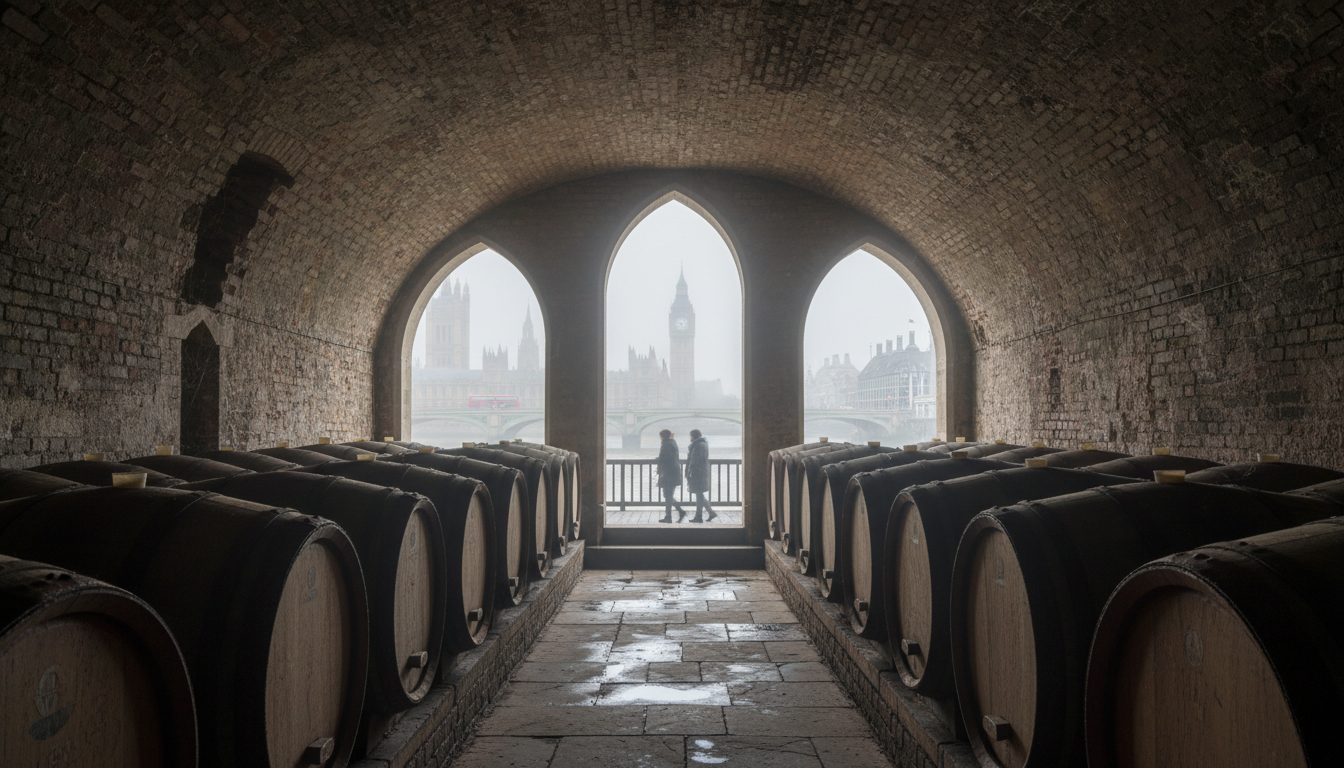
Lambeth Food & Wine: Brixton Markets & Caribbean Flavours
Lambeth’s food scene centres on Brixton’s Caribbean and West African kitchens, the Sunday farmers market in Herne Hill, and the restaurants and food halls clustered around Waterloo and the South Bank. The borough has no vineyards or wine estates of its own, though independent wine bars and merchants are well represented. Signature dishes include Caribbean patties, jerk chicken, and the Sunday roasts served in Lambeth’s traditional pubs.
There is a particular Saturday morning, somewhere in that stretch between the first properly warm weekend in May and the long, slow fade of September, when Brixton gets going before most of London has found its socks. Stallholders are unloading crates of yams and scotch bonnets, someone is already frying plantain two streets over, and the smell of jerk smoke drifts out from under a railway arch as though the trains overhead were somehow responsible for the seasoning. Lambeth does not do food in the hushed, reverent way some corners of Europe do. It does it loudly, communally, and with an accent that changes block by block – Caribbean on one street, Portuguese on the next, a Nigerian bakery squeezed between the two. This is a food guide for people who want to eat well in a borough that was never trying to be picture-postcard pretty, and is all the more interesting for it. For the wider context of a trip here, the Lambeth Travel Guide covers the practicalities; this one is strictly about what goes on your plate.
Lambeth Food and Wine at a Glance
- Signature dishes: Caribbean patties, jerk chicken, rice and peas, roti, plus the traditional British Sunday roast
- Key food areas: Brixton, Herne Hill, Waterloo and the South Bank, Vauxhall, West Norwood
- Markets: Brixton’s covered arcades and street stalls, Herne Hill’s Sunday farmers market, Lower Marsh near Waterloo
- Wine: no estates or vineyards within the borough; strong line-up of independent wine bars and merchants
- Best for food travellers: those who want variety, multicultural eating and riverside dining over formal tasting menus
Local Cuisine in Lambeth: Caribbean Roots and a Hundred Other Accents
Lambeth’s culinary identity is inseparable from Brixton’s role as the heart of Britain’s Windrush generation. Caribbean families settled here from the late 1940s onward, and the food that followed has shaped what “Lambeth food” even means. A patty – flaky, golden, filled with spiced beef, chicken or vegetables – is as close to a local signature dish as the borough has, and you will find versions ranging from the no-nonsense to the ambitiously spiced within a hundred metres of each other. Jerk chicken, slow-smoked and properly fiery, turns up at street stalls and sit-down kitchens alike, usually with rice and peas and a slick of gravy that nobody will tell you the recipe for.
But to call Lambeth’s food scene “Caribbean” alone undersells it. West African kitchens sit beside Portuguese bakeries, Vietnamese canteens share pavements with British gastropubs serving the Sunday roast with the gravity of a religious rite. This is immigrant London cooking as it actually is – unglamorous premises, extraordinary food, and prices that have not yet caught up with the quality. That gap will not last forever, which is precisely why it is worth eating here now rather than waiting for someone to put tablecloths on it.
Food Markets in Lambeth
Brixton’s covered market arcades are the obvious starting point – a warren of narrow aisles where fishmongers, fabric stalls, barbers and restaurants exist in a kind of orderly chaos that somehow works. Come hungry and without a plan; the best meals here tend to be the ones you did not know you were looking for, found through a doorway that smells better than the one next to it. Outside, the surrounding streets fill with fruit and veg stalls selling produce aimed squarely at the borough’s Caribbean and African communities – things you will not find labelled in a supermarket, sold by people who will tell you exactly how to cook them if you ask nicely.
Herne Hill, a short ride south, runs a Sunday farmers market that is a different proposition altogether – bread, cheese, seasonal English vegetables and the kind of produce stalls that appeal to people who take their breakfast seriously. Over towards Waterloo, Lower Marsh has long been a lunchtime market for workers from the South Bank’s offices and theatres, a useful stop for a quick, cheap, genuinely good meal rather than a leisurely browse.
Where to Eat in Lambeth
The South Bank and Waterloo corridor is where Lambeth’s dining gets its river views, with restaurants and food halls catering to the steady stream of theatre-goers, gallery visitors and office workers who pour out along the Thames at lunchtime and again after dark. It is not subtle dining – this stretch knows its audience and feeds it efficiently and well – but the views across the water towards Westminster are hard to argue with, particularly at dusk when the lights come on along the far bank.
Brixton remains the borough’s most interesting eating ground: Caribbean restaurants that have been feeding the same families for decades sit alongside newer West African, South American and pan-Asian kitchens, often in converted railway arches that keep the prices honest even as the food gets more ambitious. Traditional pubs scattered through Herne Hill, West Norwood and Vauxhall do a proper Sunday roast – Yorkshire pudding non-negotiable, gravy boat usually refilled without being asked – which remains one of the most reliably satisfying meals in the borough, and arguably in the country.
Wine in Lambeth: Bars, Merchants and the Truth About Vineyards
Let us be honest about something the glossier guides tend to gloss over: Lambeth has no vineyards, no wine estates, and no particular claim to viticulture. This is inner London, after all, not the Sussex Downs or the Kent countryside where England’s genuinely excellent sparkling wine industry has taken root over the past couple of decades. What Lambeth does have is a good spread of independent wine bars and merchants, particularly around Brixton and Herne Hill, run by people who know their natural wines from their conventional ones and are generally happy to talk you through both without condescension.
If English wine specifically is the goal, it is worth treating a Lambeth stay as a base rather than a destination for it – Kent and Sussex estates are a manageable day trip from central London, and several wine merchants in the borough stock a strong selection of English sparkling and still wines if a cellar visit is not on the itinerary. Within Lambeth itself, the pleasure is less about provenance and more about the company of people who have thought carefully about what is in your glass.
Cooking Classes in Lambeth
Given the borough’s Caribbean heritage, cooking classes focused on jerk seasoning, patty-making and Caribbean home cooking are the most distinctive option here, usually run by small community kitchens or individual chefs rather than large culinary schools. Demand tends to be seasonal, picking up around Notting Hill Carnival season when Caribbean food is everywhere in the conversation, so booking ahead is sensible rather than optional. Beyond Caribbean cooking, general culinary workshops around the South Bank area cater to a broader audience, often pairing a class with a meal and occasionally a wine element, aimed at visitors who want a few hours of structured food education rather than a full afternoon in an apron.
Best Food Experiences in Lambeth
The single best food experience in the borough is simply arriving at Brixton’s market with no fixed plan and eating your way through whatever smells best – it rewards curiosity far more than research. A close second is the Sunday roast ritual in one of Lambeth’s traditional pubs, ideally after a riverside walk that has earned you the calories. For a change of register, an evening along the South Bank – a meal followed by a walk beside the Thames with the lights of Westminster reflected on the water – delivers a version of London dining that photographs rather well, not that anyone is suggesting you eat purely for the view.
Best Time to Visit Lambeth for Food and Wine
Lambeth eats well in every season, but late spring through summer brings the borough’s food culture outdoors – market stalls spill further onto the pavement, pub gardens fill up, and the South Bank’s riverside becomes an extension of its restaurants. August, around Notting Hill Carnival season, sees Caribbean food and cooking at its most visible and celebratory, though it also brings crowds if carnival-adjacent events are happening nearby. Winter has its own appeal: Brixton’s covered arcades come into their own when the weather turns, offering warm, spiced food in a setting that does not care whether it is raining outside.
Anyone planning where to base themselves for all this can find villas in Lambeth.
Lambeth Food and Wine FAQs
What is Lambeth known for food-wise?
Lambeth is best known for Caribbean cuisine, particularly in Brixton, where patties, jerk chicken and rice and peas reflect the borough’s long-standing Windrush generation community. It is also known for its market culture and for pub-based Sunday roasts.
Are there vineyards or wine estates in Lambeth?
No, Lambeth is an inner London borough with no vineyards or wine estates. England’s main wine-producing regions are in Kent and Sussex, both reachable as day trips, and Lambeth itself offers independent wine bars and merchants instead.
What is the best food market in Lambeth?
Brixton’s covered market arcades and surrounding street stalls are the borough’s most significant food market, offering Caribbean and African produce alongside restaurants and street food. Herne Hill’s Sunday farmers market is a quieter alternative focused on seasonal British produce.
Keep reading
More on Lambeth
Guides nearby in London
Where to stay
Villas in Lambeth
A selection from our 5 luxury villas in Lambeth.