Oia Food & Wine: Assyrtiko Wine, Fava and Caldera Sunsets
Oia’s food and wine centres on Santorini’s volcanic produce – sun-dried tomatoes, capers, fava beans and the indigenous Assyrtiko grape – served in cliffside tavernas with caldera views. The village itself has few large restaurants or markets, so most dining and wine tasting happens in small family-run tavernas and at wineries a short drive away in the island’s interior. Expect fresh seafood and crisp volcanic whites rather than the truffles or heavy sauces found elsewhere in Greece.
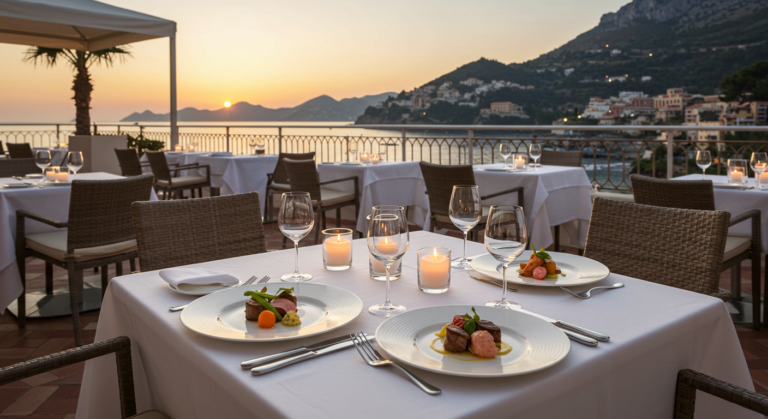
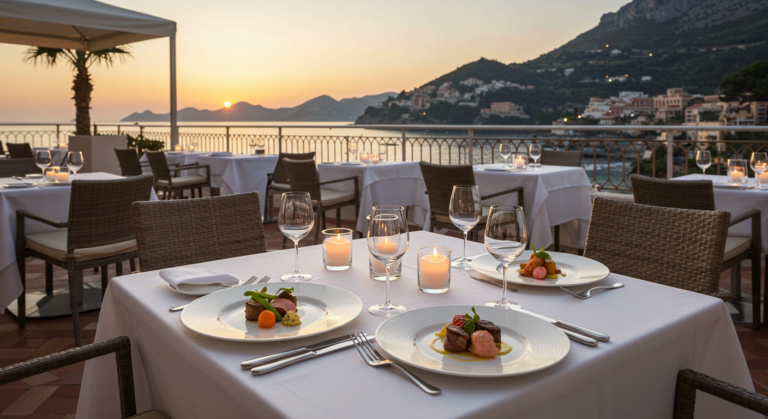
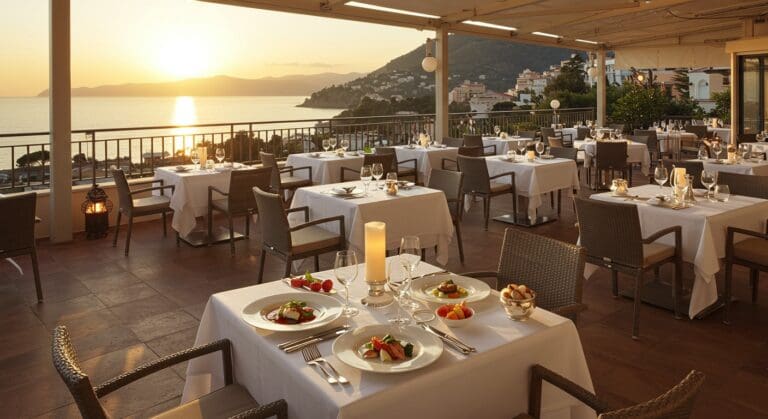
There is a particular hour in Oia, somewhere between the blue of late afternoon and the theatrical orange everyone came for, when every terrace along the caldera fills with people holding a glass of something pale gold and cold. Nobody is quite looking at their food. The sunset has that effect. But if you can tear your gaze away from the horizon for long enough, you will notice that what is actually on the table – a plate of fava, a few charred octopus tentacles, bread with tomato that tastes nothing like tomato anywhere else – deserves at least equal billing. Oia’s food scene is modest in scale and enormous in flavour, built on what the volcano, rather than the chef, decided to grow.
Oia Food and Wine: What Makes the Cuisine Different
Santorini’s cuisine is Cycladic at heart but shaped by a geology most islands do not have to contend with. The soil is black volcanic ash, the rainfall is minimal, and the wind barely stops – conditions that sound hostile until you taste what they produce. Tomatoes grown here are smaller, denser and sweeter, concentrated rather than watered down. Capers grow wild on the cliffs and are used leaves and all, not just the buds most people know. Fava, the island’s famous yellow split-pea purée, grows in exactly one place on earth with this flavour profile, and Santorini guards that fact with quiet pride.
Oia itself, being smaller and more residential than Fira, has fewer large restaurants and a higher proportion of family-run tavernas, several occupying old captains’ houses or converted cave dwellings carved into the cliff. The food leans towards seafood and mezze rather than elaborate plating – this is not a place that goes in for foam. For context on the village layout and where these tavernas tend to cluster, the Oia Travel Guide covers the practicalities of getting around.
Signature Dishes in Oia: Fava, Tomato Keftedes and the Catch of the Day
A handful of dishes appear on nearly every menu in Oia, and for good reason. Fava, served warm with olive oil, raw onion and capers, is the dish most visitors remember long after they have forgotten the name of the taverna that served it. Tomato keftedes – fried fritters made with Santorini’s concentrated tomatoes, onion and herbs – are deceptively simple and very easy to over-order. White aubergine, a pale local variety milder than its purple cousin, turns up stewed, fried or baked into dips.
Seafood is the other constant. Octopus is grilled over coals until smoky at the edges, often after being hung to dry in the sun outside the taverna kitchen – a sight that alarms some first-time visitors and delights everyone else. Fresh fish is typically sold by weight and grilled whole, simple enough that the quality of the catch does all the talking. Chloro, a soft local cheese with a sharp tang, appears in salads and as a table starter with bread. None of this is complicated food. It does not need to be.
Local Wines of Oia and Santorini: Assyrtiko, Nykteri and Vinsanto
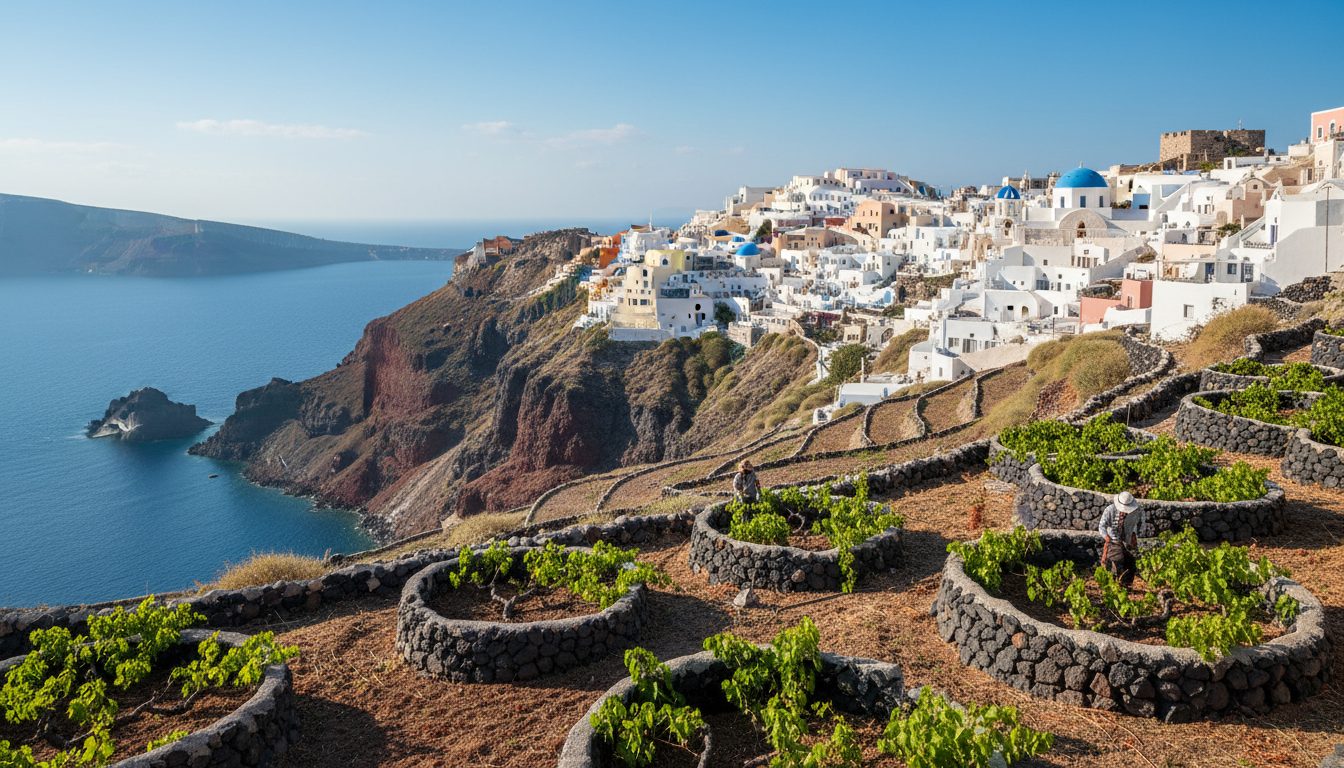
Santorini’s wine story is one of the more improbable in Europe. The island’s vines, mostly the indigenous Assyrtiko grape, survived the phylloxera epidemic that wiped out most of Europe’s vineyards in the nineteenth century, because the insect cannot survive in volcanic sand. The result is some of the oldest ungrafted vines on the continent, some reputedly over a century old, trained low to the ground in coiled basket shapes called kouloura to protect the grapes from relentless wind.
Assyrtiko itself is dry, high in acidity and faintly saline, a wine that tastes of the place that grew it in a way few others manage. Nykteri is a barrel-aged, higher-alcohol version traditionally picked at night to avoid the heat. Vinsanto, despite the name’s resemblance to Tuscan vin santo, is Santorini’s own sun-dried dessert wine, deep amber and intensely sweet, traditionally served at the end of a meal or alongside strong cheese. Wine lists in Oia lean heavily, and rightly, on these three.
Wine Estates Near Oia: Visiting Santorini’s Vineyards
The vineyards themselves sit mostly in the flatter, more open land away from Oia’s cliffside drama, which is part of the appeal – after days of caldera views, the low vine fields and black soil feel like a different island. Several producers, ranging from small family operations to larger estates with purpose-built tasting rooms, offer guided tastings that usually run through the Assyrtiko-Nykteri-Vinsanto trio with some explanation of the kouloura training method, which is genuinely worth seeing rather than just reading about.
Most estates are a short drive from Oia, easily combined with a visit to Fira or the southern villages in the same afternoon. Book ahead in high season, particularly for sunset tasting slots, which fill quickly for obvious reasons. Many estates also run small restaurants attached to the tasting rooms, serving the same Cycladic dishes found in Oia’s tavernas, but with the wine pairing already thought through for you – a reasonable trade for giving up a sunset view of the caldera in favour of a sunset view of a vineyard, which has its own charm.
Food Markets in Oia: What to Expect
Here is the honest part: Oia does not have a large produce market in the way some Mediterranean towns do. The village is small, residential and built for pedestrian cliffside streets rather than market squares, so fresh produce shopping tends to happen in Fira or the island’s larger towns, where weekly markets and larger grocers operate. What Oia does have are small grocers and delis selling local products – olive oil, Vinsanto, thyme honey, capers and dried herbs – well suited to picking up a few bottles or jars to take home, if not to assembling a week’s groceries.
This is worth knowing before you arrive expecting stalls of fresh fish and vegetables in the main square, because there are not any. What Oia lacks in market atmosphere it makes up for with the quality of what reaches its tavernas directly from boats and smallholdings, which arguably matters more to the eventual meal than the shopping experience itself.
Cooking Classes in Oia: Learning the Local Dishes
Several operators on Santorini run half-day cooking classes focused on exactly the dishes described above – fava, tomato keftedes, white aubergine dishes and Greek salad made properly, which is to say without lettuce. Classes typically begin with a short market or garden visit to explain the local ingredients, followed by hands-on cooking and a shared meal, often paired with a glass of Assyrtiko because nobody on this island sees a reason not to. Several take place on working smallholdings outside Oia itself, giving a clearer sense of how little rain and how much volcanic soil these ingredients actually need to thrive.
These classes suit anyone who has eaten their way through Oia’s tavernas and wants to understand why the tomatoes taste the way they do, rather than simply enjoying the fact that they do. Most run in small groups and need booking a day or two ahead in peak season.
Seasonal Specialities in Oia: Tomatoes, Capers and the Catch of the Day
Santorini’s growing season is short and intense rather than year-round, which shapes what turns up on menus. Tomatoes peak in late summer, which is also when the famous tomato keftedes taste best – out of season, tavernas rely on last year’s sun-dried stock, which is good but not quite the same thing. Capers are harvested through summer, both the buds and the leafier shoots used in salads. Fava, grown earlier in the year, is harvested in spring and dried for use through the rest of the year, so its quality is more consistent across seasons than the tomato’s.
Seafood follows its own calendar rather than the tourist one – octopus and smaller fish are generally available year-round, though the busiest summer months put more pressure on local supply, and some tavernas supplement with fish brought from elsewhere in the Aegean. Truffles, for the record, are not a Santorini product and any menu claiming otherwise is borrowing from the mainland rather than reflecting anything local.
Best Food Experiences in Oia: Where the Island Shows Off
The single most-repeated food experience in Oia is, unsurprisingly, dinner timed to the sunset, ideally booked at a terrace table well in advance – a ritual so thoroughly established that arriving without a reservation in July borders on optimism. Beyond that, a wine tasting at one of the cliffside or inland estates, paired with a light lunch of fava and grilled fish, gives a fuller picture of the island than dinner alone ever could. Seafood tavernas near Oia’s small harbour areas, Ammoudi and Armeni, reached by boat or a long flight of steps, serve some of the freshest fish on the island precisely because the boats land a few metres from the kitchen.
For a slower appreciation of what makes the food here distinct, a half-day spent at a vineyard followed by an evening taverna meal captures both halves of Oia’s culinary identity – the volcanic soil that grows the ingredients, and the sea that supplies everything the soil cannot.
For those planning where to base themselves while exploring all of this, villas in Oia are a practical starting point.
Oia Food and Wine FAQs
What is the best time of year for food and wine in Oia?
Late summer, roughly August to September, is when Santorini’s tomatoes and other produce are at their peak, though it coincides with the busiest and warmest tourist season. Spring and early autumn offer good eating with smaller crowds and comfortable weather for vineyard visits.
Do I need to book restaurants in advance in Oia?
Yes, particularly for sunset-facing tables in the high season months of June through September, when popular tavernas can be booked out days ahead. A reservation a few days in advance is sensible; for a specific sunset table, a week or more is safer.
Is Santorini wine only available on the island?
Most Santorini wines, including Assyrtiko and Vinsanto, are exported and available internationally, but tasting them at the vineyards where the vines are trained in their distinctive low basket shapes gives a context and freshness that bottles shipped abroad cannot fully replicate.
Keep reading
More on Oia
Guides nearby in Greece
Where to stay
Villas in Oia
A selection from our 9 luxury villas in Oia.