Pays de la Loire with Kids: Châteaux, Beaches & Puy du Fou
Pays de la Loire works well for families because it combines gentle Atlantic beaches, child-sized château visits, and one of Europe’s most immersive historical theme parks within a two-hour drive of each other. The region suits all ages – toddlers get sand and space, older children get castles and spectacle, teenagers get cities and bikes. Most sights are low-stress, outdoor, and built around long lunches rather than queuing.
Here is the thing nobody tells you before you arrive with a car boot full of buckets and a toddler who has opinions: the Loire châteaux are not, on the whole, designed for children, and the beaches are not, on the whole, designed for adults who want peace. Pays de la Loire has quietly solved this problem by having both, roughly twenty minutes apart from each other in most directions. You can do turrets in the morning and sandcastles by four. Few regions in France let you alternate quite so painlessly between culture and chaos.
Does Pays de la Loire Work for Families?
Yes, and more comfortably than its grand château reputation might suggest. This is a region built on rivers and coastline rather than mountains, which means flat cycle paths, shallow swimming, and very few white-knuckle drives with a car sick six-year-old in the back. Nantes anchors the north with trams, parks and a genuinely playful public art scene; the Vendée coast to the south delivers the beach holiday; Angers and Saumur sit in between offering château visits scaled for shorter attention spans.
What makes it work is the pacing. Nothing here demands you queue for three hours in the sun (the theme parks aside, and even those are organised with a precision that borders on reassuring). Restaurants expect children. Campsites and family resorts along the coast are staffed for them. And because distances are modest, you are rarely more than forty minutes from either a beach or a historic town, which matters enormously when someone in the car has declared, without warning, that they are bored of castles. As detailed in our Pays de la Loire Travel Guide, the region’s real strength is this geographic compactness – everything feels reachable rather than aspirational.
Best Family Beaches in Pays de la Loire
The Vendée coastline is the obvious draw, and deservedly so. Its beaches shelve gently, the Atlantic here behaves itself better than it does further north, and towns along the coast have built entire economies around keeping small children entertained between swims – crazy golf, trampoline parks, ice cream stands with suspiciously long queues at 11am. The stretch around the Baie de Bourgneuf and towards Noirmoutier offers particularly calm, sheltered water, good for the sort of paddling that doesn’t require a lifeguard’s full attention.
Further south, the beaches around Les Sables-d’Olonne combine genuine surf for older children and teenagers with wide, flat sand for the under-tens building their fortieth consecutive sandcastle. The island of Noirmoutier, reachable by a causeway that floods twice daily (check the tide tables, genuinely, people do get caught out), adds a slightly wilder, pine-scented edge to family beach days, along with oyster beds that fascinate children for roughly four minutes before they ask to go back in the water.
Inland, the Loire itself isn’t really a swimming river in most stretches, but riverside beaches and supervised lake bathing spots appear seasonally around the region, offering a freshwater alternative on days when the Atlantic wind has other ideas.
Things to Do in Pays de la Loire with Kids
The region’s headline family attraction is a historical theme park in the Vendée that stages full-scale live shows – gladiators, Vikings, birds of prey wheeling over medieval ruins – rather than rollercoasters, and it is genuinely one of the better arguments for bringing children to France at all. Book ahead in peak season; it draws crowds from across the country, and for good reason.
Nantes rewards a day trip on its own. The city’s mechanical elephant and surrounding Machines installations delight children in a way that few museums manage, turning what could be a dull industrial-heritage lesson into something closer to a fairground with better engineering. The ducal castle in the city centre has a moat you can walk around for free, which buys adults a good twenty minutes of peace.
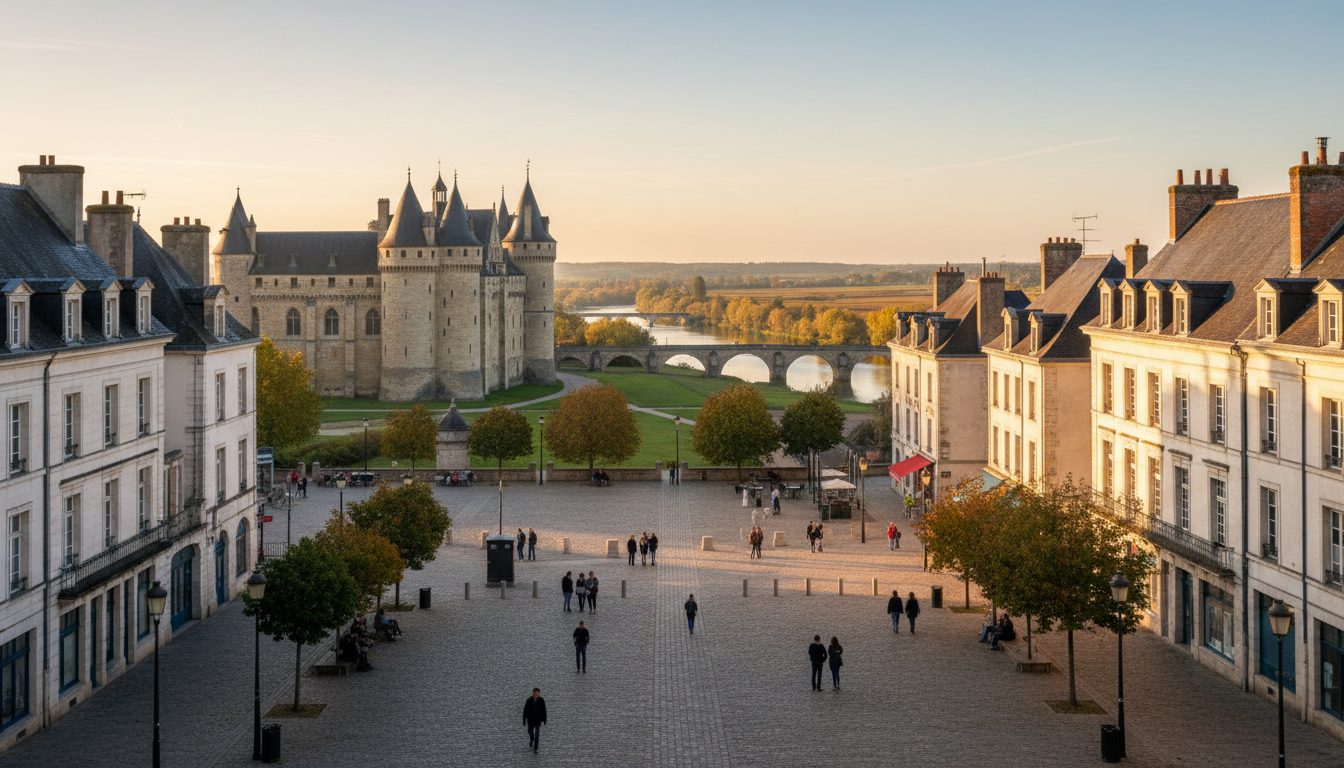
Further up the Loire, Angers and Saumur offer château visits with enough turrets, tapestries and the odd dungeon to hold a child’s interest without demanding gallery-level patience. Zoos and wildlife parks are well represented across the region too, generally spacious and well shaded – useful on the warmer days when another castle courtyard feels like one too many.
Where to Eat in Pays de la Loire with Kids
French restaurants have a reputation, not always fair, for being unwelcoming to children. Pays de la Loire mostly bucks this. Coastal towns in the Vendée run on family trade in summer, and menus reflect it – simple grilled fish, moules frites, crêpes as a genuine main course option rather than an afterthought. Crêperies in general are the family traveller’s best friend here; they are relaxed, quick, and almost universally tolerant of a four-year-old eating only the butter and sugar version while everyone else has something more ambitious.
Market towns inland tend to have at least one brasserie geared towards long lunches with high chairs and a shrug towards noise levels. Portion sizes for children’s menus are reasonable rather than generous, so don’t be surprised if your teenager orders from the adult menu by age eleven. Picnics are worth building into the itinerary too – the region’s produce markets sell good bread, rillettes and local cheese, and most château grounds have lawns practically designed for spreading a blanket.
Rainy Day Pays de la Loire with Kids
It does rain here, particularly in spring and autumn, and the Atlantic has opinions about this most days. Indoor château visits cover a good chunk of a wet morning – many have enough rooms, armour and the odd grim torture-adjacent exhibit to hold interest for an hour or two. Coastal towns generally have at least one aquarium or maritime museum nearby, strong options for a damp afternoon, and indoor swimming complexes along the Vendée coast fill the gap nicely when the outdoor pool option is rained off.
Nantes has the advantage of scale here – its museums, covered passages and indoor play spaces mean a wet day in the city rarely feels wasted. Smaller towns are, frankly, trickier in bad weather; it’s worth having a backup château or indoor attraction pencilled in in rural areas, since options thin out quickly once you’re off the coast.
Pays de la Loire with Kids by Age
Pays de la Loire with Toddlers
Toddlers do well here largely because the beaches are forgiving and the pace is slow. Stick to the gentler Vendée bays rather than the more exposed surf beaches further south, and factor in that château visits beyond about forty-five minutes will test everyone’s patience. Self-catering near the coast, with a shaded garden for the inevitable midday nap, generally works better than ambitious day-tripping.
Pays de la Loire with Juniors
This is arguably the region’s sweet spot age group. Six to twelve-year-olds are old enough to enjoy the theme park spectacle, castle climbing and bike rides, and young enough to still find a moat genuinely thrilling. Mix beach mornings with one château or attraction per day; more than that and you’ll hear about it.
Pays de la Loire with Teens
Teenagers respond well to Nantes – there’s enough city, street art and genuine edge to it that it doesn’t feel like a family holiday chaperoned stop. Surfing around Les Sables-d’Olonne and cycling the region’s long-distance Loire routes also give older children something that feels like their own activity rather than a parental itinerary imposed upon them.
Getting Around Pays de la Loire with Kids
A car is close to essential outside Nantes; distances between beach and château are short, but public transport between them is patchy. The region is famously flat and criss-crossed with well-signed cycle routes, including long stretches following the Loire itself, which makes family cycling a realistic option rather than an aspirational one – bike hire with child seats and trailers is widely available in tourist towns along the river and coast.
Within Nantes, the tram system is simple enough for visiting families to use with minimal fuss, and considerably less stressful than trying to park in the city centre. Along the coast, many towns are compact enough to walk, though a car remains useful for reaching the quieter beaches a little further out, the ones without the ice cream queue.
For families weighing up where to base themselves, there’s a good range of villas in Pays de la Loire.
Pays de la Loire Family Holiday FAQs
What is the best time of year to visit Pays de la Loire with children?
Late May to early July and September offer the most comfortable mix of warm weather, quieter attractions and lower prices than the peak July-August school holiday period, when coastal towns become considerably busier.
Are the beaches in Pays de la Loire safe for young children?
Many Vendée beaches shelve gently with calm, sheltered water, particularly around the Baie de Bourgneuf and parts of Noirmoutier, making them suitable for younger children, though flags and lifeguard presence should always be checked locally.
How many days do you need for a family trip to Pays de la Loire?
A week allows a realistic balance of beach time, one or two château visits, and a day trip to Nantes or a theme park without the schedule feeling rushed or the children feeling marched about.
Keep reading
More on Pays de la Loire
- Travel guidePays de la Loire Travel Guide
- When to goBest Time to Visit Pays de la Loire
- RestaurantsBest Restaurants in Pays de la Loire
- Food & winePays de la Loire Food & Wine Guide
Guides to places in Pays de la Loire
Where to stay
Villas in Pays de la Loire
A selection from our 56 luxury villas in Pays de la Loire.