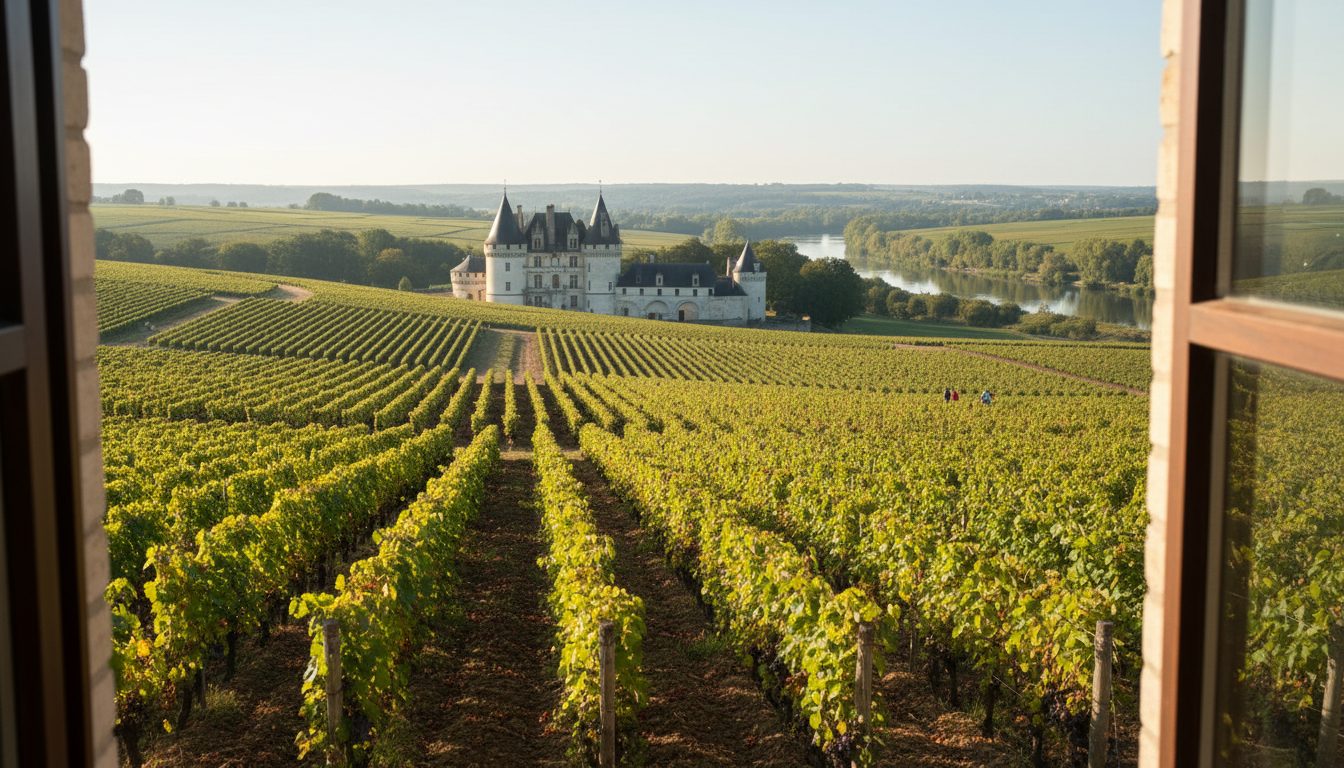
Pays de la Loire Food & Wine Guide: Local Cuisine, Markets & Wine Estates
Pays de la Loire food and wine centres on Muscadet and Anjou wines from the Loire’s western stretch, Atlantic seafood and oysters from the Vendée coast, rillettes from Le Mans and Nantes-style beurre blanc. The region produces more appellation wines than almost anywhere else in France, and its markets, farmhouses and cellars reward travellers who eat seasonally and slowly.
It’s a Saturday morning in Nantes and you’ve just watched a stallholder slice a wheel of Curé Nantais cheese with the gravity of a man performing minor surgery. Behind him, crates of just-landed sardines sit beside mountains of mogettes – the white beans the Vendée takes almost embarrassingly seriously – and somewhere a boulanger is pulling brioche vendéenne from the oven, its sugar crust catching the light like something lacquered. By noon you’ll be at a zinc-topped bar working through a dozen oysters and a chilled glass of Muscadet so dry it practically squeaks, and by evening you’ll be standing in a cellar cut into tuffeau stone near Saumur, glass in hand, listening to someone explain – patiently, as if for the first time, though you suspect it isn’t – why Chenin Blanc behaves so differently here than anywhere else on earth. This is a normal day in Pays de la Loire. Nobody is rushing you, and that, more than any single dish, is the point.
Pays de la Loire Cuisine: What Makes It Different
This is not the region of lavender and olive groves that most people picture when they think “French countryside.” Pays de la Loire sits where river meets Atlantic, and the food follows suit – it’s a cuisine built on butter, cream, white wine, root vegetables and whatever the sea has handed over that morning, rather than sun-baked herbs and tomatoes. The Loire itself, Europe’s last largely untamed major river, threads through the region carrying silt that makes the valley soil obligingly fertile, while the Vendée coast supplies oysters, mussels and the particular salt of Noirmoutier, harvested by hand in shallow pans much as it has been for centuries. Inland, Anjou and the Sarthe lean into pork, duck and dairy. It’s a cuisine of contrasts that somehow never feels contradictory, mostly because nobody here is in a hurry to reconcile them – they simply put both on the same table and let you decide. For wider context on the region before you dive into the food, the Pays de la Loire Travel Guide is a useful starting point.
Signature Dishes of Pays de la Loire
Start with rillettes, the potted, shredded pork preserved in its own fat that Le Mans claims as a point of civic pride – spread thickly on bread, it is not a snack so much as a philosophy. Nantes gives the world beurre blanc, that deceptively simple emulsion of butter, shallot and Muscadet, traditionally served with pike or other river fish, and canard nantais, duck raised around the city and served pink, often with the kind of understatement that makes you realise how much fuss is usually made over far less. The Vendée contributes jambon de Vendée, a salt-cured, air-dried ham, and mogettes au jambon – white beans slow-cooked with ham, a dish so unassuming on paper that its actual richness tends to catch first-timers off guard. Challans, further along the coast, is famous for its ducks, bred with enough seriousness that the breed itself carries the town’s name. For something sweet, brioche vendéenne is the one to track down – a plaited, lightly sugared loaf traditionally eaten at breakfast or with afternoon coffee, dense enough to feel virtuous and sweet enough to undo that impression entirely.
Pays de la Loire Wine: Muscadet, Anjou and Saumur
Pays de la Loire produces one of the broadest ranges of wine styles found anywhere in France, a fact that surprises people who assume the Loire’s good bits are all further east. Muscadet, grown around Nantes in the Sèvre-et-Maine zone, is the signature white – bone dry, mineral, and the obvious match for the region’s seafood and beurre blanc, usually aged “sur lie” (on its lees) for added depth that belies the modest price tag. Move inland to Anjou and the wines turn more varied: Anjou rosé and the deeper, more serious Cabernet d’Anjou sit alongside Savennières, a dry Chenin Blanc of genuine intensity, and Coteaux du Layon, a sweet late-harvest wine that rewards patient drinkers. Saumur, further east still, produces structured reds under Saumur-Champigny and some of the Loire’s best sparkling wine under the Crémant de Loire label – a genuine alternative to Champagne at a fraction of the fuss and the price.
Wine Estates to Visit in Pays de la Loire
The Muscadet area around Nantes rewards a slow drive through vineyards, with tastings often happening directly in working cellars rather than polished visitor centres – a reminder that this is still, fundamentally, farming country. Around Angers, the Anjou wine routes wind past Savennières and Coteaux du Layon vineyards, many open for direct tastings by appointment. Saumur is the one not to skip: the region’s tuffeau limestone has been hollowed into troglodyte cellars for centuries, some now used for sparkling wine production, others for mushroom farming (more on that shortly), and a tour through one on a hot day is as much about the blessed cool as the wine itself.
Food Markets in Pays de la Loire
Nantes has one of the great covered markets of western France, a cast-iron hall where fishmongers, cheesemongers and butchers operate with the unhurried confidence of people who have been doing this since before anyone thought to call it “artisanal.” Angers runs a similarly serious affair, heavier on Anjou produce and local wine by the glass. Along the Vendée coast, seaside towns and the islands of Noirmoutier and Yeu hold markets built almost entirely around what came off the boats that morning – oysters, langoustines, line-caught fish – sold by people who will tell you exactly how to cook it, whether you asked or not. Le Mans’ market leans into its rillettes and regional charcuterie, and is worth timing a Saturday morning around.
Cooking Classes in Pays de la Loire
Hands-on food experiences here tend to be refreshingly unglamorous – think flour on your forearms rather than a chef narrating for a camera. Classes built around beurre blanc and Loire fish are common near Nantes, often paired with a market visit so you choose the ingredients yourself. In Anjou, some sessions focus on pairing regional dishes with the area’s wines, taught by people who clearly find the whole exercise more enjoyable than their straight faces let on. Bread and brioche workshops crop up around the Vendée, usually ending with you carrying home a loaf considerably less symmetrical than the teacher’s – and tasting, somehow, exactly as good.
Seasonal Food in Pays de la Loire
Spring brings the first asparagus from the Loire’s sandy soils, prized well beyond the region, alongside early strawberries from Anjou. Summer is oyster and seafood season along the Vendée coast, when the markets on Noirmoutier and Yeu hit their stride. Autumn turns attention inland – mushrooms, including button mushrooms grown commercially in the cool darkness of Saumur’s troglodyte caves, duck from Challans, and the Coteaux du Layon grape harvest, picked late and often by hand in successive passes. Winter is rillettes-and-red-wine weather, when the Sarthe’s heartier cooking makes the most sense, and when a glass of Saumur-Champigny by an open fire stops feeling like a cliché and starts feeling entirely reasonable.
Best Food Experiences in Pays de la Loire
If you only do three things, make it these. First, eat oysters within sight of the Vendée coast they came from, ideally with nothing more elaborate than a squeeze of lemon and a glass of Muscadet – overcomplicating this dish is the local equivalent of a faux pas. Second, spend an afternoon in a Saumur troglodyte cellar, tasting Crémant de Loire in a space that stays a steady twelve degrees regardless of what the thermometer is doing outside. Third, buy rillettes, bread and a bottle of Anjou rosé from a market stall and eat it somewhere with a river view – no table required. It is, by some distance, the best lunch you will have spent the least money on.
If this has you planning the trip around the eating, the full range of villas in Pays de la Loire makes a good base for exploring the region’s markets and vineyards at your own pace.
Pays de la Loire Food and Wine FAQs
What is the signature wine of Pays de la Loire?
Muscadet, made around Nantes in the Sèvre-et-Maine area, is the region’s defining wine – a bone-dry white typically paired with seafood and often aged on its lees for extra depth.
What food is Pays de la Loire known for?
The region is known for rillettes (particularly from Le Mans), Nantes-style beurre blanc, Vendée oysters and ham, mogettes with ham, Challans duck and brioche vendéenne.
Is Pays de la Loire good for a food and wine trip?
Yes – the region combines Atlantic seafood, serious wine appellations including Muscadet, Anjou and Saumur, and strong farmhouse and market traditions, all within a relatively compact and easily driveable area.
Keep reading
More on Pays de la Loire
- Travel guidePays de la Loire Travel Guide
- When to goBest Time to Visit Pays de la Loire
- RestaurantsBest Restaurants in Pays de la Loire
- FamiliesPays de la Loire with Kids
Guides to places in Pays de la Loire
Where to stay
Villas in Pays de la Loire
A selection from our 56 luxury villas in Pays de la Loire.