Porto Food & Wine: Francesinhas, Port Lodges & River Market Life
Porto’s cuisine centres on hearty, Atlantic-influenced dishes such as the francesinha sandwich, tripas à moda do Porto and bacalhau prepared dozens of ways, alongside the city’s historic role as the trading hub for Port wine made upriver in the Douro Valley. Visitors can sample both at covered markets, traditional tascas and the Port wine lodges across the river in Vila Nova de Gaia. The best food experiences combine a market visit, a riverside Port tasting and a proper Porto lunch of tripe, grilled fish or a sandwich that defeats most first-time visitors entirely.
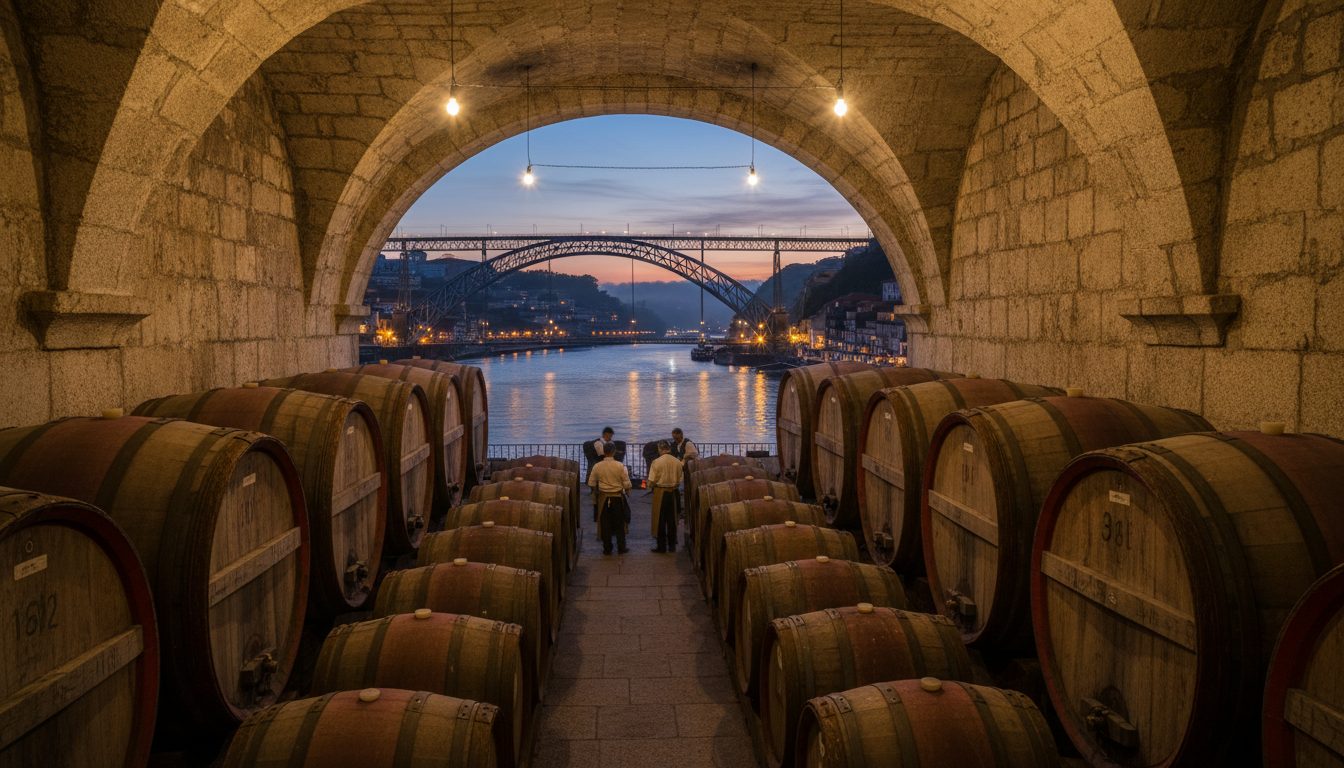
I will confess that for years I assumed Port was a drink you had after dinner, in a wing chair, with a dog nearby and absolutely no further plans. Porto disabused me of this rather quickly. Here, Port is a working industry, a riverside skyline of wine lodges, and – somewhat confusingly for the uninitiated – not actually where the wine is made at all. The grapes grow some way upriver in the Douro Valley; Porto is where the barrels end up, aged, blended and eventually poured into glasses held by people who, like me, had previously only encountered the stuff at Christmas. The city’s food follows a similarly unpretentious logic: it is a working port town’s cuisine, built on what the Atlantic and the river delivered, and it has never felt the need to dress itself up for visitors. This guide covers the dishes, the wine, the markets and the places worth building a meal around, and it pairs well with our broader Porto Travel Guide for the rest of the trip.
Porto Food and Wine at a Glance
- Signature dish: the francesinha, a layered sandwich under melted cheese and a beer-spiked tomato sauce
- Signature wine: Port, made from Douro Valley grapes and aged in lodges across the river in Vila Nova de Gaia
- Best food season: autumn, when the Douro harvest coincides with game and chestnuts appearing on menus
- Don’t miss: a tasting at a Port wine lodge followed by a walk through the city’s main covered market
Porto Food: Signature Dishes and What to Order
Porto’s food reputation rests, somewhat unfairly, on a single sandwich. The francesinha – bread, ham, sausage and steak, blanketed in melted cheese and drowned in a beer-and-tomato sauce, frequently with a fried egg balanced on top for reasons nobody fully explains – is the dish every visitor is told to try and the dish every visitor underestimates. It is enormous, faintly ridiculous and, eaten on a cold afternoon after a long walk along the river, entirely justified.
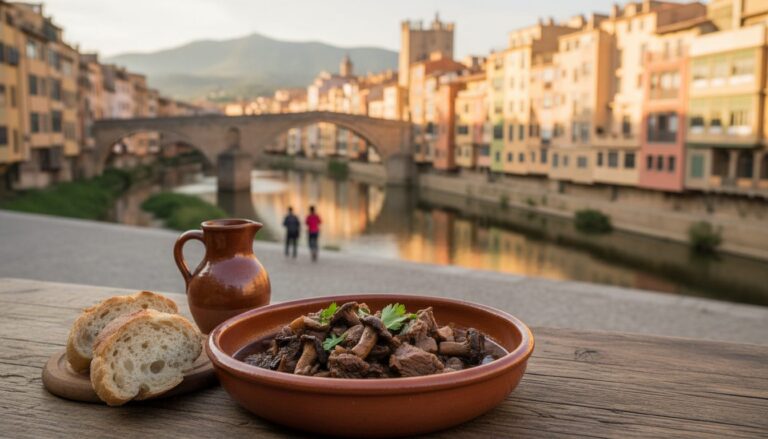
It is not, however, the only thing locals eat. Tripas à moda do Porto, a white bean and tripe stew, gave the city’s residents the nickname “tripeiros” – tripe-eaters – and remains a point of civic pride rather than embarrassment. Bacalhau, salted cod, appears in more forms than any visitor could reasonably sample in one trip, though bacalhau à Gomes de Sá, baked with potatoes, onions and olives, is a reliable starting point. Caldo verde, a kale and potato soup with a slice of chouriço, turns up everywhere from market stalls to proper restaurants and asks very little of you beyond an appetite. For something lighter, the Atlantic supplies grilled sardines, octopus and a steady stream of fresh fish, usually cooked simply over charcoal because the fish itself has never needed much help.
Porto Wine: Port, the Douro Valley and Where It Comes From
Port is a fortified wine made from grapes grown on the terraced slopes of the Douro Valley, some two hours upriver from Porto, then shipped downstream to age in the cellars of Vila Nova de Gaia, the district directly across the river from the city centre. This geographic split confuses first-time visitors reasonably often – the wine is named for the city, made in the valley, and aged somewhere in between – but it is also why a Porto trip and a Port tasting go together so naturally.
The lodges lining the Gaia riverfront, many of them centuries old and family-run across several generations, offer tastings and cellar tours that range from brisk to genuinely absorbing, depending on how much time you give them. Styles vary considerably: ruby Ports are young, fruity and unapologetically sweet; tawny Ports age in wood and develop a nuttier, more savoury character; white Port, less internationally known, makes an excellent aperitif mixed with tonic on a hot afternoon, which is a far better use of it than waiting for dessert. For those with more time, a day trip into the Douro Valley itself – to walk among the terraced vineyards and visit a working quinta – adds considerable context to whatever ends up in your glass back in the city.
Porto Food Markets: Where Locals Actually Shop
Porto’s main covered market, a handsome early twentieth-century hall near the city centre, is the best single stop for understanding what the region actually eats before it is cooked. Stalls sell fish still glistening from the morning catch, mounds of bacalhau in every cut, local cheeses, smoked sausages, and fruit and vegetables arranged with more care than the prices suggest. It gets busy, it gets loud, and the fishmongers have opinions about your choices whether you ask for them or not – which is, frankly, part of the appeal.
Beyond the main hall, smaller neighbourhood markets and riverside food stalls offer a less curated but equally honest picture of daily eating in Porto: pastries bought standing up, coffee drunk in under two minutes, conversations conducted at a volume that suggests everyone is slightly deaf. It is worth visiting on an empty stomach and leaving time to simply wander rather than shop with purpose.
Porto Cooking Classes and Food Experiences
Hands-on cooking classes in Porto typically focus on the dishes that define the city’s reputation: francesinha assembly (harder than it looks), bacalhau preparation, or the custard tarts found across Portugal, often paired with a market visit beforehand so participants shop for their own ingredients. These classes tend to run in small groups in home kitchens or dedicated culinary spaces, and they are a useful way to understand why certain dishes taste the way they do rather than simply eating them and moving on.
Beyond formal classes, the city’s food tours – usually on foot, occasionally by tram – stitch together several small tastings across neighbourhoods, which suits travellers who would rather sample six things than commit to one large meal. Port tastings paired with light food, often cheese or charcuterie, are widely available across Gaia’s lodges and make a reasonable afternoon activity when the weather turns, which in Porto it does with some regularity.
Porto Seasonal Specialities: Seafood, Game and the Harvest
Porto’s seasonal calendar follows the Atlantic and the Douro harvest more than any single trend. Summer brings sardines at their fattest and best, traditionally grilled outdoors during the city’s June festivals, when the smoke drifts through entire neighbourhoods and nobody minds in the slightest. Autumn is harvest season in the Douro, and menus across Porto respond with game, mushrooms and chestnuts, alongside the arrival of the year’s new wine. Olive oil, produced in groves across northern Portugal, is a steady presence year-round rather than a seasonal event, used generously rather than ceremoniously. Truffles, for the record, are not a genuine Porto speciality – they belong to other regions of the Iberian Peninsula – and any menu making great claims about them locally is worth a raised eyebrow.
Best Time for Porto Food and Wine
Late September through November offers the clearest argument for timing a Porto trip around food and wine specifically: the Douro harvest is underway, the weather has cooled enough for the heavier dishes to make sense again, and the lodges in Gaia are at their most active. Summer brings the sardine festivals and the liveliest market atmosphere, but also the heaviest crowds and heat that makes a francesinha feel like a tactical error. Winter is quieter, cheaper and arguably when the tripe stew makes the most emotional sense, even if the riverside terraces lose some of their appeal.
For travellers planning where to base themselves while working through all of this, there are villas in Porto within easy reach of the markets and the river.
Porto Food and Wine FAQs
Is Porto food very different from the rest of Portugal?
Porto shares many national staples, such as bacalhau and caldo verde, but has its own distinct specialities, particularly the francesinha sandwich and tripas à moda do Porto, both closely tied to the city’s working-class and maritime history rather than found widely elsewhere in the country.
Can you visit Port wine producers without going to the Douro Valley?
Yes. Most major Port wine lodges maintain cellars and tasting rooms in Vila Nova de Gaia, directly across the river from central Porto, so visitors can tour cellars and taste a full range of styles without leaving the city, though visiting the Douro Valley itself adds context about where the grapes are actually grown.
What should vegetarians expect from Porto’s food scene?
Porto’s traditional cuisine leans heavily on meat, fish and cod, which can make vegetarian dining more effort than in some other European cities, though markets offer plenty of fresh produce and cheese, and a growing number of restaurants now cater specifically to vegetarian and vegan diets.
Keep reading
More on Porto
- Travel guidePorto Travel Guide
- When to goBest Time to Visit Porto
- RestaurantsBest Restaurants in Porto
- FamiliesPorto with Kids
Guides nearby in Portugal
Where to stay
Villas in Porto
A selection from our 90 luxury villas in Porto.