
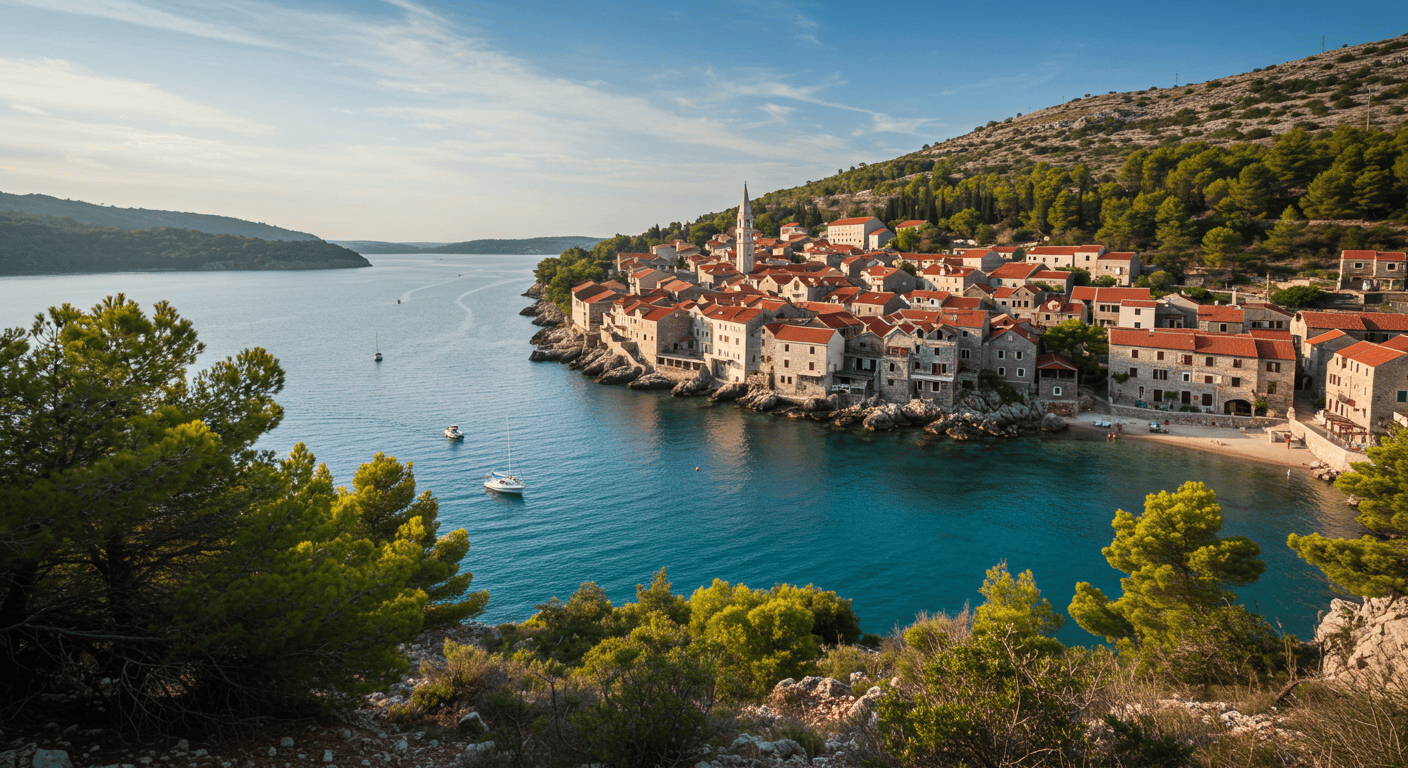
Sutivan Travel Guide: Where to Stay, Eat & Explore in Luxury
What if the most beautiful village on Brač island isn’t the one everyone’s heard of? Hvar gets the magazine covers. Dubrovnik gets the bucket lists. And somewhere along the Adriatic coast, quietly and without apparent effort, Sutivan simply gets on with being exceptional. It sits at the western tip of Brač – the same island that gave the world its dazzling white stone, used to build Diocletian’s Palace in Split and, it is said, the White House in Washington – and it carries itself with the particular confidence of a place that has never needed to compete for attention. The harbourfront is unhurried. The water is absurdly clear. The olive groves don’t care about your itinerary. This is Europe as it used to be, before everyone arrived at once.
Sutivan is not for everyone, which is rather the point. It suits couples marking a significant anniversary who want real quiet rather than a spa brochure’s version of it. It works beautifully for families who would rather have a private pool and a kitchen full of local produce than queue for a sun lounger. Groups of friends who’ve graduated beyond the obvious party islands find exactly what they’re looking for here: good wine, excellent swimming, long evenings on a terrace, no particular pressure to do anything else. Remote workers who have discovered that a fast connection and a view of the Adriatic is, in fact, a legitimate way to spend a month will find Sutivan surprisingly well-equipped for the purpose. And wellness-focused travellers – the kind who want to walk through pine forests at dawn and eat grilled fish at noon and feel genuinely restored rather than merely rested – will find the rhythm of this place doing most of the work for them. Choosing luxury villas Sutivan offers over hotels is, once you’ve understood what Sutivan is, the obvious conclusion.
Getting to Sutivan: Easier Than You’d Think, More Rewarding Than You’d Expect
The nearest airport is Split, on the Croatian mainland, which receives direct flights from across Europe throughout the summer season – London, Manchester, Amsterdam, Frankfurt, Vienna and a considerable number of other cities all have direct routes. From Split airport, it takes around twenty minutes by car or taxi to reach Split’s Stari Grad ferry terminal, and from there the Jadrolinija car ferry crosses to Supetar on Brač in approximately fifty minutes. Sutivan is a further ten minutes by car from Supetar, making the total journey from airport to villa door roughly ninety minutes on a good day. It is, by Adriatic island standards, genuinely convenient.
There is also a fast catamaran service between Split and several Brač stops during peak season, which is useful if you’re travelling without a vehicle. Speaking of vehicles: renting a car on Brač is strongly recommended. Not because Sutivan itself demands exploration by car – the village is entirely walkable – but because the island rewards those who can follow a road until it becomes a track, and then follow the track until it becomes a question. Taxis and ride-hailing apps exist, but a car gives you the freedom that makes Brač worthwhile. Scooters are available for the braver among you. Bicycles, for those who enjoy a challenge, are there too – though Brač’s interior is not what you would call flat.
Where to Eat in Sutivan: The Harbour Table and Everything After It
Fine Dining
Sutivan operates at a scale where the distinction between fine dining and excellent local cooking is agreeably blurred. The restaurants here are not reaching for Michelin stars; they are reaching for ingredients, and the ingredients in question – freshly caught Adriatic fish, hand-pressed olive oil from the groves that surround the village, local lamb from Brač’s rocky interior, prstaci clams that are legally protected and therefore a genuine occasion when you encounter them – are of a quality that renders culinary complexity largely unnecessary. The harbour-front restaurants offer the best seats on the island at night, when the lights of the boats reflect in water so still it seems painted. Go for grilled sea bass with a glass of Pošip, the white grape variety native to the Dalmatian islands, and consider yourself well-positioned in the world.
Where the Locals Eat
Walk one street back from the waterfront and things get quieter, cheaper and, frequently, better. The village’s smaller konobas – the Croatian equivalent of a family-run taverna – are where you’ll find bread that arrived from the oven an hour ago, peka dishes (lamb or octopus slow-cooked under a bell-shaped lid in the embers of a fire) prepared with genuine care, and owners who will tell you, unprompted, exactly where the fish on your plate was caught and approximately when. Local wine flows generously. Service moves at the pace of the afternoon. This is the correct approach and should not be hurried.
The village market, small but consistent, is worth visiting early for olive oil, local honey, lavender products (the island takes lavender seriously) and the particular satisfaction of buying something directly from the person who made it. For provisions when staying in a villa – which, again, is the right choice – the local shops and the Supetar market provide everything needed for a self-catered evening that will be, without false modesty, better than most restaurant meals elsewhere.
Hidden Gems Worth Seeking Out
The best meals in Sutivan are often the unscheduled ones: the terrace someone’s grandmother runs on the edge of their garden with four tables and no menu board, the fisherman who sells directly from his boat on the quay most mornings, the baker who produces a cheese pastry at 7am that deserves considerably more attention than it receives. Ask your villa manager or local contact. The good stuff here is not hidden exactly – it simply doesn’t advertise, which amounts to the same thing for most visitors. Being the person who finds it is, quietly, one of the pleasures of the place.
Exploring Brač: The Island Behind the Postcard
Sutivan is a superb base for exploring the full character of Brač, which turns out to be considerably more complex than its reputation as a beach destination would suggest. The island’s interior is dramatic and relatively untouched – a landscape of dry stone walls, ancient olive groves, abandoned villages and roads that appear on maps with a degree of optimism. The village of Škrip is the oldest settlement on Brač, featuring an Illyrian fortress, Roman-era tombs and a small but genuinely interesting museum. It takes about twenty minutes to drive there from Sutivan and feels, in the best possible way, completely removed from the coastal scene.
Bol, on the island’s south coast, is worth the drive for Zlatni Rat alone – the famous shingle spit that shifts shape with the currents and is, despite the crowds it attracts in August, legitimately extraordinary. Go in June or September and you’ll have a more manageable experience of something genuinely remarkable. The drive across the island’s spine through the pine and scrub landscape is a pleasure in itself.
Closer to Sutivan, the coastline heading east towards Supetar offers small coves accessible by water taxi or a short walk through the pine forest. These are exactly the kind of spots – clear water, no facilities, no one selling you anything – that justify the whole enterprise of coming here. The Sutivan area’s own beaches include a shingle and rock waterfront in the village itself, plus a series of small bays reached on foot within twenty minutes. None of them will disappoint.
Things to Do in Sutivan: The Pleasures of Strategic Idleness
The best things to do in Sutivan include, it must be said, quite a lot of nothing in particular – but nothing in particular conducted with great intention and at an excellent table. That said, the active options are substantial. The village is a natural starting point for walks along the Brač coastal path, which threads through pine forest above the sea with views that make the effort entirely worth it. Guided boat tours depart from Supetar and Sutivan throughout the season, offering full-day excursions to the Blue Cave on Biševo, the Green Cave, Hvar’s old town and the Pakleni islands – a series of small wooded islets just off Hvar’s coast that represent one of the Adriatic’s quieter pleasures.
Cultural day trips to Split are easy and rewarding: Diocletian’s Palace – a Roman emperor’s retirement project that a city subsequently grew inside of, which is a very Dalmatian arrangement – is one of the genuinely great historical sites in Europe and absolutely merits a morning. The fish market near the waterfront is worth visiting before the palace. Trogir, a UNESCO-listed medieval town an hour west of Split, makes for an excellent late afternoon if you have transport. For those staying in a villa with concierge access, private boat hire – to take your own course through the islands for the day – is the activity that tends to define the holiday in retrospect.
Adventure Sports and Active Pursuits: The Adriatic Does Not Disappoint
Brač has built a quiet but serious reputation among those who want to do more than float. Windsurfing at Bol is the island’s most famous active pursuit: the Maestral wind that funnels down from the mountains in the afternoon turns Zlatni Rat into one of the best windsurf spots in the Mediterranean, with schools and rental available for all levels. The same conditions make kitesurfing viable for the experienced. Sea kayaking along the Sutivan coastline is a genuinely excellent way to explore the coves and hidden beaches that are inaccessible from the road – guided half-day tours operate from the village in season.
Diving here is rewarding. The Adriatic around Brač offers walls, wrecks and caves, with good visibility and the bonus of relatively uncrowded dive sites compared to more trafficked parts of the Croatian coast. Local dive operators in Supetar and across the island offer PADI courses and guided dives for experienced divers. Snorkelling directly from the Sutivan waterfront or from a villa with sea access is also quietly excellent – the sea floor is clean, varied and populated by the kind of marine life that rewards patience and silence.
Cycling across the island is available for those with appropriate fitness and a high tolerance for gradient, with dedicated mountain bike trails in addition to road routes. Rock climbing exists in the island’s limestone interior – guided routes available, some of the technical variety, some merely steep – and trail running through the pine forest above the village is a morning ritual that a surprising number of villa guests discover they enjoy. Fresh air and endorphins. The Adriatic takes care of the rest.
Sutivan With Children: The Holiday That Converts Sceptics
There is a particular type of family holiday that Sutivan does very well: the kind where children are happy for reasons they cannot fully articulate and parents are relaxed in ways they had forgotten were possible. The village itself is gentle – car-free along the seafront, small enough that children can develop the delicious sense of geography that comes with being able to navigate somewhere independently, large enough to hold their interest. The beach is calm. The water is shallow enough for small swimmers to feel brave and clear enough for them to see straight through to the bottom, which children find disproportionately exciting.
A private villa with a pool changes the calculations entirely. The pool becomes its own universe for younger guests, which means adults can conduct the parallel activity of sitting quietly nearby with a book and a glass of something cold – an experience that most parents would tell you is not to be underestimated. Villas with private gardens and outdoor dining areas mean that the daily rhythm of meals, swimming, exploring and resting can be conducted entirely on your own terms and at your own pace. No restaurant timing, no fighting for beach space, no negotiating with the hotel about the cot.
The boats, snorkelling, the ice cream on the harbour at 6pm, the fact that dinner in a konoba is a genuinely easy experience with children who are fed at Mediterranean pace rather than British anxiety pace – all of it accumulates. Families who come to Sutivan tend to come back. This is perhaps the most reliable endorsement it has.
Culture and History: The Island With More Going On Than It Lets On
Brač has been inhabited continuously since the Neolithic period, which gives it a historical depth that sits pleasantly at odds with its current reputation as somewhere you go to swim. The Illyrians were here before the Greeks, the Romans after them – and the Roman quarries in the island’s interior, which produced the white limestone used across the ancient world, are still visible and still functioning in a modest capacity. That the same stone was used in Split’s Diocletian’s Palace, in countless Venetian buildings, and – according to a story that Croatians enjoy telling with considerable satisfaction – in the White House in Washington, says something about the quality of the material and something else about the island’s quiet significance.
Sutivan itself was settled by refugees from the Ottoman expansion in the seventeenth century, which accounts for some of the architectural character of the older parts of the village – small stone churches, compact family houses built for a community that had learned not to advertise itself too prominently. The parish church of St. John the Baptist on the waterfront, with its simple Baroque facade looking out over the harbour, is worth a quiet half hour. The Petrinović family mausoleums at the edge of the village cemetery are an unexpectedly affecting monument to a family of successful sailors and merchants – designed by the sculptor Toma Rosandić in the early twentieth century, they have a quiet grandeur that catches visitors off guard.
The island’s lavender festival and various local feast days provide seasonal cultural texture. The Croatians do not, as a general rule, underdo a celebration. These are community events worth attending with some interest and respect, rather than as spectators of someone else’s tradition.
Shopping in Sutivan: Small Scale, Considered Choices
Sutivan is not a shopping destination in any conventional sense, and attempting to treat it as one would be missing the point in a fairly comprehensive way. What it offers instead is the more satisfying alternative: things made or grown locally, available directly from the people responsible for them, at prices that don’t require a second mortgage. Brač olive oil is the starting point – the island’s groves produce oil of real distinction, and buying a bottle or two from a local producer rather than a supermarket shelf is both ethically and gastronomically the right decision.
Lavender products – essential oils, sachets, honey infused with lavender – are Brač’s most characteristic export and make genuinely good presents, as long as you exercise some restraint and don’t return to the United Kingdom smelling like an artisan soap shop. Local honey in its own right is worth seeking out. Pošip and Plavac Mali wines from Dalmatia are available at the island’s small shops and worth buying by the case if you have the transport to manage it – prices are considerably more reasonable than they will be once the wine reaches any shop in London or New York.
Supetar, fifteen minutes away, has a more developed range of shops including ceramics, linen and locally made jewellery. Split offers the full complement of Croatian artisan goods, markets and boutiques for those who want a more serious retail day. For the most satisfying haul, though, the Sunday market in Supetar and the small producers around Sutivan itself will serve you well.
Practical Matters: A Few Things Worth Knowing Before You Go
Croatia uses the Euro, having joined the Eurozone in January 2023 – which has simplified things considerably for travellers arriving from most of Europe. Card payments are widely accepted in restaurants and shops, though carrying some cash for markets and smaller transactions remains a sensible habit. The language is Croatian, and while English is spoken fluently by most people working in tourism and by younger Croatians generally, a few words of Croatian – “hvala” (thank you), “molim” (please), “dobar dan” (good day) – will be received with visible warmth.
Tipping is appreciated but not mandatory at the levels expected in the United States. Rounding up or leaving ten percent at a restaurant is the standard approach and will be received graciously. Safety is a non-issue for the overwhelming majority of visitors – Croatia ranks consistently well on European safety indices and Sutivan specifically is the kind of village where the main hazard is walking into something while looking at the sea.
The best time to visit for a luxury holiday in Sutivan is June or September. July and August are peak season – warm (reliably hot, often very hot), busy on the water and at popular spots, and at their most expensive. June offers excellent weather, long days, warm water and significantly fewer visitors. September retains the warmth, sees the summer crowds retreat and adds the particular quality of late-season Mediterranean light that makes everything look slightly more beautiful than it has any right to. May is increasingly popular for those who want a quieter, cooler experience. The island in October is beautiful and peaceful, though some services begin to reduce.
Dress modestly when visiting churches. Don’t attempt to take prstaci clams from the sea – they are a protected species and the locals take this seriously. Sunscreen is not optional. The Adriatic sun in July is making a point.
Why a Private Villa in Sutivan Is the Whole Point
Hotels exist in the Sutivan area, and they are fine. That is perhaps the most accurate and least enthusiastic endorsement available, and it is deliberately chosen. Because Sutivan, as a place, is not a hotel destination. It is a villa destination – a distinction that becomes immediately obvious the moment you understand what the village actually offers. Sutivan rewards privacy. It rewards space. It rewards the ability to set your own rhythm and follow it without reference to a checkout time, a buffet schedule or the acoustic proximity of other people’s children at 7am.
A private luxury villa in Sutivan delivers what the destination actually promises: the view from a terrace that belongs entirely to you, a pool that is yours alone, the ability to serve dinner at ten o’clock because the evening has been beautiful and there is no particular reason to stop. For families, the private villa with pool equation is, as noted above, transformative – but it works equally powerfully for couples who want genuine seclusion, for groups of friends who want to be together in the full sense of the word, and for remote workers who need reliable connectivity and a workspace that doesn’t involve a hotel lobby. Many high-specification villas in the area now offer Starlink or fibre connections, making a working holiday here genuinely viable rather than merely aspirational.
The wellness dimension of a Sutivan villa is worth considering explicitly. A private pool for morning swims, outdoor space for yoga, the option of bringing in a local masseuse or personal chef, the restorative pace of a village where nothing is demanding your attention – this is wellness that works at a structural level rather than simply offering a treatment menu. The best villas in the area include gym facilities, outdoor showers, landscaped grounds and sea or mountain views that function, frankly, as therapy.
Concierge services through quality villa operators can arrange private boat hire, restaurant reservations, transfers, guided tours, in-villa chefs and provisioning – so the practical complexity of the holiday disappears and what remains is simply the experience of being somewhere exceptional, on your own terms, with the people you chose to bring. That is the luxury holiday in Sutivan that is worth planning.
Browse our collection of luxury holiday villas in Sutivan and find the one that fits your version of the perfect week.
More Sutivan Travel Guides
What is the best time to visit Sutivan?
June and September are the sweet spots. The weather is reliably warm – water temperature is comfortable, days are long, and the atmosphere is genuinely relaxed. July and August are peak season: hot, busy at popular spots and at the top of the price range. September in particular offers beautiful late-summer light, warm seas and significantly fewer visitors than August. May works well for a quieter, cooler trip. October is atmospheric and peaceful, though some restaurants and services begin to wind down for the season.
How do I get to Sutivan?
Fly into Split airport, which has direct connections from cities across Europe throughout the summer season. From Split airport, it’s approximately twenty minutes by car or taxi to the Stari Grad ferry terminal in Split, then a fifty-minute car ferry crossing to Supetar on Brač operated by Jadrolinija. Sutivan is a further ten minutes by car from Supetar. Total door-to-door time from Split airport to Sutivan is typically around ninety minutes. A fast catamaran service between Split and Brač also operates in season. Renting a car on the island is strongly recommended for exploring beyond the village.
Is Sutivan good for families?
Very. The village is compact, largely car-free along the seafront and genuinely easy to navigate with children. The sea is calm and clear, with shallow entry points ideal for younger swimmers. A private villa with a pool is the recommended configuration for families – it gives children their own world to inhabit while adults retain the capacity for relaxation. The pace of local life, the ease of eating in konobas with children, and the range of active pursuits available (snorkelling, boat trips, kayaking) all work well for families with children of a wide age range. Many families return annually, which is a reliable indicator.
Why rent a luxury villa in Sutivan?
Because Sutivan is structurally a villa destination rather than a hotel one. The village rewards privacy, space and the ability to set your own pace – all of which a private villa delivers and a hotel cannot. You get a pool that belongs entirely to your party, outdoor dining space, the freedom to operate on your own schedule and a staff-to-guest ratio that no hotel can match. Concierge services through quality villa operators can arrange everything from private boat hire to in-villa chefs, so the logistical complexity disappears and what remains is simply the experience of being somewhere extraordinary, entirely on your own terms.
Are there private villas in Sutivan suitable for large groups or multi-generational families?
Yes. The villa portfolio in the Sutivan and wider Brač area includes properties ranging from intimate two-bedroom villas ideal for couples to substantial six or eight-bedroom estates suited to large groups and multi-generational families. The better properties feature private pools, multiple outdoor dining and lounging areas, separate wings or annexes that give different family generations appropriate privacy, and professional staffing including housekeeping and sometimes in-villa cooking. For a group holiday, the per-person cost of a large villa frequently compares favourably with equivalent hotel accommodation, while the experience is considerably more flexible and private.
Can I find a luxury villa in Sutivan with good internet for remote working?
Increasingly yes. Connectivity in the Sutivan area has improved substantially in recent years, and a number of high-specification villas now offer Starlink satellite internet or fibre connections, providing reliable speeds suitable for video calls, large file transfers and extended remote working. When booking, it is worth specifying your connectivity requirements so the villa can be confirmed as suitable before arrival. A good villa concierge can also assist with setting up a comfortable workspace – many properties have terrace or garden areas that function beautifully as outdoor offices, which is a legitimate upgrade on most corporate environments.
What makes Sutivan a good destination for a wellness retreat?
Several things working together. The pace of village life is genuinely unhurried in a way that actively reduces cortisol rather than simply describing itself as relaxing. The natural environment – pine forest, clean Adriatic water, fresh air, long evenings – provides the structural conditions for restoration. Private villas in the area offer pools for morning swims, outdoor space for yoga and movement, and the option to bring in local wellness practitioners for massage or other treatments. The local diet – fresh fish, olive oil, seasonal vegetables, local wine in reasonable quantities – is the Mediterranean diet in its original context rather than its repackaged form. Add walking trails, sea swimming, kayaking and the simple absence of any pressure to perform enjoyment for an audience, and the wellness credentials are real rather than marketed.

