
Best Restaurants in Sutivan: Fine Dining, Local Gems & Where to Eat
Best Restaurants in Sutivan: Fine Dining, Local Gems & Where to Eat
There are Dalmatian villages that perform their beauty for you, that angle their harbour walls toward the tour boats and arrange their sunsets accordingly. Sutivan is not one of them. Brač’s smallest and most quietly self-assured town faces the sea on its own terms – the tables are set for people who live here, the wine is poured without theatre, and the fish arrived this morning from somewhere you can probably see from your terrace. What Sutivan has, and what no amount of resort engineering can replicate, is the particular ease of a place that has never needed to try very hard. That ease extends, with considerable grace, to the table.
Eating well in Sutivan is less about finding the right restaurant and more about understanding how the place works. It works slowly, seasonally, and with an honesty about ingredients that more celebrated dining destinations spend considerable marketing budgets pretending to have. If you’ve come via our Sutivan Travel Guide, you’ll already know this is not a destination for people in a hurry. The food follows the same logic.
The Fine Dining Scene in Sutivan
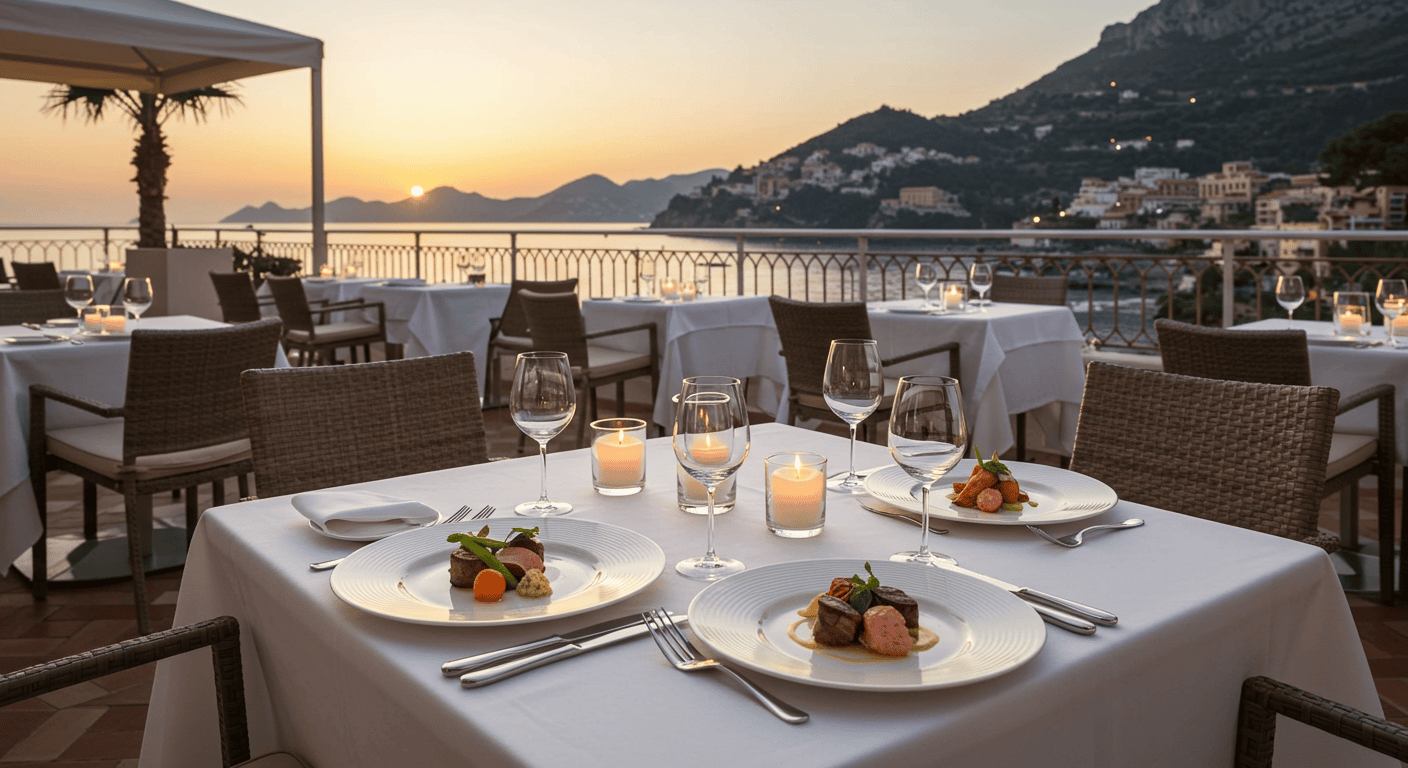
To speak of Michelin stars in Sutivan is to misunderstand Sutivan slightly. There are no starred restaurants here, and the town shows no particular signs of wanting any. This is not a failure – it is, if you’ll allow a mild provocation, rather the point. What Sutivan offers instead is something that Michelin-chasing towns frequently sacrifice in the pursuit of accolades: a direct, uncomplicated relationship between the sea, the land and the plate. The finest eating experiences here happen at restaurants where the owner’s cousin caught the fish and the grandmother’s recipe for peka – the slow-cooked meat or seafood dish prepared under a bell-shaped lid buried in embers – has not been modernised because there is absolutely no reason to modernise it.
That said, the best restaurants in Sutivan do operate at a level of care and craft that rewards the attentive diner. The cooking is rooted in classical Dalmatian technique: olive oil from Brač’s own groves (the island produces some of Croatia’s finest), fresh herbs that grow in the stone-walled gardens behind the kitchen, and a respect for seasonal rhythm that is genuine rather than aspirational. If you arrive in summer expecting a truffle tasting menu and a sommelier with a lanyard, you may need to recalibrate. If you arrive willing to eat what the island is offering today, you will eat very well indeed.
Advance reservations at the better restaurants are strongly advised, particularly in July and August when the island fills quickly. A phone call the day before, or better still two days ahead, is the appropriate approach. Turning up and expecting a table on a warm Saturday evening in peak season is the kind of optimism that tends to end in pizza.
Local Tavernas and Konobas: Where Sutivan Actually Eats
The backbone of dining in Sutivan – and, truly, in any honest Dalmatian village – is the konoba. Part taverna, part family dining room, part living argument against the concept of minimalist interiors, the konoba is where you will eat the food that defines this coast. Expect rough wooden tables, local wine served in carafes, and the faint sense that you have wandered into someone’s extended lunch that started at noon and shows no signs of concluding before dark.
The peka is the dish to order if you have planned ahead – it requires several hours of preparation and is typically available only to those who have reserved it in advance, sometimes the day before. Lamb peka and octopus peka are both canonical; debating which is superior is a reliable way to fill an hour with any local who has an opinion, which is all of them. Alongside the peka, look for brudet – a richly spiced fish stew with a depth of flavour that rewards slow eating – and fresh grilled fish priced by the kilogram, chosen from the day’s catch.
Black risotto made with cuttlefish ink is another essential. Order it without self-consciousness, eat it with the bread, and accept that your teeth will be briefly concerning for the rest of the afternoon. The experience is worth it.
The konobas in and around Sutivan tend to be family-run, which means service follows a pace set by the kitchen rather than by the reservation book. This is not inefficiency – it is a different set of priorities. Settle in with the local wine and allow the rhythm of the place to do what it does.
Beach Clubs and Casual Dining by the Water
Sutivan’s waterfront is not the purpose-built beach club territory you encounter along other parts of the Adriatic coast. There are no DJ sets at noon and no arriving with the right sunglasses as a prerequisite for entry. What there is – which is considerably more interesting – is a cluster of relaxed, open-air eating and drinking spots along the promenade and near the pebble beaches that frame the town, where the water is the kind of blue-green that makes every photograph look unconvincingly filtered.
Casual waterfront dining in Sutivan tends toward fresh seafood, cold local beer, and ice cream of the very simple, very good variety that Dalmatian coastal towns have been producing without apparent effort for generations. Grilled fish sandwiches, plates of cheese and local prosciutto from the interior, and cold Karlovačko or Ožujsko beer in the afternoon sun constitute a perfectly honourable lunch. No one will look at you strangely for ordering two of them.
For something slightly more elevated in the casual register, a number of spots along the waterfront offer full menus including pasta, risotto and grilled meats alongside their seafood. The quality varies, as it does everywhere, but proximity to the Adriatic and an honest approach to sourcing means the baseline is higher than in many comparable towns. The view, it should be noted, costs nothing extra.
Hidden Gems: Where to Eat Like a Local in Sutivan
The phrase “hidden gem” has been somewhat overworked by travel writing, to the point where genuinely hidden things have become self-conscious about it. In Sutivan’s case, the designation is earned. The town is small enough that its best eating experiences are not hidden by design – they are simply not advertised, because the people they are cooking for already know about them.
Walk slightly away from the main harbour and you will find smaller, quieter establishments where the menu changes with what’s available and where the owner will tell you, without prompting, what not to order today because it isn’t quite right. This is a sign of integrity in a restaurant, not a warning. Trust it.
Homemade pasta – particularly pljukanci, the hand-rolled Istrian-Dalmatian pasta shape that appears across this coast – served with truffle sauce or with seafood, is worth seeking out wherever a kitchen is making it fresh. The difference between fresh and dried pasta here is not a subtle one. Similarly, fritule – the small fried doughnuts dusted with icing sugar and scented with citrus and brandy – appear at bakeries and informal spots and should be treated as a priority rather than an afterthought.
Ask your villa host or local contact for specific recommendations rather than relying entirely on review platforms, where the most vocal contributors are not always the most culinarily attuned. The best table in Sutivan is almost certainly not the one with the highest number of photographs of it online.
Wine, Local Drinks and What to Order in a Glass
Brač is not the most celebrated wine island in the Adriatic – that distinction belongs to nearby Hvar and Korčula, with their plavac mali vines on the steep southern slopes – but it produces honest local wine that deserves more attention than it typically receives. Pošip, the white grape variety indigenous to this stretch of Dalmatia, is the glass to start with: crisp, dry, mineral, and deeply appropriate with fresh seafood. It is one of those wines that tastes specifically of where you are, which is a quality that neither a wine list nor a price point can manufacture.
Plavac mali, the dominant red grape of Dalmatia, produces wines of serious character and considerable body. Order it with the lamb peka and give it twenty minutes to open up. It will repay the patience. The local house wine offered in konobas by the carafe is frequently underestimated by visitors who arrive with fixed ideas about wine quality – approach it without prejudice and you may be pleasantly surprised more often than not.
For spirits, rakija is the essential Croatian digestif – a grape brandy that exists in various herbed and flavoured forms including travarica, the herb-infused version, which is frequently offered as a complimentary end to a meal. Accept it graciously. Refuse the second glass at your own discretion. Beer drinkers are well served by the reliable Croatian lagers that appear everywhere on the coast, cold and well-suited to hot afternoons.
Non-drinkers will find fresh juices, excellent coffee – Croatian coffee culture is robust and the espresso is taken seriously – and mineral water from local sources that is considerably better than the faintly apologetic water served in much of northern Europe.
Food Markets and Provisions: Eating Well Between Restaurants
Sutivan is a small town, and its market provision reflects that scale – this is not Split’s Pazar market with its theatrical abundance of produce. What the town and its immediate surroundings offer, however, is access to some of the best locally produced ingredients in Dalmatia, if you know where to look and are not in a hurry about it.
Brač olive oil is not a condiment here – it is a staple of genuine quality, cold-pressed and used with a generosity that will recalibrate your relationship with the substance if you have been cooking with supermarket alternatives. Local producers sometimes sell direct, and any reputable villa management company will be able to point you toward sources. Take enough home to cause mild anxiety at airport security. It is worth it.
Local cheese – particularly the harder sheep’s milk varieties from the island’s interior – and air-dried meats including the inland prosciutto-style products are available at smaller shops in town and from producers in the villages of the Brač hinterland. Combining these with fresh bread from the local bakery constitutes one of the more satisfying and economical meals the island can offer, and one that travels extremely well to a terrace with a view of the sea.
Fresh fish can occasionally be purchased direct from fishermen at the harbour in the early morning – not a guaranteed operation, and not one that announces itself with a sign, but worth the early rise if the opportunity presents itself. There is a particular satisfaction to eating fish you watched arrive that morning, prepared simply, at a table fifty metres from where it was unloaded.
Reservation Tips and Practical Advice for Dining in Sutivan
Sutivan operates at Dalmatian pace, which is to say: unhurried, warm, and occasionally indifferent to the concept of urgency. Embrace this rather than fighting it. However, practical planning is rewarded, particularly during the peak summer months when the island’s restaurants fill quickly and the peka – which must always be ordered in advance – requires forethought.
Reserve the peka a minimum of twenty-four hours ahead, ideally forty-eight. Call rather than email wherever possible – many smaller konobas do not monitor online bookings with the same reliability as their phones. If you speak any Croatian, even a phrase or two, the reception will be noticeably warmer. If you don’t, a friendly approach in English will serve you well – the hospitality here is genuine rather than performative.
Lunch is the more serious meal on this coast. The Croatian tradition of a long, leisurely midday meal is alive and well in Sutivan, and many restaurants offer their full menus from around noon, tapering to simpler evening options in some cases. Arriving for lunch at one o’clock, ordering unhurriedly, and remaining until three-thirty is not behaviour that will draw disapproval. It is behaviour that will draw quiet recognition.
Tipping is not obligatory but is appreciated – rounding up or adding ten percent at sit-down restaurants is the conventional approach. Cash is useful at smaller establishments that may not reliably process cards, though most tourist-facing businesses in Croatia now accept payment by card. Check before ordering if you are without cash and the restaurant appears to predate the digital economy by several decades.
Dining in a Luxury Villa in Sutivan: The Private Chef Option
There is a very specific pleasure – one that Sutivan is particularly well-suited to delivering – in eating superbly without going anywhere at all. The island’s produce is good enough, and the setting of a well-chosen villa dramatic enough, that dining in is not a retreat from the experience: it is very much part of it. Staying in a luxury villa in Sutivan with access to a private chef service transforms the best local ingredients – the Brač olive oil, the morning’s fish, the island herbs – into an experience entirely your own. A private chef who knows the island’s suppliers will frequently bring produce to the kitchen that simply does not make it to restaurant menus at all: the catch that was too small to be worth plating commercially, the oil from a single grove, the seasonal vegetable that appears for three weeks in June and then disappears until next year.
It is, to put it plainly, a rather good way to eat. And unlike a reservation at a busy konoba, the table will definitely be ready on time.
Are there any fine dining or Michelin-starred restaurants in Sutivan?
Sutivan does not currently have any Michelin-starred restaurants. The town’s dining scene focuses on high-quality traditional Dalmatian cooking – fresh fish, slow-cooked peka, local wine and exceptional olive oil from Brač’s own groves – rather than contemporary fine dining formats. The best restaurants here prioritise ingredient quality and honest technique over formal presentation, and the results are frequently excellent. For starred restaurants, the nearest options are in Split, approximately forty minutes away by ferry.
What dishes should I definitely order when eating in Sutivan?
The peka is the essential Sutivan dining experience – meat or octopus slow-cooked under an ember-covered bell lid – but must be reserved at least twenty-four hours in advance. Fresh grilled fish priced by the kilogram is always worth ordering, as is black risotto with cuttlefish ink, brudet fish stew, and pljukanci pasta served fresh. For drinks, start with a glass of local pošip white wine. End with a small glass of rakija if one is offered – it is the correct conclusion to a Dalmatian meal.
Do restaurants in Sutivan require advance reservations, and how far ahead should I book?
In July and August, advance reservations at the better restaurants in Sutivan are strongly recommended – ideally one to two days ahead, particularly for weekend evenings. If you wish to order peka, the restaurant will require at least twenty-four to forty-eight hours’ notice regardless of season, as the dish takes several hours to prepare. Outside peak season, walk-ins are more reliably accommodated, but calling ahead is always worthwhile. Phone calls are generally more effective than emails or online booking systems at smaller family-run konobas.

