
Best Restaurants in Tar: Fine Dining, Local Gems & Where to Eat
Best Restaurants in Tar: Fine Dining, Local Gems & Where to Eat
Here is a confession that might unsettle the food-obsessed traveller: Tar, a small medieval hilltop village in Istria, Croatia, does not have a sprawling restaurant scene. It has roughly the population of a medium-sized dinner party. And yet – this is the part worth paying attention to – eating well here is genuinely, almost unfairly easy. Because Tar sits at the quiet heart of one of Europe’s most quietly extraordinary food regions, where black truffles turn up in the soil like buried treasure, the olive oil is cold-pressed and taken very seriously indeed, and the wine conversation tends to go on longer than is strictly necessary. The best restaurants in Tar and the surrounding Istrian countryside offer something that grand metropolitan dining rarely manages: the feeling that the food arrived from somewhere very close, and was handled by someone who actually cares. That, in the end, is the real luxury.
The Istrian Food Context: Why Tar Eats So Well
Before diving into where to eat, it helps to understand why Tar and the wider Istrian peninsula punch so far above their weight in culinary terms. This is truffle country – specifically the Mirna Valley, which runs just below the village, is one of the most productive truffle territories in Europe. The black summer truffle (Tuber aestivum) is common enough here to appear on weekday pasta without ceremony. The white Istrian truffle (Tuber magnatum), found in autumn, is rarer, more pungent, and frankly alarming in the best possible way when shaved generously over buttered pasta at a farmhouse table.
Add to this a coastline that delivers extraordinarily fresh Adriatic seafood – scampi, sea bass, John Dory, spider crab – alongside an agricultural interior producing exceptional extra-virgin olive oil, indigenous Malvazija white wine, Teran red wine, aged sheep’s cheese, and wild herbs that seem to grow from every available crack in a stone wall. The result is a regional larder that any serious chef would happily mortgage their future for. Restaurants around Tar, from the elevated to the deeply casual, are drawing on this every single day.
Fine Dining Near Tar: The Elevated End of the Table
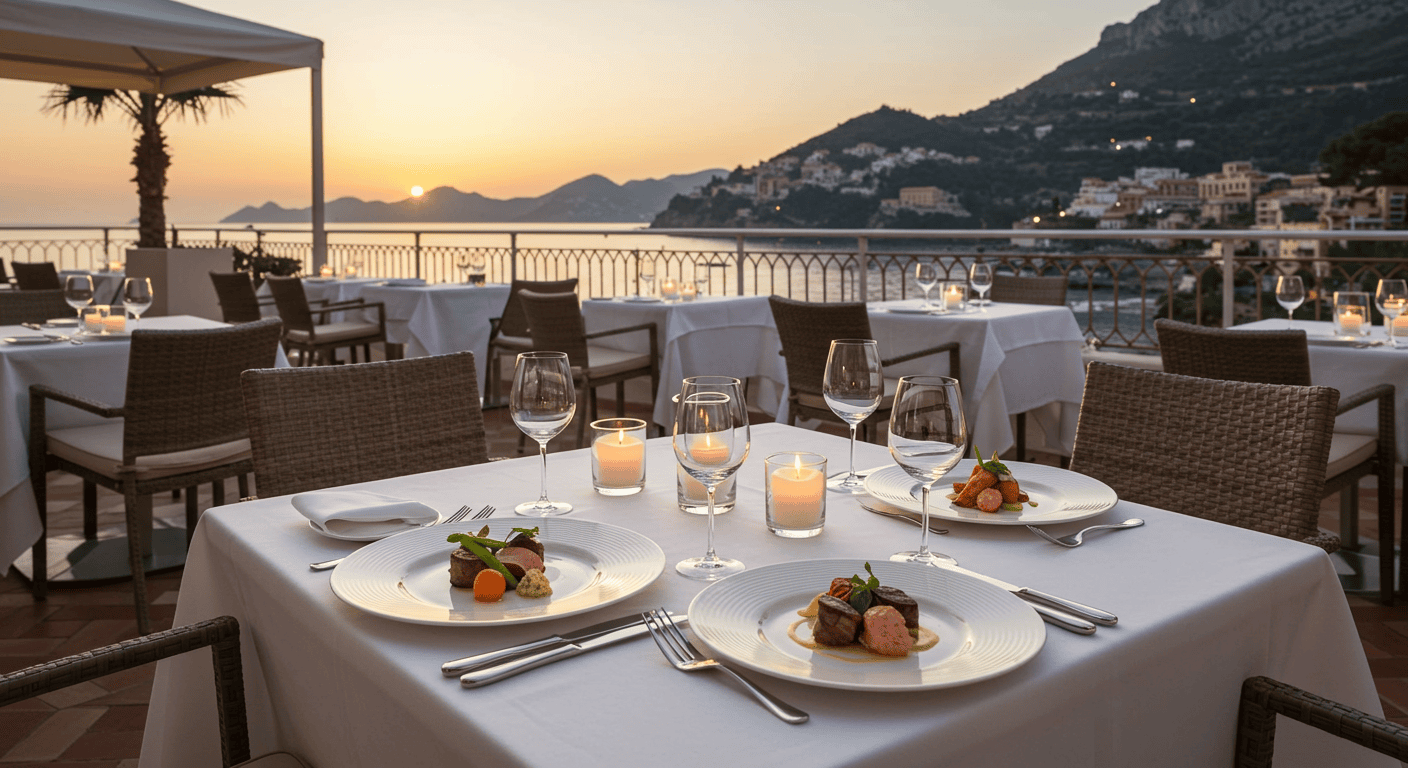
Istria as a whole has attracted serious international attention for its fine dining, and several restaurants within a short drive of Tar represent some of the most accomplished cooking in Croatia. The broader region has seen recognition from the Michelin Guide, which now covers Croatia – a development that the local chefs received with the exact combination of pride and mild suspicion that Michelin recognition tends to produce.
The fine dining philosophy in this corner of Istria is not about flights of architectural whimsy or the kind of tasting menus that leave you full of foam but somehow still hungry. It is ingredient-led, technically confident, and rooted in the seasons. A summer evening might bring cured Adriatic tuna with wild fennel, followed by hand-rolled pasta (called fuži or pljukanci depending on where you are and who is rolling) dressed simply with truffle, then a main of slow-cooked veal with the truffle sauce appearing yet again because in Istria, restraint where truffles are concerned is considered a personality flaw.
Restaurants operating at this elevated level tend to have wine lists that lean heavily – and correctly – into Istrian and Croatian producers. Look for Malvazija Istarska, the local white grape that produces everything from crisp and mineral to rich and oxidative depending on the producer and their philosophy. The orange wine movement found fertile ground here long before it became fashionable elsewhere. Giorgio Clai, Matošević, and Kozlović are names worth knowing. When the sommelier starts talking about them at length, clear your schedule.
Local Trattorias, Konobas & the Places Locals Actually Go
The konoба – spelled konoba, pronounced as though you learned it from a grandparent rather than a guidebook – is the Istrian version of a family-run trattoria, and it is where the most honest eating happens. These are places with paper tablecloths or bare wood, a handwritten or board-only menu, and a proprietor who will almost certainly recommend the same two or three dishes regardless of what you ask because those two or three dishes are the ones they make extraordinarily well and they see no reason to confuse matters.
Around Tar and throughout the Poreč hinterland, konobas tend to occupy old stone farmhouses or sit at the edge of vineyards, with terrace seating that faces west for reasons that become obvious at sunset. The menus are seasonal in the most literal sense: if the mushrooms aren’t right, you won’t find them. If the lamb is ready, it will appear. The pasta is almost always house-made, the bread arrives without being asked, and the olive oil on the table is almost certainly from the same farm as the one pressed behind the kitchen. Order the beef carpaccio with truffles if it appears. Order the grilled scampi without hesitation. Leave room for the fritule – small, lightly spiced doughnuts dusted with icing sugar that appear at the end of meals with the casualness of an afterthought and the impact of something far more considered.
Reservations at these places are advisable in July and August, when the Istrian interior fills with food-conscious travellers who have done their research and are prepared to drive winding roads to find a particular farmhouse. They are usually right to do so. Showing up without a booking in peak season and expecting a table is the dining equivalent of turning up to a sold-out concert and hoping for the best. Occasionally it works. More often it doesn’t.
Beach Clubs & Casual Dining: Eating by the Water
Tar sits inland – it is, after all, a hilltop village – but the coast is close, and the stretch of shoreline running through the broader Poreč municipality includes beach clubs and seaside restaurants that make a compelling case for eating in a swimsuit. Not literally. But almost.
Casual waterfront dining in this part of Istria operates on a pleasantly simple logic: the fish is caught nearby, grilled whole or filleted with olive oil and herbs, and served with Swiss chard sautéed in garlic (blitva) and roast potatoes that have absorbed more olive oil than seems structurally possible. This is not a criticism. The seafood platters are generous to the point of optimism, the local wine arrives cold and correctly chilled, and the view across the Adriatic towards the islands is the kind that makes you forget whatever you were worrying about before lunch.
Beach clubs at the more elevated end will have cocktail lists, sun loungers, and the sort of curated soundtrack that says “we have thought carefully about the vibe.” At the more casual end, there will be plastic chairs, checkered tablecloths, and fish so fresh it barely requires cooking. Both have their place. The plastic chair version often produces the better meal.
Hidden Gems: The Agritourism Experience
Some of the very best eating around Tar happens not in restaurants at all, but at agroturizam establishments – working farms or estates that open their doors (and their tables) to guests, usually at fixed hours and for a fixed menu. These are not experiences you stumble upon. You book ahead, you arrive at the correct time, and you eat what is offered. In exchange, you eat food that is almost entirely produced on the land around you.
A typical agritourism meal might begin with a spread of house-cured meats, home-made cheese, olives from the estate’s trees, and bread still warm from the oven. Then pasta – fuži with truffle sauce is standard and non-negotiable in the best way. Then meat: roasted lamb or pork, cooked low and slow over embers. Then cheese, fruit from the garden, and something sweet that varies by season. The wine will be the estate’s own, and it will be poured with a generosity that suggests no one is particularly worried about running out. Bring appetite. Bring time. Do not plan anything important for the afternoon.
These places do not always advertise loudly. The best way to find them is through a trusted local contact, your villa concierge, or the kind of person at the local market who seems to know everything about everything and is willing to tell you if you ask the right way.
Food Markets & Foraging Culture in Tar
The market culture around this part of Istria is genuinely worth building time around. Local markets in the surrounding towns – Poreč is the closest of any size – operate on weekday and Saturday mornings and bring together the small producers whose ingredients end up on the restaurant tables you will be admiring later that evening. This is a useful way to understand a food culture: see the raw materials before you see the finished dish.
Truffle sellers operate both at markets and at roadside points that materialise in autumn with the reliable punctuality of migratory birds. Olive oil producers offer tastings with the intensity of fine wine sommeliers, which is entirely appropriate given how seriously the oil is taken here. You will also find wild herbs, local honey, rakija (the fruit-based spirit that appears after every meal whether invited or not), and the kind of aged sheep’s cheese that should technically require a licence to sell because of what it does to your subsequent cheese standards.
The foraging culture in Istria is serious and seasonal. Locals gather wild asparagus in spring, mushrooms in autumn, and various herbs and greens throughout the warmer months. Some konobas and agritourism operations offer guided foraging walks followed by a meal built around what was collected. If you can arrange one of these, do. It is the most direct possible relationship between landscape and plate.
What to Order: A Short List of Non-Negotiables
If you eat in Tar and the surrounding Istrian countryside and do not order at least some of the following, a quiet editorial disappointment will be noted on your behalf. Fuži or pljukanci with truffle – accept no substitutes when this is on the menu. Grilled scampi, split and brushed with olive oil and garlic. Fritaja – a simple Istrian egg dish cooked with wild asparagus in spring, or truffles when asparagus has passed. Roasted lamb or suckling pig when the occasion calls for it. Maneštra – a thick vegetable and bean soup that sounds humble and tastes like someone has been cooking it since the medieval period (they probably have). And for dessert, the fritule already mentioned, or kroštule, fried pastry ribbons dusted with sugar and utterly impossible to eat with any dignity.
Wine & Local Drinks: What to Drink With All of This
Malvazija Istarska is the wine with which you will become acquainted whether you intend to or not. It is the dominant white grape of the peninsula and comes in a range of styles: fresh and citrus-driven from stainless steel, richer and more textured when barrel-aged, and then the skin-contact versions – orange wines aged on the grape skins – which are complex, amber in colour, and pair with the food here in a way that feels less like a suggestion and more like a law of nature.
Teran is the red – deep, iron-rich, almost austere in its youth, produced from one of Istria’s indigenous grapes and grown on the region’s characteristic red soil (terra rossa). It is the wine to order with red meat, aged cheese, and anything involving truffle that tends towards the earthy and intense.
Beyond wine: Istrian olive oil is worth tasting on its own terms, as a drink practically, poured over good bread. Biska is a local mistletoe-based rakija that appears in very small glasses at the end of meals. It tastes medicinal in the best possible way, which may or may not be a coincidence. Treat it with respect. It tends not to return the favour if you overdo it.
Reservation Tips & Practical Eating Advice
July and August are when the Istrian interior and coast reach peak visitor numbers, and the best konobas and agritourism tables fill up with considerable speed. Reservations for dinner at any restaurant worth eating at should be made at least a week in advance in high season, ideally two. Lunch reservations are slightly more forgiving, but not dramatically so at the places that matter.
Many of the smaller farmhouse and konoба establishments keep limited hours – lunch from noon to three or four, dinner from seven or eight onwards, and nothing in between because there is work to be done and someone’s grandmother does not run to your schedule. The standard restaurant closing day in rural Istria is often Monday, though this varies. Call ahead. It is always worth calling ahead.
Language presents no serious obstacle: almost all restaurants in the tourist belt around Tar and Poreč have English-speaking staff or English menus. In the more remote agritourism spots, you may find yourself pointing at things on a chalkboard or relying on the universal language of nodding enthusiastically and holding up fingers for quantities. This method has a near-perfect success rate.
Driving is essentially non-negotiable for reaching the best inland restaurants, which means planning who is not drinking the Malvazija at dinner – a sacrifice that everyone at the table will appreciate and no one will volunteer for spontaneously. Taxis from the coastal resorts are available. Your villa concierge, if you have one, is an invaluable resource for both recommendations and logistics.
For those staying in a luxury villa in Tar, the private chef option available through Excellence Luxury Villas deserves serious consideration – not as a retreat from the local restaurant scene, but as a complement to it. On an evening when you have already driven to a konoба in the hills and eaten truffles until you ran out of superlatives, having a private chef arrive the next morning to produce a slow Istrian breakfast using market ingredients from Poreč is not an extravagance. It is, in fact, an entirely rational response to the excellence of the local larder. A good private chef in this region will know the truffle hunters, the olive oil producers, and the farmers. They will cook at your table what you might otherwise have to drive for. This is the correct use of a private chef.
For more on what to do, see and explore while you are here, our full Tar Travel Guide covers everything from the medieval village itself to the beaches, the wine routes, and the truffle season timing that will genuinely change your autumn plans.
When is the best time of year to eat truffles near Tar, Istria?
Istria has a truffle season that runs effectively year-round, which is one of its more generous qualities. Black summer truffles (Tuber aestivum) are available from roughly May through September and appear on menus throughout the summer. The white Istrian truffle (Tuber magnatum) – rarer, more aromatic, and more highly prized – peaks in autumn, typically from late September through November. If truffles are a priority, and they should be, September is arguably the ideal month: the summer crowds have thinned, the white truffle season is beginning, and the weather remains warm enough for terrace dining. Many restaurants and agritourism estates around Tar hold truffle-tasting events and dinners through October.
Do restaurants near Tar require advance reservations, and how far ahead should I book?
In high season – July and August – reservations at the better konobas, agritourism estates, and fine dining restaurants near Tar should be made at least one to two weeks in advance. The most sought-after farmhouse tables and elevated dining experiences can fill significantly ahead of that, particularly on weekends. Outside high season, a few days’ notice is usually sufficient, though calling ahead is always worthwhile as smaller establishments sometimes close on short notice or operate reduced hours. Your villa concierge or accommodation host will typically have relationships with local restaurants and can assist with bookings, often securing tables that might otherwise appear unavailable to direct enquiries.
What local Istrian wines should I look for when dining near Tar?
The two grapes to know are Malvazija Istarska (white) and Teran (red). Malvazija is the dominant white of the region and comes in a variety of styles – from fresh and unoaked through to richer barrel-aged versions and the increasingly celebrated skin-contact orange wine style, which pairs particularly well with truffle dishes and aged local cheeses. Teran is the indigenous red: dark, mineral, and somewhat austere, ideally suited to grilled and roasted meats. Look out for producers including Kozlović, Matošević, Giorgio Clai, and Kabola, all of which operate in the broader Poreč and Tar area. Many restaurants in the region stock small-production local wines that do not appear on any international market, which is one of the quiet advantages of drinking on location.


