
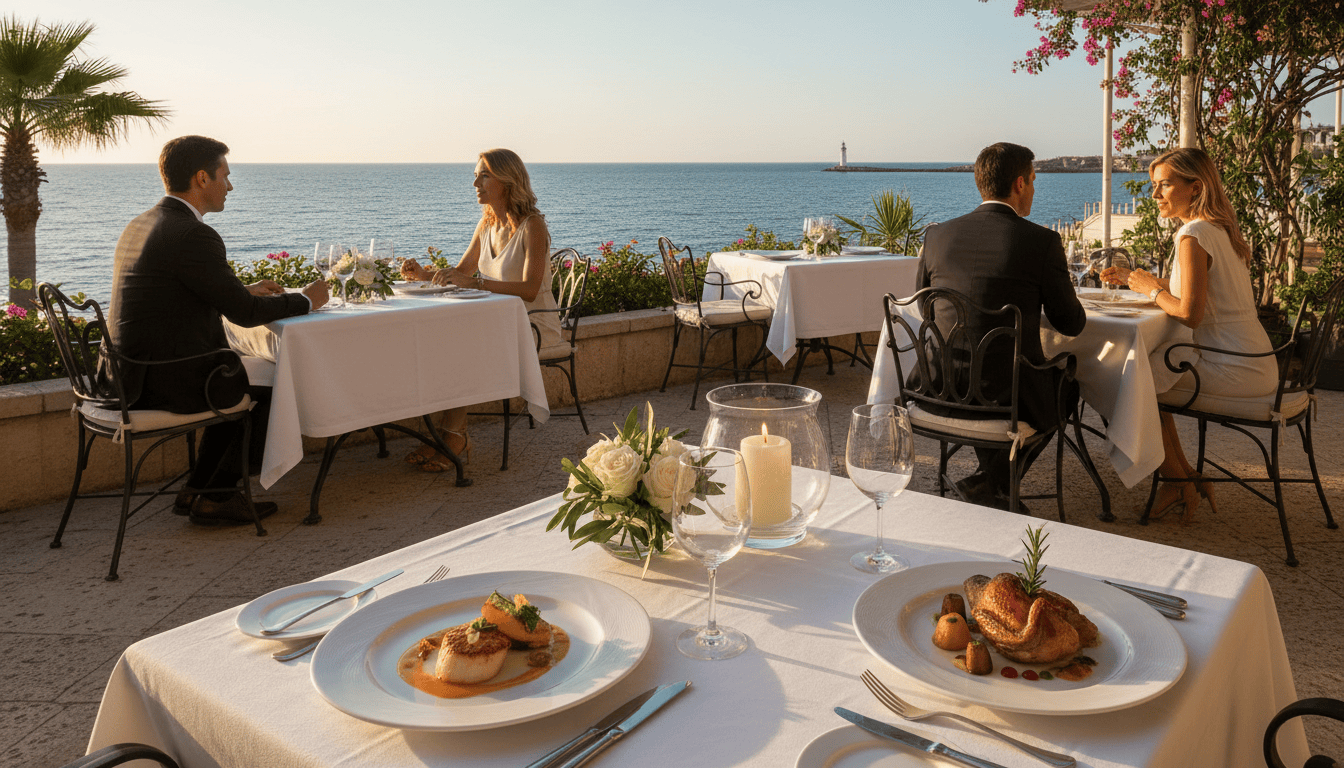
Best Restaurants in Vendée: Fine Dining, Local Gems & Where to Eat
What does a region taste like when it refuses to try too hard? That is, perhaps, the defining culinary question of the Vendée – a stretch of Atlantic France that has spent centuries feeding itself extraordinarily well and only recently started letting anyone else in on the secret. This is not a food destination in the way that Lyon is a food destination, all grand brasseries and chefs with opinions. The Vendée is quieter about it. It slips oysters onto your plate without ceremony, pours you a muscadet that costs less than you expect it to, and lets the quality do the talking. Which it does. Loudly. The best restaurants in Vendée span Michelin-recognised fine dining, market-driven bistros, beachside tables where the fish arrived that morning, and everything in between – and navigating them well is one of the genuine pleasures of any visit here.
The Fine Dining Scene: Michelin Stars and Serious Kitchens
The Vendée does not have the density of starred restaurants you would find in Burgundy or the Basque Country, but that is rather the point. What it does have is a handful of kitchens operating at a serious level without the theatre or the reverence that sometimes makes fine dining feel like a church service you did not know you had signed up for.
The region’s most celebrated dining address is without question Thierry Drapeau’s restaurant in Saint-Sulpice-le-Verdon, which holds two Michelin stars and has held them long enough for them to feel well-earned rather than newly acquired. Drapeau works with hyper-local produce – marsh lamb, Challans duck, Atlantic fish – and applies technique that is rigorous without being showy. His menus read like a geography lesson in the best possible way: you understand exactly where you are when you eat here. The setting is rural and unhurried. Book well in advance, particularly in summer, and dress with some intention – not black tie, but perhaps not the shorts you had on at the beach that afternoon.
Elsewhere in the region, several restaurants have attracted Michelin Bib Gourmand recognition – the guide’s acknowledgement of exceptional quality at reasonable prices, which in practice means you eat like royalty and leave feeling only mildly guilty about ordering dessert. The Vendée’s proximity to both coast and bocage gives its best kitchens an enviable larder to draw from, and the chefs who understand this tend to produce menus that feel genuinely rooted rather than assembled from a generic luxury playbook.
Local Bistros and Market-Driven Restaurants
If fine dining is the headline, the bistros are the story. The Vendée’s mid-range restaurant scene – if we can call it that without making it sound mediocre, which it isn’t – is where the region’s food culture reveals itself most honestly. These are the places run by a couple where one cooks and one serves, where the menu changes because the market changed, where the bread basket arrives before you have quite settled into your chair.
The coastal towns – Saint-Gilles-Croix-de-Vie, Les Sables-d’Olonne, La Tranche-sur-Mer – all have their clusters of proper local restaurants away from the tourist frontage, if you are willing to walk an extra street or two. Which you should be. The further you get from the seafront esplanade, the better the food tends to get and the more likely you are to be the only non-French person in the room. This is generally a reliable quality indicator.
Les Sables-d’Olonne, the Vendée’s most significant coastal town, has a particularly good concentration of independent restaurants around its old fishing harbour. Look for menus that lead with the day’s catch listed in full rather than a vague “poisson du jour” – specificity here is a proxy for freshness. Sole, sea bass, John Dory, sardines grilled simply with lemon and local butter: this is where the Vendée’s Atlantic identity is most legibly expressed on a plate.
In the inland villages and market towns – Fontenay-le-Comte, Luçon, Montaigu – the cooking tilts more towards the classic southwestern French register: confits, terrines, duck in various states of transformation, robust sauces, and portions that suggest the chef has never heard of nouvelle cuisine and is not about to start now. These are not necessarily romantic destinations, but they are honest ones, and honesty at the table is underrated.
Beach Clubs and Casual Coastal Dining
The Vendée coastline in summer is a particular kind of wonderful: long sandy beaches, relatively uncrowded by French Riviera standards, with a light that photographers chase and everyone else simply enjoys. The beach dining scene matches the mood – informal, sociable, focused on simplicity done well.
Along the Côte de Lumière – the stretch between Saint-Jean-de-Monts and the Île de Noirmoutier causeway – seasonal beach clubs and guinguettes set up from June through September, offering grilled seafood, rosé by the carafe, and the kind of lunch that begins at noon and ends when someone notices it is four o’clock. Nobody is ever particularly alarmed by this. The better ones source directly from local fishing boats and shellfish beds; the less good ones are easy enough to identify because the menu includes pizza. Skip those.
The Île de Noirmoutier deserves its own mention. Connected to the mainland by a causeway that disappears at high tide (which never gets old, even on the fourth crossing), the island has a handful of excellent seafood restaurants where Noirmoutier potatoes – small, waxy, celebrated across France with the fervour usually reserved for truffles – appear on almost every table in some form. Order them. Always.
Hidden Gems and Local Secrets
Every region has them: the places that don’t appear in travel guides because the people who eat there would quite like to keep them that way. The Vendée has more than its share. The formula tends to be consistent: a village with fewer than eight hundred inhabitants, a restaurant that looks like it might be someone’s front room (because it might be), a handwritten menu of four choices, and food that makes you reconsider every restaurant you have ever praised.
The bocage vendéen – the network of hedgerow countryside that runs through the centre of the department – hides some of the region’s most characterful eating in farmhouse tables (tables d’hôtes) where the proprietor grows much of what appears on the plate. These require some effort to find and occasionally some French to navigate, but they repay both investments considerably. Ask locally; your villa concierge or host will often know exactly where to send you.
The villages around the Marais Poitevin – the extraordinary wetland network sometimes called the Green Venice of France – also reward exploration. Restaurants here lean into the marsh’s particular produce: eels, frogs (genuinely excellent, not a cliché), freshwater fish, and the very good Poitevin butter that appears on tables with the quiet confidence of something that knows its own worth.
Food Markets: Where the Vendée Eats Before Breakfast
To understand what a region eats, visit its markets. The Vendée’s market culture is robust and largely unperformed – these are working markets that locals actually use, not artisanal tourism installations. Fontenay-le-Comte and Luçon run excellent weekly markets; the coastal towns have summer markets that are heavier on tourists but still worthwhile for the shellfish stalls alone.
What to look for: Vendée mogettes (white beans with a specific local identity and protected status, simmered with cream and served with ham), jambon vendéen (the region’s dry-cured ham, which has been quietly excellent for centuries while its Basque and Bayonne equivalents get all the attention), Noirmoutier sea salt harvested from the island’s salt pans, and the various goat’s cheeses that appear from inland producers.
The fish and shellfish market stalls in Saint-Gilles-Croix-de-Vie – one of the Atlantic coast’s most active fishing ports – are genuinely worth building a morning around. Sardines canned here have achieved something close to cult status among French food obsessives. If you can bring some home, do. If you cannot, eating them fresh from the port is acceptable compensation.
What to Order: The Vendée on a Plate
Any reasonable guide to the best restaurants in Vendée needs to tell you what to actually eat when you get there. Consider this the essential list.
Start, if the season allows, with oysters from the Vendée’s coastal beds or those of nearby Noirmoutier. Eat them cold, with a squeeze of lemon, and resist the urge to add anything else. Order the mogettes whenever they appear – they are the region’s most undersung dish and have no adequate equivalent elsewhere. If Challans duck is on the menu, order it; this breed has been reared in the Vendée’s marshlands for centuries and the flavour reflects that heritage. Sole meunière along the coast will be among the finest you eat anywhere. Finish with a brioche vendéenne – the region’s enriched, braided bread that appears at every celebration and which local bakeries make with a seriousness of purpose that suggests they understand exactly what they have.
Wine, Muscadet and Local Drinks
The Vendée sits at the southern edge of Loire wine country, which means muscadet – the crisp, mineral, impeccably seafood-friendly white wine – is both local and absurdly well-priced by the standards of anything this good. Order it by the carafe at lunch along the coast and you will understand immediately why French people don’t worry very much about drinking at lunchtime.
Beyond muscadet, the Fiefs Vendéens appellation produces some genuinely interesting wines from local grape varieties – including Négrette and Pinot Noir for reds, and Chenin Blanc and Chardonnay for whites – that rarely travel far from the region and are all the better for it. Ask any serious restaurant for their local wine selection; the good ones will have one and will be quietly pleased you asked.
Gros-Plant du Pays Nantais, the bracingly sharp local white made from the Folle Blanche grape, is not for everyone – it has the kind of acidity that makes your mouth make interesting shapes – but with fresh oysters it achieves a harmony that more elegant wines cannot quite manage. Try it once. You will either love it or respect it.
For those who prefer something non-alcoholic, the Vendée’s artisan producers have begun making excellent pressed apple and pear juices that appear at better markets and farm shops. They are a significant cut above anything bottled and labelled “fruit juice” in a supermarket, and make the drive out to find them feel worthwhile.
Reservation Tips and Practical Advice
A few practical notes that will make the difference between a good meal and a great one.
Book ahead, particularly in July and August when the Vendée fills significantly with French holidaymakers who know exactly where the good tables are. The finest restaurants in the region – and several of the better bistros – will be full without a reservation, and the French are not particularly apologetic about turning you away at the door. This is not rudeness; it is logistics. Plan accordingly.
Lunch is still France’s main meal in most of the Vendée, and the set lunch menus (formules) at even quite serious restaurants offer remarkable value – three courses for prices that would buy a sandwich in London. If you are in any doubt about where to eat dinner, have a serious lunch instead. You will not feel shortchanged.
Learn to say what you cannot eat before you need to say it. French kitchens at the bistro level do not always have elaborate alternatives for dietary requirements, and the chef may be genuinely puzzled by requests that would be routine in London or New York. Politeness and advance warning together solve most problems. Arriving and demanding something entirely off-menu while the kitchen is in service does not.
Finally: do not rush. The Vendée’s restaurant culture is not designed for the quick turnaround. Tables are yours for the evening. The pace is deliberate. A two-and-a-half-hour dinner is not an indulgence here; it is the standard. Embrace it. You are on holiday, and the wine is excellent, and there is honestly no good reason to be anywhere else.
Staying in a Luxury Villa with Private Chef
Of course, the finest meal you will eat in the Vendée may well happen without leaving your own property. Staying in a luxury villa in Vendée through Excellence Luxury Villas opens the option of a private chef – someone who shops the local markets in the morning and translates what they find into dinner on your terrace that evening, with the same regional produce that the best restaurants are using and none of the reservation anxiety. It is, by any reasonable measure, an exceptional way to eat. For everything else you need to plan your time in this quietly brilliant corner of France, the full Vendée Travel Guide covers the region in the depth it deserves.


