Cádiz Food & Wine: Sherry, Fried Fish and Bluefin Tuna
Cádiz province is known for fried fish, sherry and Manzanilla wine, and some of Spain’s finest bluefin tuna, caught each spring using the ancient almadraba net system off Barbate and Zahara de los Atunes. Signature dishes include tortillitas de camarones, pescaíto frito and urta a la roteña, while the sherry towns of Jerez de la Frontera, Sanlúcar de Barrameda and El Puerto de Santa María produce the wines the region is built on. Covered markets, tapas bars and bodega visits remain the most direct route into this cuisine.
I will admit something that surprised me on my first visit: I turned up expecting paella, because that is what everyone outside Spain assumes Spanish food looks like, and found almost none. Cádiz does not really do rice dishes, or at least not as its calling card. What it does instead is fry things in olive oil with a confidence bordering on arrogance, age sherry in dim warehouses for decades without apparent hurry, and pull tuna out of the Atlantic using a net system so old it predates the Romans having an opinion about it. The food here is not showy. It does not need to be. It has been getting this right for about three thousand years, which buys a certain amount of quiet self-assurance.
Cádiz Cuisine: What Makes the Region’s Food Different
Cádiz cuisine sits at the meeting point of Atlantic and Mediterranean waters, which is a geographer’s way of saying the fish is extraordinary and the locals know it. This is a coastal, fried, salted and sherry-splashed cuisine, built around seafood pulled from the Bay of Cádiz, shellfish from the sandy flats near Sanlúcar, and olive oil from groves further inland. Garlic, sherry vinegar, cumin and good bread do most of the heavy lifting, rather than elaborate sauces.
What distinguishes Cádiz food and wine from the rest of Andalusia is the sheer frequency with which sherry turns up uninvited – in a marinade, a reduction, a glass alongside, sometimes all three in one sitting. The cooking is unpretentious, often eaten standing at a bar with a napkin on the floor (a habit visitors find either charming or alarming, depending on their relationship with hygiene). It rewards travellers who are happy to order several small plates rather than hunting for one grand dish, and who don’t mind eating their main course with their fingers.
Signature Dishes in Cádiz: Fried Fish, Shrimp Fritters and Tuna Belly
Pescaíto frito is the dish most associated with the city of Cádiz itself – a cone or plate of small fish, squid and whitebait, lightly floured and fried so fast and so hot that the result is almost greaseless. Locals eat it from paper cones on the seafront, which tells you everything about how seriously (or not) it is meant to be taken.
Tortillitas de camarones are thin, lacy fritters studded with whole tiny shrimp, shell and all, and are arguably the province’s most distinctive contribution to Spanish tapas. Urta a la roteña – a local bream baked with tomatoes, peppers and sherry – comes from the fishing town of Rota and is one of the few dishes here that qualifies as a proper sit-down main. Ortiguillas, battered and fried sea anemones, are an acquired texture rather than an acquired taste, and worth trying once purely for the conversation it generates afterwards.
Then there is tuna – specifically bluefin from the waters off Barbate and Zahara de los Atunes, prepared almost nose-to-tail in the way other regions treat pork. Mojama (air-cured tuna, sliced thin like charcuterie) and tuna belly grilled rare are both specialities worth seeking out, particularly in late spring when the catch is freshest.
Cádiz Wine: Sherry, Manzanilla and the Coastal Vineyards
The so-called sherry triangle – Jerez de la Frontera, Sanlúcar de Barrameda and El Puerto de Santa María – produces wines unlike anything else in Europe, and Cádiz province is where all of it happens. Palomino grapes, grown in chalky albariza soil, are fortified and aged under a layer of flor yeast in a solera system that blends old vintages with new, meaning the bottle in front of you may contain wine going back decades.
Fino and Manzanilla are the driest and most food-friendly styles, pale, briny and bone-dry, and Manzanilla specifically can only be aged in Sanlúcar, where the sea air apparently does something to the yeast that nobody has managed to replicate elsewhere (they have tried). Amontillado and Oloroso are darker, nuttier, and considerably more alcoholic, best approached in smaller glasses and with a clearer head than a first-time visitor usually has by that point in the afternoon. Sherry here is drunk cold, in small glasses called copitas, and treated as an aperitif rather than a dessert wine – which comes as news to most people who grew up thinking of it as something their grandmother kept for Christmas.
Wine Estates to Visit Near Cádiz
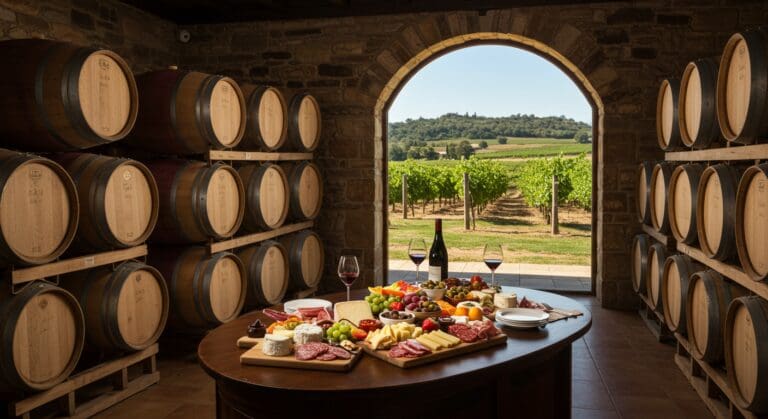
Bodega visits across the sherry triangle are among the most rewarding food experiences in the province, and most working bodegas offer tours ending in a tasting, which is the correct order of priorities. Jerez has the largest concentration of historic bodegas, many housed in cathedral-like warehouses with soaring ceilings designed to keep the barrels cool – walking into one on a hot August afternoon feels like stepping into a different climate entirely.
Sanlúcar de Barrameda, smaller and considerably less polished, is where Manzanilla is made and where the bodegas feel more like family concerns than tourist operations, which is exactly the point. El Puerto de Santa María rounds out the triangle with its own sherry houses and a waterfront setting that makes the post-tasting stroll considerably more pleasant than it has any right to be. Booking ahead is advisable in summer, when tour groups descend in numbers that rather undercut the whole unhurried, family-concern atmosphere.
Food Markets in Cádiz
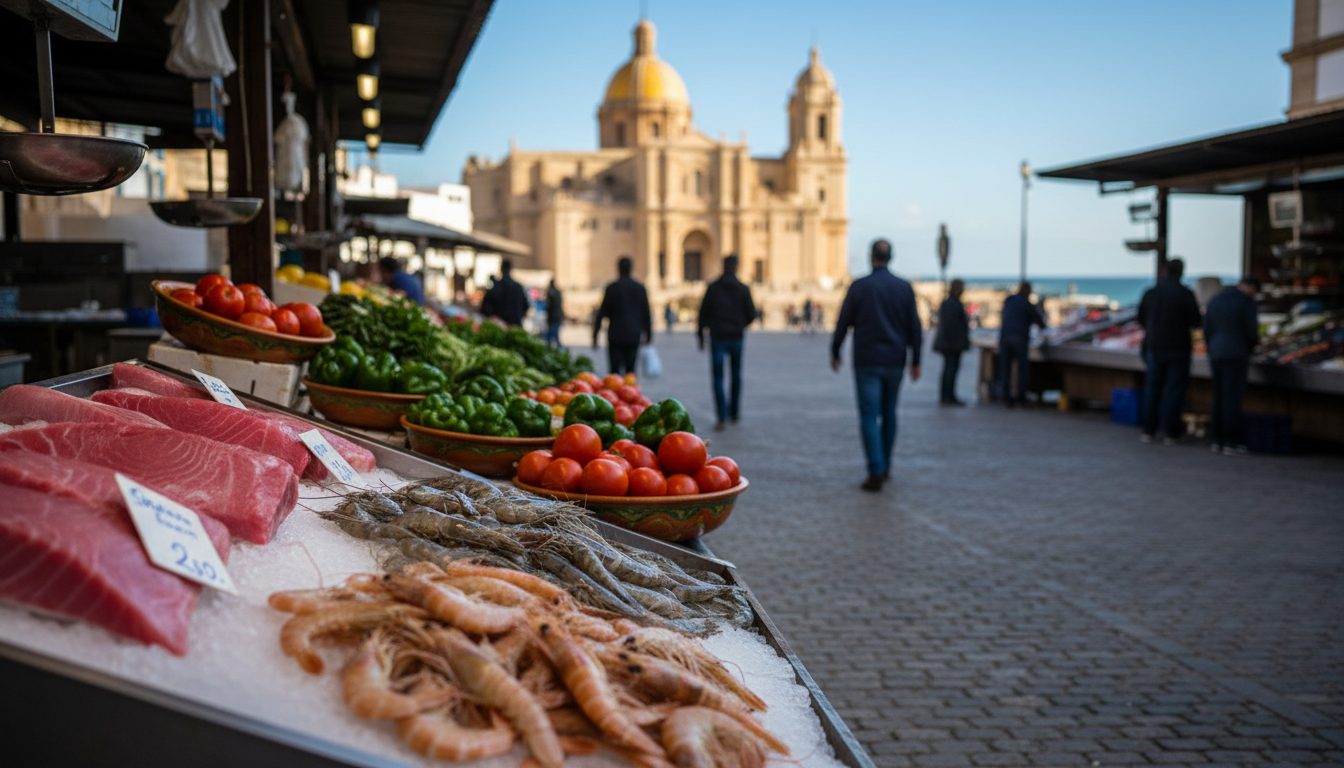
The covered market in the old town of Cádiz city is the best single place to understand the region’s produce in under an hour. Stalls groan with ice-packed fish still wearing their indignant expressions, cured meats, local cheeses and enough variety of olives to make a Greek blush. Arrive mid-morning, before the lunchtime rush, and budget time to simply wander – this is not a market built for efficient shopping, it’s built for grazing, and most stalls have a small bar attached for exactly that purpose.
Smaller towns across the province run their own weekly or daily markets, generally quieter and more locally used, where the shrimp and anchovies are sold by weight to people who clearly know what they’re doing and have strong opinions about freshness. These are good places to pick up ingredients if a kitchen is available, and good places to watch an argument about the correct price of langostinos, which happens more often than you’d expect.
Cooking Classes in Cádiz
Hands-on cooking classes are increasingly available across the province, typically built around a market visit followed by a few hours learning the fundamentals of pescaíto frito, tortillitas de camarones or a sherry-based sauce. These classes tend to run in small groups, often in a private kitchen or courtyard setting, and are a genuinely useful way to understand why Andalusian frying technique is so particular about oil temperature and timing (the difference between crisp and greasy is about fifteen seconds, which nobody tells you until it’s too late).
Some classes extend into a sherry pairing session, matching each dish to a specific style – fino with fried fish, amontillado with something richer – which does more to explain Cádiz’s drinking habits than any amount of reading. Worth booking a few days ahead, particularly in high season when demand outstrips the number of instructors willing to repeat the shrimp fritter lesson for the fourth time that week.
Seasonal Food in Cádiz: Tuna, Shellfish and Olive Oil
The almadraba tuna season runs roughly from April to June, when migrating bluefin pass through the Strait of Gibraltar and are caught using a labyrinth of nets that has barely changed in design since Phoenician times. This is genuinely the best time to eat tuna here – later in the year it’s still available, but frozen or less fresh, and locals will tell you as much without being asked.
Shellfish, particularly langostinos from the sandy shallows near Sanlúcar, peak in late spring and summer, while olive oil from groves further inland is pressed in autumn and sold fresh through the winter months – look for early-harvest oils, which are greener, sharper and considerably more interesting than the smoother late-season pressings sold in supermarkets back home. Winter brings heartier dishes, including stews built around chickpeas and salt cod, a sensible response to weather that, while mild by northern European standards, still occasionally demands something warmer than fried fish eaten standing up.
Best Food Experiences in Cádiz
If time only allows for a handful of food experiences, prioritise a market visit in Cádiz city, a bodega tour in either Jerez or Sanlúcar, and a plate of pescaíto frito eaten somewhere near the sea, ideally from a paper cone rather than a plate (it tastes better that way, and no one has yet explained why). Add an evening of tapas-hopping, where ordering is done by pointing rather than reading, and a tasting of properly chilled Manzanilla alongside tuna mojama.
For a broader sense of the province beyond its kitchens and cellars, the Cádiz Travel Guide covers the wider region, including the towns and coastline that frame all this eating and drinking.
Anyone planning where to base themselves for all this can browse villas in Cádiz.
Cádiz Food and Wine FAQs
What is the best time of year for food and wine in Cádiz?
Late spring, from April to June, is ideal, coinciding with the almadraba tuna season and the freshest shellfish, while still avoiding the full heat and crowds of July and August.
Is sherry the same thing as the sweet wine my grandmother drank at Christmas?
Not usually. Most sherry produced and drunk in Cádiz is fino or Manzanilla, both bone-dry and served chilled as an aperitif; the sweeter styles most people associate with sherry are a smaller part of production, often exported and aimed at a different market altogether.
Do I need to book bodega tours in advance?
It’s advisable, particularly in summer and around harvest time in September, when the larger bodegas in Jerez can fill up with tour groups; smaller, family-run bodegas in Sanlúcar often prefer advance notice simply because they are not set up for walk-ins.
Keep reading
More on Cádiz
- Travel guideCádiz Travel Guide
- When to goBest Time to Visit Cádiz
- RestaurantsBest Restaurants in Cádiz
- FamiliesCádiz with Kids
Guides nearby in Andalusia
Where to stay
Villas in Cádiz
A selection from our 33 luxury villas in Cádiz.