
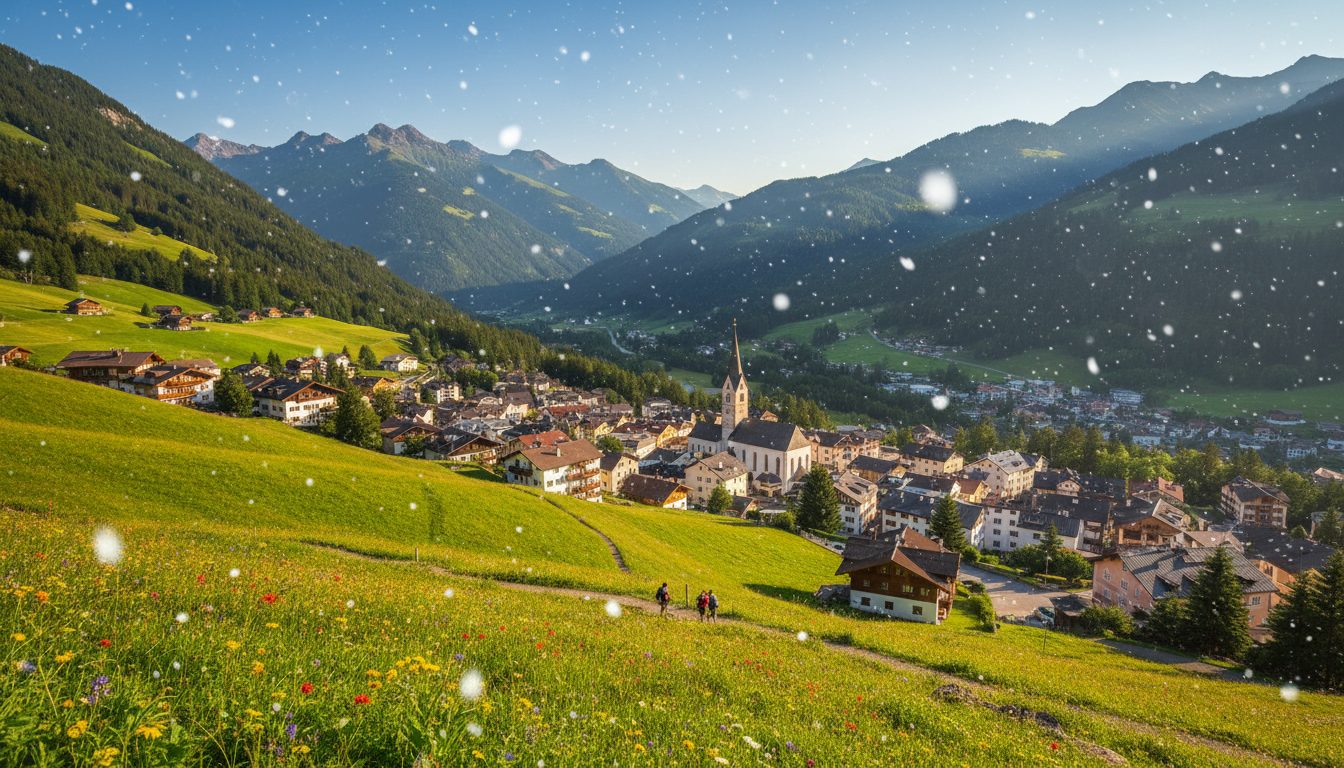
Best Time to Visit Kitzbühel: Hahnenkamm, Streif & Alpine Hikes
The best time to visit Kitzbühel depends on whether you want snow or sunshine: ski season runs from early December to late March, with the most reliable snow and biggest crowds from mid-January through February. Summer, roughly June to September, brings mild hiking weather and far fewer visitors. Shoulder months – April, May, October and November – are quietest but see many lifts, restaurants and hotels close entirely.
There’s a particular hour on a clear January morning when the Hahnenkamm cable car fills with skiers who have clearly had an excellent breakfast and an even better night before, and the whole carriage smells faintly of sunscreen and schnapps. That’s Kitzbühel in season – a town that takes its winter sport seriously, but never quite seriously enough to stop enjoying itself. Come back in July and you’ll find the same mountain, the same cable car, but a very different crowd: ramblers in sensible boots, cows wearing bells louder than anything on the apres-ski playlist, and a silence you can actually hear. Choosing when to visit Kitzbühel is really choosing which version of the town you want.
Best Time to Visit Kitzbühel at a Glance
- Peak ski season: mid-December to early March – reliable snow, highest prices, busiest slopes
- Quieter ski weeks: early December and most of March – good snow, thinner crowds
- Best for skiing conditions: January and February
- Best for value and peace: June, September, early October
- Best for events: late January (Hahnenkamm Races)
- Avoid if budget matters: Christmas week, New Year, February half-term
- Largely closed: April to late May, and November
Kitzbühel in Winter: The Ski Season Month by Month
Kitzbühel’s ski area, linked into the wider Kitzbühel-Kirchberg network, typically opens in early December and closes in late March or early April, snow permitting – and in a resort at this altitude, snow is never entirely guaranteed on the lower slopes, which is why extensive snowmaking has become less a luxury and more a basic requirement.
December in Kitzbühel
Lifts generally open in the first week of December, though early runs can be patchy until a proper cold snap arrives. Daytime temperatures hover around -2°C to 4°C (28°F to 39°F), with colder nights. Christmas week and New Year are the most expensive and crowded dates of the entire year – book lift passes and restaurant tables well ahead, or accept queuing with everyone else’s extended family. Early December, by contrast, is one of the better-kept secrets of the season: decent snow, Christmas markets setting up, and noticeably shorter lift lines.
January in Kitzbühel
This is peak winter, properly cold (-6°C to 1°C / 21°F to 34°F) and usually reliably white from top to bottom. Late January brings the Hahnenkamm Races, the town’s best-known event and one of the most famous fixtures on the World Cup downhill calendar – expect the Streif piste closed to the public, hotel prices spiking accordingly, and a genuinely electric atmosphere if you don’t mind sharing it with several thousand other spectators.
February in Kitzbühel
Cold, bright, and the single busiest month after Christmas, largely thanks to European half-term school holidays which stagger across the month depending on the country. Snow reliability is at its best. If you can travel outside the main school holiday weeks, you get February’s superb conditions without February’s queues – a genuinely useful piece of timing if your schedule allows it.
March in Kitzbühel
Often underrated. Daytime temperatures climb to a more comfortable 3°C to 9°C (37°F to 48°F), days lengthen, and the slopes empty out considerably once the half-term rush passes. Snow quality on upper runs usually holds well into the month; lower pistes can turn slushy by afternoon. Lifts typically run until late March or early April, making this a strong choice for sunny spring skiing at friendlier prices.
Kitzbühel in Spring: Shoulder Season After the Snow
April and much of May are, frankly, Kitzbühel’s off-switch. Once the lifts close, many hotels, restaurants and attractions shut down entirely for a few weeks of maintenance and well-earned rest – locals call it the “between seasons,” and tourists who turn up expecting a lively alpine town often find a quiet one with its shutters half-drawn. Temperatures range from a chilly 2°C to a mild 14°C (36°F to 57°F), weather is unpredictable, and trails at higher altitude can still hold patches of snow well into May. This isn’t a season to plan a holiday around, but if you’re passing through, accommodation is cheap and the town is yours.
Kitzbühel in Summer: Hiking, Lakes and Festivals
By June, Kitzbühel has reopened for business in an entirely different guise. Summer temperatures sit comfortably between 15°C and 25°C (59°F to 77°F), rarely sweltering thanks to the altitude, and the surrounding peaks open up into an extensive network of hiking and mountain biking trails. Cable cars that spend winter hauling skiers switch to carrying walkers and cyclists instead, and the Kitzbühel Alps reveal themselves as genuinely fine hiking country – gentler than the high Alps further south, but with views that more than earn the climb. Lakes nearby offer swimming on the hottest days, and the town’s summer festival calendar, including open-air concerts and local traditional events, keeps things lively without the crush of winter. July and August are the busiest summer months, particularly with domestic Austrian and German visitors; June and September are quieter, cooler in the evenings, and arguably the pick of the warm-weather calendar.
Kitzbühel in Autumn: The Quiet Months
September carries summer’s momentum with noticeably fewer visitors and golden light on the valley that photographers tend to get overly excited about. October turns properly autumnal – crisp mornings, temperatures dropping to 4°C to 13°C (39°F to 55°F), and foliage worth the trip in itself. By November, Kitzbühel largely closes again ahead of the ski season, mirroring its spring hibernation. If you want the town at its most peaceful, without the full shutdown of the spring gap, late September into early October is the answer.
Best Time to Visit Kitzbühel for Skiing
If snow quality is your only concern, aim for January or February – cold, consistent, and dependable even on lower slopes. If you’d rather avoid the Christmas and half-term price surges and crowds, target early December or March instead; you’ll trade a little snow certainty for considerably more room on the pistes and in the restaurants. Serious early-morning skiers should note that whatever the month, first lifts are where the quiet is found – by midday even a quiet week develops a queue at the popular cable cars.
Best Time to Visit Kitzbühel to Avoid Crowds
Outside ski season, June and September offer warm, settled weather with a fraction of July and August’s visitor numbers. Within ski season, early December and the second half of March are consistently the quietest weeks that still deliver proper alpine skiing. Christmas week, New Year, and February half-term are, by some distance, the busiest and most expensive dates on the calendar – book accordingly, or deliberately avoid them.
For more on getting around, where to eat and what else the valley offers beyond the slopes, see the full Kitzbühel Travel Guide.
Once you’ve settled on when to go, the next decision is where to stay – browse villas in Kitzbühel.
Kitzbühel Weather and Seasons FAQs
Is Kitzbühel worth visiting in summer?
Yes – summer offers mild weather, extensive hiking and mountain biking trails, open-air events, and significantly fewer visitors and lower prices than ski season, though some winter-specific attractions are closed.
What is the coldest month in Kitzbühel?
January is typically the coldest month, with daytime temperatures ranging from around -6°C to 1°C (21°F to 34°F) and consistently reliable snow cover across the ski area.
When do the ski lifts close in Kitzbühel?
Lifts generally close in late March or early April, depending on snow conditions that particular year, with March offering a good combination of spring sunshine and still-reliable upper-slope snow.
Keep reading
More on Kitzbühel
Guides nearby in Tyrol
Where to stay
Villas in Kitzbühel
A selection from our 14 luxury villas in Kitzbühel.


