Tyrol Travel Guide: Where to Stay, Eat & Explore in Luxury
Here is something the Alpine brochures reliably skip: Tyrol is two entirely different destinations depending on which season you arrive in, and most people only discover this by accident. Summer Tyrol – all meadow flowers, cowbells, and hiking trails that feel like they were designed by someone who genuinely loved you – bears almost no resemblance to the winter version, which is all candlelit Stuben, thermal pools steaming in sub-zero air, and that particular quality of silence you only get when several feet of snow have absorbed every sound the world was making. The mistake is to think you’ve seen it after one visit. You haven’t. You’ve seen half of it.
This is a place that works with uncanny precision for an unusually wide range of travellers. Families who want genuine privacy – a chalet with its own garden, its own pool, no hotel corridors, no buffet breakfast negotiations – find something here that coastal Europe rarely delivers at this altitude. Couples marking anniversaries or milestone birthdays gravitate to the thermal spa villages: Ötztal, Innsbruck’s surrounds, the Kitzbühel hinterland. Groups of old friends doing a ski week together have been coming to Tyrol for decades with no apparent intention of stopping. And increasingly, remote workers have noticed what anyone with functioning eyes and reliable broadband could have told them years ago – that the cognitive clarity produced by mountain air, pine forests, and the absence of open-plan offices is not nothing. Wellness-focused guests, too, have found that Tyrol’s combination of altitude, thermal waters, and hiking culture produces results that no city spa can replicate, however Egyptian the cotton.
Getting Here Is Half the Pleasure – If You Play It Right
Innsbruck Airport is the obvious entry point and, frankly, one of the more dramatic landings in Europe – the mountains arrive at your window with the kind of confidence that makes you grip your armrest slightly. From London, flights take around two hours. Munich Airport is the larger alternative, sitting roughly ninety minutes from the Tyrolean border by road and offering significantly more flight connections from the United Kingdom and beyond. Salzburg Airport is worth considering if your villa sits in the eastern reaches of the region. Zürich is also in play for those arriving from the United States, with direct transatlantic services that land you within three hours of most Tyrolean addresses.
Within Tyrol, a hire car is not merely convenient – it is the difference between experiencing the region and merely visiting it. The valleys fan out in every direction from Innsbruck, and the villages that contain Tyrol’s best kept secrets are not reachable by wishful thinking and a bus timetable. Roads are extremely well maintained. Winter driving requires snow tyres, which reputable hire companies will supply as standard in season. Trains connect the major centres with characteristic Austrian precision – the journey from Innsbruck to Kitzbühel takes under two hours and is visually ridiculous in the best possible way. But for villa guests arriving with luggage, children, ski equipment, or simply the desire to arrive on their own terms, a private transfer from the airport is the civilised choice and not especially extravagant given the distances involved.
A Food Culture That Has Nothing to Prove and Knows It
Fine Dining
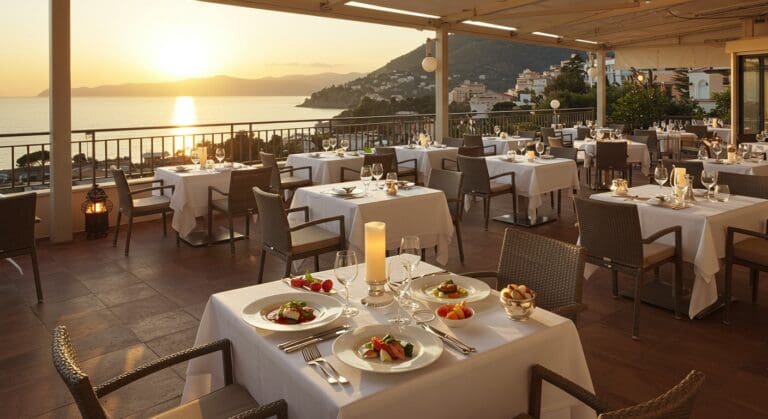
Tyrol has accumulated Michelin stars with the quiet efficiency of a region that never quite got around to being fashionable and therefore never had to perform. Innsbruck’s fine dining scene is anchored by restaurants that take Austrian cuisine seriously enough to reinvent it – game from the surrounding mountains, freshwater fish from Alpine lakes, dairy so good it’s almost embarrassing to cook with. The Penz Hotel in Innsbruck houses one of the city’s most discussed restaurants, its rooftop setting combining views over the old town with food that earns the view. Across the region, chefs at this level treat local provenance not as a marketing angle but as the baseline assumption. You don’t have to ask where the venison came from. Everyone already knows.
Where the Locals Eat
The Tyrolean Wirtshaus – the village inn – is the social infrastructure of rural life here, and eating in one is an education in what Austrian food actually is before the tourism industry got involved. Gröstl, the pan-fried potato and meat dish that appears on virtually every menu, tastes different in every kitchen and generates quiet local arguments about whose grandmother’s version was definitive. Innsbruck’s market hall, the Markthalle beside the Inn River, is the best single hour you can spend understanding what this region eats – local cheesemakers, butchers with whole cured legs hanging in the window, bread that smells like something important. The city’s Altstadt wine bars open early and fill with a mix of students, professors, and people who have simply earned a glass of Grüner Veltliner by mid-afternoon.
Hidden Gems Worth Seeking Out
The alpine dairy huts – Almen – scattered across the high pastures above the valley floors are open through the summer months and serve a version of simplicity that restaurants twice the price are trying to recreate. Fresh Bergkäse, dark bread, and buttermilk, eaten at a wooden table with a view that makes you slightly suspicious something is being asked of you in return. In the ski villages, the mountain restaurants that are not the most prominent ones on the piste map tend to be precisely the ones worth finding – smaller, family-run, more likely to serve you something that was actually produced within walking distance. Ask your villa manager. They always know. That is what they are there for.
The Geography of Tyrol: Understanding What You’re Looking At
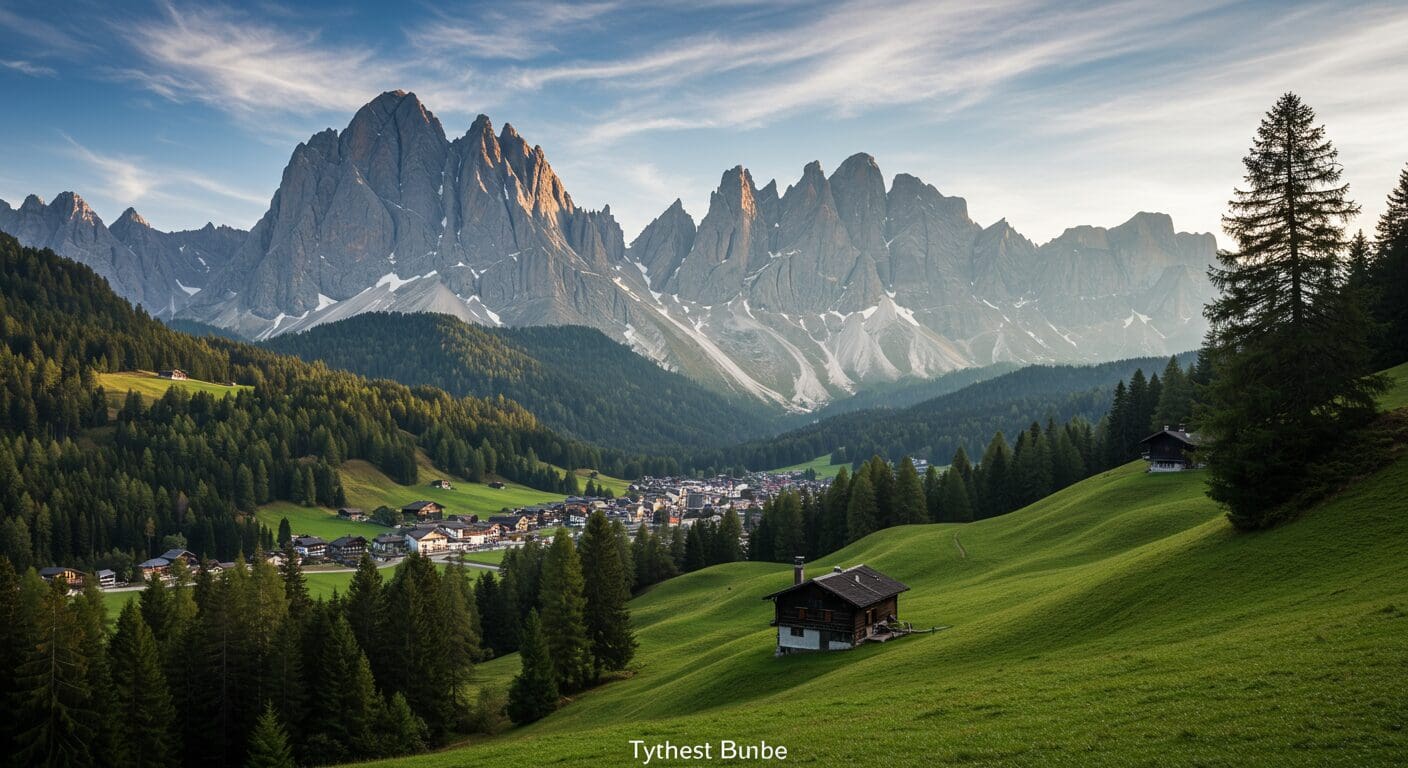
Tyrol is, at its core, an exercise in vertical drama. The region sits at the heart of the Eastern Alps and is divided between North Tyrol, South Tyrol (now technically part of Italy, a geopolitical arrangement that continues to produce excellent wine and mild existential complexity), and the smaller East Tyrol, separated from its northern sibling by a sliver of Salzburg province. For most visitors, North Tyrol is the destination – the Innsbruck region, the Ötztal and Zillertal valleys, the Kitzbühel Alps to the east, and the quieter Lechtal to the west.
The Inn Valley runs east to west like a spine, with Innsbruck at its centre – a proper city of 130,000 people that somehow functions simultaneously as a medieval old town, a university city, a ski resort antechamber, and the capital of a federal state. From here, the valleys radiate outward into distinctly different landscapes. The Ötztal is wilder and higher, leading eventually to the Ötztal Glacier and the kind of terrain that makes hikers feel appropriately small. The Zillertal is broader and more developed, home to some of the region’s most celebrated ski resorts. Kitzbühel to the east has its own gravitational pull – one of the most famous ski towns in the world, with a Hahnenkamm downhill race that arrives each January like a controlled explosion. What unites all of it is the quality of the light. Alpine light at altitude is a specific and slightly unfair advantage that Tyrol wields year-round.
What to Actually Do Here: The List Is Longer Than You Think
The obvious activities are obvious because they are excellent, and there is no shame in doing the things everyone does in Tyrol. Summer hiking on the region’s 15,000 kilometres of marked trails produces a category of physical satisfaction that is hard to achieve any other way. Cable car ascents to the high alpine zones – the Nordkette directly above Innsbruck being the most dramatic, accessible from the city centre in twenty minutes – open up terrain that would otherwise require a full day’s commitment. Lake swimming in the Inn’s tributaries and the turquoise glacial lakes of the Ötztal is, for anyone who grew up swimming in British or American waters, a revelation in temperature and clarity.
Beyond the outdoor staples, Innsbruck repays serious cultural attention. The Hofburg Imperial Palace, the Goldenes Dachl – the golden roof that functions as the city’s visual signature – and the Tyrolean State Museum’s collections tell a history that connects medieval Habsburg ambition with contemporary Alpine identity in ways that are genuinely interesting rather than merely preserved. Day trips from a central Tyrolean villa are almost unfairly easy: Salzburg is two hours east, the Dolomites are accessible from the region’s southern edges, and Innsbruck itself is small enough to cover properly on foot in a morning.
The Adventure Sports Case for Tyrol: It’s Not Just for Skiers
Winter skiing in Tyrol is, let us acknowledge, one of the great sporting experiences available to human beings in the early twenty-first century. The ski areas here are not merely large – they are logically connected, well-managed, and served by infrastructure that other Alpine countries study and then feel quietly sad about. Kitzbühel’s 170 kilometres of piste, the Ski Arlberg area to the west, the Hintertux Glacier in the Zillertal offering year-round skiing: the provision is simply excellent. Off-piste opportunities for experienced skiers are significant. Snowboarding, ski touring, heliskiing in season – the options compound.
In summer, the adventure portfolio is equally serious. Via ferrata routes – the iron-bolted mountain climbing paths that require minimal technical skill but deliver maximum exposure – thread through the limestone faces above every major valley. White water rafting and kayaking on the Inn and its tributaries is well organised and genuinely exciting rather than the managed-disappointment variety of activity holiday. Mountain biking has grown dramatically as a summer offering, with lift-accessed downhill trails appearing above every major ski village. Paragliding from the Nordkette is available to tandem beginners and is, by most accounts, the finest possible way to understand Innsbruck’s geography. And road cycling, for those inclined, through passes like the Timmelsjoch and the Brenner is the kind of riding that ends careers in the best possible way.
Why Families Keep Coming Back: The Practical Magic of Tyrol
Tyrol is extraordinarily well set up for families, partly by design and partly because Austrian culture has a genuine rather than performed fondness for children. Ski schools in all the major resorts begin at age three and operate with a seriousness of purpose that produces results within days. Dedicated children’s ski areas – Kinderland – exist at every major resort, complete with magic carpet lifts and characters that encourage small people to point their skis in the right direction without trauma. Summer equivalent: adventure parks, rope courses, and cable car excursions designed for families with varying levels of enthusiasm for altitude.
The private villa advantage for families in Tyrol is not complicated to explain. A chalet with its own garden and heated pool eliminates the negotiations that hotel common areas impose on family groups. Children can exist at their natural volume without anyone being apologetic about it. Parents can establish a proper home rhythm – real breakfasts, flexible mealtimes, space for teenagers to have their own corners of the property – that no hotel stay genuinely replicates. The provision of a private pool in a mountain setting, which might seem counterintuitive until you’ve returned from a hiking day to find your children swimming while you drink something cold on a terrace, turns out to be one of the better ideas in luxury travel.
History, Culture and the Weight of What Happened Here
Tyrol’s history is richer and stranger than the ski brochures tend to suggest. The region was a crossroads of Alpine Europe long before it became a Habsburg possession in the fourteenth century, and Innsbruck was for a time a genuine centre of imperial power – the Hofburg here is not a secondary Habsburg residence but the place where Maximilian I effectively ran Europe from. The Goldenes Dachl, completed in 1500, was built as a royal box from which to watch the tournaments below, which is either magnificent or deeply impractical depending on your feelings about fifteenth-century urban planning. (Both, probably.)
The Tyrolean resistance to Napoleonic occupation in 1809, led by Andreas Hofer, is a story of genuine heroism that produced a regional identity so robust it has outlasted every subsequent political rearrangement. Hofer is still something close to a secular saint here. His image appears in museums, on menus, and in the sort of respectful hush that accompanies mention of his name in certain villages that he defended personally. This is not mere nostalgia – it is an active cultural memory that shapes how Tyroleans understand themselves. Traditional festivals, Schützenfest processions, Advent markets of a quality that makes the ones in the United Kingdom look like a car boot sale with mulled wine – these are lived traditions rather than tourist reconstructions. Innsbruck’s Advent market is, by reasonable consensus, one of the finest in Europe.
Shopping in Tyrol: The Things Worth Bringing Home
Tyrolean craft production is old, serious, and pleasingly immune to trend. The things made here have been made here for centuries and don’t particularly care about the global retail cycle. Woodcarving is the art form with the deepest roots – figures, household objects, and furniture produced by craftspeople in the Inn Valley and the Zillertal to standards that make souvenirs from airport departure lounges seem even more dispiriting than they already are. Loden cloth – the traditional boiled wool fabric used for jackets, coats, and hunting wear – is warm, extraordinarily durable, and looks better as it ages. A good Tyrolean loden coat is a genuine investment. Innsbruck’s old town has the independent shops worth exploring: specialist food stores with regional cheeses and cured meats, schnapps producers who distil from local fruit, and a handful of proper antique dealers whose stock reflects the region’s Habsburg inheritance.
Kitzbühel’s shopping is more obviously resort-inflected – Bogner, Sportalm, the luxury ski wear brands that have grown up around the Hahnenkamm circuit – but even here the best finds are in the smaller streets rather than the main pedestrian thoroughfare. The local weekly markets in the villages running through summer are the right place for produce: honey from high-altitude hives, dried mountain herbs, and the particular variety of artisanal jam that Austrians produce with what appears to be joyful compulsion. They’re very good. Take several jars.
Practical Things You Will Be Glad You Knew
Austria uses the euro. English is spoken widely in tourist areas and resort towns, rather less so in the deeper valley villages, where German with a Tyrolean accent so specific it occasionally defeats other German speakers is the working language. Tipping is expected but not at American proportions – rounding up and leaving ten percent for good service is perfectly correct. Austrian service, it should be noted, can read as formal to visitors accustomed to more performative hospitality; this should not be confused with coldness. It isn’t coldness. It’s professionalism.
The best time to visit depends almost entirely on what you want from the region. December through March delivers the full winter experience: ski season proper, with peak conditions typically from January through mid-March before the spring sun starts making its opinions known. Summer – late June through September – is arguably the more surprising pleasure, with long warm days, uncrowded trails, and accommodation prices that reward the curious. May and November are the shoulder months that most visitors skip, which means the hotels are quieter, the villages belong to their residents, and the landscape is doing something genuinely interesting in terms of seasonal transition. Safety is a non-issue by any reasonable metric. Austria is a stable, well-organised country with functioning emergency services and mountains that are comprehensively mapped, marked, and patrolled.
Why a Private Villa in Tyrol Makes Everything Else Better
The standard Tyrolean hotel experience is fine. Often better than fine. Austria does hotels well and has no shortage of grand historic properties that deliver exactly what they promise. But a private villa or luxury chalet in Tyrol operates in a different register entirely, and the difference is not merely one of space or amenity – it’s structural. A villa gives you the region on your own terms. You wake when you want, eat what you want, bring the people you actually want to spend time with, and organise your days without reference to checkout times or breakfast seatings or the stranger in the next room who has decided six a.m. is an appropriate time to begin his day audibly.
For families, the private pool and garden are not luxuries in the abstract but genuinely useful pieces of infrastructure that reshape the rhythm of a holiday. For groups of friends, the shared chalet experience – collective meals, a proper sitting room, a sauna that fits everyone, someone to deal with the firewood – is what makes a ski week into a thing people talk about for years. For couples on milestone trips, the privacy and the quality of space available in Tyrol’s finest private properties produces an atmosphere that no hotel, however well-intentioned, can manufacture. And for remote workers – increasingly the guest profile that every intelligent villa company is thinking about – Tyrol’s combination of mountain clarity, genuine connectivity, and the cognitive reset that altitude and clean air provide makes it one of the more productive places in Europe to bring a laptop. The views are, frankly, counterproductive in the best possible way.
Luxury villas in Tyrol range from contemporary architect-designed chalets with heated infinity pools and private wellness suites to beautifully restored farmhouses with underfloor heating and enough original timber to make a carpenter emotional. The best properties have dedicated concierge services that can arrange ski passes, mountain guides, restaurant reservations, and airport transfers without anyone having to navigate Austrian phone menus. Staff-to-guest ratios at this level are simply incomparable to hotel stays. It is a different category of experience, and Tyrol – with its extraordinary landscapes, its food culture, its adventure provision, and its particular quality of light in every season – is one of the finest settings in which to have it. Browse our private villa rentals in Tyrol and find the property that suits your version of the place.
More Tyrol Travel Guides
What is the best time to visit Tyrol?
Tyrol has two genuinely distinct peak seasons. Winter – December through mid-March – is optimal for skiing, with the best snow conditions typically found in January and February. Kitzbühel’s Hahnenkamm race in late January brings extraordinary atmosphere. Summer, from late June through September, delivers warm days, long hiking hours, and a landscape transformed by wildflower meadows and glacial lake swimming. If you want to avoid crowds and prices while experiencing the region authentically, early June and October offer a quieter Tyrol that most visitors never see.
How do I get to Tyrol?
Innsbruck Airport is the closest entry point, with direct flights from London, Frankfurt, Amsterdam, and other European hubs – flight time from the UK is around two hours. Munich Airport offers considerably more international connections and sits roughly ninety minutes from the Tyrolean border by car or rail. Salzburg Airport serves eastern Tyrol well. Zürich connects transatlantic travellers, with road transfer times of approximately three hours to Innsbruck. Within the region, a hire car or private transfer is strongly recommended – the valleys are beautiful and the drive is part of the experience.
Is Tyrol good for families?
Exceptionally so. Ski schools across the region accept children from age three and are staffed by instructors with genuine skill in teaching young beginners. Dedicated children’s areas exist at every major resort. In summer, adventure parks, cable car excursions, and guided family hikes provide structured activity without requiring small people to be more athletic than they actually are. Private villa rentals add a significant layer of comfort for family travel – a property with its own garden and pool gives children space to exist at their natural energy levels while parents actually relax, which is the entire point.
Why rent a luxury villa in Tyrol?
A private villa in Tyrol offers something hotels structurally cannot: the region on your own schedule. Private pools and gardens, full kitchens, dedicated concierge services, and staff-to-guest ratios that are simply incomparable to hotel stays. For families, the freedom from shared spaces and timetabled meals transforms the experience. For groups, the shared chalet format – communal evenings, private rooms, a sauna that fits everyone – is what turns a ski holiday into an annual tradition. At the luxury villa level, properties here come with amenity lists that include private wellness suites, wine cellars, and in some cases private ski rooms with boot warmers. It is a different category of stay.
Are there private villas in Tyrol suitable for large groups or multi-generational families?
Yes, and Tyrol is particularly well-provisioned for this. The traditional chalet format scales well – the largest properties accommodate twelve to twenty guests across multiple bedrooms with separate living areas that allow different generations to coexist without orchestrating every moment together. Many properties offer separate guest suites or annexes that give older children or grandparents their own space within the same grounds. Private pools, large dining rooms designed for group meals, and concierge services capable of coordinating ski school, childcare, and restaurant reservations for an entire extended family group make the logistics of multi-generational travel considerably less fraught.
Can I find a luxury villa in Tyrol with good internet for remote working?
Tyrol is better connected than its mountain location might suggest. Innsbruck and the major resort towns have excellent broadband infrastructure, and many luxury properties now offer fibre or Starlink connections as standard – a direct result of the growing remote worker guest profile. The best villa concierge services can confirm connection speeds and workspace provision before booking. Practically speaking, the combination of reliable high-speed connectivity, an inspiring physical environment, and the cognitive reset that altitude and clean mountain air provides makes Tyrol one of the more genuinely productive remote working destinations in Europe – assuming you can resist looking out the window, which is not guaranteed.
What makes Tyrol a good destination for a wellness retreat?
Tyrol’s wellness credentials are structural rather than aspirational. The altitude itself – most villages sit between 800 and 1,800 metres – produces measurable physiological effects: improved sleep, elevated energy, and the kind of mental clarity that follows genuine physical exertion in clean air. The region has a long tradition of thermal spa culture, with dedicated spa villages in the Ötztal and surrounding valleys offering hydrotherapy and treatment programmes of serious medical heritage. Private villa amenities at the luxury level frequently include indoor pools, saunas, and steam rooms. Combine that with the hiking and cycling infrastructure, the quality of local food, and the enforced disconnection that mountains naturally produce, and Tyrol functions as a wellness destination that doesn’t require you to call it one.