Marina Food & Wine: Olive Oil, Fresh Fish & Dalmatian Konobas
Marina’s food culture centres on Dalmatian coastal cooking: grilled fish, octopus, olive oil pressed from local groves, and wines made from indigenous grapes such as Plavac Mali and Pošip. Meals here lean heavily on what came out of the Adriatic that morning or off the hillside that autumn. The nearest proper markets and wine estates sit a short drive away in Trogir and across the Split-Dalmatia hinterland.
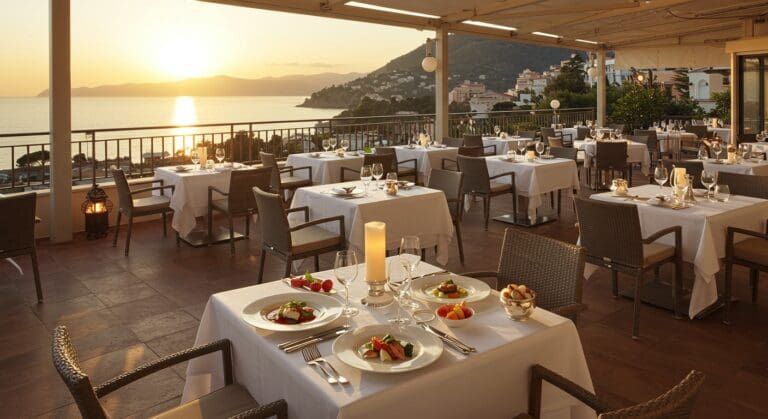
Picture this: you’ve woken late because nobody in Marina seems to be in any particular hurry, and you walk down to the harbour where a man is unloading a crate of sardines that were, until recently, swimming. By eleven you’ve eaten them grilled with nothing but salt and olive oil, and you’ve decided this is the only correct way to eat a sardine. Lunch is slower – a plate of octopus salad under a vine canopy, a carafe of something local and unlabelled – and by the time the afternoon heat settles in, you’re doing what everyone here does, which is very little, very contentedly. Dinner arrives late, the fish is whatever the owner’s cousin caught, and somewhere around the second glass of wine you stop checking your phone for the time. This is, more or less, every good day in Marina, Croatia, and it revolves entirely around the table.
Marina Food and Wine: At a Glance
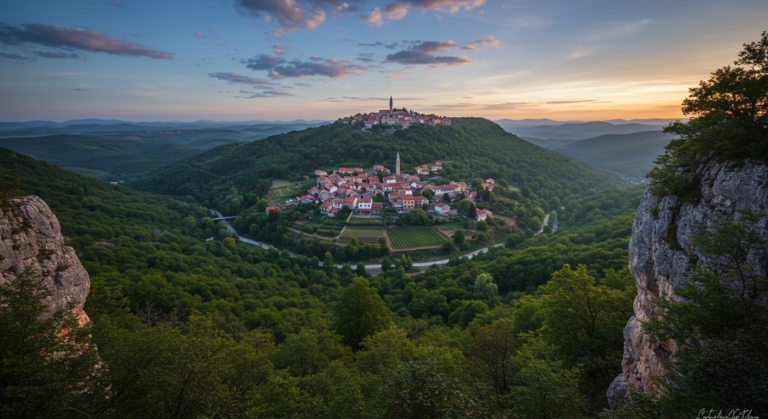
Marina sits on Croatia’s Dalmatian coast near Trogir, a fishing village turned gentle holiday base where the food culture hasn’t changed much to suit tourists – which is precisely its appeal. Expect Adriatic seafood, olive oil from hillside groves, Dalmatian wines made from grapes you won’t find anywhere else, and family-run konobas rather than fine-dining theatre. The nearest markets, wine estates and cooking classes are within easy reach in Trogir and the wider Split-Dalmatia region.
Regional Cuisine in Marina: Simple, Seasonal and Slightly Stubborn
Dalmatian cooking, and Marina’s version of it, is built on restraint rather than flourish. This is a cuisine that trusts its ingredients to do the talking – fish is grilled, not sauced; vegetables are dressed with olive oil and little else; meat, when it appears, is usually slow-roasted under a peka, the traditional bell-shaped lid buried in embers. The Venetian and Mediterranean influences that shaped the wider Adriatic are present but understated: a little garlic, a lot of parsley, bread for mopping rather than accompanying.
What makes Marina’s food culture distinct is less about invention and more about insistence. Ask a konoba owner why the fish isn’t seasoned beyond salt and oil, and you’ll likely get a look suggesting the question itself is the problem. Portions are generous, service is unhurried bordering on philosophical, and the menu often changes depending on what the boats brought in – which is either charming or mildly inconvenient, depending on how set your heart was on the sea bass.
Signature Dishes to Try in Marina
Marina Food: Grilled Fish and Shellfish
Whole fish – brancin (sea bass), orada (sea bream), or whatever’s freshest – arrives grilled over charcoal, finished with olive oil and a squeeze of lemon. Mussels (dagnje) and shellfish from the bay turn up simply steamed with white wine and garlic, which sounds unremarkable until you taste how much flavour three ingredients can carry when none of them are hiding anything.
Marina Food: Octopus Salad and Black Risotto
Octopus salad (salata od hobotnice) – boiled tender, then dressed with olive oil, onion and parsley – is close to a regional obligation. Black risotto (crni rižot), coloured and flavoured with cuttlefish ink, is the dish most likely to leave a stain on your shirt and no regrets whatsoever.
Marina Food: Peka and Pašticada
Peka – meat or octopus slow-cooked with vegetables under that iron bell – usually needs ordering ahead, which tells you something about how seriously it’s taken. Pašticada, a Dalmatian beef stew simmered for hours in wine and prunes, is the dish locals reserve for celebrations, though nobody will stop you ordering it on a Tuesday.
Local Wines Near Marina: Plavac Mali, Pošip and the Dalmatian Grape List
Dalmatia’s wine identity rests on grapes that rarely travel abroad, which is either a tragedy or the whole point. Plavac Mali, a robust red related to Zinfandel, dominates the region and produces everything from easy table wine to serious, structured bottles grown on steep coastal slopes. Pošip, a crisp white from the island of Korčula, pairs naturally with the seafood that dominates every Marina menu. Further along the coast, Babić from the Primošten area adds another red worth seeking out on a local wine list.
In Marina itself, don’t expect grand cellar doors – this is a village, not a wine region in the Tuscan sense – but tavern house wine, often unlabelled and poured from a jug, is frequently better than its humble presentation suggests. The serious tasting experiences happen a short drive or boat trip away, on the islands and hinterland where these grapes are actually grown at scale.
Wine Estates to Visit Near Marina
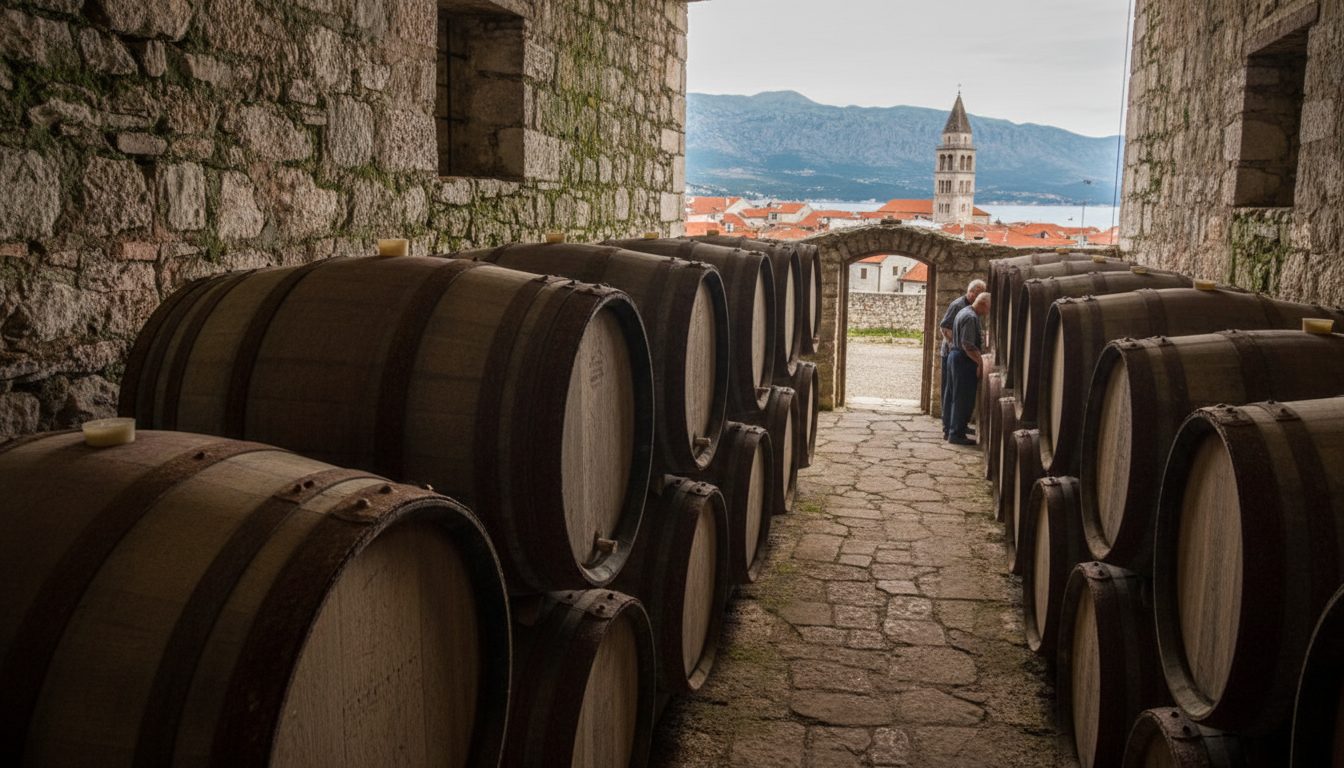
For a proper tasting, day trips from Marina into the Split-Dalmatia hinterland and across to the islands are the way to go. Family-run estates throughout the region offer tastings of Plavac Mali and Pošip alongside rakija, the local fruit brandy that’s traditionally used to toast everything from weddings to Tuesday evenings. Many estates welcome visitors by appointment rather than operating as formal cellar doors, so a little planning – or asking at your accommodation – goes further than turning up unannounced.
Vineyard visits here tend to be low-key affairs: a plastic table under a fig tree, a view across terraced vines to the Adriatic, and an owner who talks about soil and sun exposure the way other people talk about their children. It’s wine tourism without the production values, and considerably better for it.
Food Markets in Marina and Nearby Trogir
Marina’s own produce stalls are modest – a few tables of tomatoes, figs and whatever’s in season – but the proper market experience is ten minutes away in Trogir, where the morning market sells fish straight off the boats alongside local olive oil, cheese and vegetables. Arrive early; by mid-morning the better fish has gone and the stallholders have mentally clocked off for the day, Dalmatian pace being what it is.
These markets are less about souvenirs and more about watching how the region actually eats – home cooks arguing cheerfully over tomato prices, fishermen weighing out the morning’s catch, and the occasional tourist looking faintly out of their depth among crates of sea urchins.
Cooking Classes Near Marina
Cooking classes around Marina and Trogir typically focus on the dishes you’ll have already eaten several versions of by the time you sign up – octopus salad, risotto, peka, pašticada – taught in small groups, often starting with a market visit to buy the ingredients yourself. It’s a useful way to understand why Dalmatian food tastes the way it does: not from complexity, but from knowing exactly when to stop adding things.
Expect a relaxed pace rather than a masterclass atmosphere – this is a region that treats a cooking lesson as roughly equivalent to an extended lunch with homework attached, and most participants seem entirely fine with that arrangement.
Seasonal Specialities in Marina: Olive Oil, Truffles and Seafood
Olive oil is the backbone of Marina’s food culture, pressed each autumn from groves on the surrounding hills and the nearby island of Čiovo, and used with something approaching reverence – drizzled over everything from bread to ice cream, somewhat alarmingly. Harvest happens between October and December, and visiting then means catching the groves mid-work and the oil at its freshest.
Truffles belong more properly to Istria further north, so while you’ll occasionally see them on menus in the wider Dalmatia region, they’re an import rather than a local product – worth knowing before you pay a premium expecting a local specialty. Seafood, by contrast, is genuinely seasonal and genuinely local: expect more sardines and anchovies through summer, and heartier shellfish and winter fish stews once the tourist crowds thin out and the sea turns colder.
Best Food Experiences in Marina
The best food experience in Marina isn’t a single meal but a rhythm: breakfast with good coffee and a view of the harbour, a long lunch somewhere shaded, an evening swim to justify dinner, and dinner itself taken slowly enough that the waiter stops checking on you after the second course. Add a sunset boat trip with fresh fish grilled on board, a wine tasting at a hillside estate, and one morning lost happily in Trogir’s market, and you’ve covered the essentials.
For more on exploring beyond the table, the Marina Travel Guide covers the wider village and its coastline in more depth.
If you’re deciding where to base yourself for all this eating and drinking, you can browse villas in Marina.
Marina Food and Wine FAQs
What is the best time of year to visit Marina for food and wine?
Late September through October is ideal, when the summer crowds have thinned, seafood remains plentiful, and the olive harvest and grape picking are both underway across the surrounding hills.
Is Marina a good base for day trips to wineries and markets?
Yes. Marina’s own offerings are modest, but Trogir’s market and the Split-Dalmatia hinterland’s wine estates are all within a short drive, making day trips straightforward.
What should I order at a traditional konoba in Marina?
Start with octopus salad or grilled sardines, follow with black risotto or whole grilled fish, and order peka a day ahead if you want to try the slow-cooked local specialty.
Keep reading
More on Marina
Guides nearby in Split-Dalmatia County
Where to stay
Villas in Marina
A selection from our 22 luxury villas in Marina.
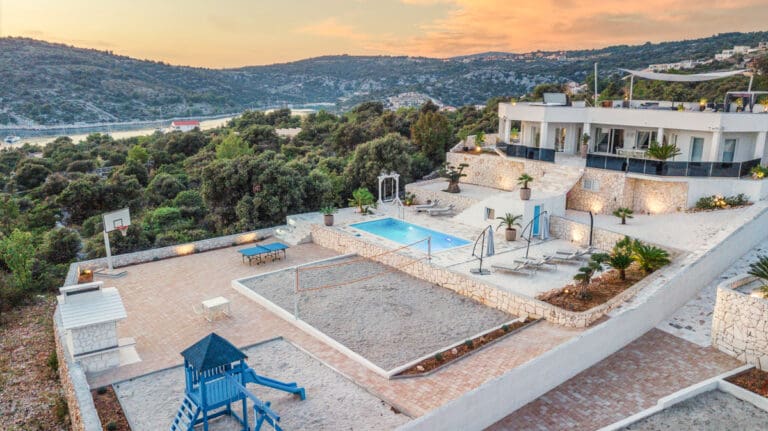
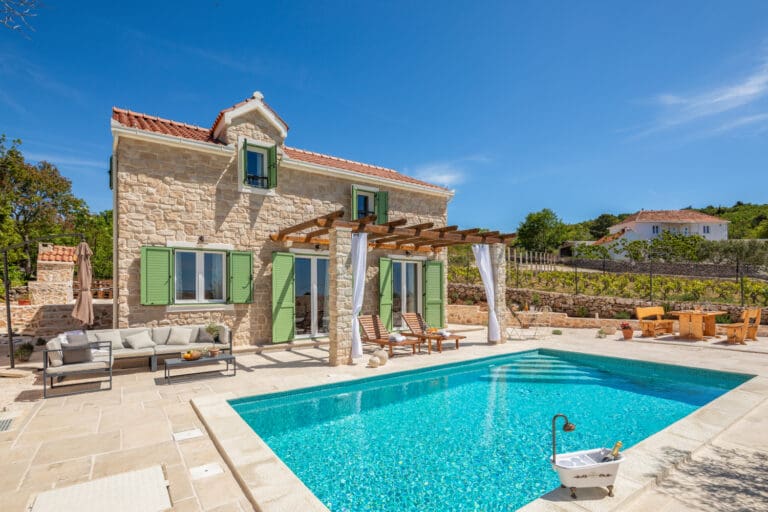 Villa Kalista
 Rent Villa Diell Croatia
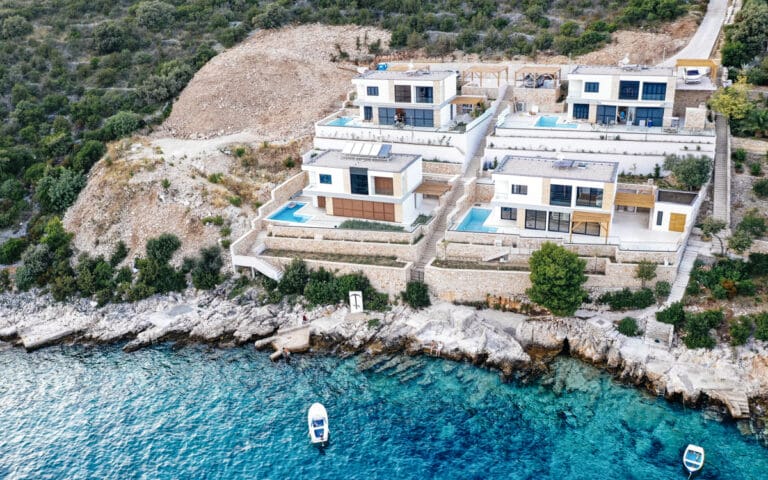
 Villa Vjeko
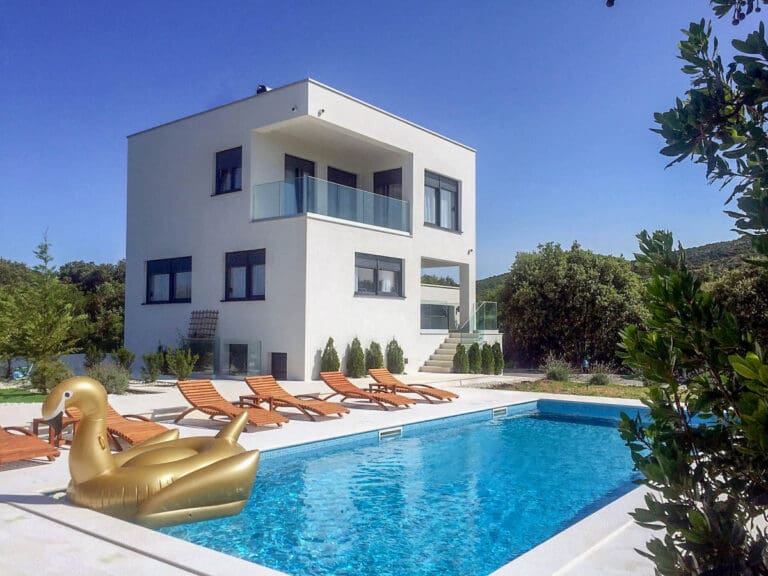
 Villa Andersi I Croatia
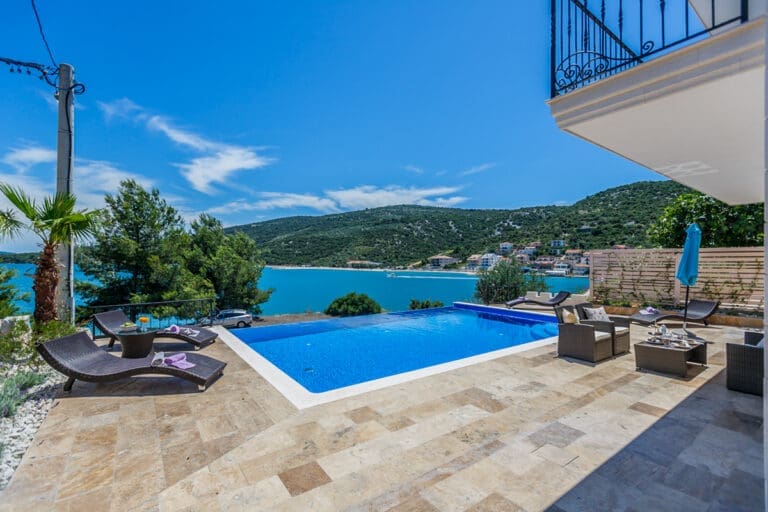
 Villa Vilis Croatia
 Villa Ljubo Croatia
See all 22 villas in MarinaVillas across Split-Dalmatia County