Best Time to Visit Gwynedd: Eryri, Castles and Welsh Coast
The best time to visit Gwynedd is May, June or September, when daylight is long, rainfall is lower than the Welsh average, and the crowds around Eryri (Snowdonia) and the coast have not yet reached July-August saturation. Summer (July-August) is warmest but busiest and priciest, especially on the Llŷn Peninsula and around Snowdon’s main paths. Winter is cold, wet and quiet, but offers dramatic mountain light and the lowest prices of the year.
Here is the thing nobody tells you about Gwynedd’s weather: it has very little to do with what the rest of Wales is doing. Stand in Caernarfon on a soft grey morning and the summit of Yr Wyddfa, fifteen miles inland, might be locked in cloud, sleet, or – in one memorable August I recall with a certain grim fondness – actual snow. Microclimates here are not a marketing term. They are a genuine, occasionally infuriating, fact of geography, and understanding them matters more to your trip than any national forecast ever will.
So rather than ask “what’s the weather like in Gwynedd”, the better question is “what’s the weather like in the bit of Gwynedd I’m actually going to” – because the coast at Abersoch and the high ground above Blaenau Ffestiniog operate, climatically speaking, almost as different countries.
Gwynedd Weather by Month: The Year at a Glance
Coastal towns like Pwllheli, Barmouth and Criccieth sit a few degrees milder than inland Snowdonia year-round, thanks to the Irish Sea. Mountain weather changes fast and should never be trusted on sight – cloud can descend in minutes even when the valley below is in sunshine. Rain falls somewhere in Gwynedd most months; the difference is only ever one of degree.
Spring in Gwynedd: March to May
Spring arrives in Gwynedd reluctantly, as if it has somewhere else it would rather be. March is still properly cold, averaging 4-9°C (39-48°F), with bare trees and a decent chance of hail sideways off the sea. By May, though, things have turned a corner – daytime temperatures reach 12-16°C (54-61°F), hedgerows along the Llŷn Peninsula fill with bluebells and gorse, and Eryri’s lower paths dry out enough to be properly enjoyable rather than an exercise in bog navigation.
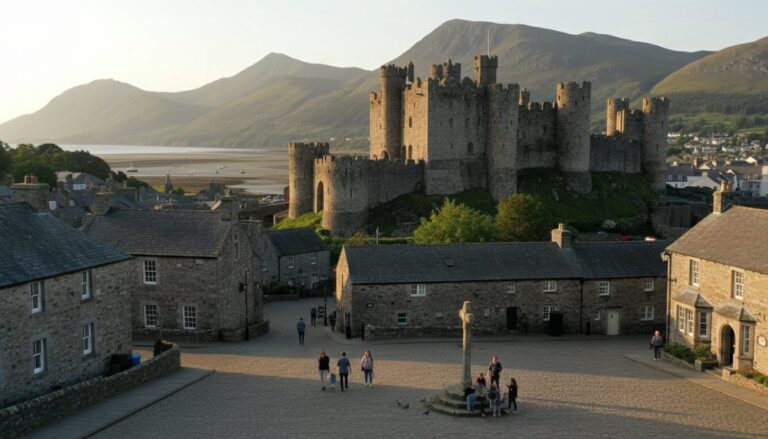
Crowds are light outside the Easter fortnight, and prices on everything from parking to pasties stay reasonable. Castles at Caernarfon and Harlech are open with none of the queuing that August brings, and the Ffestiniog Railway runs its spring timetable through daffodil-lined cuttings that make the slate-mining history feel almost gentle. May is arguably the single best value month in Gwynedd: long enough days, short enough queues, and a landscape putting on a genuinely good show.
Summer in Gwynedd: June to August
This is peak season, and for reasons that are entirely fair. Temperatures sit between 16-20°C (61-68°F), daylight stretches past 9.30pm in June, and the beaches of the Llŷn Peninsula – Porth Oer, Hell’s Mouth, the lot – finally earn their reputation as some of Britain’s better coastal stretches. Portmeirion’s pastel terraces photograph beautifully in full sun, which happens often enough, if not constantly, to make the trip worthwhile.
The cost of this is, inevitably, everyone else having the same idea. Car parks at Pen-y-Pass fill before 8am most July and August mornings, Barmouth’s seafront gets properly busy, and accommodation prices across the county climb to their annual peak. July and August bring the main run of local shows, regattas and agricultural events, and the National Eisteddfod occasionally lands in or near the region, drawing serious crowds when it does. Summer suits families tied to school holidays and anyone who wants guaranteed warmth over solitude – just book Snowdon-adjacent anything well ahead, and start early.
Autumn in Gwynedd: September to November
September is, by a fair margin, the insider’s month. The school-holiday crowds evaporate almost overnight after the bank holiday, temperatures hold at a pleasant 13-17°C (55-63°F), and the sea – having spent all summer warming up – is arguably at its most swimmable. Bracken on the lower slopes of Cadair Idris and around Eryri turns copper and gold through October, and the light takes on that low, raking quality that makes every slate roof in Blaenau Ffestiniog look faintly cinematic.
By November the shift is unmistakable: 6-10°C (43-50°F), shorter days, and a genuine wildness to the coast around Harlech and Barmouth that summer visitors never see. Some smaller seasonal cafés and attractions begin reducing hours or closing for winter from late October, so it pays to check ahead rather than assume. Autumn suits walkers, photographers and anyone who would rather have a beach – or a castle courtyard – mostly to themselves.
Winter in Gwynedd: December to February
Winter here is not for everyone, and Gwynedd makes no apology for it. Expect 2-7°C (36-45°F), frequent rain, genuinely short days, and mountain conditions that can turn properly serious – Yr Wyddfa’s summit sees snow and ice regularly, and winter hill-walking demands proper kit and experience, not enthusiasm alone. Many smaller attractions and seasonal cafés close for the season, particularly on the Llŷn Peninsula, though the main castles and larger sites generally stay open.
What winter offers in return is a landscape stripped of pretence: empty beaches, dramatic cloud over the Snowdonia ridgelines, log fires in village pubs, and accommodation prices at their lowest point of the year. It suits a particular kind of traveller – one who has read enough misty-mountain poetry to want to see the real, slightly damp, thing for themselves.
Best Time to Visit Gwynedd for Hiking Snowdonia (Eryri)
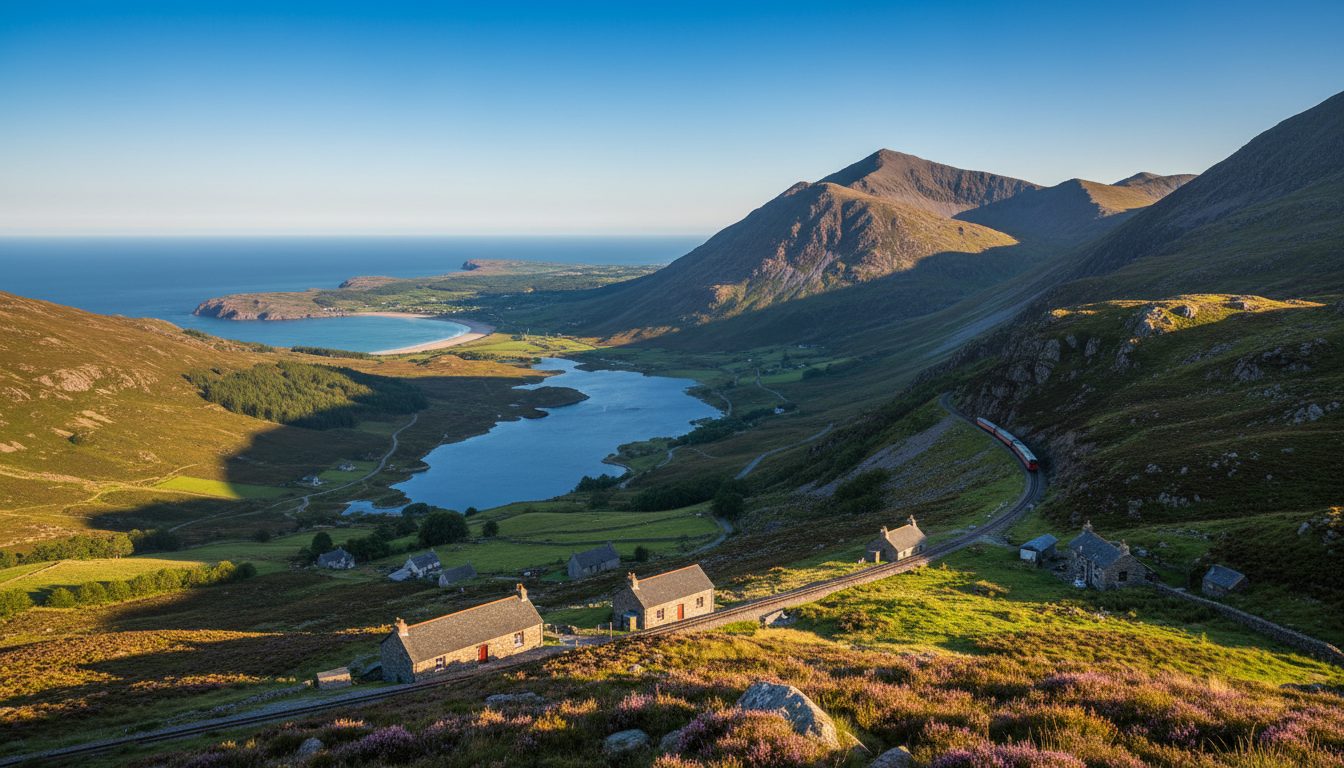
For hill-walking, May, June and September are the sweet spot – daylight is generous, paths are drier than spring’s earlier months, and the worst of the summer crowding on routes like the Llanberis and Pyg tracks has not yet built, or has already eased. July and August remain climbable, but expect company; the main paths up Yr Wyddfa can feel more like a queue than a solitary communion with nature. Winter ascents are possible and genuinely striking, but require proper experience, ice axes and crampons, and a healthy respect for how fast conditions change above the treeline.
Gwynedd Shoulder Season Advantages
Late May, early June, and the whole of September are where Gwynedd quietly rewards the traveller who skips the obvious months. Prices sit comfortably below summer peaks, popular sites like Portmeirion and Caernarfon Castle are pleasant rather than crowded, and the weather is frequently just as good as August’s – sometimes better, since shoulder months bring fewer of the heavy, humid days that occasionally roll in off the sea in high summer. Restaurants and cafés are open but not overwhelmed, car parking is actually possible near trailheads, and the light – that low, golden, slightly theatrical Welsh light – tends to be at its best either side of the solstice crush.
The Case for Visiting Gwynedd in the Off-Season
There is a stubborn, slightly contrarian pleasure to visiting Gwynedd in deep winter. The crowds that cluster around Snowdon’s honeypot routes and Portmeirion’s gates in summer simply are not there in January. Prices drop across the board, from parking to accommodation, and the coastline around Harlech and Barmouth takes on a rawness that summer visitors never witness – storm-driven waves, near-empty sand, pubs with fires lit at 3pm. It is not a trip for sunbathers, but for anyone drawn to dramatic weather and solitude over ice cream and crowds, it has its own considerable appeal.
For more on getting around, where to base yourself and what to see across the county, the Gwynedd Travel Guide covers the fuller picture.
For anyone weighing up when to book, it’s worth matching your dates to the season before choosing where to stay – browse villas in Gwynedd once you’ve settled on your month.
Gwynedd Weather and Seasons FAQs
What is the rainiest time of year in Gwynedd?
Autumn and winter bring the most consistent rainfall, particularly October through January, with the mountains of Eryri typically receiving significantly more precipitation than the coastal towns. Even summer sees regular showers, so waterproofs are a year-round essential rather than a seasonal precaution.
Is Gwynedd warm enough for a beach holiday in summer?
Sea temperatures and air temperatures rarely reach Mediterranean levels, but July and August bring enough warm, settled spells for genuine beach days on the Llŷn Peninsula and around Harlech and Barmouth. Many visitors swim, though the water stays bracing rather than balmy even in high summer.
When should I avoid visiting Gwynedd if I dislike crowds?
Avoid late July through late August, particularly around school summer holidays and bank holiday weekends, when Snowdon’s main paths, coastal car parks and popular sites like Portmeirion see their heaviest footfall. September onward sees a sharp and reliable drop-off in visitor numbers.
Keep reading
More on Gwynedd
- Travel guideGwynedd Travel Guide
- RestaurantsBest Restaurants in Gwynedd
- Food & wineGwynedd Food & Wine
- FamiliesGwynedd with Kids
Guides nearby in Wales
Where to stay
Villas in Gwynedd
A selection from our 44 luxury villas in Gwynedd.