
Best Restaurants in Pollençaa: Fine Dining, Local Gems & Where to Eat
Most places in Mallorca can give you a good meal. Several can give you a beautiful one. But Pollença – and specifically the stretch between the old town and Puerto Pollença – has a particular gift for giving you both at once, without any of the performance that usually comes attached. There is no posturing here, no destination restaurants surrounded by nothing, no chefs who moved here from somewhere more famous and brought their identity crisis with them. What you get instead is a genuinely layered food scene: one part ancient market town, one part quietly ambitious fine dining, and one part Mediterranean coast doing what it has always done without needing to be told it’s good at it. This is a town where you can eat a six-course tasting menu one evening and a bowl of arroz brut in a stone-walled square the next, and feel equally well looked after on both occasions. That particular trick is harder to pull off than it sounds.
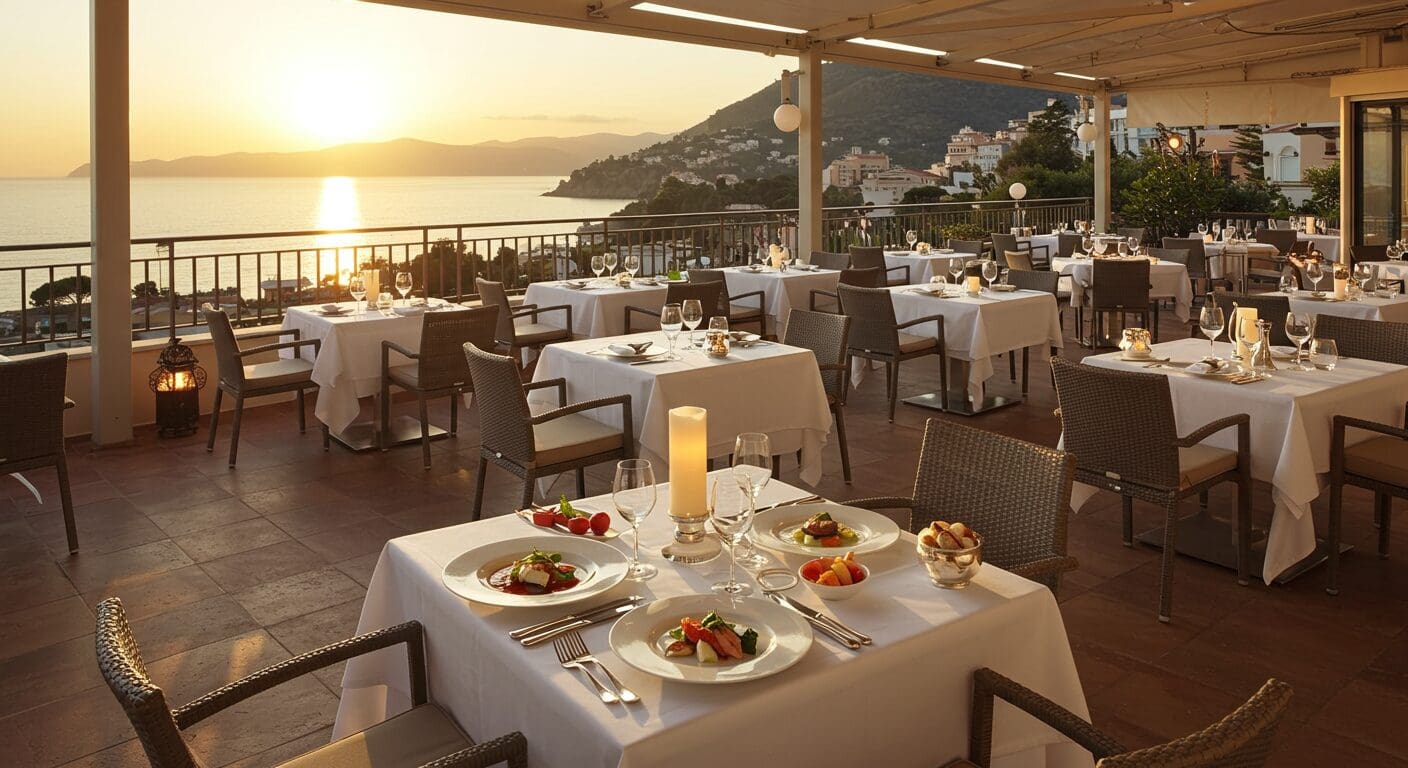
Fine Dining in Pollença: Where Ambition Meets the Mallorcan Landscape
The conversation about fine dining in Pollença begins, and for many people ends, at 365 Restaurant inside the Son Brull Hotel & Spa – an 18th-century monastery hotel that sits just outside the town on the road towards Palma. Chef Andreu Segura runs a kitchen without an à la carte menu, which is either a statement of confidence or a gentle reminder that you are not actually in charge here. (It is both.) Each evening, guests choose between two tasting menus – six or eight courses – with one option entirely vegetarian, drawing on ingredients grown on the hotel’s own farm estate: heritage vegetables, citrus fruit, different olive oils, and wine from the estate’s own production. The result is food that feels genuinely rooted rather than merely locally-sourced in the way that word appears on every menu from here to the Balearic mainland. Michelin has taken note – 365 holds three red knife-and-fork symbols in the Guide, denoting it as one of the finest addresses by Michelin’s own standards, and it sits at a remarkable 9.6 out of 10 on TheFork. Reservations are essential, and they go quickly. Book before you book your flights. That is not an exaggeration.
In Puerto Pollença, Terrae Restaurant represents a different but equally serious approach. Chef David Rivas runs a kitchen without a fixed menu – dishes shift according to what Mallorcan producers are offering that week, which sounds charming in theory and turns out to be charming in practice. The dining room is small and stylish, with the kind of rustic warmth that suggests someone actually thought about it rather than simply buying distressed wood. Terrae has earned its place in the Michelin Guide through a genuine commitment to local sourcing and sustainability – solar energy, reduced plastic use, and a kitchen that answers to the season rather than the other way around. First-time visitors sometimes find the lack of a fixed menu slightly unnerving. They are, without exception, delighted by the end of the meal.
Local Gems: The Heart of Pollença’s Food Culture
Not every excellent meal in Pollença requires a tasting menu and a dress code. Restaurant Q11, positioned directly beside the main church on the town’s central square, occupies a happy middle ground between gastronomy and genuine neighbourhood life. Part restaurant, part wine shop, it serves fresh and elegant Mediterranean dishes alongside a wine selection that would make most dedicated wine bars feel slightly insecure. The location alone is worth noting – there are few better places to be in Pollença than on that square as the evening light shifts, and Q11 makes the most of it. It draws a mix of serious wine enthusiasts, couples who’ve been coming back for years, and people who simply wandered over from the Sunday market and found themselves still there at ten o’clock. This is a reliable sign of quality.
La Placeta offers a different texture again – a generous outdoor terrace, a clean modern interior, and a kitchen with a particular talent for risotto and paella. These are dishes that restaurants frequently get wrong in ways they don’t seem to notice, which makes La Placeta’s consistent execution all the more satisfying. TheFork users rate it at 9.0, and it regularly appears on lists of Pollença’s best Mediterranean restaurants – not because it is trying to be something it isn’t, but because it is very good at being exactly what it is. The terrace on a warm evening is one of those places that makes you feel slightly smug about your dinner choices, which is an underrated part of any good meal.
Then there is 2K Street Gourmet, which holds a 9.5 rating on TheFork – making it, by user score, the highest-rated restaurant in Pollença on that platform. The concept takes street food seriously as a culinary idiom rather than a compromise, producing gourmet dishes in a relaxed, accessible format that appeals to a wide range of diners. It is also one of the few spots in town that welcomes dogs, which makes it immediately popular with a particular category of traveller who has packed more for their pet than for themselves. No judgement. The food is excellent either way.
Beach Clubs and Casual Dining by the Water
Puerto Pollença – the beach town sitting at the foot of the bay below the old town – is where the food scene shifts into a more sun-bleached register. The waterfront promenade, the Pine Walk, is lined with restaurants and bars that range from very good to merely adequate, and separating the two requires a little local knowledge. The beach clubs here offer the kind of long, unhurried lunches that remind you why you came to the Mediterranean in the first place: grilled fish, cold local wine, the sound of the sea doing nothing in particular.
Look for spots that champion local catch – red mullet, sea bass, and the prized Mallorcan lobster (llangosta) when in season. The best casual seafood in Puerto Pollença tends to come from restaurants that have been there long enough not to need a sign visible from the road. A terrace with mismatched chairs and a hand-written specials board is often a better predictor of quality than any amount of Instagram-friendly design. You learn this eventually. Some people learn it on their second visit to Mallorca. Others, optimistically, on their fifth.
The Food Markets: Where the Ingredients Begin
Pollença’s Sunday market is one of the most genuinely good markets on the island – not a tourist market dressed up as a local one, but an actual weekly gathering around the town’s main square and surrounding streets where you will find local produce, artisan goods, and more varieties of olive oil than you thought possible. It runs through the morning and is best experienced early, before the heat and the crowds arrive simultaneously at around eleven.
The market is the place to stock up on sobrassada – the rich, spreadable Mallorcan cured sausage – along with local cheeses, honey, preserved almonds, and the island’s excellent olive oils. If you are staying in a villa with a kitchen, the Sunday market is not optional. It is the entire point of having a kitchen. The quality of ingredients available here makes even simple cooking feel like a genuine achievement, which is possibly why so many guests who say they won’t cook end up doing exactly that on at least one evening.
There is also a smaller Wednesday market in the town, less sprawling but useful for fresh vegetables, local fruit, and the particular pleasure of buying something directly from the person who grew it.
What to Order: The Dishes That Define Pollença’s Table
Mallorcan cuisine rewards the curious and punishes the timid. At the top of any order of priority: arroz brut, the island’s earthy, saffron-tinged rice dish with rabbit, pork, and seasonal vegetables – a dish that looks unpretentious and tastes like someone’s grandmother perfected it over forty years. Which is, in several cases, exactly what happened.
Beyond that: frito mallorquí (a pan-fried mix of offal, vegetables, and fennel that is better than it sounds and considerably better than the English translation suggests), tumbet (a slow-cooked layering of aubergine, potato, and peppers), and pa amb oli – the Balearic answer to the bruschetta question, involving good bread, excellent olive oil, tomato, and whatever cured meat or cheese is in the kitchen. It is the simplest thing on any menu and frequently the most satisfying.
For fish, order whatever is fresh. This is not a hedge – it is genuinely the right strategy. A local restaurant will tell you what came in that morning, and that is what you should eat.
Wine and Local Drinks: The Mallorcan Glass
Mallorcan wine has had a very good decade. The island’s DO Pla i Llevant and DO Binissalem designations produce wines that stand up to serious scrutiny, with the indigenous Callet and Manto Negro red grapes and Prensal Blanc whites offering something genuinely different from the mainland Spanish canon. Son Brull’s own estate wine – poured as part of the 365 tasting experience – is a direct expression of the land the hotel sits on, and worth trying on those terms alone.
Beyond wine: hierbas, the herbal liqueur that appears at the end of most meals as though by natural law, comes in sweet, dry, and mixed varieties. The dry version (hierbas secas) is the one worth knowing. Local gin, produced on Menorca originally but now embraced across the Balearics, is drunk with ice and lemon in a way that the Spanish call a gin-lemon and which is devastatingly refreshing in the early evening heat. Café amb llet – coffee with warm milk – is the morning drink of choice and is taken seriously. Order it slowly. There is no rush. This is one of the things Pollença is quietly trying to teach you.
Reservation Tips: The Practical Reality
The fine dining restaurants – 365 in particular – require advance booking, often weeks ahead during the high summer months of July and August. Terrae, with its small dining room, fills up quickly on weekend evenings from June onwards. Both accept reservations online and by phone, and neither rewards a casual walk-in approach during peak season.
For the mid-range and casual end of the spectrum, earlier evenings (before 8pm) are often easier than the Spanish dining hour of nine or ten, and the quieter shoulder months of May, June, and September offer considerably more flexibility. The Sunday market warrants an early start regardless of your intentions for the rest of the day. Q11 and La Placeta are both worth booking a day or two ahead during busy periods rather than trusting to luck, however charming the square looks when you’re wandering past it at noon.
One final note on the subject of reservations: Pollença in August is not Pollença in October. If you are serious about eating well, the shoulder season rewards you generously – with better availability, more relaxed kitchens, and the particular pleasure of having one of the island’s finest dining rooms largely to yourself.
Where to Stay: The Villa Advantage
The ideal base for eating your way around Pollença is a luxury villa in Pollença with access to a private chef – which transforms the Sunday market from a pleasant stroll into a genuinely purposeful expedition. Many of Excellence Luxury Villas’ properties in the area offer private chef services, meaning you can bring the market’s best ingredients home, hand them over, and return to the terrace with a glass of cold Mallorcan white to await dinner on your own terms. After a long lunch at 365 or an evening exploring Puerto Pollença’s waterfront, there is something particularly satisfying about a private meal in a Tramuntana hillside villa that nobody else knows about. For the broader picture of what awaits beyond the table, the Pollença Travel Guide covers the full scope of what this corner of northern Mallorca has to offer.

