Best Restaurants in Madeira: Fine Dining, Local Gems & Where to Eat
There is a particular hour in Funchal – somewhere between six and seven in the evening – when the smell of charcoal and espetada smoke drifts up from the harbour restaurants and meets the faint sweetness of the famous gardens above. The Atlantic catches the last of the light. Someone at a nearby table orders a poncha. It arrives without ceremony, in a small ceramic cup, looking entirely innocent. This is the moment you understand that Madeira is not just a place to pass through on the way somewhere else. It is, quietly and emphatically, a destination with something to say at the table.
For a volcanic island of 270,000 people perched in the Atlantic some 900 kilometres southwest of Lisbon, Madeira punches well above its weight when it comes to food and drink. Two Michelin-starred restaurants. A growing fine dining scene that has caught the attention of serious food travellers. Markets that would make a London chef weep with envy. And a local cuisine that is deeply, confidently itself – not chasing trends, not performing for tourists, just quietly excellent. This guide covers the best restaurants in Madeira for luxury travellers: from two-star gastronomy to the family terrace where the flowers are almost as good as the food.
Fine Dining in Madeira: The Michelin Scene
Madeira now holds two Michelin stars in a single restaurant, which is remarkable for an island this size, and a third establishment carries the Bib Gourmand – Michelin’s mark of approval for places offering exceptional quality at a more accessible price point. The fine dining scene here is not vast, but what exists is genuinely world-class, shaped by chefs who have made a conscious choice to cook on this island rather than in a European capital. That decision shows on the plate.
Il Gallo d’Oro at The Cliff Bay hotel in Funchal is where the story starts. In 2004 it became the first Michelin-starred restaurant in Madeira – a moment that announced the island’s culinary ambitions to the wider world. Today it holds two stars, making it one of the most decorated restaurants in Portugal. French chef Benoît Sinthon leads the kitchen with a philosophy rooted in gastronomic sustainability, drawing on Iberian traditions and sourcing an impressive proportion of ingredients from the PortoBay vegetable garden. The tasting menus run from seven to eleven courses and have a kind of intellectual rigour to them – each dish feels considered rather than merely constructed. Reservations are essential and should be made well in advance. Wear something that suggests you meant to be there.
William, the fine dining restaurant at Belmond Reid’s Palace, opened in 2015 and received its Michelin star less than two years later – a rate of recognition that tells you something about the quality arriving on those plates. The restaurant is named in homage to William Reid, the Scottish entrepreneur who built the iconic clifftop hotel that has been receiving guests for over 125 years. The dining room across its two floors carries the weight of that history with a kind of unhurried, old-money confidence. Chef Luís Pestana works with distinctly Madeiran produce – mirlitons, passion fruit, island beetroot – alongside coastal seafood, creating a menu that reads as genuinely local rather than generically Mediterranean. If you are staying at Reid’s, dinner at William is close to obligatory. If you are not staying there, it is still worth the trip up the cliff.
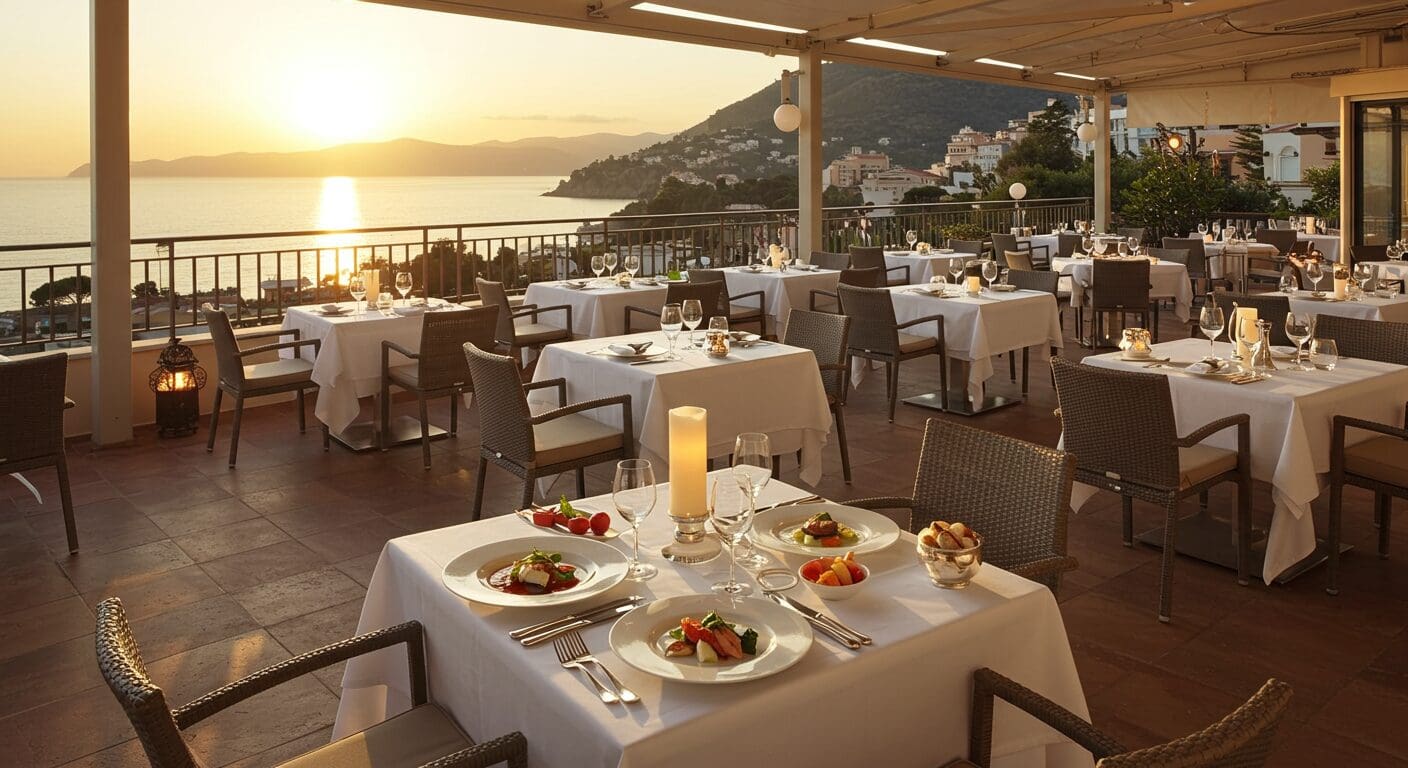
Restaurante do Forte occupies a category of its own. Perched atop the 17th-century São Tiago Fort in Funchal, it has been offering exceptional cuisine since 2001 and the setting remains one of the most theatrical on the island. On a clear evening, dining outside on the terrace between the fort’s battlements with direct sea views is the kind of experience that makes people go quiet mid-conversation and just look. Multi-course dinners paired with excellent Portuguese wines, a sense of occasion that requires no manufactured ambience – the building does all the work. This is the restaurant to book for anniversaries, proposals, or simply for the night you decide that Tuesday deserves to be memorable.
Michelin Bib Gourmand and Rising Stars
Not every exceptional meal in Madeira costs what you might expect of a fine dining destination. Casal da Penha carries the Michelin Bib Gourmand – recognition that the kitchen here offers serious cooking without serious inflation. The restaurant sits in the centre of Funchal, flanked by tall buildings in that particular urban way that offers no hint of what is inside. It is small, family-owned, and genuinely charming, with a flower-filled upstairs terrace that becomes fiercely contested on warm evenings. Arrive early or book ahead if you want a terrace seat. The food rewards patience either way.
Akua, which entered the Michelin Guide in 2025, represents the newer wave of Madeiran dining – confident, seafood-focused, relaxed in atmosphere but serious about what arrives at the table. Chef Júlio Pereira opened Akua in Funchal after arriving on the island in 2018, and across his various dining ventures he has built a reputation for vibrant, modern cooking with an honest approach to pricing. Akua has been in business for five years before its Michelin listing, which is its own kind of quality indicator – this is a restaurant that built its following through consistency, not hype. The seafood here reflects the island’s relationship with the Atlantic: immediate, direct, and treated with real understanding.
Local Restaurants and Neighbourhood Gems
Beyond the starred establishments, Madeira’s restaurant scene rewards the traveller willing to eat where the locals eat – which, on this island, rarely means a compromise in quality and usually means a significant improvement in atmosphere. The Madeiran relationship with food is pragmatic and proud in equal measure. Recipes are not performed for visitors; they are simply what has always been cooked here.
Look for smaller, family-run restaurants in the older parts of Funchal and in the quieter fishing villages along the coast – places where the menu is handwritten or chalked on a board, where the owner’s mother may or may not be in the kitchen, and where the wine arrives in a ceramic jug before you have properly considered your options. These are establishments that resist description by name but are impossible to miss once you develop an eye for them: a string of tables on a terrace, a familiar crowd, a particular absence of effort in the decor that signals confidence in the food.
The village of Câmara de Lobos – which Winston Churchill famously painted, though the locals have been gracious enough not to let this define the place entirely – has some of the most unpretentious seafood restaurants on the island. Sit close to the harbour. Order whatever swam most recently. Drink the local wine. Churchill was onto something.
What to Order: The Essential Madeiran Dishes
There are certain dishes in Madeira that are not optional. Treat this section as guidance rather than suggestion.
Espetada is the island’s signature meat dish: large chunks of beef marinated in garlic, bay leaf, and sea salt, threaded onto a bay laurel skewer and cooked over a wood fire. It is served suspended on a hook above the table – an arrangement that is either thrillingly theatrical or mildly alarming depending on your relationship with dangling meat. Either way, it is excellent. Lapas – limpets – are grilled on a hot iron plate with butter, garlic, and a squeeze of lemon, and are among the simplest and most satisfying things you will eat on the island. They arrive sizzling and should be eaten immediately. Waiting to photograph them properly is, in this context, a mistake.
Bacalhau – salt cod – appears in various preparations across the island, from the traditional Bacalhau à Brás to baked versions with olive oil and potatoes. Black scabbardfish (peixe espada preto) is a Madeiran speciality that sounds alarming and tastes extraordinary, typically served with banana and passion fruit sauce in a combination that should not work as well as it does. Bolo do caco, the soft flatbread made with sweet potato and served warm with garlic butter, will appear at most meals and will disappear faster than seems reasonable.
For something sweet, poncha cake and honey cake (bolo de mel) are the local standards, though the latter – made with molasses rather than honey, despite the name – is dense, spiced, and divisive in the way that only very traditional foods can be. You will either love it or appreciate it intellectually.
Wine, Madeira Wine, and What to Drink
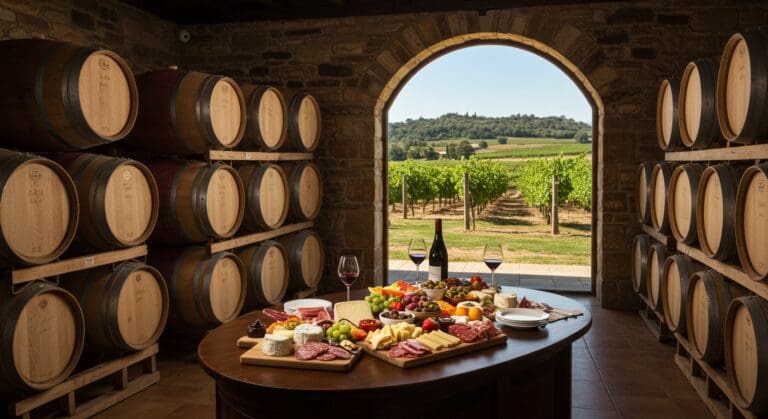
The wine situation in Madeira deserves its own section, and not simply because the island’s fortified wine is among the most historically significant in the world. Madeira wine – produced on the island since the 15th century and famously stable enough to have been used as ballast on merchant ships – comes in styles ranging from the bone-dry Sercial to the rich, sweet Malmsey. It is aged through a deliberate heating process called estufagem that gives it a characteristic oxidised complexity, and a well-aged bottle can outlast most human ambitions. Order it as an aperitif, pair it with dessert, or simply drink it on a terrace at that particular hour mentioned at the start of this piece.
For local spirits, poncha is the thing. Made from aguardente de cana – sugarcane spirit – mixed with honey, sugar, and lemon or orange juice, it is served in a small cup and administered with a cheerfulness that slightly undersells its effect. It is the island’s unofficial national drink and is genuinely delicious. The fact that it is also extremely strong is something locals consider secondary information.
Portugal’s mainland wines are well-represented across restaurant lists throughout Madeira, with Alentejo reds and Vinho Verde whites appearing reliably. The island also produces its own table wines – less celebrated than the fortified variety, but worth exploring, particularly with fresh fish.
Beach Clubs, Casual Dining, and Lido Life
Madeira’s coastline is rocky rather than sandy, which means beach clubs here operate a little differently from their Balearic counterparts. The island’s lidos – natural and constructed seafront pools carved into the volcanic rock – have become social and dining destinations in their own right. Several offer terrace restaurants with Atlantic views, grilled fish menus, and a relaxed afternoon energy that is entirely its own thing.
The Lido area in Funchal has a concentration of casual seafront restaurants serving grilled fish, fresh salads, and cold beer with a directness that luxury travellers sometimes forget to appreciate. This is not a scene that requires reservations or dress codes. It requires appetite and the ability to sit still in the sun for longer than your schedule probably allows.
For a more curated casual dining experience, several of Funchal’s boutique hotels have poolside or terrace dining options that sit comfortably between fine dining formality and neighbourhood simplicity – well-sourced menus, good wine lists, service that understands the difference between attentive and hovering.
Food Markets: Where to Go and What to Buy
The Mercado dos Lavradores in Funchal is the island’s most famous market and is, in parts, a genuinely remarkable experience. The building itself – a 1940s art deco structure tiled in traditional azulejo panels – is worth the visit before you have looked at a single piece of fruit. The ground floor flower market fills the space with colour and scent in the mornings; the surrounding stalls are piled with tropical fruit that grows on this island with an enthusiasm that seems almost excessive. Passion fruit, custard apple, tamarillo, banana in varieties you have not encountered before.
The fish market in the lower level of the Mercado dos Lavradores is where the black scabbardfish arrives each morning – long, dark, and deeply strange-looking, laid out in rows with a casualness that suggests the vendors have made their peace with the aesthetic. The market is busiest in the mornings and on Fridays, and it is worth arriving early both for freshness and for the experience of watching the island’s professional buyers at work.
Smaller weekly markets operate in various towns and villages around the island – Monte, Santana, Machico – offering local produce, island cheeses, honey, and the kind of unhurried commercial interaction that feels increasingly rare. These are not tourist markets. They are markets that tourists are welcome to attend.
Practical Reservation Tips for Madeira Restaurants
Fine dining reservations at Il Gallo d’Oro and William should be made well in advance – particularly during peak season between June and September and over Christmas and New Year, when Madeira’s famous fireworks display draws significant visitor numbers to the island. Both restaurants book out weeks ahead during these periods. Email reservations are typically more reliable than phone for international guests, and most properties have English-speaking reservation staff.
For mid-range and neighbourhood restaurants, same-week bookings are usually manageable outside high season. The terrace at Casal da Penha is the exception – it fills quickly and the indoor alternative, while perfectly pleasant, is a different experience. Call ahead, specifically requesting the terrace, and call a few days in advance rather than the same morning.
Madeiran dining tends to run slightly later than mainland Portuguese habits suggest, but earlier than Spanish customs might imply. Lunch service is typically from noon to three; dinner from seven onwards, with eight to nine being peak. Arriving at seven thirty tends to offer the best combination of available tables and fully warmed kitchens. Some local restaurants operate without a formal booking system entirely – in which case, arriving early and being prepared to wait with a poncha is the correct strategy.
Dress codes at the two Michelin-starred establishments are smart casual at minimum – neither requires black tie, but both reward the effort of dressing for the occasion. The island’s general dining culture is relaxed without being careless about presentation.
Staying Well: Villas, Private Chefs, and Eating at Your Own Pace
For travellers who want to experience Madeira’s extraordinary produce on their own terms – at a long table with a view, at whatever hour the evening suggests – renting a luxury villa in Madeira with a private chef option offers something no restaurant can quite replicate. Several properties on the island work with private chefs who source directly from the Mercado dos Lavradores and local fishermen, bringing espetada to the terrace grill, preparing lapas on a wood fire, and building menus around whatever arrived that morning. The combination of a well-appointed villa, an informed chef, and a Madeira wine list chosen with local knowledge produces evenings that tend to become the ones you describe to people for years afterwards.
For everything else the island has to offer – walks, viewpoints, culture, and context – the Madeira Travel Guide from Excellence Luxury Villas covers the full picture.