Setúbal Food & Wine Guide: Local Cuisine, Markets & Wine Estates
What does it taste like when a country stops performing and simply feeds you? That question has a surprisingly precise answer, and it involves a fishing port on the southern edge of the Arrábida peninsula, a glass of something pale and mineral poured at a table with a view of the Sado estuary, and the quiet realisation that you have been eating extremely well for several days without once consulting a list of the world’s best restaurants. Setúbal doesn’t announce itself as a food destination. It doesn’t need to. The produce does the talking, the wine pours itself, and the region’s cooks have been refining the same essential pleasures for centuries. The tourists mostly haven’t caught up yet. This is, from where we’re standing, an enormous advantage.
Whether you’re staying in one of the region’s beautiful private villas or simply passing through, this Setúbal food & wine guide covers everything worth knowing – local cuisine, markets, wine estates, and the experiences that money can actually buy. For a broader introduction to the region, our Setúbal Travel Guide is the place to start.
The Regional Cuisine: What Setúbal Actually Cooks
Setúbal sits at a geographical intersection that is, culinarily speaking, almost unfairly generous. To the north, the Serra da Arrábida delivers herbs, wild game and honey. To the south and west, the Atlantic delivers fish in quantities that would make a Breton fisherman weep quietly into his cider. The Sado estuary runs through the middle of all this and contributes its own particular gift: rice paddies that produce some of the finest rice in Portugal, and a rich ecosystem that supports extraordinary seafood, including the local species of horse mackerel, seabass and, most famously, the dolphins that accompany the fishing boats. The dolphins are not on the menu. Everything else largely is.
The cooking here is Portuguese in the truest sense – restrained in technique, generous in flavour, entirely unbothered by trend. Olive oil is used with the liberality of a culture that has never had reason to fear it. Garlic appears everywhere. Fresh herbs – coriander especially – are scattered as though someone knocked over the plant. And fish is treated with a reverence that verges on the spiritual.
What you won’t find in Setúbal is the slightly performative rusticity that passes for authenticity elsewhere. This is a working port city that has been cooking honest food for a long time, and it shows in the texture of the place – the tiled tabletops, the terracotta pots, the unremarkable-looking restaurants that turn out to be quite remarkable.
Signature Dishes: What to Order and Why
The single dish most associated with Setúbal is choco frito – fried cuttlefish, cut into thick strips, seasoned simply and served with lemon and chips. This sounds, on paper, like bar food. In practice, it is one of the more quietly perfect things you can eat in Portugal. The cuttlefish caught in these waters has a texture and sweetness that makes the frozen version served elsewhere taste like a different species entirely. You will order it once, eat it in approving silence, and order it again the following day.
Beyond the cuttlefish, the seafood ledger runs deep. Lingueirão grelhado – grilled razor clams – arrive at the table still sizzling, dressed with garlic and butter. Camarão da costa, the small Atlantic prawns caught just offshore, are typically served boiled with coarse salt and eaten with cold beer in what constitutes a complete argument for this way of life. Seabass and bream from the estuary are grilled whole, simply, with no apology for their simplicity.
Inland, the cuisine shifts towards the land. Wild boar, rabbit and partridge appear in slow-braised preparations during the autumn and winter months. The region’s olive oil – more on which shortly – shows up as the base of almost everything. Açorda, the bread-thickened soup that Portuguese grandmothers have been making forever, is here given particular depth by the quality of the local herbs. And the rice dishes – often made with seafood, sometimes with duck from the estuary – benefit enormously from the quality of Sado-grown grains. Good rice in a rice-producing region is, it turns out, a different ingredient altogether.
The Wines of Setúbal: A Region Worth Understanding
The Península de Setúbal wine region is one of Portugal’s most underappreciated, which is either a shame or an opportunity depending on how you feel about queues at wine estates and inflated prices. The region encompasses two DOC appellations – Setúbal and Palmela – and produces wines of genuine distinction across a remarkably broad stylistic range.
The star of the show, historically, is Moscatel de Setúbal – a fortified wine made from Muscat grapes that has been produced here since the 18th century. Unlike the lighter, often slightly cloying Muscats you might encounter elsewhere, the best examples from Setúbal are aged in oak for years, sometimes decades, developing extraordinary complexity: orange peel, dried apricot, roasted nuts, beeswax, a long golden finish that rewards patience. The older vintages – some producers release twenty-year and even forty-year expressions – are in a different conversation entirely and deserve to be treated accordingly.
The unfortified wines are less internationally famous but equally worth attention. Castelão, the dominant red grape of the Palmela DOC, produces wines with a particular earthy, mineral character – dark fruit, leather, a savoury quality that makes them natural companions to the region’s meat dishes. White wines from Fernão Pires and Arinto can be fresh and mineral or richer and textured depending on how they’re handled. The best producers are working at a level that would turn heads in any European wine region.
Wine Estates to Visit in the Setúbal Region
The Setúbal peninsula is well set up for cellar door visits, with several estates offering tastings and tours at a standard that reflects the region’s growing confidence. The experience of visiting a wine estate here differs pleasantly from the more choreographed productions of, say, the Douro – there is a directness to it, a sense that the person pouring your wine knows exactly what they’re doing and doesn’t need to tell you about it at length.
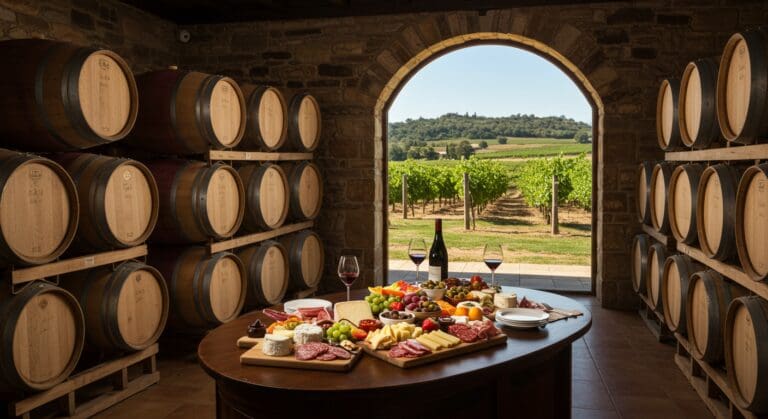
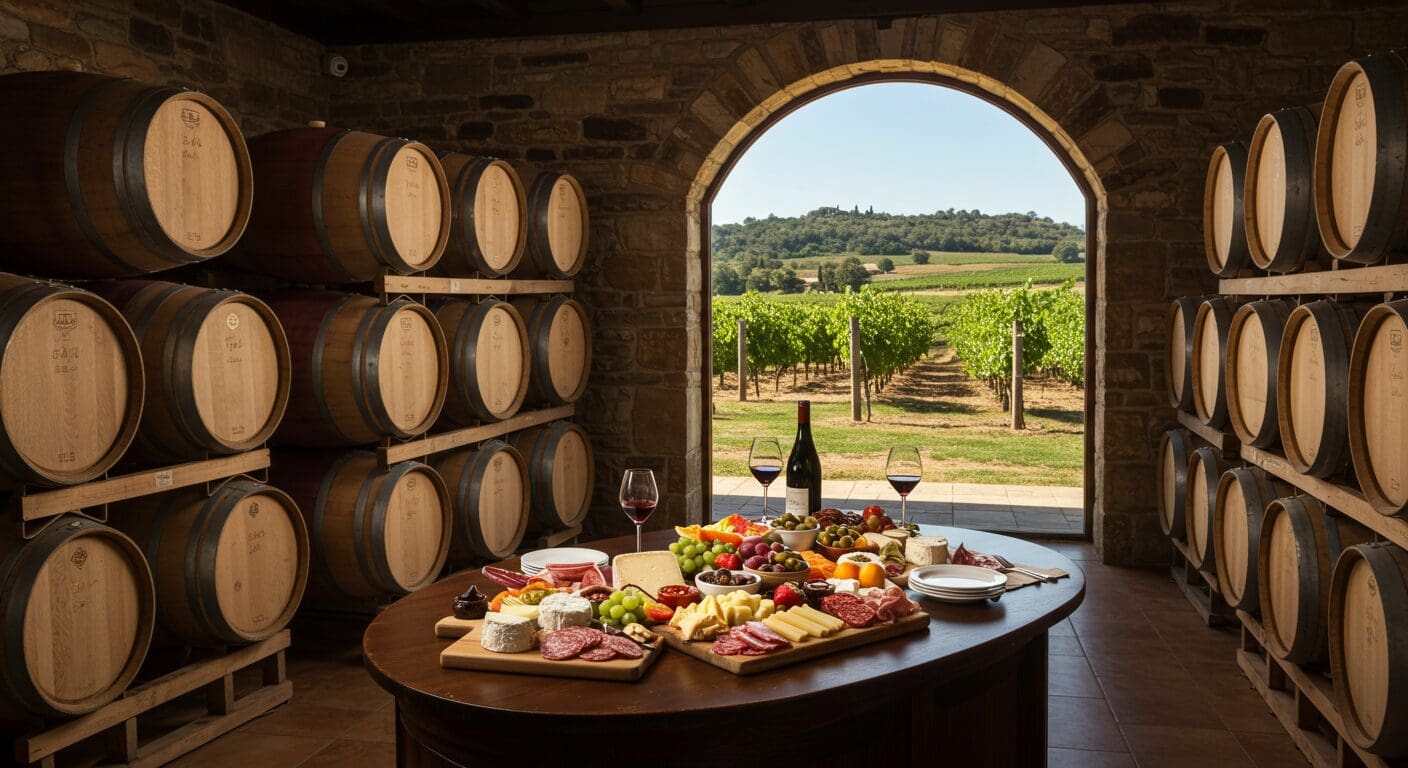
José Maria da Fonseca, based in Azeitão, is the great name of the region and one of Portugal’s oldest continuously operating wine companies. Founded in 1834, it has been producing Moscatel de Setúbal for as long as anyone can credibly claim to have been doing anything. A visit to the estate includes a tour of the historic cellars, where barrels and demijohns of aging Moscatel create one of the more atmospheric spaces you’ll encounter anywhere in Portuguese wine country. The tasting selection spans current releases through to old vintages that function less as a commercial proposition and more as an education in what age does to a great sweet wine.
Other estates in the region offer more boutique experiences – smaller production runs, more personal tastings, the slightly thrilling sense of drinking something that relatively few people outside the region have discovered. The area around Palmela and the Serra da Arrábida foothills rewards exploration: look for family-run estates where the appointment is taken seriously and the hospitality is genuine rather than curated. Several estates will arrange private tastings with advance notice, which – particularly if you’re staying in a villa and can receive deliveries – opens up a very pleasant avenue for building a cellar over the course of a week.
Markets: Where Setúbal Shops for Itself
The Mercado do Livramento in Setúbal is, by almost any measure, one of the finest municipal markets in Portugal – which puts it in contention for one of the finest in southern Europe. Housed in a building decorated with blue-and-white azulejo panels depicting the region’s fishing and agricultural traditions, it operates most mornings and is at its best on weekdays, when the professionals arrive early and the tourists have not yet materialised in meaningful numbers. (A word about timing: arrive after ten in the morning and you will find much of the best fish already spoken for. This is your only warning.)
The fish section alone justifies the visit. The variety on display – wild seabass, bream, various species of clam and cockle, cuttlefish, ray, sardines of a size that would make a Lisbon vendor envious – reflects the proximity of serious fishing grounds. Prices are honest. The vendors know their stock with the exactitude of people who grew up with it. If you’re staying in a self-catering villa, shopping here is not merely pleasant – it is the point.
Beyond fish, the market offers excellent fruit and vegetables from the surrounding region, local cheeses, honey from the Serra da Arrábida, and a small selection of prepared foods and pantry goods. There is usually someone selling something that resists easy categorisation but turns out to be delicious. This is part of the appeal.
The town of Azeitão, a short drive from Setúbal, hosts a monthly fair – the Feira de Azeitão – on the first Sunday of the month, where local producers bring olive oil, wine, cheese, honey, fruit and handicrafts. It’s considerably less organised than Livramento and considerably more charming for it.
Olive Oil: The Region’s Liquid Gold
The olive oil produced in and around the Serra da Arrábida is not the sort of thing that needs a marketing campaign. It is, to use a technical term, extremely good – grassy and peppery when young, with a depth and complexity that reflects the thin, rocky soils and the particular microclimate of the Arrábida hills. Several small producers in the area offer tastings and direct sales, which is by far the most sensible way to ensure you don’t fly home empty-handed.
Visiting an olive oil producer in the harvest season – October through December, typically – is an experience that repays the small effort of arrangement. Pressing fresh oil is one of those agricultural processes that seems to have nothing to do with a bottle of supermarket olive oil, which is presumably the point. The flavour of oil tasted immediately after pressing, vivid green and almost aggressively fresh, is one of those things that recalibrates expectations permanently. Your kitchen will never be the same. This sounds like hyperbole. It is not.
Many of the region’s wine estates also produce olive oil – another reason to arrange a proper estate visit rather than a drive-by tasting. The combination of a serious olive oil tasting followed by a wine tasting, ideally in the shade of an old quinta courtyard, is a sequence of events that requires very little to improve upon.
Cooking Classes and Culinary Experiences
For those who prefer to take Setúbal’s flavours home in the form of skills rather than luggage, the region is increasingly well served by cooking experiences aimed at serious food enthusiasts. Classes focused on traditional Portuguese cooking – particularly the seafood preparations and rice dishes for which the region is known – are available through various operators in and around the peninsula, typically in private quinta settings or domestic kitchens where the context reinforces the content.
A particularly rewarding format combines a morning at the Livramento market – selecting fish and produce directly from vendors – with an afternoon cooking session in a private villa or estate kitchen. The logic of choosing your own raw materials and then preparing them yourself is one that serious cooks will find hard to resist. Several luxury villa operators in the region can arrange this kind of bespoke culinary day on request, which transforms what might otherwise be a pleasant holiday activity into something closer to a genuine education.
Private chef services – where a local cook comes to your villa and prepares a dinner focused on regional specialities – are another option worth considering, particularly for groups or for travellers who want the experience without the classroom atmosphere. The best of these chefs bring knowledge of the region’s producers, seasonal availability and traditional techniques that no restaurant menu can fully communicate. Dinner at a table overlooking the Arrábida hills, cooked by someone who grew up eating this food, is a very different proposition from dinner out. Not better or worse, necessarily. Different in a way that stays with you.
The Best Food Experiences Money Can Buy in Setúbal
If you have decided to spend seriously on food in Setúbal, it is worth knowing where that money goes furthest. A private tasting of aged Moscatel de Setúbal – including old vintages that don’t appear on the public tasting list – at an estate like José Maria da Fonseca can be arranged with advance planning and represents extraordinary value relative to comparable experiences in better-known wine regions. The wines themselves are, at this level, deeply serious.
A chartered boat trip from Setúbal into the Sado estuary or along the Arrábida coast, with a skipper who knows the best anchorages and a cooler stocked from the Livramento market that morning, is another experience that sits at the intersection of luxury and simplicity. Eating cured ham and cheese with cold wine on a boat while watching dolphins – and in the Sado, this happens – is not something that requires further elaboration.
For truffle enthusiasts: the broader Alentejo region to the east produces black truffles, and seasonal truffle hunts can be arranged through specialist operators, typically combining the hunt itself with a lunch that makes use of the morning’s discoveries. This is not Périgord – the scale is different – but the essential experience of walking through scrubland with a dog of improbable professional competence and emerging with something that smells extraordinary is well worth the trip inland.
At the top of the food experience ladder, private dinners at quinta estates – arranged through your villa concierge or directly with an estate – offer the kind of total immersion in regional food culture that a restaurant, however fine, cannot replicate. Eating at a table that has been set for you alone, in a building surrounded by vineyards, with wines chosen from the estate’s private reserves, is a particular pleasure that Setúbal delivers with less fuss and considerably less expense than equivalent experiences in more fashionable corners of Europe.
Bringing It All Together: Eating Well in Setúbal
The most significant thing about food and wine in Setúbal is the ease of it all. There is no system to master, no reservation wars to navigate, no sense that the good stuff is being withheld behind a velvet rope. You arrive, you eat well, you drink something excellent, you find that the fish was caught this morning and the oil was pressed this autumn and the wine in your glass is older than you are. Then you do it again the next day, slightly adjusted, equally good.
This is a region that rewards the traveller who pays attention – who asks questions at the market, who accepts the wine recommendation, who orders the cuttlefish without consulting their phone. The returns on that attention are high. The Setúbal food & wine scene is not undiscovered – the Portuguese certainly know about it – but it has the comfortable depth of a place that has never needed to perform for an audience. Which is, in the end, exactly what you want from somewhere you’ve chosen to spend your holiday.
If you’re ready to base yourself properly in the region and eat your way through it at whatever pace suits you, take a look at our collection of luxury villas in Setúbal. A private kitchen, a market ten minutes away, and a wine region on the doorstep: the arithmetic is straightforward.