
Romantic Ko Samui District: The Ultimate Couples & Honeymoon Guide
Romantic Ko Samui District: The Ultimate Couples & Honeymoon Guide
What does it actually take to make a place feel romantic? Not just pretty – genuinely, memorably romantic in the way that makes you reach for your partner’s hand without thinking about it? Ko Samui District has a particular answer to that question. It isn’t one thing. It’s the combination of a Gulf of Thailand sunset turning the sky the colour of a ripe mango, a private pool so still it mirrors the stars, a longtail boat disappearing into the distance while you sit with a cold drink and absolutely nowhere to be. Ko Samui gets written off sometimes as Thailand’s party island, which is a bit like dismissing the Amalfi Coast because Naples has traffic. Beyond the busier southern shores lies one of Southeast Asia’s most quietly romantic destinations – layered, unhurried, and rather more sophisticated than its reputation suggests. This guide is for the couples who want to find it.
Why Ko Samui District Is Exceptional for Couples
There’s a quality to Ko Samui District that takes most visitors a day or two to properly notice. The island operates at a pace that’s just slightly slower than the rest of the world – not lethargic, but genuinely, deliberately relaxed. For couples, that rhythm is everything. Romance doesn’t flourish under pressure. It needs space, ease, and a certain quality of light – and Ko Samui, particularly on its northern and northeastern coasts, delivers all three in considerable quantities.
The island’s geography alone does a great deal of the work. Fringed by coconut palms, punctuated by hillside temples and dramatic viewpoints, and surrounded by waters that shade from jade green in the shallows to deep ink blue offshore, Ko Samui offers an environment that’s hard to feel stressed in. The surrounding archipelago – the Ang Thong Marine National Park visible on clear mornings like a watercolour wash on the horizon – adds a sense of wild scale that reminds you how small, and how fortunate, you are.
Then there’s the infrastructure of luxury. Ko Samui has grown considerably over the past two decades, and with that growth has come a category of private villa and resort that can genuinely rival anything in Bali or the Maldives. For couples specifically, the private villa model is transformative. Your own pool, your own chef, your own timetable. Breakfast at noon if you like. Dinner at the edge of a cliff if you prefer. Nobody to negotiate with. The island rewards those who plan for intimacy rather than convenience.
The Most Romantic Settings and Experiences
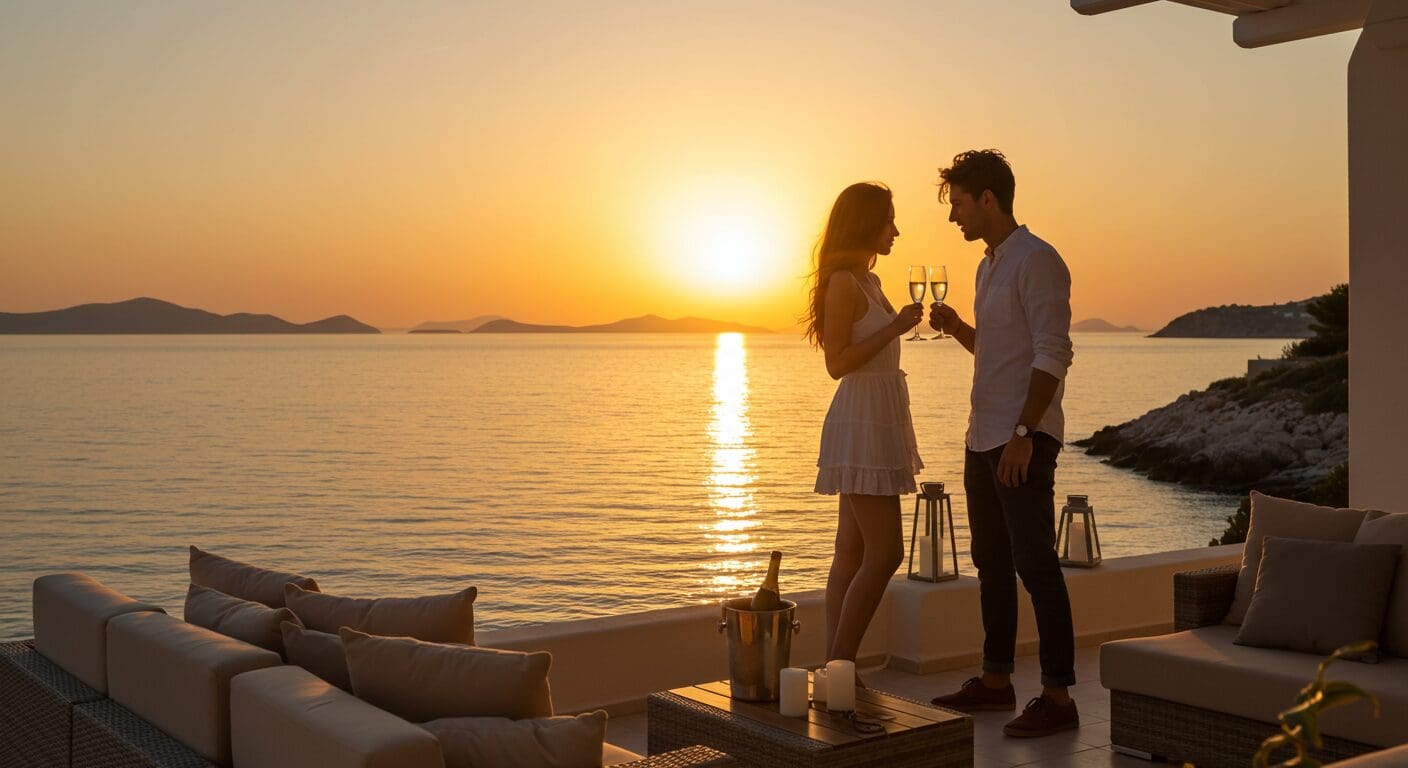
The northern coast, particularly around Ban Tai and the elevated hillsides above it, offers some of the most reliably breathtaking views on the island. Watching the sun drop into the Gulf of Thailand from a high vantage point – ideally with a glass of something cold, ideally without a tour group materialising around you – is the kind of experience that recalibrates your entire sense of what matters. It’s hard to be petty about anything after that.
Koh Nang Yuan, accessible by boat, is the kind of place that exists primarily to make people feel that the world is fundamentally generous. A trio of tiny islands connected by white sand bars, surrounded by clear water in every direction – it photographs beautifully and, more importantly, it feels beautiful. Go early, before the day trippers arrive. Bring your own snacks and a certain willingness to simply sit.
The lesser-visited east coast, around Bangrak and beyond, has a quieter, more authentic character than the tourist-heavy south. Long stretches of beach where you might genuinely be alone, fishing boats anchored offshore, and a general sense that life is proceeding according to its own logic rather than yours. That sense of encountering somewhere real – rather than somewhere staged for your consumption – is quietly romantic in its own way.
Temple visits might not appear on most romantic itinerary lists, but the experience of arriving at Wat Phra Yai – the Big Buddha temple – at dusk, when the golden light catches the statue and the crowds have mostly thinned, is one that many couples find unexpectedly moving. Not everything romantic involves a cocktail.
Best Restaurants for a Special Dinner
Ko Samui’s dining scene has evolved well beyond pad thai and buckets – though both remain available should the mood strike. For a genuinely special dinner, the island offers a range of settings and cuisines that will satisfy well-travelled palates.
The most romantically positioned restaurants tend to sit at the water’s edge or on elevated terraces with uninterrupted sea views. Look for establishments along the northern coast that combine Thai-influenced menus with serious wine lists and the kind of service that makes you feel attended to rather than processed. Candlelit tables on stilts over the water, the lap and pull of the tide below you, the occasional distant shimmer of a boat at anchor – this is the context in which even straightforward food becomes memorable.
For something more immersive, many of the island’s luxury villas and resorts offer private dining experiences – a table set on the beach, a bespoke menu prepared by a personal chef, the whole production arranged around the two of you. This is, objectively, difficult to improve upon. If you’re staying in a private villa, your concierge can typically arrange this with minimal fuss and maximum effect.
The island also has a small but genuinely excellent collection of restaurants exploring the intersection of Thai and international cuisines – thoughtful tasting menus, elevated takes on southern Thai dishes, the occasional brilliant use of local coconut, lemongrass, and galangal in ways that manage to feel both rooted and inventive. The food here, at its best, is a reminder that Thai cuisine is one of the most complex and nuanced in the world. That’s not a romantic observation so much as a fact worth stating clearly.
Couples Activities: From Sailing to Spa
A full day’s sailing around the Ang Thong Marine National Park archipelago is one of those experiences that makes all your previous holidays feel slightly underprepared. Sixty-plus islands, impossibly green, rising from water so clear you can see the seabed at depth. Charter a private boat – a catamaran or traditional wooden vessel – and you have the freedom to anchor where you like, swim in coves that see perhaps a dozen people a week, and eat lunch with no other sound than the sea. It’s the kind of day that generates photographs you’ll still be looking at in twenty years.
Ko Samui’s spa culture is, frankly, exceptional. Thai massage has a therapeutic rigour that bears no resemblance to the vague kneading offered at airport wellness centres, and the island’s better spas – many attached to luxury resorts or available as private in-villa services – have elevated the form considerably. A couples’ spa day, combining traditional Thai massage with herbal treatments, scrubs, and perhaps a floating treatment pool, is the sort of indulgence that both parties tend to approach with mild scepticism and leave with a conspicuously improved outlook on life.
Cooking classes are underrated as a couples activity, largely because they involve both collaboration and eating, which covers most of the bases. Ko Samui offers a range of Thai cooking experiences, from morning market visits to full-day classes where you learn to make the pastes from scratch. There is something quietly satisfying about mastering a green curry with your partner and then eating the evidence. The classes also give you something to talk about at dinner parties for the next several years, which is either a benefit or a drawback depending on your social circle.
Kayaking through the mangroves, sunset cocktail cruises, snorkelling in the marine park, paddleboarding along quieter stretches of coast – Ko Samui offers enough variety to fill a fortnight without repetition. The trick is resisting the urge to fill every hour. The most romantic moments here tend to arrive unscheduled.
Most Romantic Accommodation Areas
Where you stay in Ko Samui matters more than visitors often realise. The island is large enough that the character shifts considerably depending on your location, and for romantic stays, some areas are markedly better suited than others.
The north coast – particularly the stretch around Choeng Mon and the northeast tip – is widely considered the most refined part of the island. Quieter beaches, calmer waters, a collection of high-end villas and boutique resorts, and a general absence of the nightlife noise that characterises the south. For couples on a honeymoon or anniversary trip, this is typically the right area. The sunsets here are watched rather than performed.
The hillside properties above the northern and eastern coasts offer something different again: elevated panoramic views, greater privacy, the theatrical quality of being above it all. A villa perched on a hillside with an infinity pool that appears to pour directly into the Gulf of Thailand is not a modest experience. It is also, for those keeping score, extremely difficult to be unhappy in.
Maenam, on the north coast, has a gentle, unshowy quality that appeals to couples who want beautiful surroundings without the performance of a luxury resort. Long, relatively quiet beach, a handful of very good restaurants, the kind of local market that sells things people actually need rather than souvenirs. It retains a texture that the more developed areas have polished away.
For the full guide to neighbourhoods, beaches, and what to expect across the island, the Ko Samui District Travel Guide covers the geography in considerably more detail.
Proposal-Worthy Spots
Ko Samui provides no shortage of settings that make a meaningful question easier to ask. The challenge, if anything, is narrowing it down.
A private beach at sunset – and there are several that can be arranged through villa concierge services or private boat charter – remains the most reliably effective context. Not because it’s conventional, but because the combination of beauty, privacy, and the particular quality of evening light on that coast creates a moment that’s very difficult to misread. The sunset doesn’t know it’s doing anything significant. It just does it anyway.
The viewpoints above the island’s interior – accessible by scooter or arranged vehicle, particularly around the central highlands – offer a different kind of drama: the whole island visible below, the sea on multiple sides, the temples and coconut groves laid out beneath you like a map of somewhere you’d like to spend your life. Several couples have proposed here. There’s a reason for that.
For those who prefer something more orchestrated, a private dinner on your villa terrace – arranged with the kind of attention to detail that Ko Samui’s best villa management teams excel at – allows for a completely private, entirely tailored proposal experience. Champagne already chilled. Flowers already placed. Staff who know when to appear and when to disappear entirely. It’s not subtle. But then, proposals rarely benefit from subtlety.
Anniversary Ideas and Honeymoon Considerations
Ko Samui earns its reputation as a honeymoon destination honestly. It has the ingredients – beauty, privacy, warmth, culinary sophistication, and activities that range from genuinely adventurous to horizontal – and the infrastructure to deliver them reliably. For couples arriving from the northern hemisphere in the depths of winter, the sight of 30-degree sunshine and a private pool can produce an almost medical sense of relief.
For honeymoons, the recommendation is straightforward: private villa over resort, every time. The ability to exist entirely on your own terms – to eat when you’re hungry, swim when you feel like it, have the chef prepare something specific because you asked – creates an atmosphere that shared resort spaces simply cannot replicate. Honeymooners staying in private villas consistently describe a quality of relaxation and connection that surprises them. It shouldn’t, but it does.
For anniversaries, Ko Samui rewards couples returning for a second or third time. The island reveals itself gradually, and there’s always another beach, another viewpoint, another restaurant you didn’t find the first time. An anniversary trip might combine a revisit to somewhere significant from a previous trip with the deliberate discovery of something entirely new – a different part of the island, a cooking experience you skipped before, a full day on the water you kept meaning to book. The island is patient. It will wait.
The best time to visit for romantic purposes is broadly November through April – the Gulf of Thailand coast is typically drier and calmer during this period, and the light has a quality in the cooler months that photographers describe with noticeable emotion. May through October brings the rainy season, which on Ko Samui means dramatic skies, occasional heavy showers, and significantly lower prices. The rain, it should be noted, is warm. Some couples find it very atmospheric. Others book for February and have done with it.
The Romantic Base You Actually Deserve
All of the above – the sunsets, the sailing, the spa days, the private dinners – is made considerably more meaningful by where you come home to each evening. Ko Samui’s villa rental market has reached a level of quality and variety that makes choosing the right property a genuine pleasure rather than a compromise. Clifftop villas with private pools and unbroken sea views. Beachfront properties where your morning involves walking directly from bed to sand. Hillside retreats with outdoor living areas and the kind of silence that city-dwellers have almost forgotten is possible.
A luxury private villa in Ko Samui District is the ultimate romantic base – the space and privacy to be entirely yourselves, in one of the most beautiful island environments in Southeast Asia. Everything else is logistics. The villa is the point.
When is the best time of year to visit Ko Samui District for a romantic trip or honeymoon?
The most reliably good weather falls between November and April, when Ko Samui’s Gulf of Thailand coastline tends to be dry, calm, and bathed in the kind of clear light that does justice to the surroundings. December through March is peak season and particularly popular for honeymoons, so booking well in advance – especially for private villas – is strongly advised. If you’re flexible on timing and budget, the shoulder months of November and April offer excellent conditions with slightly fewer visitors. The rainy season runs roughly May to October and brings occasional heavy showers, but also lower prices, lusher landscapes, and a quieter, more local atmosphere that some couples find genuinely appealing.
Is a private villa or a resort better for a honeymoon in Ko Samui?
For most couples, a private villa is the better choice for a honeymoon. The key difference is autonomy – in a private villa, you set the schedule, you control the environment, and you aren’t sharing your most memorable week of the year with a hundred other guests competing for sun loungers and breakfast tables. Many Ko Samui villas come with private pools, dedicated staff, in-villa chefs, and concierge services that can arrange everything from boat charters to couples’ spa treatments. Resorts have their advantages – a broader range of on-site dining and activities, for instance – but for genuine privacy and the kind of intimacy a honeymoon deserves, a well-chosen villa is difficult to improve on.
Which area of Ko Samui District is most romantic for couples?
The north and northeast of the island – particularly around Choeng Mon, Maenam, and the hillside areas above them – are generally considered the most romantic and refined parts of Ko Samui. These areas have calmer, cleaner beaches, a higher concentration of luxury villas and boutique properties, and a noticeably quieter atmosphere compared to the busy southern coast around Chaweng and Lamai. For couples prioritising privacy, beautiful views, and a relaxed pace, the north coast consistently delivers. If panoramic views and dramatic elevation appeal, the hillside villa properties above the northern coast offer something exceptional – particularly at sunset, when the light across the Gulf of Thailand is genuinely difficult to describe without sounding like a travel brochure.


