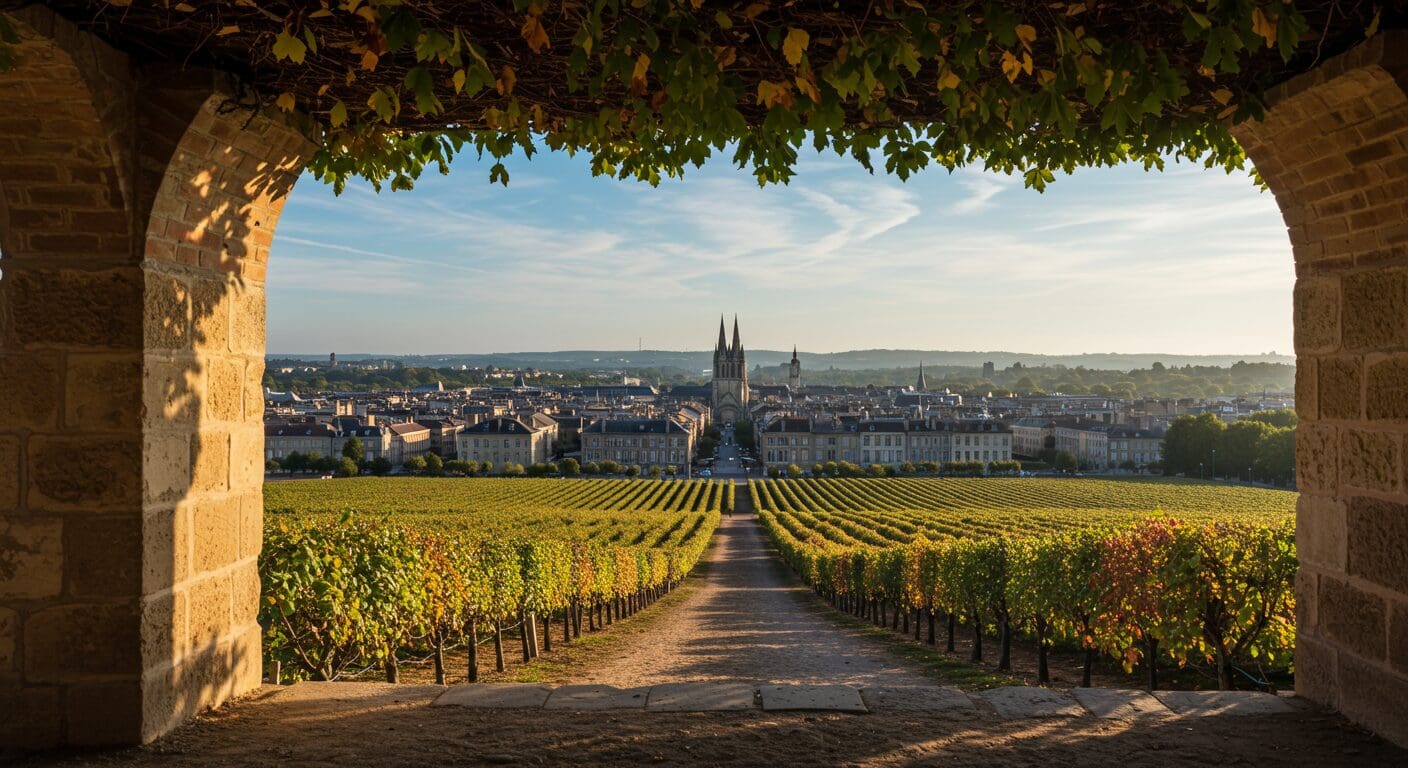
Bordeaux Travel Guide: Where to Stay, Eat & Explore in Luxury
Here is a confession most wine writers won’t make: Bordeaux is not, primarily, about wine. Or rather, it isn’t only about wine – though you’d be forgiven for assuming otherwise given the way the city has been mythologised into a kind of vinous Valhalla for people who own proper glassware. The truth is that Bordeaux is one of the most liveable, walkable, historically layered and genuinely beautiful cities in Europe, and its greatest pleasure isn’t a 2010 Pauillac – it’s the cumulative experience of a place that has been doing elegance so long it no longer has to try. The wine is wonderful. But so is everything else. This tends to surprise people.
It also tends to surprise people that Bordeaux suits such a wide range of travellers. Couples marking a significant birthday or anniversary find it near-perfect – the food alone justifies the flight. Multi-generational families and groups of friends renting a private villa in the surrounding countryside discover a rhythm entirely their own: mornings by the pool, afternoons on a château visit, evenings that drift pleasantly past midnight. Remote workers – and there are more of them here than you might expect – find the Gironde’s combination of high-speed connectivity, exceptional food and an unhurried pace something close to ideal. Wellness-focused guests come for the vineyard thermal spas, the cycling routes through vine country and the particular quality of silence you only get somewhere genuinely away from things. Bordeaux, in other words, doesn’t have a type. It merely has standards.
Getting Here Is Easier Than the Wine List Suggests
Bordeaux-Mérignac Airport sits roughly twelve kilometres southwest of the city centre – close enough that you won’t spend the first hour of your holiday in a taxi, which is already a promising start. It’s served by direct flights from most major European cities, and connections from London (both Heathrow and City), Amsterdam, Madrid and beyond make it genuinely accessible without requiring the kind of schedule rearrangement usually reserved for weddings. Ryanair, easyJet, Transavia and Air France all operate routes here, so the competition keeps fares reasonable even in high season.
From the airport, a taxi to the city centre takes around 25 minutes on a clear run. The tram line (Line A) also connects the airport to the city, which is useful to know and almost no one uses it with luggage. If you’re heading directly to a villa in the Médoc, Saint-Émilion or the Entre-Deux-Mers regions – as many guests of luxury villa rentals in Bordeaux do – a private transfer is both the most sensible and the most agreeable option. Bordeaux is also accessible by TGV from Paris Montparnasse in just over two hours, which remains one of France’s more civilised facts. Within the region, a hire car is close to essential. The vineyards are beautiful, the villages are spread across rolling countryside, and the bus service, while it exists, operates on its own philosophical timetable.
Where to Eat in Bordeaux – From Michelin Stars to Market Stools
Fine Dining
Bordeaux’s restaurant scene has matured considerably in the past decade, moving beyond its reputation as merely a place to drink well into somewhere you genuinely eat well too. The proof is in the starred tables, and there are several worth the reservation battle.
Maison Nouvelle, Chef Philippe Etchebest’s two-Michelin-star address in the Chartrons district, is the kind of restaurant that reminds you why fine dining exists. Etchebest – a former MMA fighter turned Bocuse d’Or medalist, which is exactly the kind of biography Bordeaux would produce – brings precision and genuine emotion to South-West French produce. Every plate is a considered argument. The atmosphere is intimate without being hushed, and the service has the rare quality of making you feel attended to rather than managed. Book early. Book very early.
For something equally accomplished but perhaps more quietly poetic, Soléna – the one-starred restaurant run by Chef Victor Ostronzec – operates behind an almost deliberately understated façade in central Bordeaux. The cooking here leads with feeling: seasonal ingredients handled with the kind of restraint that looks simple and isn’t. The sort of meal you find yourself describing to people for weeks afterwards.
Away from the city itself, La Grand’Vigne at Les Sources de Caudalie, deep in the Pessac-Léognan vineyards, holds two Michelin stars and operates in a setting that borders on the unfair. Surrounded by vines, with the château’s wine programme woven seamlessly into the experience, it is the definitive argument for combining a great meal with a great location. Reservations fill quickly – sometimes months in advance – so plan accordingly.
Le Cent 33, awarded its Michelin star in 2016 under Chef Fabien Beaufour, offers a sleek yet welcoming interior and the kind of gastronomic cooking that works as well for a landmark occasion as it does for an indulgent Tuesday. And then there is Le Pressoir d’Argent – Gordon Ramsay’s celebrated fine-dining address at the Grand Hôtel de Bordeaux on Place de la Comédie – where exceptional tasting menus meet wine pairings curated with the seriousness the location demands. Whether you approve of the celebrity chef model or not, the execution here is difficult to fault.
Where the Locals Eat
The Marché des Capucins is the city’s great leveller – a covered market where Bordeaux comes to eat, argue gently about oysters and drink white wine before ten in the morning with an air of complete self-possession. The oyster bars here are exceptional: Arcachon oysters, freshly opened, with rye bread and a glass of Entre-Deux-Mers. This is the local version of breakfast and it is vastly superior to the alternatives.
The Saint-Pierre quarter, huddled between the cathedral and the river, is where you’ll find terraces that fill early and stay full late. This is bistro territory – steak with sauce Bordelaise, duck confit that has been given the respect it deserves, tarte aux pruneaux for those who haven’t yet been persuaded that canelés are the only dessert that matters. The wine bars here stock local bottles at prices that make you momentarily forget what you paid for dinner the night before.
In the Chartrons neighbourhood – the old wine merchants’ quarter, now quietly gentrified into the sort of place that sells both antiques and artisan coffee – Sunday mornings have a particular quality. The Marché des Chartrons lines the quays with organic produce, local cheeses, ceramics and more honey than one neighbourhood could reasonably need. It is extremely pleasant. You will buy things you didn’t intend to.
Hidden Gems Worth Seeking Out
The wine bar culture in Bordeaux is seriously underrated. Small, serious establishments scattered across the city stock Bordeaux appellations you’ll never find in a supermarket and aren’t featured on any tourist map – Fronsac, Graves, Côtes de Bourg – poured by people who will talk about them with the slightly terrifying depth of knowledge that is the native Bordelais’s birthright. These are not the places with chalkboards and fairy lights. They have regulars who have been coming since before you were born, and they will tolerate you cheerfully provided you show appropriate respect for what’s in the glass.
The village of Saint-Macaire, less than an hour south of Bordeaux, has a medieval centre almost entirely devoid of tourist infrastructure and a handful of quietly excellent local restaurants operating on the reasonable assumption that good food needs no marketing. It also has intact medieval ramparts and a view over the Garonne that has been largely undiscovered by everyone except the people who live there. Keep it that way.
The Landscape Around Bordeaux – More Than Vines, Though the Vines Are Very Good
The Gironde department is, geographically, an exercise in unhurried abundance. The city sits at the confluence of the Garonne and the Dordogne, where they merge into the Gironde estuary – one of the largest in western Europe and a body of water that gives the whole region its particular light quality, that soft Atlantic diffusion that makes everything look slightly more beautiful than it probably deserves.
To the north lies the Médoc peninsula: a long, flat finger of land between the estuary and the Atlantic, covered in vines and punctuated by the great classified châteaux – Margaux, Pauillac, Saint-Julien, Saint-Estèphe. The landscape here is famously unspectacular in topographical terms. No dramatic hills, no sweeping panoramas. Just gravel soil, vine rows and the occasional château that looks as though it has been placed there specifically to make you feel underdressed. The drama is all in the glass.
East of Bordeaux, Saint-Émilion sits on limestone hills above the Dordogne valley – a UNESCO-listed medieval village that manages the difficult trick of being genuinely beautiful while also being genuinely visited. The underground monolithic church, carved from a single limestone rock, is extraordinary. The surrounding vineyards, producing some of the most sought-after Merlot-dominated wines in the world, can be explored on foot, by bicycle or, increasingly, by electric bike for those who prefer to arrive at the next château in a presentable state.
Further south, the Arcachon Basin offers something entirely different: a shallow inland sea, oyster beds, pine forests and the Dune du Pilat – Europe’s tallest sand dune, rising 110 metres from the edge of a pine forest, offering views over the Atlantic that are frankly implausible. It takes about 40 minutes by car from Bordeaux and feels like a different country.
Things to Do That Aren’t Just Drinking Wine (Though That Counts Too)
A luxury holiday in Bordeaux has more layers than the region’s geology, which is saying something. The activities available range from the intellectually absorbing to the unambiguously hedonistic, often within the same afternoon.
La Cité du Vin is the obvious starting point for anyone with even a passing interest in wine – and even those without one. This extraordinary Frank Gehry-adjacent building on the banks of the Garonne has welcomed over 3.5 million visitors since opening, and its Via Sensoria tasting trail is genuinely immersive rather than the educational obligation you might expect. The visit concludes on the panoramic belvedere at the top of the building, where an oenologist selects fifteen or so wines daily for tasting with views across the city. It is one of Bordeaux’s most considered experiences and consistently underestimated.
A sightseeing cruise on the Garonne River offers the city from an angle most visitors miss. The stone façades of the 18th-century quays, the Place de la Bourse reflected in the Miroir d’Eau, the sweep of the river as it curves toward the estuary – these are not things you can fully appreciate from the street. A glass of wine and a canelé in hand, live commentary playing quietly in the background: this is the Bordeaux travel guide experience most people wish they’d booked on day one rather than the last afternoon.
Château visits are, naturally, central to the Bordeaux experience. Beyond the famous names of the Médoc and Saint-Émilion, the smaller appellations – Pomerol, Lalande-de-Pomerol, Castillon Côtes de Bordeaux – offer visits that are less stage-managed and more genuinely personal. Some châteaux offer private tours and tastings that bear no resemblance to the group tour model; a good villa concierge will know which ones.
Cycling through vine country is one of those activities that sounds obligatory and turns out to be genuinely excellent. The routes are largely flat, the lanes are quiet, and stopping at a château to taste wine after thirty minutes of gentle pedalling is a life choice that requires no justification whatsoever.
Adventure in the Gironde – Sand, Sea and Surprisingly Good Surfing
The Atlantic coast an hour west of Bordeaux is one of Europe’s great surfing stretches – long, clean swells rolling in from the open ocean, beach breaks at Lacanau and Hossegor that attract serious surfers from across the continent and offer lessons for those who consider themselves beginners and would like to become intermediate beginners by the end of the week. The water is cooler than the Med and the waves are considerably more interesting.
Cycling infrastructure across the region has expanded significantly in recent years. The Route des Vins à Vélo in Saint-Émilion takes you through UNESCO-listed vineyard landscapes on well-maintained dedicated paths, while the Voie Verte trail network connects villages, forests and river banks in a way that makes a hire car feel briefly unnecessary. Briefly.
Kayaking and stand-up paddleboarding on the Arcachon Basin offer access to the oyster beds, the Bird Island nature reserve and the extraordinary landscape of the Cap Ferret peninsula – a thin strip of land between the basin and the ocean that operates at a distinctly leisurely pace and produces some of the finest oysters in France. The combination of physical activity and outstanding shellfish is, it turns out, a very good one.
For those who prefer their adventure with an altitude component, paragliding from the Dune du Pilat offers a perspective over the Atlantic and the pine forests of the Landes that is, without exaggeration, one of the more memorable things you can do in southwest France. The dune itself is worth climbing even without the paraglider – though it is substantially more work than it appears from the bottom.
Golf is well-served across the region: the Golf de Bordeaux-Lac offers a parkland course close to the city, while several château estates have private courses that can be arranged through villa concierge services. Horse riding through vineyard landscapes is also available and considerably more refined than it sounds.
Bordeaux with Children – Better Than You’d Think and Then Some
Bordeaux is, against all reasonable expectation for a city whose identity is built around alcohol, excellent for families. The old city is compact and largely walkable, the riverfront is flat and buggy-friendly, and the pace of life is calibrated towards long lunches and extended afternoons rather than the frantic schedules that exhaust children and parents in equal measure.
La Cité du Vin has dedicated family programming and interactive elements that engage children who have not yet developed opinions about tannins. The Miroir d’Eau – the vast reflective water feature in front of the Place de la Bourse – is effectively a free water park from May through September, where children of every age run through the mist jets with the single-minded enthusiasm that water and hot days reliably produce. Grandparents watch from café terraces. This is the natural order of things.
The Arcachon Basin is a family destination of genuine quality: safe, shallow swimming, boat trips to the oyster beds, sandcastles at the foot of the Dune du Pilat and the specific joy of watching children attempt to climb a sand dune and slide back to the bottom before trying again. It doesn’t age.
For families renting a luxury villa in Bordeaux, the private pool element transforms the holiday calculus entirely. While adults sit on a shaded terrace with something cold and Bordeaux-produced, children can be safely occupied in the garden for the entire afternoon without anyone needing to negotiate towel space or queue for a sun lounger. The value of this cannot be overstated and should be weighed against every alternative accommodation option with appropriate seriousness.
History, Architecture and the Things Bordeaux Does With Stone
Bordeaux was, for a significant portion of its history, one of the most important ports in the western world. The wealth this generated between the 16th and 18th centuries – much of it, it must be said, from the slave trade and sugar, which the city has only relatively recently begun to fully reckon with – produced an urban centre of remarkable architectural coherence. The 18th-century city, built almost entirely in golden limestone from the region’s own quarries, was awarded UNESCO World Heritage status in 2007. Walking through the streets around the Grand Théâtre, the Allées de Tourny and the Place de la Comédie, it is easy to understand why.
The Grand Théâtre itself, completed in 1780 and designed by Victor Louis, was the architectural inspiration for the Paris Opéra Garnier. It remains one of the finest neoclassical buildings in France – which is a category with extraordinarily stiff competition. Tours are available, and performances are worth attending if dates align.
Saint-Émilion’s medieval heritage extends underground: the Monolithic Church, carved over several centuries directly from the limestone plateau, is one of the largest underground churches in Europe. The catacombs and hermitage caves beneath the village add another layer to a settlement that has been continuously inhabited since Roman times.
The CAPC Museum of Contemporary Art, housed in a 19th-century warehouse on the Chartrons quays, offers one of France’s better contemporary art collections in a space that makes most purpose-built galleries look under-imagined. The building itself – the vast nave of the former warehouse – is as arresting as anything on the walls. There is also a very good café. These things matter.
The Fête du Vin, held every two years along the Bordeaux quays, transforms the riverfront into the world’s largest wine tasting event – over 300,000 visitors, 85 appellations, concerts and a general atmosphere of suspended reality. The Fête le Fleuve alternates with it in the off-years, celebrating the river itself with boats, music and the kind of public festivity the French execute with a naturalness that makes everyone else look like they’re trying too hard.
Shopping in Bordeaux – Bottles, Boutiques and Canelé Tins
The obvious answer to the question of what to buy in Bordeaux is wine, and the obvious answer is correct. The négociants of the Chartrons district have been trading Bordeaux wine for centuries, and several still operate shops that offer bottles unavailable through standard retail channels. The Vinothèque de Bordeaux on the Cours du 30 Juillet is a reliable starting point for serious purchasing; the wine merchants clustered around the Place du Parlement offer a more intimate experience with a higher probability of leaving with something unexpected.
Canelés – the small, burnished, custardy cakes with a caramelised exterior that are Bordeaux’s most emphatic contribution to French pastry – are available everywhere and should be consumed immediately rather than packed for the return journey, where they will deteriorate into a dim shadow of what they once were. If you insist on taking them home, buy them on the morning of departure from one of the specialist pastry shops around the Marché Victor Hugo.
The Rue Sainte-Catherine – Europe’s longest pedestrian shopping street at nearly 1.2 kilometres – covers the full spectrum from high street chains to independent boutiques, with everything in between. The streets fanning off it into the Saint-Pierre quarter contain the more interesting independent retail: ceramics, textiles, wine accessories and the kind of French kitchen equipment that makes your kitchen at home look both functional and slightly apologetic.
For antiques and vintage finds, the Chartrons district on a Sunday morning is the definitive Bordeaux experience. The dealers here specialise in wine-related antiques – corkscrews, decanters, château memorabilia, 19th-century label printers – alongside furniture, art and objects that cover the full range of interesting to inexplicable. The atmosphere is distinctly Bordelais: knowledgeable, unhurried and with the implicit suggestion that you should have arrived earlier.
Practical Details for the Intelligent Visitor
France operates on euros. Tipping is appreciated but not expected at the level that visitors from the United States or the United Kingdom might assume. Leaving a few euros on a café table or rounding up at a bistro is entirely appropriate; the percentage-based tipping mathematics of other countries is not required and will occasionally bewilder your server.
The best time to visit Bordeaux for a luxury holiday depends on what you’re after. June and September offer the ideal balance: warm and settled weather, comfortable temperatures for both city exploration and outdoor activities, and the vine-growing season at its most visually compelling. July and August bring the full heat of the Gironde summer – perfectly pleasant if you have a pool, somewhat oppressive if you’re spending extended time on stone streets in direct sun. The harvest (vendanges) in September and October is the definitive wine tourism season, with the vines turning gold and the châteaux in full productive intensity. Spring – April through May – is underrated: mild, green and largely uncrowded.
French is the language of Bordeaux. English is widely spoken in hotels, restaurants and tourist contexts, but making a genuine effort with basic French will be received with warmth rather than the theatrical indifference that is Bordeaux’s undeserved reputation. In wine contexts especially, a few words of attempted French will be met with gratifying generosity.
Bordeaux is a safe city by any reasonable measure. As with any urban destination, normal awareness applies in crowded public spaces and on public transport. The old city at night is animated rather than intimidating, and the surrounding countryside presents no particular safety considerations beyond the standard rural practicalities.
Driving in France requires a full licence, and the blood alcohol limit is lower than in the UK – a relevant consideration given what you’ll be tasting. Many villa guests sensibly arrange drivers for château visits. It is a decision that improves the day considerably.
Why a Private Villa in Bordeaux Transforms the Entire Experience
There is a version of Bordeaux that involves a city-centre hotel, a fixed breakfast at an assigned time, a lobby you share with a coach tour group and a pool – if there is one – that operates on a towel reservation system of Byzantine complexity. This is a perfectly functional way to visit Bordeaux. It is not, however, the right way.
A luxury villa in the Bordeaux region offers something categorically different. Space, to begin with – the kind that allows a family of eight or a group of friends to share a building without developing the particular tensions that come from sharing two hotel rooms. Private pools that are yours, entirely, from the moment you arrive until the moment you leave. Mornings that begin at whatever time you decide, with coffee on a terrace looking over vines or farmland or countryside that has no particular agenda beyond being beautiful.
The privacy of a villa in the Gironde is one of its most underestimated qualities. There is no checkout time anxiety, no minibar calculation, no negotiating your dinner plans around the hotel restaurant’s last orders. Your villa is your base, and the entire region extends from it on your own terms. Couples marking a significant occasion find this combination of intimacy and autonomy close to ideal. Multi-generational families discover that separate wings and shared outdoor spaces resolve in one architectural stroke the tension between togetherness and privacy that no hotel can adequately address.
For remote workers and digital nomads, many of the better Bordeaux villa rentals now feature reliable high-speed broadband as standard, with Starlink connectivity increasingly available in more rural locations. The combination of fast internet, a private study or garden workspace and the particular quality of a Bordeaux afternoon as a reward for the working day is, frankly, a more compelling productivity environment than most offices.
Wellness-focused guests find that a private villa with a pool, outdoor space and access to the region’s thermal spas – most notably the extraordinary Caudalie Vinothérapie Spa at Sources de Caudalie, which uses grape-derived polyphenols in its treatments with genuine scientific credibility – constitutes a retreat of real quality. Add morning cycling through vineyard lanes and evenings on a private terrace with a bottle of something exceptional, and the wellness argument becomes overwhelming.
Many villa rentals in the region include staff options: private chefs who source ingredients from the local markets and cook dinner in your kitchen while you open the wine, housekeeping teams who operate invisibly, concierge services that can arrange château visits, restaurant reservations and private boat hire on the Arcachon Basin with the ease of someone who has done it a hundred times. Because they have.
Excellence Luxury Villas has an extensive collection of private villa rentals in Bordeaux, ranging from intimate properties for couples to grand estate houses that accommodate large groups with room to spare. Each property is selected for the quality of its facilities, its location and the particular character that makes Bordeaux so difficult to leave.
More Bordeaux Travel Guides
- Best Restaurants in Bordeaux: Fine Dining, Local Gems & Where to Eat
- Bordeaux Food & Wine Guide: Local Cuisine, Markets & Wine Estates
- Bordeaux with Kids: The Ultimate Family Holiday Guide
- Best Time to Visit Bordeaux: Month by Month Weather, Crowds & Tips
- Bordeaux Luxury Itinerary: The Perfect 7-Day Guide
- Romantic Bordeaux: The Ultimate Couples & Honeymoon Guide
What is the best time to visit Bordeaux?
June and September are the sweet spot for most visitors – warm, settled and uncrowded relative to peak July and August. The harvest season from mid-September through October is the definitive wine tourism window, with golden vines, château activity at full intensity and a distinctly festive atmosphere across the region. Spring (April to May) offers mild temperatures and green landscapes with significantly thinner crowds. Winter is quiet and cooler but atmospheric, particularly in the city, and often the best time to secure restaurant reservations at the top tables.
How do I get to Bordeaux?
Bordeaux-Mérignac Airport is the main gateway, located around 12 kilometres from the city centre and served by direct flights from most major European cities including London, Amsterdam, Madrid and Paris. Flight time from London is approximately one hour and 40 minutes. Bordeaux is also accessible by TGV high-speed train from Paris Montparnasse in just over two hours – one of France’s most convenient rail connections. For villa guests heading directly into the countryside, a private transfer from the airport is the most comfortable option and can be arranged through your villa provider.
Is Bordeaux good for families?
Genuinely excellent, despite its vinous reputation. The city’s old quarter is compact and flat, ideal for walking with children. The Miroir d’Eau water feature in front of the Place de la Bourse functions as a free outdoor water attraction in summer. La Cité du Vin has dedicated family programming. The Arcachon Basin – around an hour west – offers safe swimming, boat trips, oyster beds and the Dune du Pilat, which entertains children for longer than you’d expect. Families renting a private villa with a pool gain the additional advantage of a private outdoor space that removes the logistics of shared hotel facilities entirely.
Why rent a luxury villa in Bordeaux?
The advantages are both practical and experiential. A private villa gives you space that no hotel room can match, a private pool that is yours alone, and the freedom to set your own schedule without the constraints of hotel mealtimes, checkout pressures or shared facilities. For groups and families, the cost per head often compares favourably with equivalent hotel accommodation. Staff options – private chefs, housekeeping, concierge – mean the level of service can exceed most hotels while the privacy remains absolute. The Bordeaux vineyard countryside also contains properties that simply cannot be replicated in a hotel context: farmhouses, wine estate annexes and grand country houses set among vines with views that take some absorbing.
Are there private villas in Bordeaux suitable for large groups or multi-generational families?
Yes, and this is one of the region’s genuine strengths. The Gironde contains a significant number of larger estate properties – some with multiple buildings or converted outhouses on the same grounds – that can accommodate groups of 10 to 20 or more without anyone feeling crowded. Separate wings or adjacent cottages allow different generations to share a property while maintaining their own space and rhythms. Private pools, large outdoor dining areas and extensive grounds make these properties particularly well-suited to groups who want to spend time together and apart with equal ease. A good villa concierge can also arrange catering, private transport and group activities that function at scale.
Can I find a luxury villa in Bordeaux with good internet for remote working?
Increasingly, yes. High-speed fibre broadband is now standard in well-managed luxury villa rentals across the Bordeaux region, and Starlink satellite connectivity has significantly improved options in more rural and vineyard locations where terrestrial infrastructure is less reliable. When booking, it’s worth confirming upload and download speeds specifically if video conferencing is a requirement. Many of the better properties also offer dedicated workspace areas – studies, garden offices or quiet salons – separate from the main living spaces, which makes the working day meaningfully more productive and the transition to afternoon wine tasting meaningfully more satisfying.
What makes Bordeaux a good destination for a wellness retreat?
Several things converge here that are hard to replicate elsewhere. The pace of life in the Gironde countryside is genuinely unhurried in a way that recalibrates rather than just relaxes. The region’s thermal spa offering is exceptional – the Caudalie Vinothérapie Spa at Sources de Caudalie pioneered grape-derived treatments and remains one of Europe’s most distinctive wellness destinations. Cycling routes through vineyard landscapes offer low-impact outdoor activity in genuinely restorative surroundings. Private villa pools allow for morning swimming, yoga on a terrace and days that begin and end on your own terms. Add the quality of local food and the meditative quality of a long, slow dinner with good wine, and the wellness case for Bordeaux becomes considerably stronger than the destination’s reputation might suggest.