
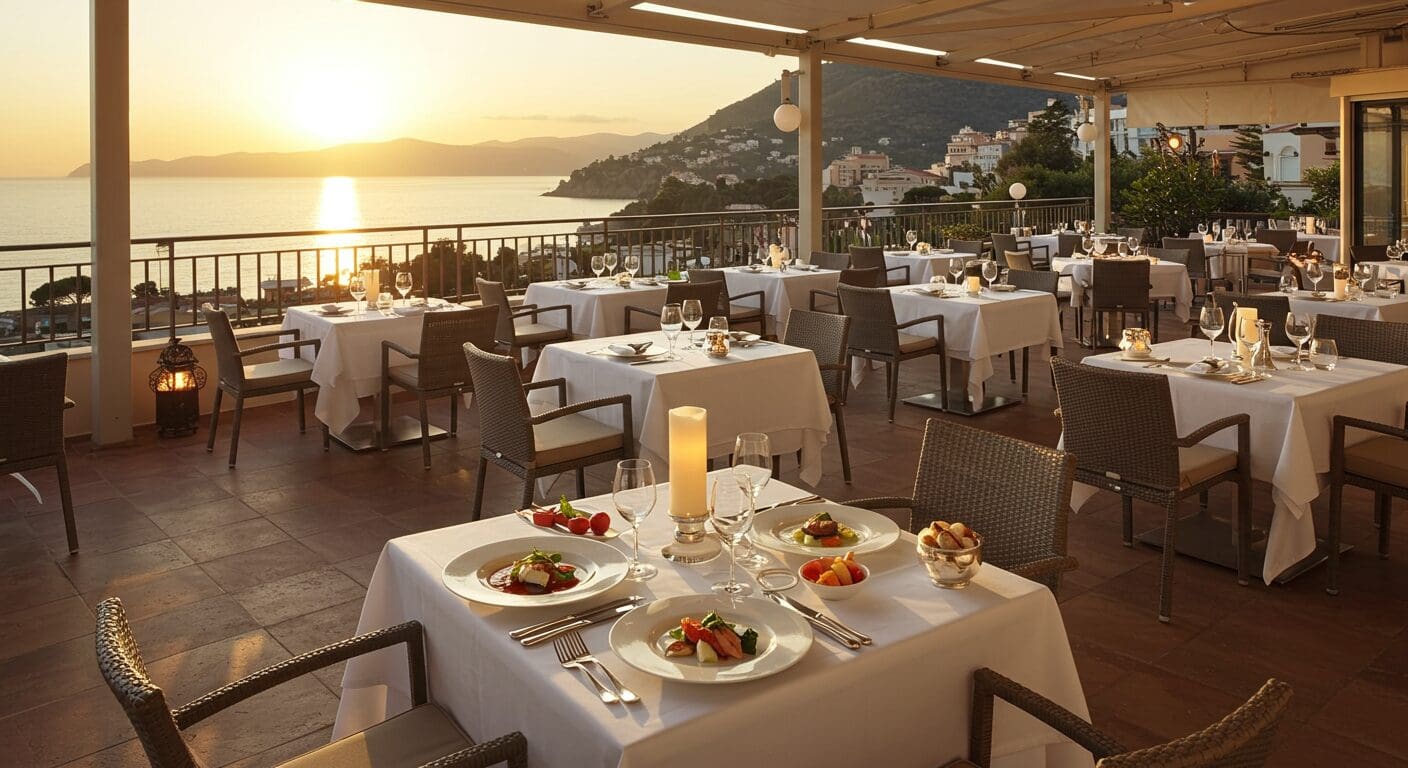
Best Restaurants in Javea: Fine Dining, Local Gems & Where to Eat
There is a particular hour in Javea – somewhere between seven and eight in the evening – when the smell of garlic hitting olive oil drifts out from every doorway along the old town streets, and the air carries a faint trace of sea salt from the harbour a short walk away. The light has gone amber. The locals have emerged. The tourists who arrived at noon with sunburned ambition are now, wisely, sitting down. This is the hour Javea belongs to the table. And what a table it is.
For a town that receives its fair share of visitors, Javea has managed something quietly remarkable: it has held onto its culinary soul. This is a place where two-Michelin-starred restaurants coexist with family-run rice shacks where the menu hasn’t changed in thirty years, and where both are, in their own way, entirely worth your evening. Knowing which one to choose on which night – and what to order when you get there – is really the whole game. This guide will help you play it well.
Fine Dining in Javea: The Michelin Standard
Let’s begin where the serious business happens. BonAmb holds two Michelin stars and three Repsol Suns, and if you know what those numbers mean, you’re already reaching for your phone to make a reservation. Run by chef Alberto Ferruz, BonAmb is widely regarded as the gastronomic crown jewel of the Costa Blanca – a restaurant that takes the culinary history and landscape of Javea itself as its primary ingredient. The tasting menus are exercises in precision and restraint, showcasing seasonal, local produce in ways that make you consider very carefully whether you’ve ever actually eaten a prawn before. You haven’t. Not like this.
What distinguishes BonAmb from the category of “fine dining destination you feel obligated to visit” is that it genuinely rewards curiosity. The dishes are rooted in Mediterranean tradition – this isn’t molecular theatre for its own sake – but they carry an intellectual rigour and a lightness of touch that feels wholly specific to this coast, this climate, these waters. Tasting menus change with the seasons, and the wine pairings are handled with the kind of confidence that makes you feel very well looked after. Booking well in advance is not a suggestion. It is a condition of participation.
For a fine dining experience that operates at a slightly different register – younger, more informal in atmosphere but no less serious in the kitchen – Tula (known locally as El Tula) is one of the most talked-about contemporary restaurants in the region. Chef Borja Susilla and his partner Clara Puig have built something genuinely special here: a small, warmly run establishment recognised with Two Repsol Suns, where the cooking is creative, market-led, and deeply attentive to local ingredients. The kind of place that reminds you why you sought out good food in the first place. Reservations are strongly advised.
Contemporary Local Cooking: The Rising Stars
Volta i Volta is the sort of restaurant you hope to stumble upon and almost never do – which is why you should simply make a note of it now. Opened in 2016 by Margherita (Italian) and Carlos (Valencian), the restaurant has earned its place in the Repsol Guide as a new benchmark for seasonal, product-driven cooking. The pairing of an Italian sensibility with a Valencian one turns out to be less of a fusion exercise and more of a natural conversation – both culinary traditions share an almost religious devotion to the quality of raw ingredients, and that philosophy runs through everything on the plate here.
The menu changes with what’s available and what’s good – which is exactly how it should work, and rarely does. Customers who write reviews online tend to use words like “original” and “well-prepared”, which in the dry accounting of internet feedback actually says quite a lot. A comprehensive lunch menu offers excellent value, while the evening à la carte selection is tight, considered, and entirely worth your time. It seats a relatively small number of covers, so do not simply turn up and hope for the best. The best requires a reservation.
Traditional Valencian Cuisine: Where the Locals Actually Eat
There is a particular pleasure in eating food that has been cooked this way, in this place, for decades – where the recipes have been tested not by critics but by generations of people who actually live here and know exactly what a rice dish is supposed to taste like. Trinquet Restaurant delivers precisely that pleasure. Specialising in fresh fish, seafood, and the rice dishes for which the Valencia region is rightfully famous, Trinquet has long been a firm local favourite and has recently earned the Solete distinction in the 2025 Repsol Guide – a recognition that will come as no great surprise to its regulars, who already knew.
The menu leans into the best of the Javea area’s culinary heritage: arrós a banda, fresh catches brought in from nearby waters, seafood treated with respect rather than elaborate intervention. This is the place to order the rice. Order the rice. If you are on the Costa Blanca and you do not eat rice beside the sea at least once, you have made a significant error and should revisit your priorities accordingly.
Javea’s old town provides additional hunting ground for authentic local eating. The narrow streets between the historic church and the market building shelter a number of small, family-run restaurants where the menus follow the rhythms of the local fishing trade and the daily market. These establishments may not have social media presences worth speaking of. They make up for it in other ways.
International Dining: When the Mood Shifts
Twenty years in the same location serving the same freshly made pasta is its own form of excellence. La Casa della Pasta sits between Javea’s old town and the port, run by an Italian-Dutch couple whose commitment to doing one thing properly has resulted in a 4.5-star rating across more than 900 Google reviews. That kind of consistency is earned slowly and lost quickly – they’ve kept it for two decades. The pasta is made fresh, the risotto is what risotto should be, and the tiramisu arrives with the quiet confidence of a dish that doesn’t need to explain itself. For a night when you want something excellent without ceremony, this is your place.
Beach Clubs and Casual Dining by the Water
Javea’s coastline is divided between three distinct areas – the old town, the port, and Arenal beach – and each has its own eating culture. The Arenal zone, the sandy beach that curves gently around its bay, is home to a line of chiringuitos and beach restaurants where the approach to dining is relaxed in the best sense. Feet in the sand optional. Sunscreen on the menu not listed but implied.
The better beach clubs here take their food seriously – grilled fish, fresh seafood, cold glasses of local white wine – without the performative exclusivity that beach dining can sometimes acquire on other parts of the Spanish coast. There is a certain refreshing lack of velvet ropes in Javea. The focus remains, sensibly, on the food and the view in roughly equal measure. For lunch, a table at one of the waterfront restaurants at the port is one of the most quietly civilised ways to spend an afternoon on the Costa Blanca.
Food Markets and Local Produce
The Javea market runs on Thursdays, and it is worth building your week around it. Held in the old town, it brings together local producers selling vegetables, fruit, olive oil, cheeses, cured meats, and the kind of tomatoes that remind you why tomatoes became a thing worth caring about. The covered market building also operates on a daily basis for fresh produce, fish, and meat – if you are staying in a villa with kitchen access, this is where your private chef (or your own enthusiastic ambitions) should begin.
The local olive oil from the surrounding hills deserves specific mention. So does the locally caught red prawn – gamba roja – which appears on the better restaurant menus and is, at its best, one of the finest things the Mediterranean produces. The esgarraet, a Valencian salad of roasted peppers and salt cod, is a small dish that punches considerably above its weight and should be ordered whenever it appears as a starter.
Wine, Local Drinks, and What to Order
The Valencia region is not, historically, where Spanish wine conversations tend to begin – but it is increasingly where they should. Local white wines from the Marina Alta denomination pair with remarkable ease alongside the seafood and rice dishes that define this coastline. Ask for recommendations at any serious restaurant and you will generally be pointed toward something interesting and local.
Cava, the Spanish sparkling wine, makes an excellent aperitif at any hour that seems appropriate – which on the Costa Blanca is most of them. For something more local still, ask for a glass of mistela, the sweet Valencian wine made from Moscatel grapes, which works brilliantly as a dessert accompaniment. And if someone offers you a hierbas liqueur at the end of a meal, it is both polite and wise to accept it.
For the non-wine drinkers: horchata – the cold, sweet drink made from tiger nuts – is a Valencian institution. It belongs to a different meal occasion than dinner, but if you’re in Javea in summer and haven’t tried it by lunchtime, you’re leaving something important on the table.
Practical Tips: Reservations, Timing, and Eating Well
A few things that will improve your dining experience in Javea considerably. First: eat late. The Spanish dining rhythm is not a cultural quirk for visitors to observe from a distance – it is, in practice, the difference between eating surrounded by other tourists at 7pm and eating among locals at 9pm. The atmosphere at a restaurant at 9:30 on a summer evening in Javea is qualitatively different from the same restaurant two hours earlier. Better in every way.
Second: make reservations. For BonAmb, this means planning weeks in advance. For Tula and Volta i Volta, several days to a week ahead during high season is sensible. For the local favourites and beach restaurants, a call on the morning of the day usually suffices – but don’t leave it to chance in July and August.
Third: lunch is frequently the better deal at Javea’s finer establishments. The menú del día – a set lunch menu typically including multiple courses and a drink – offers remarkable value even at restaurants that would otherwise be considered a special-occasion expense. This is one of Spain’s most underrated gifts to the travelling visitor, and Javea delivers it well.
Finally: if you are staying in a luxury villa in Javea, do consider arranging a private chef for at least one evening. The combination of the local market’s produce, a talented chef working in your villa’s kitchen, and a table set beside your private pool as the sun sets over the Mediterranean is – by any reasonable measure – the finest restaurant in Javea on that particular night. Excellence Luxury Villas can arrange exactly this, and it is an experience that rather recalibrates your expectations for the rest of the trip.
For more on what to see, do, and experience beyond the table, the full Javea Travel Guide covers everything the area has to offer in the depth it deserves.
Does Javea have any Michelin-starred restaurants?
Yes. BonAmb in Javea holds two Michelin stars and three Repsol Suns, making it one of the most highly decorated restaurants on the Costa Blanca. Run by chef Alberto Ferruz, it offers seasonal tasting menus rooted in local Mediterranean produce and represents the pinnacle of fine dining in the area. Reservations should be made well in advance, particularly during the summer months.
What traditional dishes should I try in Javea?
Javea sits within the Valencia region, and rice dishes are the cornerstone of the local culinary tradition. Arrós a banda – rice cooked in fish stock and served separately from its seafood – is a regional speciality worth seeking out, as is the locally caught red prawn (gamba roja). Esgarraet, a roasted pepper and salt cod salad, is an excellent starter, and any fresh fish from the day’s catch at the port is a reliable order at the waterfront restaurants.
When is the best time to visit Javea’s food market?
The main outdoor market in Javea runs on Thursday mornings in the old town, bringing together local producers with fresh fruit, vegetables, olive oil, cheese, and cured meats. The covered municipal market operates daily for fresh fish, meat, and produce. If you are staying in a villa and planning to cook or have a private chef, visiting the market early in the morning before the best produce is taken is the approach most locals would recommend.


