
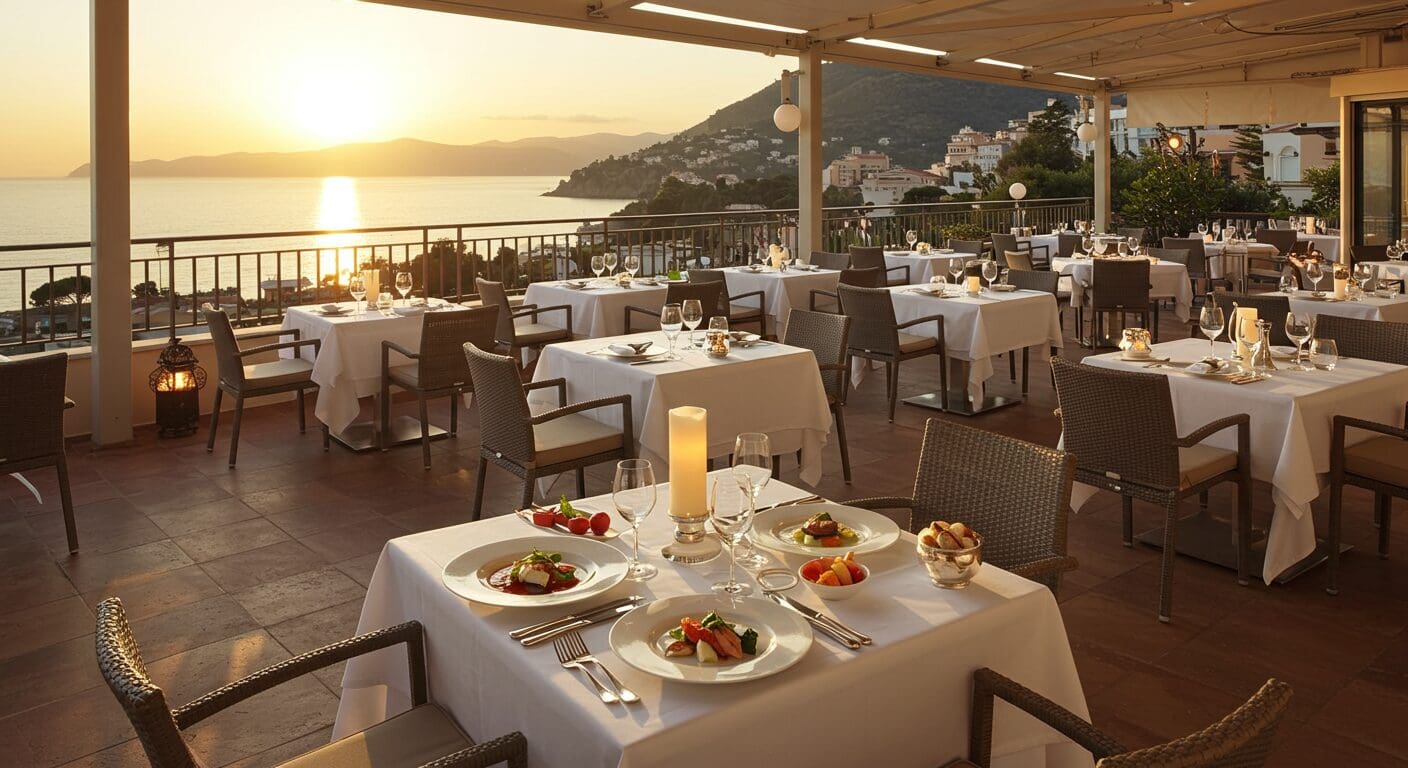
Best Restaurants in Marche: Fine Dining, Local Gems & Where to Eat
What happens when one of Italy’s most food-obsessed regions also happens to be one of its least visited? You get extraordinary cooking, almost entirely unspoiled by the performance of being famous. Marche – tucked between the Apennines and the Adriatic, sandwiched between Tuscany to the north-west and Puglia’s gravitational pull to the south – has been quietly, methodically, producing some of Italy’s most serious food for decades. Four Gambero Rosso Tre Forchette awards from just 74 reviewed restaurants. A three-Michelin-star table that places in the World’s 50 Best. Trattoria cooking that would have Romans driving four hours without complaint. And yet the crowds are elsewhere. That is, for now, their loss and entirely your gain.
The Fine Dining Scene: Marche’s Michelin Constellation
Let’s begin at the top, because in Marche, the top is genuinely rarefied.
Uliassi in Senigallia is the headline act – and not in the way that phrase usually implies a certain breathless over-selling. Mauro and Catia Uliassi, a brother and sister team, have built something that belongs in the same conversation as the world’s genuinely great restaurants. Three Michelin stars. Number two in all of Italy on the 50 Top Italy 2026 rankings. A fixture in the World’s 50 Best ecosystem. The cooking is seafood-driven, technically sophisticated, and shot through with a creativity that never tips into the sort of avant-garde theatre that leaves you hungry and confused. There is a menu built entirely around raw fish that deserves its own paragraph, though we’ll resist the urge. Book months ahead. Book now, frankly.
Also in Senigallia – the town is doing a lot of heavy lifting gastronomically – is Madonnina del Pescatore, Moreno Cedroni’s two-starred restaurant that has been quietly influencing Italian coastal cooking since 1984. Cedroni is one of those rare chefs who has stayed curious and inventive across four decades without ever losing sight of the fact that the sea is just outside. Ranked 13th in all of Italy for 2026, it remains one of the most rewarding dinner reservations in the country.
Venture inland, up into the Sibillini Mountains, and you find one of the region’s most charming surprises: Il Tiglio in Montemonaco. Unassuming on arrival in the way that truly confident places tend to be. Then the tasting menu arrives – built around homegrown vegetables, herbs, locally sourced meats, game, and the kind of truffle that doesn’t need explaining – and the mountain village setting starts to feel entirely deliberate rather than incidental. Il Tiglio holds one Michelin star and, since the 2025 guide, a Michelin Green Star for sustainability. It is, in short, the restaurant equivalent of being let in on a secret.
In Loreto, Andreina is the showcase for chef Errico Recanati’s obsession with fire-based cooking – an approach that sounds elemental because it is. One Michelin star, bold regional flavours, and a technical command of live-fire technique that goes well beyond the fashionable. This is not a restaurant doing grill food. This is a chef who has spent years understanding what heat does to ingredients at every possible moment of the process.
Finally, on the northern Adriatic edge of the region, Dalla Gioconda in Gabicce Monte – chef Davide Di Fabio at the helm – holds both a Michelin star and a Green Star for sustainability, making it one of only two restaurants in all of Marche to carry both honours simultaneously. The elevated coastal setting and the commitment to ingredient provenance make it the kind of place you remember not just for what you ate, but for the feeling of the whole evening.
Local Trattorias and the Art of the Marchigiana Table
Michelin stars are one way to eat well in Marche. The other is to find the trattoria where the handwritten menu changes daily, the wine list is three bottles long, and the pasta is made by someone who has been making it since before you were born. These places exist in abundance here, precisely because the region hasn’t been overrun with visitors who need everything explained to them in four languages.
In the hill towns of the interior – Macerata, Fermo, Ascoli Piceno – look for small, family-run trattorias serving vincisgrassi, the region’s defining pasta dish. It’s a layered baked pasta not entirely unlike lasagne, though the Marchigiani would prefer you didn’t say that out loud. Rich, slow-cooked, occasionally involving chicken livers or truffle, it is comfort food with architectural ambitions. Order it wherever it appears on the menu. Don’t overthink it.
Ascoli Piceno deserves special mention for olive ascolane – fried, stuffed olives that have achieved something close to mythological status in the region. The best versions use large Ascolana olives, stuffed with seasoned meat, coated in breadcrumbs, and fried until the exterior is precisely, confidently golden. Eating them anywhere other than Ascoli is fine. Eating them in Ascoli itself is something else entirely.
Along the coast, smaller seafood restaurants in towns like Numana, Porto Recanati, and Porto San Giorgio serve brodetto – the Adriatic fish stew that every coastal town between Venice and Bari has a version of, and about which extraordinary regional pride is invested. Marche’s version tends toward vinegar and saffron, is deeply savoury, and arrives with bread that has no other purpose than to do what bread was always meant to do at the end of a bowl of something magnificent.
Beach Clubs and Casual Coastal Dining
The Adriatic coast of Marche operates at a different register to the fine dining rooms of Senigallia. This is where summer lunches extend well past three o’clock, where the sea is approximately fifteen metres from the table, and where the standard of casual cooking is, by any objective measure, unreasonably high.
Beach clubs along the Riviera del Conero – the stretch of dramatic white limestone cliffs south of Ancona – combine loungers and umbrellas with kitchens that take their raw materials seriously. Grilled fish pulled from the Adriatic that morning. Seafood antipasti that function as entire meals if you allow them to. Cold, slightly fizzy Verdicchio arriving in a condensation-covered glass. This is the Italian seaside at its most effortlessly pleasurable, which is to say: it takes some effort to have a bad time.
For a more elevated beach experience, Gabicce Mare in the north offers sophisticated options where aperitivo hours drift naturally into dinner, usually with a view across the water toward Rimini’s lights – though most people politely keep their attention on the Marche side of the equation.
Hidden Gems Worth Seeking Out
The nature of a hidden gem is that specific names are hard to verify without recent visits – and inventing them would be a disservice to exactly the kind of spontaneous discovery that makes travelling in Marche so rewarding. What can be said is this: the region’s smaller hill towns consistently harbour restaurants that local residents would rather you didn’t know about. In Urbino, in Jesi, in Visso, in the villages threading through the Monti Sibillini, you will find – if you follow local recommendation rather than aggregated review platforms – the kind of cooking that reminds you why you travel for food in the first place.
Ask your villa manager. Ask the person at the cheese shop. Ask anyone who looks like they eat well. The referral network in rural Marche is more reliable than any algorithm.
Food Markets and Ingredient Culture
Understanding Marche food means understanding where the ingredients come from, and the region’s markets are as good a starting point as any. The daily market in Ancona’s Mercato delle Erbe is a proper working market – not a tourist market dressed up as a working one, which is a distinction worth making. Produce, fish from the morning catch, local cheeses, cured meats, and the kind of transactional efficiency that suggests the people shopping here are doing so because they intend to cook something serious later.
Truffle markets, particularly around Acqualagna in the northern inland area, operate seasonally and with an intensity that reflects just how seriously the Marchigiani take their fungi. Acqualagna is one of Italy’s most important truffle centres – white truffle in autumn, black throughout much of the year – and the market atmosphere during peak season has the particular electric quality of rooms where genuine commerce is happening around something people care about deeply.
For cured meats, look out for ciauscolo – a soft, spreadable salami unique to Marche that is usually applied to bread in a manner that suggests restraint is not part of the plan. It has PDO status, which means the real thing is only made here. Buy enough to regret the customs regulations on the way home.
Wine and Local Drinks
Marche’s wine credentials are considerably stronger than its international reputation would suggest, which is consistent with most things about the region. Verdicchio dei Castelli di Jesi is the white to know – clean, minerally, with enough structure to handle serious seafood and enough freshness to drink in quantities that are perhaps technically inadvisable on a weekday lunch. The Castelli di Jesi landscape produces consistently excellent expressions across different producers, and the local pride in the grape is matched only by a slight irritation that nobody outside Italy seems to have caught up yet.
Rosso Conero and Rosso Piceno are the reds worth pursuing – the former made from Montepulciano grapes grown on the slopes near Ancona’s dramatic headland, the latter a blend that varies across the region but at its best has depth, complexity, and the kind of food-pairing versatility that makes dinner easier. Pair either with the region’s red meat dishes, with vincisgrassi, or with anything involving truffle.
For something local and non-vinous, anisette liqueurs have a long tradition in Marche – Mistrà being the most distinctive regional expression. It arrives in small glasses at the end of meals, often without being asked for, and should be approached in the spirit in which it is offered.
Reservation Tips and Practical Notes
For Uliassi and Madonnina del Pescatore, think months rather than weeks in advance, particularly for summer and weekend sittings. Both restaurants have international reputations that their limited covers cannot adequately accommodate during peak season. Early in the week and shoulder season visits are more achievable, and the experience is no less remarkable for being slightly easier to book.
Il Tiglio in Montemonaco, given its mountain village location, is best approached with some flexibility around timing – call ahead, allow plenty of travel time from the coast, and consider making a longer day of the Sibillini rather than treating dinner as the sole purpose of the journey. Though frankly, it could be.
For more casual coastal and trattoria dining, same-day reservations are usually fine outside of August, when the Italian holiday season creates genuine competition for tables. Learning to say “un tavolo per due, stasera, è possibile?” will take you further than most booking platforms, and the conversation that follows will generally be more pleasant.
Lunch in Marche is not the abbreviated affair it has become elsewhere. Set aside two hours minimum, more if the wine is good and the afternoon commitments are flexible. In this region, that is not an indulgence. It is simply how lunch works.
The best way to anchor all of this – the Michelin tables, the trattoria discoveries, the market mornings, the wine – is from a base that matches the quality of the eating. A luxury villa in Marche with a private chef option means you can bring what you found at the truffle market, the cheese shop, or the morning fish stall directly to your own table – cooked properly, in a setting that makes the whole experience feel entirely and satisfyingly personal. For everything else you need to know about the region before you arrive, the full Marche Travel Guide covers the ground comprehensively.


