Felanitx Travel Guide: Where to Stay, Eat & Explore in Luxury
In late spring, when the almond blossom has long since fallen and the summer crowds haven’t yet arrived to rediscover the Mediterranean, Felanitx does something quietly remarkable: it simply gets on with being itself. The markets fill with locals rather than lens caps. The cafés on the main square belong, still, to people who actually live here. The light turns that particular shade of Mallorcan gold that painters have been chasing for centuries, falling across the honey-coloured stone of the parish church and the terracotta rooftops of the old town in a way that makes you briefly question every life decision that led you to spend so long ignoring this part of the island. This is the southeast of Spain at its most unperformed – and that, increasingly, is the rarest luxury of all.
Felanitx is one of those destinations that rewards a particular kind of traveller – the kind who has done Palma, ticked Deià, nodded politely at Pollença, and now wants somewhere that isn’t already on everyone else’s itinerary. It’s ideal for couples on milestone trips who want atmosphere without the attendant performance of being seen to have found it. It suits families seeking privacy – a private villa with a pool surrounded by fig trees and silence, somewhere the children can be feral in the best possible sense and nobody minds. It works beautifully for groups of friends who want to eat well, drink better, and actually talk to each other without the ambient noise of a resort hotel lobby. And with increasingly reliable connectivity across the region, it’s become a quietly serious option for remote workers who have realised that working from a Mallorcan finca beats working from a grey office in ways that require no elaboration whatsoever. Wellness-focused guests come for the hiking, the silence, and the sense that the pace of life here is calibrated to something more human than the rest of the island’s more tourist-facing coast.
Finding Your Way In: Airports, Transfers and the Art of Arriving Slowly
Palma de Mallorca Airport (PMI) is your point of entry, and it’s a good one – well connected from across Europe, served by everything from budget carriers to private charters, and considerably more manageable in size than its passenger numbers might suggest. From the airport, Felanitx sits roughly 50 kilometres to the southeast – a journey of around 45 minutes to an hour depending on traffic and, more relevantly, your willingness to stop at the roadside stalls selling local produce on the way. A private transfer from the airport is the obvious choice for a luxury holiday in Felanitx, and several operators offer exactly this, with clean, air-conditioned vehicles and drivers who know the southeastern roads well enough not to attempt the sort of aggressive overtaking that can make Mallorcan driving such a character-building experience.
Once you’re in Felanitx itself, a hire car is genuinely useful. The town is the centre of a substantial municipality that stretches all the way down to the coast at Porto Colom – one of the most handsome and least spoiled harbour towns on the island – and without wheels you’re somewhat marooned. The roads in the region are good and the driving is straightforward, the landscape of vineyards, carob trees and dry-stone walls making even a ten-minute drive feel like a reward rather than a task. Parking in the town itself is generally easy outside peak summer weeks, which is another small but meaningful pleasure.
Eating Felanitx: A Town That Takes Its Table Seriously
Fine Dining
For a town that doesn’t appear in many glossy magazine round-ups, Felanitx has quietly assembled a dining scene that would embarrass significantly more celebrated destinations. The jewel in the crown is Restaurant Estragon, which since late 2023 has been run by Felix Passow and his wife Vivien, who relocated from Berlin to take over the restaurant and have brought with them the kind of rigour and warmth that makes an evening feel genuinely special rather than merely well-executed. Estragon opens for dinner only, has tables on a front terrace that are hard to leave once the evening cools, and the interior is contemporary without the clinical edge that sometimes afflicts restaurants trying to look serious. The veal and the salmon salad draw particular praise from regulars, and the hospitality is the kind that makes you feel like a guest rather than a transaction. Book ahead. Then book again.
PAX Gastrobar, located on the peaceful square that gives it its name, arrived with a different energy and immediately became the sort of place that requires advance reservations – which in a town this size is saying something. Chef Jerome brings international experience that takes in Oslo, Prague, St Petersburg and Sydney before Mallorca, which sounds like either a very interesting CV or a very interesting decade, possibly both. The cuisine is Mediterranean and Spanish, designed for sharing, with the kind of elegantly casual dishes that suit a long lunch as well as a dinner.
Where the Locals Eat
Restaurant Xino Xano on Passeig de n’Ernest Mestre is the kind of place that locals are slightly reluctant to mention to visitors, not out of possessiveness exactly, but out of a well-founded concern that the reservation situation will become untenable. The croqueta variations are the kind of thing you think about afterwards – varied, precisely made, the sort of starter that makes you annoyed you only ordered one round. Fresh fish mains follow with quiet confidence. The price-to-quality ratio is one of those things that makes you briefly recalibrate what you’ve been paying for food elsewhere on the island, and not favourably for elsewhere.
For something more casual, the town square cafés are an education in Mallorcan daily life. Saturday is market day – genuinely one of the better weekly markets in the southeast, and well attended by locals rather than purely tourists – and the square around it fills with a particular morning energy that rewards turning up with no particular plan and a willingness to spend an hour watching the world go about its business over a café amb llet.
Hidden Gems Worth Seeking Out
El Castillo del Bosque sits on the road connecting Felanitx, Porto Cristo and Porto Colom, and has been operating for over 38 years with a focus on fresh, seasonal produce and the kind of welcome that comes from knowing exactly what you are. It’s not trying to be discovered; it was never lost. Surrounded by nature and decidedly peaceful, it’s the right choice for a long, unhurried lunch after a morning’s hiking or a drive through the southeast. Family-run in the truest sense, with the kind of institutional knowledge about what’s good today that no algorithm will ever replicate.
And then there is Pizzeria Focaccia, right beside the town hall, which deserves mention not because pizza is unexpected in Mallorca but because this particular pizza is exceptional. The owner is Italian, the ingredients are local and fresh, and at least one Italian couple has been recorded as calling it one of the best pizzas they’ve had in their lives – which is the kind of endorsement that carries significantly more weight from Italians than from anyone else. It is, by several accounts, the best pizza on the island. That is a bold claim. It appears to be correct.
The Landscape Around You: Southeast Mallorca’s Best-Kept Secrets
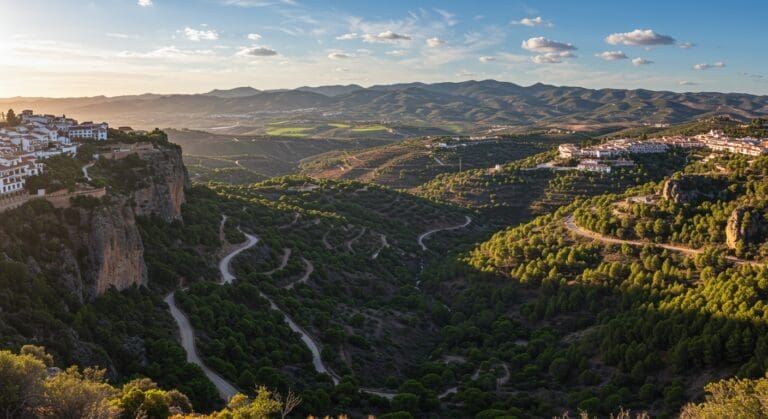
The municipality of Felanitx is considerably more varied than a first glance at the town itself suggests. Inland, the landscape is rolling and agricultural – vineyards, almond groves, ancient dry-stone walls dividing plots of land that have been farmed in broadly similar ways for centuries. It’s quieter and drier than the northwest of the island, less dramatically operatic than the Serra de Tramuntana, but possessed of a particular beauty that grows on you the longer you’re in it. There’s a reason the finca architecture here is so good: people have been finding this landscape worth building beautiful things in for a very long time.
The Puig de Sant Salvador is the dominant feature on the horizon – a mountain topped by the Sanctuary of Sant Salvador that you will spend several days seeing from a distance before eventually making the trip up, which you absolutely should. The views from the summit stretch across the entire southeastern coast of Mallorca, on a clear day reaching all the way to Cabrera, the island nature reserve visible from the shore, and on an especially clear day further still. The descent back into the town feels different after you’ve seen how much land is actually out there, and how little of it has been compromised.
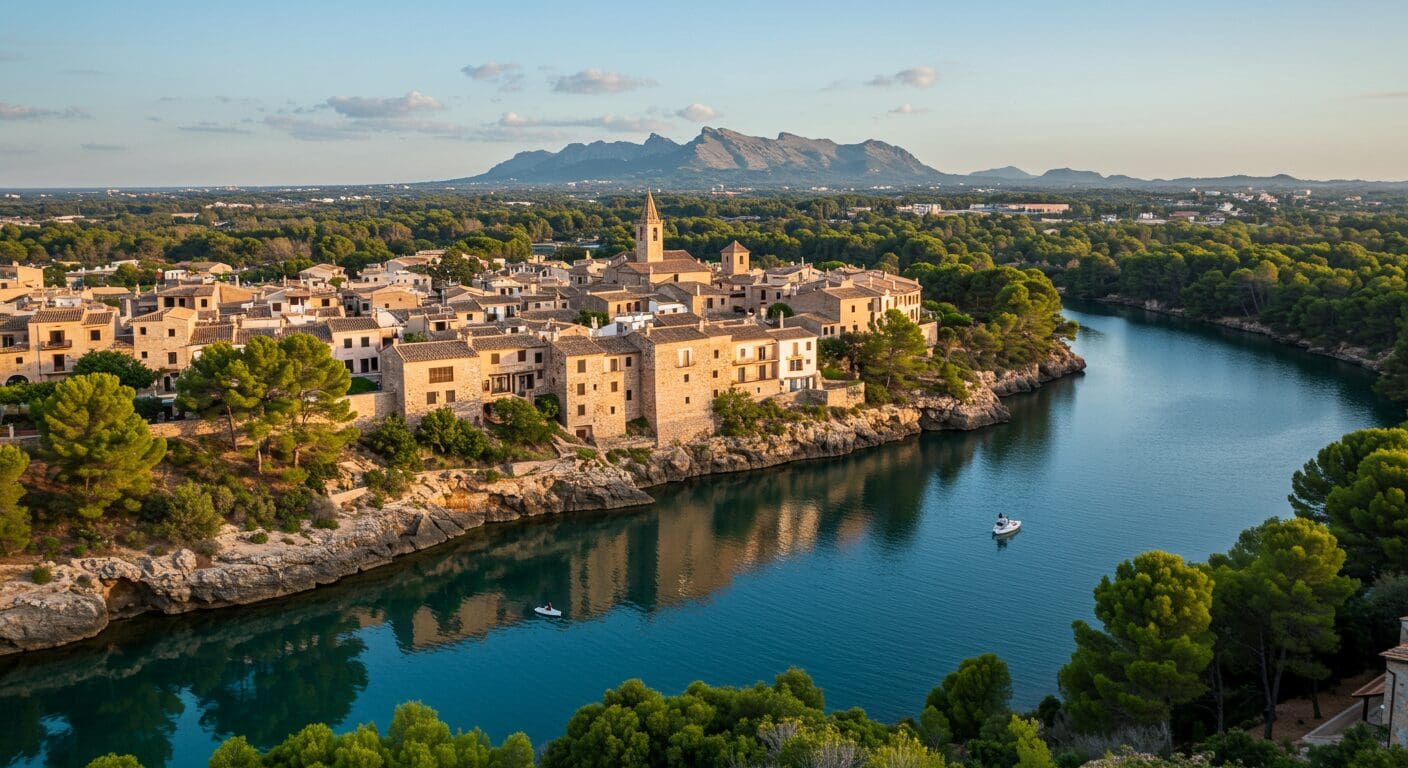
Porto Colom, down on the coast, is roughly fifteen minutes from the town and is one of those Mallorcan coastal towns that has managed, through some combination of geography, planning restrictions and good fortune, to remain something you’d actually want to look at. The harbour is horseshoe-shaped and genuinely lovely. The town has restaurants, bars and a small beach, but retains the feeling of a working fishing village that happens to have become popular, rather than a tourist destination that has learned to simulate authenticity. The distinction matters.
Things To Do in Felanitx That You’ll Actually Want to Talk About Afterwards
The best things to do in Felanitx are the kind that don’t photograph particularly well but stay with you long after more visually dramatic experiences have blurred together. That said, the Saturday market in the main square is a genuine weekly highlight – one of the most authentic market days in southeast Mallorca, selling local produce, ceramics, household goods and the kind of things that suggest the market is primarily for people who live here rather than people visiting for a week. Arrive by 9am for the full experience; arrive by 11am and you’ll find it winding down.
The drive through the Mallorcan southeast is itself an activity. Porto Cristo, the Caves of Drach with their extraordinary underground lake, the Caves of Hams – these are all within easy reach and are either serious natural wonders or very good theme park experiences depending on your mood, but either way impressive. The southeastern coastline, accessed by minor roads that require a certain confidence behind the wheel, has coves and lookout points that reward the slightly lost.
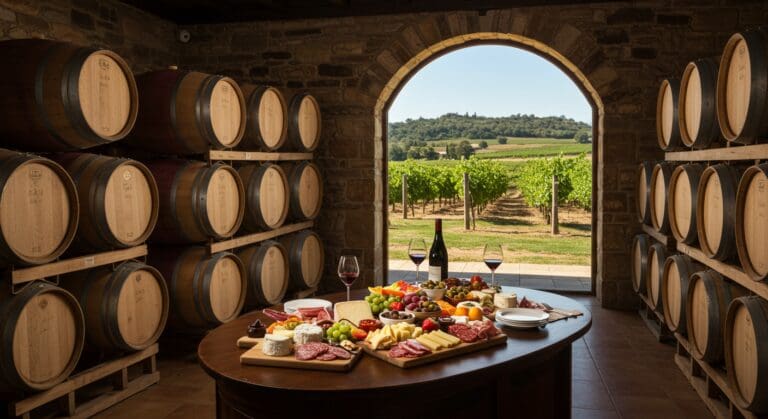
Wine is taken seriously around here. The Pla i Llevant denominació d’origen covers much of the southeast, and several bodegas in and around Felanitx offer visits and tastings. The local varieties – Callet and Mantonegro among them – produce wines that are genuinely distinctive and age with more ambition than their relative obscurity might suggest. Visiting a bodega in this part of Mallorca is one of those pleasurable afternoons that requires no further justification.
For Those Who Need Their Holiday to Feel Like an Achievement
The hiking and cycling around Felanitx is among the best in Mallorca for anyone who doesn’t specifically require the high-drama gradients of the Tramuntana. The ascent to the Santuari de Sant Salvador – built originally in 1348 as a refuge from plague, which gives its hilltop remoteness a rather different context – is manageable on foot and deeply satisfying on arrival. The sanctuary itself contains a large stone cross, a figure of Christ, and views that justify the entire trip to Mallorca regardless of what else you do. It’s one of the island’s most important pilgrimage sites and one of its most reliably moving experiences, neither of which requires you to be remotely religious to appreciate.
Cycling the rural roads of the southeast is a particular pleasure in the cooler months – spring and autumn being the ideal seasons, before the summer heat turns any climb into an act of penance rather than recreation. The terrain is gentler than the northwest, with long rolling roads through vineyards and almond groves that suit both casual cyclists and those with more serious ambitions. Bike hire is available in the area, and several operators offer guided routes that take in the best of the landscape without requiring you to spend a morning staring at a map.
The coastline around Porto Colom and the nearby Cala Marçal offers good snorkelling in clear water, kayaking along rocky inlets, and the kind of sea swimming that makes every other form of exercise feel like a poor substitute. The water quality in the southeast is consistently excellent, the crowds are manageable outside high summer, and the sense of arriving somewhere by water – even by kayak – adds a perspective on the coastline that road access simply doesn’t provide.
Felanitx with Children: The Right Kind of Chaos
Felanitx is an excellent choice for families, and not in the slightly desperate way that tourist boards describe every destination as family-friendly. The practicalities work: the town itself is safe, walkable, and genuinely interesting to small people who have not yet been told what to find boring. The Saturday market is a reliable source of small expenditures and considerable excitement. The drive to Porto Colom and the harbour is short enough to survive without incident even with young children, and the harbour itself – with its boats, its waterfront cafés, its general air of purposeful maritime activity – is the kind of thing that keeps children occupied without requiring anyone to organise anything.
The Caves of Drach at Porto Cristo, about 20 minutes from Felanitx, remain one of those experiences that works on every age simultaneously. The underground lake concert is the kind of thing that adults remember with genuine affection and children describe accurately as ‘really cool underground with boats’. El Castillo del Bosque is the right restaurant for families – relaxed, surrounded by space, with the kind of unhurried service that makes lunches with children feel manageable rather than anxiety-inducing.
For families staying in a luxury villa in Felanitx, the private pool changes the mathematics of the holiday entirely. Children can swim from morning to evening. Adults can watch them do this while sitting in dappled shade with a glass of local wine. Nobody needs to stake out sun loungers at 7am or navigate a resort pool’s complex social hierarchies. This is, quietly, the point.
History, Ceramics, and the Particular Dignity of a Town That Never Sold Out
Felanitx has a history that stretches back to the Moorish period, with the town formally consolidated under Christian rule in the 13th century following the Reconquista. The Church of Sant Miquel, dominating the main square with considerable authority, dates primarily from the 16th and 17th centuries and is one of the more impressive parish churches in the Mallorcan interior – not in a showy way, but in the way of a building that has been considered important by the community around it for a very long time, which is a different and more convincing kind of impressiveness.
Felanitx has been known for ceramics for centuries – specifically the green-glazed pottery that has been made here since medieval times and remains one of the town’s most distinctive contributions to Mallorcan material culture. You’ll find it in the market, in small shops around the town, and in the homes of anyone in the southeast with taste. It’s the right thing to bring home – specific to this place, genuinely made here, useful in an actual kitchen, and not available in every souvenir shop on the island.
The town also produced one of Mallorca’s most celebrated contemporary artists, Miquel Barceló, who grew up here before becoming one of the most significant Spanish painters of his generation. His work is visible in Palma Cathedral, where he created a remarkable ceramic chapel that is among the most discussed contemporary religious art commissions in Europe. Knowing Felanitx produced him gives the town a certain biographical weight that enhances even an aimless afternoon walk through it.
Shopping in Felanitx: What to Buy and Where to Find It
The Saturday morning market is the headline event, and rightly so – it’s one of the most genuinely local market days in the southeast, mixing fresh produce with crafts, household goods, clothing and the kind of cheerful commercial chaos that makes Mallorcan market culture so worth participating in. Arrive early, bring cash, and have no particular plan.
The ceramics shops scattered through the town and its surrounding area are the best source of the famous green-glazed Felanitx pottery – functional, handsome, and distinctive enough to need no explanation when you get it home. Olive wood products, local honey, cured meats and local wines from the Pla i Llevant bodegas make excellent additions to the same bag. The wines in particular travel well and are not yet widely available elsewhere, which gives them a provenance that is both genuine and slightly satisfying to mention.
For a more curated shopping experience, Palma is under an hour away and has everything from independent boutiques in the old quarter to international luxury brands along the Passeig del Born. But the things worth bringing home from a luxury holiday in Felanitx are overwhelmingly found in Felanitx itself – which is, in its way, exactly the point of coming here.
Before You Go: The Practical Bits That Actually Matter
The best time to visit Felanitx is May, June, September and October – the shoulder seasons when the light is extraordinary, the heat is manageable rather than oppressive, the crowds are thin and the restaurants have availability. July and August are busy and very hot; the town functions perfectly well, but the ease of the experience is materially different and the coastal roads to Porto Colom can become quite testing. Winter visits are quieter still and have a particular quality – the town fully belongs to its residents, and the Mallorcan interior in January has a austere beauty that is entirely its own.
The currency is the euro. Spanish is the official language, with Catalan (specifically Mallorcan Catalan) widely spoken and appreciated when visitors make any attempt at it, however inadequate. English is broadly understood in restaurants and accommodation. Tipping is appreciated but not obligatory – rounding up the bill is the local norm rather than a fixed percentage calculation. The tap water in Mallorca is technically drinkable but heavily chlorinated; most visitors drink bottled.
Felanitx is a safe town in a safe part of the island. The usual common-sense precautions apply, as they do everywhere. Driving requires a valid licence and some patience on the narrower rural roads. Sun protection in summer is non-negotiable and not a suggestion. The pace of life in the town respects the siesta – between roughly 2pm and 5pm, activity slows considerably and some smaller shops close. Adapting to this rhythm rather than fighting it is, in retrospect, one of the holidays better decisions.
Why a Private Villa in Felanitx Is Not Just the Best Option – It’s the Only One That Makes Sense
The hotel offering in Felanitx is limited, which is not really a problem because a private villa is unambiguously the right way to experience this part of Mallorca. The region’s landscape – open, agricultural, threaded with minor roads between ancient fincas – is precisely the setting that makes private villa living feel like its natural conclusion rather than an indulgence. You’re not staying in a building at the edge of someone else’s operation. You’re living, briefly, in a place.
Luxury villas in Felanitx range from converted stone fincas with terraces and private pools surrounded by almond and olive trees to larger contemporary properties with all the amenities – outdoor kitchens, gyms, wine cellars, cinema rooms – that have become the vocabulary of serious villa design. The privacy is fundamental: no shared pools, no lobby schedules, no breakfast sittings. The pool is yours. The terrace is yours. The morning, which in Mallorca in May is one of the finest things available to a human being, is entirely yours.
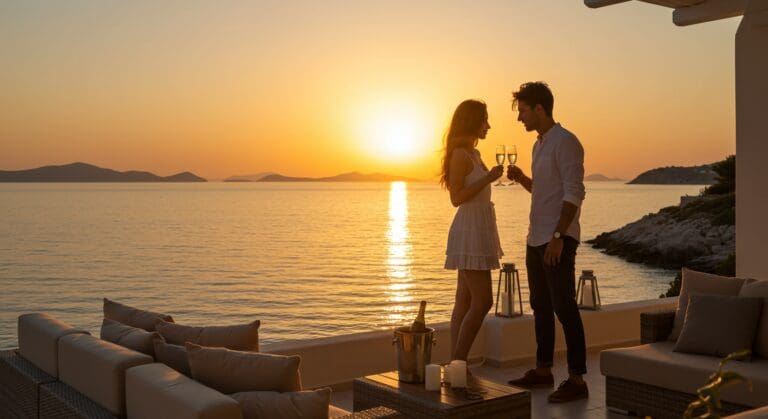
For families, the villa model eliminates virtually every logistical frustration of resort holidays. Children have space – outdoor space, pool space, the kind of room to exist that resort hotels simply cannot offer. Multi-generational groups find that separate wings and multiple living areas mean everyone gets the holiday they actually wanted, simultaneously and without negotiation. For couples on milestone trips, the seclusion of a well-chosen villa – a private terrace, an outdoor bath, dinner on the terrace as the sun sets over the carob trees – provides a quality of romance that no hotel room, however thoughtfully appointed, can quite replicate.
Remote workers will find that the better villas in the area now come with reliable high-speed internet, in some cases Starlink connectivity, meaning the gap between working from home and working from a Mallorcan finca with a pool has closed to the point where it’s really only a question of logistics and willpower. Wellness-focused guests bring yoga mats to terraces that face east, use private pools for early morning swims before the heat arrives, and discover that the combination of outdoor activity, excellent food and a pace of life that doesn’t apologise for being slow is rather effective at restoring whatever it is that contemporary life has been quietly removing.
Excellence Luxury Villas has an extensive portfolio of properties across the region. Browse our private villa rentals in Felanitx to find the property that suits your group, your style and your particular vision of what a Mallorcan week should feel like.
More Felanitx Travel Guides
What is the best time to visit Felanitx?
May, June, September and October are the ideal months – the shoulder seasons bring exceptional light, manageable temperatures and far thinner crowds than the peak summer period. July and August are busy and very hot, which suits some travellers but changes the character of the experience considerably. Winter visits are quiet and atmospheric, with the town feeling fully itself rather than partially given over to tourism.
How do I get to Felanitx?
Fly into Palma de Mallorca Airport (PMI), which is well served by direct flights from across Europe and beyond. From the airport, Felanitx is approximately 50 kilometres to the southeast – around 45 minutes to an hour by road. A private airport transfer is the most comfortable option for a luxury holiday, and a hire car is strongly recommended for getting around the municipality once you arrive, as the town and its surrounding coast and countryside are best explored independently.
Is Felanitx good for families?
Genuinely, yes. The town is safe, walkable and interesting, with the Saturday market a reliable highlight for all ages. The coastal town of Porto Colom is 15 minutes away, the Caves of Drach at Porto Cristo are within easy reach, and the relaxed pace of the southeast suits families far better than the more resort-heavy parts of the island. A private villa with a pool changes the practical calculus of a family holiday significantly – children swim all day, adults relax, and nobody has to compete for sun loungers.
Why rent a luxury villa in Felanitx?
Because the hotel offering in Felanitx is limited, and because the landscape – open, agricultural, dotted with beautiful old fincas – is precisely the setting where villa living makes most sense. A private villa gives you complete privacy, your own pool, your own schedule, and a quality of space that no hotel can replicate. Staff and concierge options mean you can have as much or as little organisation as you want. The ratio of private space to price, compared to equivalent hotel stays on the island, is strongly in the villa’s favour.
Are there private villas in Felanitx suitable for large groups or multi-generational families?
Yes, and the region is well suited to it. The larger villas in the Felanitx area come with multiple bedrooms, separate living areas, and in some cases distinct wings that allow different parts of a group to have genuine independence while sharing common spaces – terraces, pools, outdoor dining areas. Multi-generational families in particular benefit from this kind of space, as it allows grandparents, parents and children to coexist on a holiday without the various negotiations that proximity in a hotel tends to require.
Can I find a luxury villa in Felanitx with good internet for remote working?
Yes. The better villas in the Felanitx area now offer reliable high-speed internet as standard, with a growing number providing Starlink connectivity that delivers consistent speeds even in more rural locations. Many properties have dedicated workspace or study areas, and the combination of reliable connectivity, private outdoor space and a pace of life conducive to focused work makes the region a genuinely practical choice for remote workers rather than simply an aspirational one.
What makes Felanitx a good destination for a wellness retreat?
Several things work in its favour. The pace of life in the Mallorcan southeast is genuinely slower than the more developed parts of the island, which is not nothing. The hiking – particularly the ascent to the Santuari de Sant Salvador – and cycling on the rural roads provide serious outdoor exercise in extraordinary landscape. The food culture, built on fresh local produce, olive oil, seasonal vegetables and good local wine in reasonable quantities, is a natural fit for health-conscious travellers. And private villas in the area often come with private pools, outdoor fitness areas and the kind of space and silence that wellness requires and resort hotels struggle to provide.