
Pernera Travel Guide: Where to Stay, Eat & Explore in Luxury
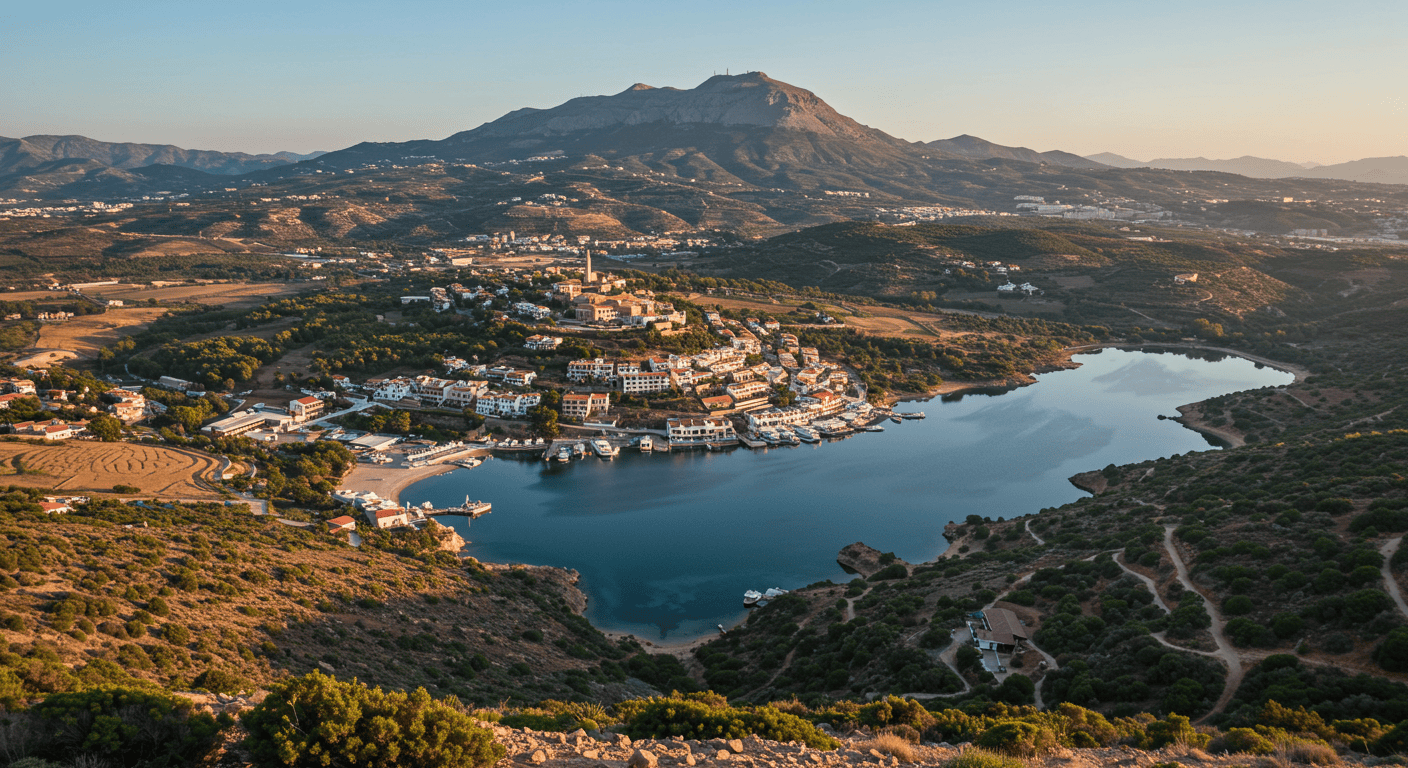
There is a version of Cyprus that exists almost entirely for the benefit of people who have already been to Cyprus. Not the resorts with their clipboard-wielding entertainment coordinators. Not the strip of Ayia Napa with its particular brand of enthusiastic chaos. Pernera is the quieter, more considered chapter – the one locals actually read. A small coastal village on the Famagusta Bay, it sits close enough to Protaras to borrow its excellent beaches, yet far enough to have maintained something increasingly rare in Mediterranean Europe: genuine peace. The water here is a shade of blue that seems slightly implausible even when you’re standing in it, the pace is unhurried in the way that actually takes a few days to absorb, and the food – when you find the right places – is quietly, confidently excellent. This is where you come when you know what you’re doing.
Which raises the obvious question: who, exactly, is Pernera for? The answer is somewhat specific, and that specificity is the point. Families who want privacy and a proper pool without negotiating a hotel lobby every time someone needs suncream will find this deeply their kind of place. Couples on milestone trips – the anniversaries, the milestone birthdays, the “we need to actually talk to each other again” escapes – tend to arrive sceptical and leave quietly evangelical. Groups of friends in their thirties and forties who have graduated beyond package holidays but haven’t yet graduated to boredom will find Pernera hits an almost exact sweet spot. Remote workers who need reliable connectivity and a view worth logging off for are increasingly well served here. And wellness-focused travellers who want genuine outdoor activity, clean food and the kind of stillness that isn’t manufactured will find Pernera delivers it without trying too hard. That last part matters more than it sounds.
Getting Here Without the Drama: Airports, Transfers and Getting Around
Larnaca International Airport is the most commonly used gateway, sitting roughly 80 kilometres from Pernera – around 75 minutes by road, depending on which part of the island’s traffic patterns decide to assert themselves. Paphos International Airport is a viable alternative if you’re flying from certain United Kingdom airports, though from Pernera it’s the longer drive of the two at around two hours. Direct flights from the UK, Germany, Scandinavia and much of northern Europe run throughout the peak season, with frequency tapering off in winter when the island settles into something altogether more local and less logistical.
Pre-booking a private transfer is the move here. The airport taxi system works, but arriving at your villa in a sleek vehicle rather than a slightly warm saloon with an air freshener shaped like a pine tree sets a more appropriate tone for what follows. Once in Pernera, a hire car is genuinely worth it – the village itself is walkable, but the island’s best beaches, towns and day-trip destinations require wheels and a degree of self-direction that taxis don’t really reward. Cyprus drives on the left, which is either reassuring or irrelevant depending on where you’re travelling from. The roads are generally good, the drivers are spirited, and the signage is bilingual in Greek and English, which removes at least one layer of navigation anxiety.
Eating in Pernera: From Mezze to Midnight Grills
Fine Dining
Pernera’s dining scene is not about theatre or Michelin architecture – it is about produce, proximity and a kitchen culture that doesn’t feel the need to explain itself. The finest meals here tend to arrive at tables set close to the water, where the grilled fish has been local that morning and the wine list runs strongly toward Cypriot varieties that most visitors have never encountered before arriving. Commandaria – the island’s ancient dessert wine, one of the oldest named wines in the world – should be tried at least once, ideally after a meal long enough to justify it. The better restaurants in and around Pernera take the island’s Levantine culinary heritage seriously: lamb slow-cooked with herbs, halloumi made properly (the squeaky, slightly salty version, not the rubbery imitation exported elsewhere), fresh seafood treated with restraint rather than buried under sauce. Fine dining here doesn’t announce itself loudly. It just gets quietly on with being excellent.
Where the Locals Eat
The local taverna is Cyprus’s great democratic institution. Enormous quantities of food arrive without much ceremony, the wine comes in carafes, and the meze format means no one has to make a decision more stressful than whether to have the octopus. Pernera and its immediate surrounds have several family-run tavernas where the menu is shorter than the welcome, and where the house specials change based on what arrived that morning rather than what a designer printed six months ago. Seek out the places without English-language chalkboards outside – this is not snobbery, it is navigation. The beach clubs along this stretch of coast are also worth investigating for a long, slow lunch rather than just a sun lounger transaction. Order slowly. Stay longer than you planned.
Hidden Gems Worth Seeking Out
The really good discoveries in Pernera tend to come via recommendation rather than review aggregator – a villa concierge who has lived here for fifteen years will reliably know something a travel app will not. Small fish restaurants tucked just off the coastal path, bakeries that operate on a “if you know you know” timetable, a particular fisherman who sells directly from his boat in the early morning. Cyprus has a strong tradition of home-style cooking – kleftiko, souvla, stifado – that occasionally surfaces in tiny, unlisted spots that serve perhaps twenty covers and feel faintly conspiratorial. These are worth going slightly out of your way for. Ask locally. Accept the recommendation. Turn up hungry.
The Lay of the Land: What the Famagusta Bay Region Actually Looks Like
Pernera sits on the eastern coast of Cyprus, within the broader Famagusta Bay area – a sweep of coastline that includes Protaras to the south and Cape Greco to the southwest, with the divided city of Famagusta sitting further north as a different and considerably more complex chapter of the island’s history. The landscape here is classic eastern Mediterranean: low limestone hills behind the coast, scrubby vegetation that smells extraordinary in the early morning heat, and a coastline that alternates between sandy coves and flat rock shelves that drop cleanly into exceptionally clear water.
The beaches in the immediate Pernera area are among the island’s most admired – quieter than the main Fig Tree Bay (which is technically just south in Protaras but very much the area’s headline act) and with a clarity of water that consistently surprises people who arrive expecting the murky Mediterranean they may have encountered elsewhere. The coastal path that connects several of the small coves is genuinely lovely for an early morning walk before the sun makes ambition inadvisable. Inland, the terrain shifts to olive groves and small agricultural holdings, and driving fifteen minutes in almost any direction produces a landscape that looks nothing like the beach you just left. Cyprus rewards exploration in a way that its reputation for resort holidays sometimes obscures.
Things to Do in Pernera That Are Actually Worth Your Time
The primary activity in Pernera, as in much of this coastline, is being in or near extraordinary water. This sounds reductive until you actually arrive, at which point it begins to seem entirely reasonable. The swimming here – particularly in the smaller, more sheltered coves – is genuinely exceptional. Beyond the beach, the region offers a range of activities that scale from entirely effortless to moderately ambitious, which covers most holiday preferences.
Cape Greco National Forest Park is a short drive south and is one of those places that tends to stop conversations when you first see it – sea caves, arches, and a dramatic cliff coastline that looks faintly geological and permanently photogenic. The Kamares Arches (the sea bridges of Cape Greco, also known as Lovers’ Bridge) are one of those landmarks that have become tourist reference points precisely because they are, objectively, remarkable. Day trips to Nicosia – the world’s last divided capital – are intellectually fascinating and historically dense in ways that reward even the most beach-focused traveller making a single exception. The Venetian walls, the Green Line, the extraordinary Selimiye Mosque (formerly St Sophia Cathedral) visible from the southern side: this is a city carrying significant historical weight.
Boat trips along the coast – to the sea caves, around the cape, or simply out to quieter anchorages for swimming – are widely available and represent one of those rare activities that delivers exactly what it promises. Wine touring through the Troodos foothills is a slightly longer expedition but one that turns up genuinely interesting indigenous grape varieties and mountain village lunches that constitute a separate experience from the coast entirely.
For Those Who Need More Than a Sun Lounger: Water Sports and Adventure
The waters off the eastern Cyprus coast are among the clearest in the Mediterranean, which makes this dive territory of genuine note. The sea floor around Cape Greco is varied and interesting – PADI-certified dive centres operate nearby, and there are several accessible sites suitable for both qualified divers and those completing their first open-water dives. The underwater visibility here is, on the right day, almost unreasonably good.
Snorkelling from the rocky coves around Pernera requires nothing more sophisticated than a mask and some willingness to get in – the marine life is modest but present, and the sheer visibility of the water makes even a slow surface-level exploration worth the effort. Kayaking along the coast is a particularly good way to access the smaller coves and sea caves that boats can’t reach and walkers can’t quite get to. Paddleboarding is available from the main beaches and requires very little skill relative to how satisfying it looks when you’re managing not to fall off.
For those who require something more aerobically demanding, mountain biking trails in the Troodos range are within day-trip range and offer a dramatic counterpoint to the coastal flatness. Hiking in Cape Greco National Park is moderate rather than challenging – well-marked trails through coastal scrub with the sea visible for most of the route – and early morning walks here before the heat builds are among the genuinely memorable experiences this part of Cyprus delivers quietly and without ceremony.
Why Families Keep Coming Back to Pernera
The short answer is: because it works. The longer answer involves the specific combination of calm, clear, shallow water near the beaches, a scale of resort that doesn’t feel overwhelming, and the option of a private villa with its own pool that makes the whole enterprise considerably more manageable and rather more enjoyable for everyone involved.
Pernera’s beaches are generally calmer than those on the wilder western coast, which matters when you’re managing children with varying relationships to waves. The Fig Tree Bay area nearby has shallow, sheltered swimming that is widely considered among the best family swimming in the eastern Mediterranean. Boat trips, sea caves, snorkelling in clear water, the mild novelty of seeing a different country’s road signs – these things land well with children in a way that requires no particular engineering. Cyprus also operates on a time zone that is only two hours ahead of central Europe (three ahead of the United Kingdom), which sounds like a minor detail and is, in practice, the difference between a functioning family bedtime and a small domestic crisis.
The private villa model particularly suits families here. Having your own pool removes the morning sun-lounger anxiety entirely. There is no hotel dining room negotiation, no corridor noise at eleven pm, no awkward proximity to other families at the pool who have made different disciplinary choices. The villa is yours, the pool is yours, and the pace of the day is determined by the people in it rather than a laminated activity schedule. The island is extremely safe by any reasonable measure, and the Cypriot welcome toward families with children is genuine rather than performative.
Layers of History: What Pernera and Eastern Cyprus Carry With Them
Cyprus has been wanted by almost everyone who sailed past it, which means its history is complicated, layered and occasionally uncomfortable in ways that make it considerably more interesting than destinations that simply got on with being beautiful without interruption. The eastern part of the island carries this particularly strongly. Famagusta, a short drive north, contains some of the most significant medieval architecture in the entire eastern Mediterranean – the old walled city, abandoned since 1974, is a UNESCO World Heritage Site and one of those places where the weight of recent history sits visibly on top of the ancient kind in a way that is genuinely affecting.
The ghost town of Varosha – the formerly glamorous resort district that has been sealed since the Turkish military intervention of 1974 – has partially reopened in recent years and is now accessible in limited form. It is one of the strangest experiences available in this part of the world: a place frozen in a specific moment that happens to be within living memory. Not cheerful, exactly. But absolutely worth understanding.
More ancient still, the Neolithic settlement of Choirokoitia (further west but within day-trip range) dates to around 7000 BC and is another UNESCO site – evidence of organised human settlement on Cyprus so early in the record that it resets whatever timeline you arrived with. Byzantine churches, Venetian fortifications, Lusignan architecture: the island’s cultural sediment is deep and rewards anyone willing to look slightly beyond the waterline.
Shopping in Pernera: What to Take Home and Where to Find It
Pernera itself is a village rather than a shopping destination, which is part of its appeal and also an accurate calibration of expectations. The practical and interesting shopping happens in the surrounding area – Protaras nearby has a reasonable range of shops, and Nicosia (on a day trip) offers genuinely interesting finds for those prepared to seek them.
Cyprus lace – particularly from Lefkara, a village in the hills that has been producing it for centuries (allegedly introduced by Leonardo da Vinci, which may be apocryphal but is a good story) – is one of the island’s most distinctive crafts and a UNESCO Intangible Cultural Heritage. Handmade ceramics in traditional Cypriot styles, locally produced olive oil and carob-based products (carob has deep roots in Cypriot agriculture and produces everything from syrup to chocolate alternatives worth investigating), and Commandaria wine make for gifts that have actual provenance rather than the airport-purchased variety. Local pottery, hand-embroidered textiles, and small artisan food producers found at weekend markets in the wider Famagusta region are worth building an afternoon around. The rule of thumb applies here as everywhere: the further from the main tourist strip, the more interesting the find.
What You Actually Need to Know Before You Arrive
Cyprus uses the Euro, which simplifies matters for most European travellers. Card payments are widely accepted in restaurants, shops and hotels, though carrying some cash for smaller tavernas and market transactions remains sensible. The language is Greek, though English is spoken almost universally throughout the tourist-facing economy – this is partly a legacy of British colonial history and partly a consequence of Cyprus having been a popular British holiday destination for long enough that linguistic adaptation has been thorough. You will not struggle. You might also not try particularly hard to learn any Greek as a result, which is a minor shame given how warmly even basic attempts are received.
The best time to visit for a luxury villa holiday sits broadly between May and October, with June, September and early October offering the ideal balance – warm enough, uncrowded enough, and with sea temperatures that remain genuinely inviting without the peak summer heat that mid-July to mid-August delivers. July and August are hot. Properly, persistently hot. Those who find this energising will enjoy themselves enormously. Those who find it enervating should plan accordingly.
Cyprus is extremely safe. Tipping is appreciated but not compulsory – rounding up a restaurant bill or leaving ten percent in a taverna is appropriate and received warmly. The island operates on Eastern European Time (EET) – UTC+2 in winter, UTC+3 in summer. Dress codes in restaurants are smart-casual at most; cover-ups are expected when entering churches and monasteries. The political complexity of the island – the division between the Republic of Cyprus in the south and the Turkish Republic of Northern Cyprus in the north – is a live issue that occasionally surfaces in conversation. Engage with it thoughtfully if it does. It is not a tourist abstraction for the people who live here.
Staying in a Luxury Villa in Pernera: The Case Against Hotels
There is a moment, usually around day two or three of a well-chosen villa holiday, when you realise you haven’t thought about a hotel lobby once. No queue at breakfast. No negotiating a sun lounger allocation. No sense that forty other guests are competing with you for the same piece of the afternoon. A luxury villa in Pernera is a different category of holiday – not just an upgrade in the conventional sense, but a fundamentally different structure for how your days unfold.
The private pool is the obvious headline, and it earns its headline status. Swimming on your own schedule, without an audience, at seven in the morning or at midnight with a glass of Commandaria, is not a small thing. The space – particularly for families or groups – removes the friction that hotels quietly introduce: different bedtimes, different schedules, the constant awareness of other people’s proximity. A villa with four or six bedrooms gives a group room to breathe in a way that adjacent hotel rooms simply don’t.
The better villas in Pernera come with options that shift the holiday experience substantially – private chefs who cook from the island’s produce market, concierge services that know which boat trip captain to call and which restaurant table to request, wellness amenities including outdoor fitness areas, treatment spaces, and the kind of thoughtfully equipped kitchen that makes even a private chef optional on the nights you’d rather cook yourself. For remote workers, many properties offer strong connectivity – reliable broadband, increasingly Starlink where rural locations require it – and the particular productivity that comes from working at a desk with an infinity view rather than a shared hotel workspace. The Cypriot light at seven in the morning, with a coffee and a screen and nothing else demanding anything of you, is unreasonably good for concentration.
Multi-generational families – grandparents, parents, children, the occasional tolerant teenager – find the villa model uniquely effective here precisely because the space accommodates different rhythms. Separate wings for different generations. A pool that the children own entirely during the day and the adults reclaim at nine pm. A dining table large enough for everyone, on a terrace warm enough to use every evening. It is, in the most practical sense, the most considered way to do a luxury holiday in Pernera – and the most likely to produce the kind of trip that people actually talk about afterwards rather than just recovering from.
Browse our collection of private villa rentals in Pernera and find the property that makes the whole thing possible.
More Pernera Travel Guides
What is the best time to visit Pernera?
May, June, September and early October offer the best conditions for most travellers – warm sunshine, swimmable sea temperatures, and significantly fewer crowds than peak summer. July and August are the hottest months, with temperatures regularly exceeding 35°C; enjoyable for heat-seekers, but genuinely demanding for families with young children or anyone who prefers their sightseeing without a personal microclimate. The shoulder months deliver the same extraordinary light and water clarity at a pace that suits a luxury holiday rather than a survival exercise.
How do I get to Pernera?
Larnaca International Airport is the most convenient gateway, approximately 75-80 kilometres from Pernera and around 75 minutes by road. Paphos International Airport is an alternative for certain flight routes, though it sits around two hours from Pernera. Direct flights operate from across the UK, northern Europe and beyond throughout the summer season. Pre-booked private transfers are the most comfortable and efficient option; hiring a car on arrival is strongly recommended for making the most of the region.
Is Pernera good for families?
Genuinely yes. The beaches in the Pernera and Protaras area are among the calmest and most family-friendly on the island – sheltered, shallow and with exceptional water clarity. The region is extremely safe, English is widely spoken, and the time zone difference from the UK is only two hours, which makes managing children’s schedules considerably less stressful. A private villa with its own pool removes the daily logistics of shared hotel facilities and gives families the space and flexibility to operate on their own timetable rather than anyone else’s.
Why rent a luxury villa in Pernera?
A luxury villa offers a fundamentally different holiday experience from a hotel – private pool, private space, and the freedom to structure your days entirely around your group rather than a hotel’s schedule. For couples, it delivers seclusion and intimacy. For families, it removes friction. For groups, it creates a shared space that hotel rooms simply cannot replicate. The staff-to-guest ratio in a well-appointed villa – particularly those with private chef and concierge options – typically exceeds anything a hotel at the same price point can offer. And the ability to swim in your own pool at midnight is, after you’ve done it once, genuinely difficult to give up.
Are there private villas in Pernera suitable for large groups or multi-generational families?
Yes. The villa inventory in and around Pernera includes properties sleeping anywhere from four to twelve or more guests, often with separate wings or guest annexes that provide privacy within the group. Multi-generational families particularly benefit from the configuration: grandparents can have their own space and quiet hours, children can have direct pool access under supervision, and parents can occupy the middle ground without everyone living on top of each other. Many larger villas include multiple lounging and dining areas, allowing different parts of the group to gather or disperse as the day requires.
Can I find a luxury villa in Pernera with good internet for remote working?
Increasingly yes. Fibre broadband is available in the Pernera and wider Protaras area, and higher-end villa properties have invested in connectivity as a specific amenity in response to demand from remote working guests. Where standard broadband is insufficient, Starlink satellite connectivity is being adopted by some villa owners, delivering reliable high-speed internet even in more rural or coastal settings. When enquiring about a property, it’s worth specifying your working requirements – download speed, reliability, and dedicated workspace – so the right match can be made. Working from a Cypriot villa terrace at seven in the morning is, by most accounts, an unreasonable improvement on the office.
What makes Pernera a good destination for a wellness retreat?
Several things converge here usefully. The outdoor lifestyle is effortless rather than engineered – morning swims in clear water, coastal walking and hiking in Cape Greco National Park, cycling, paddleboarding and kayaking are all available without requiring any particular planning. The food culture, at its best, is built around fresh fish, vegetables, legumes and local olive oil – a diet that happens to align closely with the Mediterranean eating pattern recommended by approximately everyone. The pace of Pernera itself is genuinely unhurried. And a well-appointed luxury villa with a private pool, outdoor gym equipment, and space for private yoga or massage treatments provides the infrastructure for a wellness focus without the clinical atmosphere of a dedicated spa resort. The Cypriot climate, particularly in the shoulder season, does a great deal of the work without being asked.

