
Selca Travel Guide: Where to Stay, Eat & Explore in Luxury
Most visitors to Brač arrive with their eyes fixed firmly on Bol – the famous beach, the turquoise water, the Zlatni Rat horn of shingle that shifts with the currents and appears on roughly every third Croatian tourism poster ever printed. They pile off the ferry, head south, and spend a week missing everything interesting. Selca, sitting quietly in the island’s southeastern corner like someone who has long since stopped trying to explain themselves to newcomers, gets on with being one of the most quietly rewarding villages on the Dalmatian coast without particularly caring whether you notice. The stone houses are genuine rather than restored-to-look-genuine. The konobas serve food to people who actually live there. The pace is the kind that doesn’t perform itself for tourists. This is not a secret in the dramatic sense – it’s on the maps, the ferries stop at Supetar, it’s quite findable – but it remains one of those places that requires a little intention to reach, which is exactly why the people who find it tend to come back.
Who comes here, and why? Selca works extraordinarily well for couples who want a milestone anniversary to feel genuinely private rather than Instagram-curated. It works for families who have done Dubrovnik twice and want their children to actually swim in a cove rather than queue for a fortress tour. It draws groups of friends at the stage of life where someone always needs a good desk and reliable wifi by day, and everyone needs a proper terrace dinner by night. Remote workers who have discovered that a Croatian island in shoulder season is a more civilised office than any open-plan in London or Amsterdam find Selca’s pace genuinely sustaining rather than merely decorative. And wellness-minded travellers – not the rigidly scheduled kind, but the sort who simply want to sleep well, eat well, swim twice a day and read a real book – find that the eastern end of Brač provides all of that without requiring them to sign up for anything.
Getting to the Eastern End of Brač Without Losing Half a Day
The principal gateway to Brač is Split Airport, which sits conveniently close to the ferry terminal at Split Harbour. The crossing to Supetar takes roughly 50 minutes and runs frequently enough throughout the summer that missing one is an inconvenience rather than a catastrophe. From Supetar, Selca is approximately 30 kilometres east along the spine of the island – a drive that takes around 40 minutes and delivers you through a landscape of limestone, lavender fields and dry-stone walls that all look exactly like someone’s very good screensaver. Private transfers can be arranged from Split Airport directly to Selca or to your villa, which avoids the mild chaos of navigating Supetar in peak season with luggage and children who have already had enough of airports.
The alternative approach is via the ferry from Makarska to Sumartin, which docks on the eastern tip of the island and puts Selca within about 10 minutes by car. This route is quieter, the ferry is smaller, and you arrive feeling rather more like you’ve discovered something than disembarked from a scheduled service. Dubrovnik Airport is a feasible option for those pairing Brač with time further south, though it adds around two hours of driving to the equation. Within the island, a hire car is the honest answer – there are bus services, and they work, but Brač rewards the freedom to stop when something catches your eye, and something frequently will.
Eating and Drinking on the Eastern End of Brač: Where the Menu Doesn’t Need a Translation
Fine Dining
The Dalmatian coast doesn’t do fine dining in the formal European sense – there are no white-gloved trolleys, no amuse-bouche rituals, no sommelier who makes you feel inadequate about your wine knowledge. What it does instead is arguably better: exceptional ingredients treated with enough respect to let them speak, served in settings where the view is doing a significant amount of the work. Around Selca and the wider eastern Brač area, the better restaurants operate a kind of elevated simplicity. Fresh fish – sea bass, bream, John Dory – arrives grilled or baked in salt crust. Lamb from the island’s interior, raised on wild herbs and the kind of grass that doesn’t exist in flatter countries, is slow-roasted until it barely needs a knife. The wine list tends to be almost exclusively Croatian, which is the correct choice. Plavac Mali from the Pelješac peninsula and Pošip from Čara on Korčula are the benchmarks; any restaurant worth its salt will have both.
Where the Locals Eat
The village konobas of Selca and its neighbours are the truest argument for staying on the eastern side of Brač rather than gravitating towards the resort density of Bol. These are family-run places that have been serving the same dishes for decades not because they lack imagination but because the dishes are exactly right: peka (lamb or octopus slow-cooked under a bell-shaped lid covered with embers), homemade pasta with lobster or with truffles when the season permits, grilled vegetables from kitchen gardens that are visible from the dining room window. Lunch runs long here in the civilised Mediterranean way. A carafe of house white appears without much ceremony. Nobody is rushing you. The lunch that was meant to last an hour becomes the afternoon, which is precisely the point.
Hidden Gems Worth Seeking Out
The best eating around Selca occasionally requires a degree of local knowledge or at minimum a friendly word with whoever manages your villa. There are places without websites, without Instagram accounts, and in some cases without a sign legible from the road – identified instead by a string of lights and the sound of people who are clearly in no hurry to leave. Some of the finest meals on this part of the island are served at agritourism properties a few kilometres inland, where the produce is grown on-site and the catch comes from a cousin’s boat. Ask specifically about where to eat peka – the real version, not the tourist approximation – and plan the meal around it, since it requires ordering in advance. The wait is entirely worth it. A cold beer while you wait is also, in these circumstances, a genuine pleasure rather than merely a habit.
The Eastern Edge of Brač: A Landscape That Earns Its Reputation Quietly
Brač is the largest of the central Dalmatian islands, and its eastern end has a character quite distinct from the western beaches that attract the majority of visitors. The landscape here is drier, more austere, more emphatically Mediterranean in the literal rather than lifestyle-magazine sense. Limestone karst dominates – pale, hot to the touch in July, threaded through with tracks that lead to secluded bays. The dry-stone walls that divide the land have been built and rebuilt over centuries, and the olive groves they contain are ancient enough that some individual trees predate most European nations in their current form.
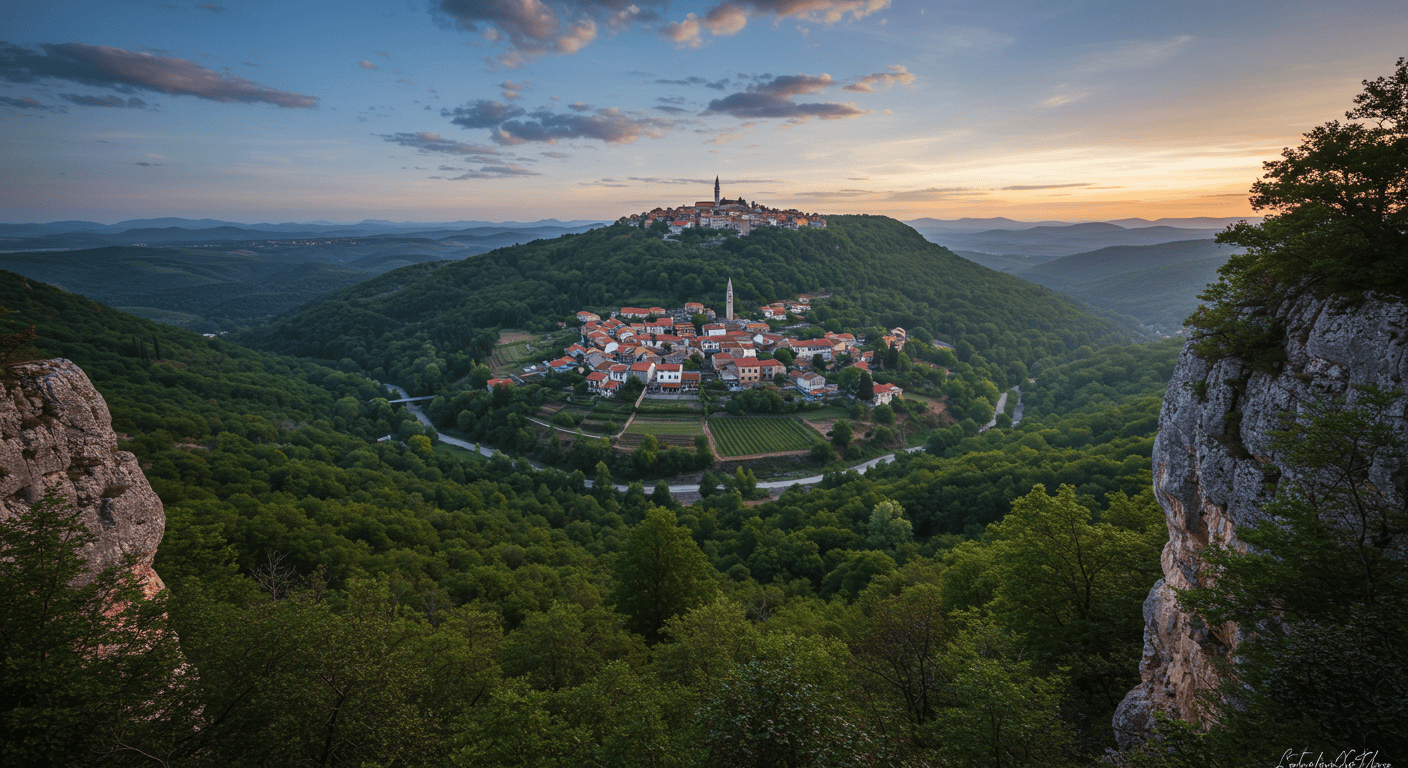
The village of Selca itself sits slightly elevated above the shoreline, which means approaching it from the coast road delivers a proper sense of arrival. The old stone houses, the church tower, the fig trees that lean over walls – it has the visual grammar of a Dalmatian village without the self-consciousness that tourism money occasionally introduces. The nearby coast offers a series of small coves accessible by a combination of track and short walking path: pebble beaches in sheltered inlets, water that is genuinely clear rather than travel-brochure-clear, and a quietness in the late afternoon that makes reading feel like a serious activity rather than a guilty one. The wider island rewards exploration – Bol and Zlatni Rat are worth at least one visit even if you’ve sworn off crowds, and the interior villages around Škrip and Nerežišća offer a completely different register of the Brač experience.
Things to Do in Selca: From Purposeful Leisure to Absolutely Nothing at All
The spectrum of things to do in and around Selca runs from genuinely active to genuinely restful, and the destination handles both ends with equal competence. At the active end: kayaking along the southeastern coast, where the coves are accessible only by water and the snorkelling in the shallower bays requires no qualification beyond the ability to put your face in the sea. Boat hire – with or without a skipper – opens up the coastline considerably and allows access to the small islands nearby, including Šćedro and the outer edges of Hvar, which from a private boat looks entirely different from the version experienced from a crowded harbour ferry.
Day trips from Selca with genuine substance include Hvar town (best reached by water taxi or private boat, early in the morning before the day-tripper surge), the old town of Korčula, and Split itself – which rewards a full day and contains one of the most extraordinary pieces of Roman architecture in Europe in the form of Diocletian’s Palace, now largely inhabited and thoroughly alive rather than roped off and stared at. For those who prefer the pace of local life to the pace of sightseeing, the markets of Supetar and the villages along the ridge road provide a more sustainable form of cultural engagement – the kind that ends with olive oil and a bottle of Pošip rather than a museum exit through the gift shop.
Adventure on the Eastern Coast: Why Brač Delivers More Than Beaches
The waters around the southeastern coast of Brač are among the clearest and most navigable in the Adriatic, which makes them a legitimate destination for anyone with a scuba qualification or a developing interest in obtaining one. Dive sites in the broader Brač channel include walls, wrecks, and the kind of underwater topography that rewards multiple dives in the same location. Visibility in summer regularly exceeds 30 metres, which is the kind of figure that makes divers from murkier seas genuinely emotional.
Above the waterline, Brač has developed a credible cycling infrastructure along its ridge road, with routes ranging from relaxed coastal paths to genuinely demanding climbs into the island’s interior. The views from the higher points – Vidova Gora, at 778 metres the highest point of any Adriatic island – are worth the cardiovascular investment. Hikers find the marked trails through the island’s interior satisfying in a way that is specific to limestone landscapes: the terrain is rugged, the light is extraordinary, and the complete absence of other hikers on most routes is either refreshing or slightly unnerving depending on your disposition. Sailing is the obvious adventure activity for those staying in villas with access to charter services – the island-hopping potential within a day’s sail of Selca is exceptional, encompassing Hvar, Korčula, Vis, and the Pelješac peninsula.
Selca with Children: The Argument for the Eastern Side Over the Western Crowds
Families who have spent a holiday herding children through the crowds of more famous Adriatic destinations tend to arrive at the eastern end of Brač with an expression of visible relief. The coves are small enough to feel contained, the water is shallow enough near shore that younger swimmers can manage it confidently, and the village pace means nobody is rushing past in a jet ski while the children are trying to find fish with a snorkel mask. The absence of a significant hotel infrastructure in the immediate area is, counterintuitively, one of the main reasons it works so well for families – a private villa with a pool means mornings can begin when the children decide they’re ready rather than when the breakfast buffet opens, which turns out to be a significant quality-of-life improvement.
Practically speaking: the beaches accessible from Selca are predominantly pebble rather than sand, which requires a brief acclimatisation period for younger children who arrive expecting a sandcastle environment, but water shoes solve the entry problem and the payoff is water quality that compensates comprehensively. Older children and teenagers with water-sports inclinations will find kayaking, paddleboarding and snorkelling all readily available and independently engaging enough to buy adults a genuine hour of quiet. The evening rhythm of the village – the korzo, the slow walk, the gelato – is one that children take to naturally and that makes family dinners feel like something other than a logistical negotiation.
Stone, Memory and Olive Trees: The Culture and History of Selca
Selca sits within an island whose recorded history extends back through Greek, Roman, Byzantine and Venetian chapters, each leaving enough behind to give the landscape a quality of layered time that makes simply walking through it feel substantive. The village itself is known within Croatia for its tradition of stone masonry – Brač stone, a brilliantly white limestone quarried from the island for over two millennia, was used in the construction of Diocletian’s Palace in Split and, considerably later, in the White House in Washington. The craft of stone carving remains alive in Selca in a way that is not purely performative: the Stonemasons’ School has operated here for decades, and the connection between the village and its material is more than a heritage talking point.
The stone carving festival held in Selca in the summer months brings sculptors from across the region and beyond, which gives the village a particular cultural energy during that period – works in progress appearing in public spaces, craftspeople visible at work, the village operating as something closer to an open studio than a heritage attraction. The churches of the area – the Parish Church of St. Rock in Selca among them – contain the kind of art and architecture that rewards unhurried attention without requiring specialist knowledge to appreciate. The tradition of the rosary confraternity, with its distinctive processional music, represents one of those strands of living local culture that exists parallel to rather than for the benefit of tourism, which gives it a quality that no amount of staged authenticity can replicate.
Shopping in Selca: What to Bring Home That Actually Means Something
The shopping proposition in Selca is not extensive in the retail-therapy sense, which is either a limitation or a liberation depending on why you came. What it does offer is the category of thing that is worth bringing home because it genuinely comes from somewhere specific: local olive oil from family-owned groves on the eastern end of the island, pressed with varieties that have been grown here for centuries and that taste noticeably different from supermarket alternatives. Brač lavender – grown on the island’s drier slopes – appears in forms ranging from dried bundles to oils, soaps and sachets, and travels well without requiring explanations at customs.
The stone carving tradition produces small sculptural works and decorative pieces in Brač limestone that are the kind of things that look good in a London or New York apartment without looking like they were purchased in a gift shop, because they weren’t. Local wine – particularly the island’s own Plavac Mali and the Pošip produced in the broader Dalmatian region – is worth acquiring in quantities that test your luggage allowance. The Split market, reachable on a day trip from Selca, offers the broader Dalmatian product range: honey, rakija, artisanal cheese, cured meats, handmade textiles. It is also extremely good for people-watching, which costs nothing and is frankly undervalued as a holiday activity.
Before You Go: The Practical Details That Make the Difference
Croatia uses the kuna – or more accurately, since January 2023, the euro, which Croatia joined with considerably less drama than anticipated and which simplifies the financial logistics for visitors from the eurozone considerably. Those arriving from the United Kingdom will need to exchange currency; the rate at Split Airport is broadly acceptable, and ATMs in Supetar and the larger villages are reliable. Credit cards are accepted in most restaurants and shops, though smaller konobas and market vendors often operate cash-only, which is worth remembering before committing to a late afternoon with no wallet.
The language is Croatian, and while English is widely spoken in tourist-facing contexts, a small effort with basic Croatian phrases – hvala for thank you, dobar dan for good day – is received with warmth disproportionate to the linguistic investment. Tipping is appreciated but not demanded; rounding up the bill or leaving ten percent is standard and entirely sufficient. The best time to visit Selca for a genuine luxury holiday experience is May, June, or September – warm enough for swimming, cool enough for long lunches that don’t require retreating indoors, and uncrowded enough that the eastern Brač pace asserts itself without competition. July and August are hotter, busier, and more expensive, though still entirely manageable by the standards of the broader Mediterranean summer. Safety presents no notable concerns; Croatia is among the more straightforwardly secure holiday destinations in the region, and the villages of eastern Brač have the particular tranquillity of places that tourists have not yet fully discovered.
Why a Private Villa in Selca Is the Only Honest Way to Do This
There are hotels on Brač, and some of them are perfectly decent. But a private luxury villa in Selca changes the nature of the stay in ways that go beyond the amenity list. The fundamental difference is scale and ownership: a villa is your space, not a section of shared infrastructure, and in a village like Selca – where the entire appeal is slowness, privacy and the feeling of genuine inhabitation rather than temporary presence – that distinction matters enormously. A private pool means the first swim of the morning is yours. Breakfast happens at the time the household agrees rather than the time the kitchen opens. The terrace is not shared with seventeen other couples who are also trying to have a romantic moment.
For families, the space that a villa provides is the difference between a holiday that refreshes everyone and one that tests the relationships of people who love each other very much. Multiple bedrooms, separate living areas, a pool that children can use without a wristband system – these are not luxuries in the abstract sense but practical solutions to the real logistics of travelling with a range of people who have different sleep schedules, different energy levels, and different opinions about what constitutes a reasonable time to return from dinner. Groups of friends find a villa eliminates the complexity of coordinating around a shared hotel corridor and replaces it with a kitchen that is available at midnight, a dining table that fits everyone, and a living space that functions at group scale.
For remote workers, a well-equipped Selca villa with reliable connectivity – and many in the region now offer high-speed broadband or Starlink – provides the particular pleasure of working mornings from a terrace with a view of the Adriatic, then closing the laptop at noon and walking to a cove. This is not a bad arrangement. For those seeking a genuine wellness reset, the combination of private pool, space for yoga or quiet exercise, fresh local food prepared in a private kitchen, and the restorative quality of the Dalmatian light does work that no structured programme could replicate – and it does it without a timetable. Browse our collection of luxury holiday villas in Selca and find the one that fits the shape of your particular group, trip and intention. The eastern end of Brač is patient. It will wait for you to arrive and then quietly demonstrate that you should have come sooner.
More Selca Travel Guides
What is the best time to visit Selca?
May, June and September offer the most rewarding conditions for a luxury holiday in Selca: sea temperatures warm enough for comfortable swimming, daytime temperatures in the mid-twenties, and a pace of life that hasn’t been accelerated by peak-season crowds. July and August are the hottest and busiest months – perfectly manageable and still beautiful, but the prices are higher, the ferries are fuller, and the eastern Brač tranquillity requires slightly more effort to locate. For those interested in the Stonemasons’ Festival, late summer is the relevant window. October is increasingly popular with visitors who prioritise walking, cycling and gastronomy over beach time, and the light in autumn on the eastern end of Brač is genuinely remarkable.
How do I get to Selca?
The most practical route is to fly into Split Airport, from which the ferry terminal at Split Harbour is approximately 25 minutes by transfer. The Jadrolinija car ferry from Split to Supetar runs regularly throughout the day and takes around 50 minutes; from Supetar, Selca is a 40-minute drive along the island’s main road. The alternative route is via the smaller ferry from Makarska to Sumartin on the eastern tip of Brač, which places Selca within approximately 10 minutes by car and avoids crossing the full length of the island. Private airport transfers can be arranged directly to Selca or to a specific villa, which is the most seamless option for groups travelling with luggage or young children. A hire car is strongly recommended for exploring the island independently.
Is Selca good for families?
Selca is an excellent choice for families, particularly those who have found more heavily touristed Adriatic destinations too crowded or too loud for genuinely relaxed family time. The coves accessible from the eastern coast are relatively sheltered, the water is clear, and the village pace is calm enough for children to move through it without being overwhelmed. The principal consideration is that the beaches are predominantly pebble rather than sand, which younger children sometimes find initially discouraging – water shoes are the practical solution and quickly become a non-issue. A private villa with a pool addresses the question of what to do when children need to swim on their own terms rather than the schedule of a shared beach. The evening village rhythm, with its slow promenade culture and accessible cafes, works naturally for families with children of most ages.
Why rent a luxury villa in Selca?
A private villa fundamentally changes the quality of the stay in Selca by replacing the shared-infrastructure model of hotel accommodation with genuine personal space. A private pool means swimming on your own schedule. A private terrace means evenings that belong to your group rather than the terrace demographic at large. The kitchen – whether used independently or through a villa chef or catering service – means access to exceptional local produce prepared to the preferences of your specific household rather than a menu designed for general palatability. For families and groups in particular, the space ratio of a villa – multiple bedrooms, living areas, outdoor spaces – reduces the friction inherent in sharing a building with strangers. Staff and concierge options at the higher end of the villa market bring a hotel-level service element without the hotel-level compromise on privacy.
Are there private villas in Selca suitable for large groups or multi-generational families?
Yes – the villa inventory around Selca and the broader eastern Brač area includes properties that accommodate groups ranging from four to sixteen or more guests, with configurations designed for multi-generational use: separate bedroom wings that give different generations meaningful privacy, multiple living and dining spaces that allow the group to be together or apart according to inclination, private pools of sufficient size for genuine group use, and outdoor terraces that function as communal spaces for evening dining. Some larger properties include separate staff quarters or guest annexes. For multi-generational families in particular, the practical value of a single self-contained property over multiple hotel rooms – with a shared kitchen, shared outdoor space, and none of the corridor logistics – is considerable.
Can I find a luxury villa in Selca with good internet for remote working?
Connectivity on Brač has improved substantially in recent years, and an increasing number of villas in the Selca area are equipped with high-speed broadband or Starlink satellite internet that provides reliable working conditions. When selecting a villa for remote working purposes, it is worth confirming the specific connectivity provision with the property directly or through the booking team, since coverage quality can vary between properties even within a small area. Beyond connectivity, the better-equipped villas include indoor and outdoor workspace options – a desk in a well-lit room, a shaded terrace area suitable for screen use – that make working from a Croatian island a genuinely functional rather than merely aspirational proposition. The combination of reliable connectivity and a private pool ten minutes from the desk is one that most offices cannot match.
What makes Selca a good destination for a wellness retreat?
Selca’s wellness credentials derive less from structured programming than from the cumulative effect of its natural and cultural environment. The Adriatic light, the clean air from the limestone interior, the quality of the food and the pace of life on the eastern end of Brač constitute a form of rest that is more restorative than most things that call themselves a retreat. Practically speaking: the sea swimming available from the coves around Selca is the kind of daily physical activity that improves everything; the local food – olive oil, fresh fish, vegetables from kitchen gardens – is genuinely nourishing rather than health-theatre; and the absence of the noise and stimulation of more touristed destinations allows sleep quality to recover in ways that matter. Villas with private pools, outdoor yoga or exercise space, and the option of in-villa massage or treatment services provide an additional wellness infrastructure for those who want it. The eastern end of Brač doesn’t promise transformation. It simply provides the conditions under which the body and mind remember what they’re supposed to feel like.


