
Romantic Amalfi Coast: The Ultimate Couples & Honeymoon Guide
Romantic Amalfi Coast: The Ultimate Couples & Honeymoon Guide
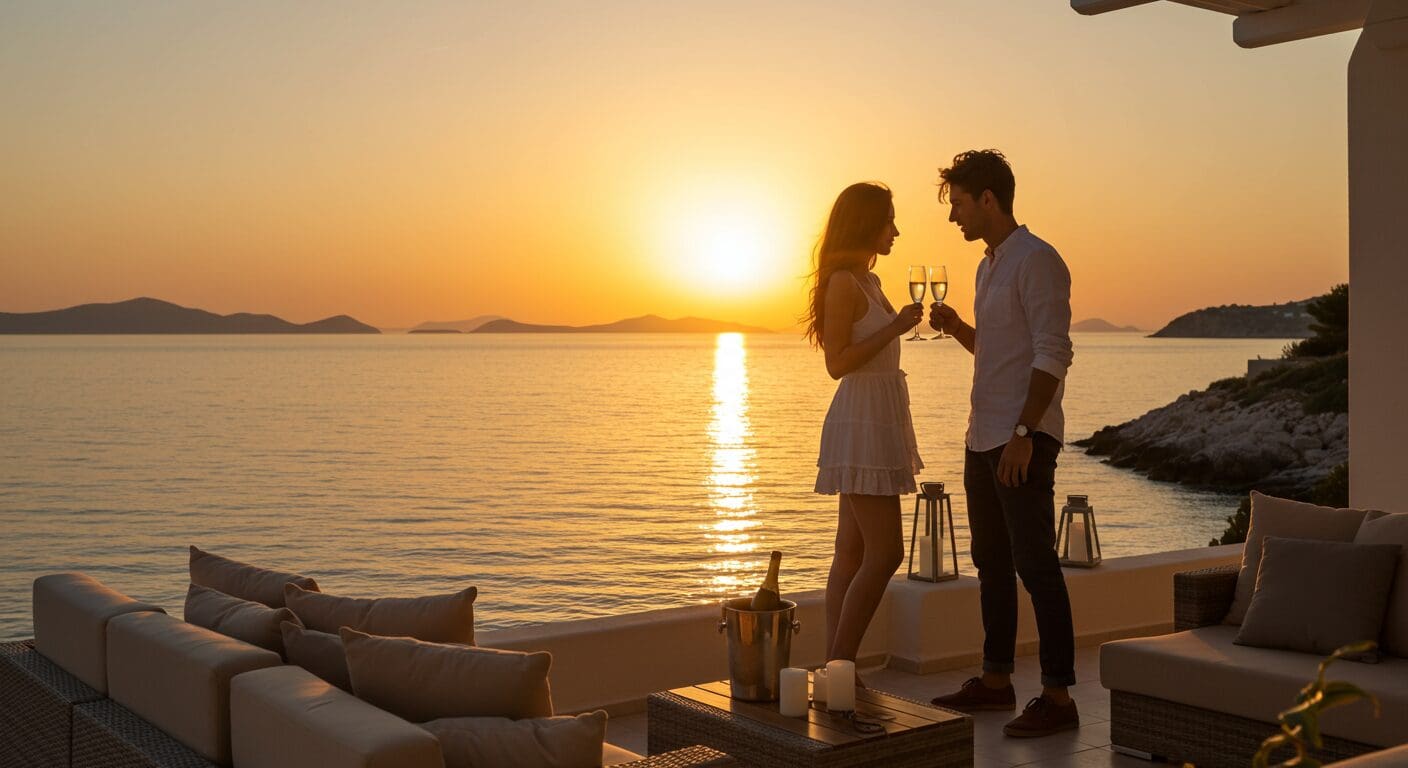
There is a specific hour on the Amalfi Coast – somewhere between six and seven in the evening – when the light turns the colour of warm honey, the scent of lemon groves drifts down from the terraces above, and the Tyrrhenian Sea goes so still it looks like something painted rather than real. The boats slow. The voices soften. Someone, somewhere, is opening a bottle of something cold. If you cannot feel romantic in that moment, you may wish to consider whether you are, in fact, made of stone. This is a coastline that has been seducing people for centuries, and it shows no signs of stopping.
For couples – whether you are newly together, newly married, or marking three decades with the same person – the Amalfi Coast operates at a frequency that seems almost designed for intimacy. It is dramatic without being exhausting, indulgent without being hollow, and beautiful in a way that keeps revealing itself rather than hitting you over the head all at once. Before you go, our comprehensive Amalfi Coast Travel Guide covers all the essential planning detail you will need to make the most of your time here.
Why the Amalfi Coast is Exceptional for Couples
There are places that look romantic in photographs and disappoint in person. The Amalfi Coast is not one of them. If anything, the photographs consistently fail to capture it – the scale, the smell, the particular way the cliffs fold into the sea, the sensation of sitting on a terrace so high above the water that the boats below look like toys. The coast runs for roughly thirty kilometres along the southern edge of the Sorrentine Peninsula, and virtually every metre of it presents some new angle that makes you want to stop and simply look.
What makes it genuinely exceptional for couples, beyond the obvious visual theatre, is its texture. The Amalfi Coast rewards slow travel – the kind where you linger over a three-hour lunch, where you spend a morning doing precisely nothing on a private terrace, where the itinerary is loose by design. It is not a destination that suits those who want to tick boxes at pace. It suits those who want to be thoroughly, unhurriedly present with one another. The combination of warm water, extraordinary food, historic villages perched at vertiginous angles, and a culture that takes pleasure seriously creates conditions in which connection – whether you are rekindling it or cementing it for the first time – comes naturally.
There is also the practical matter of beauty as a constant companion. When everything around you is this extraordinary, conversation finds its own depth. You notice things together. You share things. The coast does a great deal of the romantic heavy lifting, and couples tend to arrive home from it feeling refreshed in ways they cannot quite explain.
The Most Romantic Settings Along the Coast
Positano is the obvious opening act, and it earns every word written about it. The village tumbles down its cliff face in a cascade of blush, terracotta and white, the houses stacked so improbably that you half expect them to slide into the sea. In the early morning, before the day-trippers arrive, it is genuinely magical – narrow lanes barely wide enough for two people walking closely together, which is perhaps the point. The beach at Positano has a particular energy in the late afternoon when the sun drops behind the mountains and the light goes golden and diffuse.
Ravello, further along the coast and considerably higher up, offers a different kind of romance – quieter, more contemplative, less photographed. The Villa Cimbrone gardens are one of the great romantic set-pieces on the entire Italian coastline: a long walk through cypress trees opens suddenly onto the Terrace of Infinity, a balustrade lined with classical busts overlooking a drop to the sea that genuinely takes your breath away. D.H. Lawrence and Greta Garbo both came here for reasons that require no explanation.
Praiano sits between Positano and Amalfi and is frequently overlooked, which is precisely why it deserves mention. Fewer crowds, better views in some directions, and the kind of calm that allows you to hear the sea properly. For couples who want beauty without the performance of it, Praiano delivers consistently.
The town of Amalfi itself – the historic republic that gave the coast its name – has a magnificent cathedral and a piazza that fills beautifully in the evenings, when locals and visitors mix with the easy democracy of somewhere that has hosted both for centuries.
The Best Restaurants for a Special Dinner
The Amalfi Coast takes its food as seriously as it takes its sunsets, which is saying something. The cooking here is rooted in the ingredients that define this particular stretch of Campania – the Sfusato Amalfitano lemon (which is extraordinary and should not be confused with whatever pale citrus you have at home), fresh-caught fish and seafood, handmade pasta, buffalo mozzarella from the plains nearby, and a ferocious local pride in doing things properly.
For a genuinely special dinner, the coast offers restaurants with terraces suspended above the sea – places where the table setting includes a view so distracting that you occasionally forget to eat. Seek out restaurants in Positano that specialise in grilled local fish with minimal intervention; the ingredient quality here makes elaborate technique unnecessary and good chefs know it. In Ravello, the dining scene is somewhat more refined and formal, suiting anniversaries and proposal evenings particularly well. In Amalfi town, the seafood restaurants around the harbour tend toward the deeply satisfying rather than the showy – fresh pasta with clams, spaghetti alle vongole prepared without drama but with complete conviction.
The ritual of the aperitivo hour is not to be underestimated as a romantic practice. Find a bar with a view – there is no shortage – order a spritz or a glass of local white wine, and watch the light change together. This costs very little and delivers enormously. Italians have understood this for a long time.
Couples Activities: From Sailing to Spa
The sea is the obvious starting point. Chartering a private boat – anything from a classic wooden gozzo to a more substantial sailing yacht – to explore the coast from the water is one of those experiences that immediately separates the Amalfi Coast from almost anywhere else. From the sea, the cliffs appear even more dramatic, the villages more improbable, and the hidden sea caves and grottos inaccessible by road become suddenly reachable. Anchor in a quiet cove, swim in water that is unreasonably clear, eat lunch on deck. It is, by most reasonable measures, a very good day.
Cooking classes in the region tend to be deeply pleasurable shared experiences – learning to make fresh pasta, preparing the classic Amalfi lemon cake known as delizia al limone, or understanding the local approach to seafood. The best classes take you to the market first, then into a proper kitchen, often in a private home or a terrace with a view. You are unlikely to emerge without both new skills and a considerable appetite.
Wine tasting in Campania is an underappreciated pursuit. The region produces wines of genuine character – Fiano di Avellino, Greco di Tufo, and the volcanic Lacryma Christi from the slopes of Vesuvius – and a visit to one of the local producers, ideally in the hills above the coast, combines beautiful scenery with the considerable pleasure of understanding what you are drinking and why.
Spa experiences at the better hotels and villas along the coast can be exceptional – treatments that use local ingredients including, inevitably, lemon, along with various aromatic herbs from the terraces above. A couples massage followed by time in a thermal pool overlooking the sea is the kind of afternoon that resets something fundamental. Hiking the Sentiero degli Dei – the Path of the Gods – offers a different physical register entirely: a ridge walk of considerable beauty connecting Agerola to Positano with views that justify the name without embarrassment.
The Most Romantic Areas to Stay
Where you base yourself on the Amalfi Coast shapes the tone of your stay considerably, and this is a decision worth taking seriously. Positano is the most immediately glamorous option – it has the best beach access, the most concentrated restaurant and bar scene, and a social energy that suits couples who want to be in the middle of things. It is also the most visited, and in peak season the lanes can feel busy. For honeymooners who want animation and atmosphere, it remains the classic choice.
Ravello, perched three hundred and fifty metres above the sea, offers the most serene and refined experience. There is no beach here, but there are gardens, silence, extraordinary views, and a sense of remove from the world that couples seeking genuine privacy tend to find precious. It attracts a different crowd – writers, musicians, people who have been coming here for decades and have no intention of stopping.
Praiano and Conca dei Marini are the quieter choices for those who want the beauty without the audience. Private villa rentals here offer genuine seclusion – a pool, a terrace, a view, and the sense of having the coast largely to yourselves. For couples celebrating anniversaries or simply wanting to disconnect completely from normal life, these villages deliver something the more famous names sometimes cannot: actual peace.
Proposal-Worthy Spots
If you are considering a proposal on the Amalfi Coast – and the setting will certainly do nothing to discourage you – a few locations present themselves with particular force. The Terrace of Infinity at Villa Cimbrone in Ravello is the most famous, and with good reason: the combination of classical grandeur, the long garden walk building anticipation, and the sudden revelation of that view creates a theatrical quality that proposals deserve. The fact that many others have proposed here before you does not diminish it. Some things earn their reputation.
A private boat at sunset, anchored off the coast with a glass of Franciacorta and no other vessels in sight, offers something more intimate and less public – which some people prefer strongly. The coast viewed from the sea at that particular hour has a quality that feels like it was arranged specifically for you, even though you know perfectly well it was not.
The gardens of the Villa Rufolo in Ravello, where Wagner found the inspiration for his Flower Garden of Klingsor, provide another extraordinary setting – the terraced gardens, the medieval architecture, and the views across to the mountains of Calabria creating a backdrop of considerable weight. For proposals with a sense of history and place, it is hard to do better.
Anniversary Ideas on the Amalfi Coast
The Amalfi Coast suits anniversary celebrations of every number with equal generosity. A first anniversary calls for indulgence – a private villa, a chartered boat, dinners that last three hours because nobody is in a hurry. A significant milestone – ten years, twenty-five – might be marked with something more deliberately memorable: a private cooking lesson with a local chef, a sunset sailing trip followed by dinner on a terrace above the sea, perhaps a night in Ravello to contrast with a night in Positano for two different registers of the same extraordinary coastline.
The ritual of returning to a place you have visited before carries its own particular romance. Couples who come back to the Amalfi Coast often speak of it in the same tones – as somewhere that holds something of them, that exists partly in memory and partly in the present simultaneously. Anniversaries celebrated here tend to feel weighted with time in exactly the way they should.
Consider building in one experience specifically designed for reflection – a long walk on a quieter path, an afternoon on a private terrace with nothing scheduled, a meal at the kind of small restaurant where the owner has been cooking the same dishes for thirty years and shows no signs of wavering. The Amalfi Coast does quiet intensity as well as it does spectacle.
Honeymoon Considerations
The Amalfi Coast is one of the most consistently requested honeymoon destinations in the Mediterranean, and the reasons are not hard to locate. It offers the complete package that honeymooners tend to need: extraordinary beauty, world-class food and wine, warm water for swimming, privacy when you want it and animation when you do not, and a culture that takes romance as seriously as it takes everything else involving pleasure, which is very seriously indeed.
Timing matters considerably. May, early June, September and October offer the most favourable conditions – warm enough for swimming, manageable crowds, and the particular quality of light that the shoulder season produces. July and August are peak season: hot, busy, and for those honeymooners who envisioned a quiet terrace and a private cove, potentially at odds with expectations. If you must travel in August, a private villa with its own pool becomes not a luxury but a necessity.
Budget accordingly and without apology. The Amalfi Coast is not a destination that rewards cost-cutting in the obvious places – a mediocre hotel room here, when extraordinary alternatives exist, is a specific kind of sadness. The differential between a good villa and a remarkable one, or between a decent restaurant and a genuinely memorable dinner, is worth understanding before you arrive. A honeymoon on the Amalfi Coast, done properly, justifies itself completely. Done halfway, it leaves the faint sense that you almost had something extraordinary.
For the ultimate honeymoon base, a luxury private villa in Amalfi Coast gives you everything a romantic escape should be – privacy, beauty, your own terrace above the sea, and the freedom to set the pace entirely on your own terms. No lobby. No schedules. Just the coast, the light, and each other.
When is the best time to visit the Amalfi Coast for a romantic trip?
May, early June, September and October are ideal for couples. The weather is warm, the water swimmable, and the crowds considerably more manageable than peak summer. The light in these shoulder months is exceptional – softer and more golden than the harsh midday glare of August – and the atmosphere in the villages is relaxed in a way that suits romantic travel. If you are planning a honeymoon or anniversary trip in July or August, book well in advance and prioritise a private villa with its own pool to ensure you have the seclusion the season otherwise makes difficult to find.
Which village on the Amalfi Coast is most romantic for couples?
This depends on what kind of romance you are seeking. Positano is the most celebrated – glamorous, animated, with excellent beach access and a concentration of exceptional restaurants and bars. Ravello, higher up and considerably quieter, offers a more contemplative and private atmosphere with some of the most breathtaking views on the entire coast, making it particularly suited to proposals, milestone anniversaries, and couples who want genuine serenity. Praiano and Conca dei Marini provide beautiful alternatives for those who want the full beauty of the coastline with fewer visitors and a more unhurried pace. A stay that moves between two or three villages often captures the full range of what the coast offers.
Is a private villa better than a hotel for a honeymoon on the Amalfi Coast?
For most honeymooners, yes – and significantly so. A private villa gives you complete freedom over your time and pace, a level of privacy that even the best hotels cannot fully replicate, and typically a terrace or pool that belongs entirely to you rather than being shared with other guests. The experience of waking up in your own villa above the Tyrrhenian Sea, with breakfast on your own terrace and no obligation to interact with the outside world until you choose to, is fundamentally different from a hotel stay in ways that honeymoons particularly benefit from. Luxury villas on the Amalfi Coast also often come with concierge services that can arrange private boat charters, restaurant reservations, cooking classes and transfers – all the experiences of the coast, delivered on your own terms.


